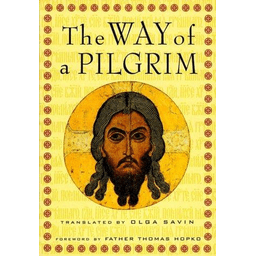
- Starting price
- Free (public-domain editions)
- Free tier
- Yes
- Platforms
- Print · Kindle · Audiobook · Free (public domain)
- Developer
- Various / Public domain
- Launched
- 1884
- Updated
- May 31, 2026
The verdict
The Way of a Pilgrim is the best-loved popular doorway into the Jesus Prayer and the contemplative tradition behind it. It is a short, strange, gentle book - part travelogue, part spiritual diary - that follows one wandering Russian as a single sentence becomes the rhythm of his whole life. Read across many traditions by anyone drawn to unceasing prayer, it remains the place most people start.
Try The Way of a Pilgrim ↗Opens gutenberg.org
The Way of a Pilgrim has quietly become the book people reach for when they want to understand the Jesus Prayer. It surfaces in monastery bookstores, in seminary syllabi, in the footnotes of contemplative writers, and - famously - in the pocket of a J.D. Salinger character. For a short, anonymous Russian book first printed around 1884, it has traveled an astonishing distance, almost entirely by word of mouth: one reader hands it to another and says, in effect, read this and you will understand what 'pray without ceasing' actually means.
The book did not arrive with an author's name attached. It presents itself as the first-person account of a nameless Russian wanderer - a peasant with a withered arm, a knapsack of dried bread, and a Bible - who hears the line from First Thessalonians, 'pray without ceasing,' read aloud in church and cannot get past it. How, he asks, is that even possible? It is not a theological puzzle to him. It is a practical one. He sets out on foot across 19th-century Russia to find someone who can tell him how to do the thing the apostle commanded.
What he finds is a spiritual father - a starets - and a book called the Philokalia, an anthology of writings from the Eastern Christian contemplative tradition. Under that guidance the pilgrim learns the Jesus Prayer: 'Lord Jesus Christ, Son of God, have mercy on me, a sinner.' He is told to say it a set number of times a day, then more, then more, until the prayer detaches from effort and begins to say itself - folding into his breathing, his walking. The rest of the book is the record of what that does to a life on the road. It is the most accessible popular introduction to the practice ever written, and it earns the reputation fresh with every reader who finishes it.
✓ The good
- The best-loved popular introduction to the Jesus Prayer - for most readers this is the book that first explains the practice from the inside
- Short and inviting - a slim narrative you can read in an afternoon, told as a story rather than a treatise
- Genuinely free - older translations are public domain, so a complete, legible text is one click away, with cheap reprints everywhere
- A narrative testimony, not a lecture - you follow a real-feeling person through doubt, progress, and joy rather than abstract instructions
- A natural on-ramp to the Philokalia - the pilgrim leans on that anthology throughout, so the book doubles as a guided first taste of it
- Read with interest far beyond its home tradition - Catholics, Protestants, and others drawn to contemplative prayer have long found it worth reading
- Pairs with a ready-made sequel - The Pilgrim Continues His Way picks up the same voice, so there is somewhere to go if it lands
✗ Watch out
- The 19th-century Russian idiom shows - the diction and cadence read as old-fashioned to some, especially in the older free translations
- Episodic, wandering structure - readers who want a tight argument or a clear arc can find the narration meandering
- A testimony, not a how-to manual - it shows one person living the prayer rather than teaching it step by step, and treating it as a guide will frustrate you
- Assumes the Orthodox devotional world - the Philokalia, spiritual fatherhood, and sacramental life are taken for granted, which can feel unfamiliar to outside readers
- Translation choice matters - the reading experience varies noticeably between the free public-domain versions and the more recent renderings
Best for
- Anyone curious about the Jesus Prayer who wants one short book to start with
- Readers drawn to contemplative or unceasing prayer from any background
- People who learn better through a story than through a manual
- Anyone planning to read the Philokalia and wanting a gentle on-ramp first
Avoid if
- You want a structured, step-by-step manual for a daily prayer practice
- You bounce off 19th-century devotional prose and need a brisk modern voice
- You want a systematic theology of prayer rather than a personal narrative
- You prefer a tightly plotted book and find episodic, wandering structure tiring
What The Way of a Pilgrim is
The Way of a Pilgrim is an anonymous Russian Orthodox spiritual classic, first published in Russian around 1884, narrated by an unnamed wandering pilgrim who sets out to learn what it means to 'pray without ceasing.' Under the guidance of a spiritual father (a starets) and the Philokalia - an anthology of Eastern Christian contemplative writings - he learns and practices the Jesus Prayer, 'Lord Jesus Christ, Son of God, have mercy on me, a sinner,' repeating it until it becomes continuous and, in the book's account, prays itself within him. The narrative follows him across the Russian countryside as that single practice reshapes how he sees everything he meets.
It is best understood as the popular introduction to the Jesus Prayer and to the broader contemplative spirituality associated with the Philokalia and the Hesychast tradition of the Christian East. The book is a personal testimony rather than a manual: it shows the prayer lived out in one ordinary, footsore life rather than laying down a system. It is short, and it is frequently paired with its sequel, The Pilgrim Continues His Way, which carries the same voice into deeper material. Many editions print the two together.
Why readers keep reaching for the Pilgrim
Most writing about prayer explains prayer. The Way of a Pilgrim does something rarer: it shows you a person learning to pray, from the inside, over months and miles, with all the false starts and small breakthroughs left in. You are not handed a definition of unceasing prayer. You watch it happen to someone - at first a chore he counts out on a knotted prayer rope, then a habit, then something that has quietly taken up residence in him. That narrative shape is why the book reaches people who would never finish a treatise on the same subject.
It is also why the book has found readers far outside the tradition that produced it. The pilgrim's question - how could anyone actually pray all the time? - is not an Orthodox question or a Russian question. It is a human one, and it occurs to people in every tradition the first time they read the apostle's instruction and take it literally. The book is unmistakably a product of the Russian Orthodox devotional world, and it never pretends otherwise. But the longing at its center is shared widely enough that Catholics, Protestants, and others drawn to contemplative prayer have read it with interest for over a century, each bringing their own vocabulary to what they find.
The Jesus Prayer: one sentence, repeated until it lives
At the center of the book is a single short sentence: 'Lord Jesus Christ, Son of God, have mercy on me, a sinner.' The pilgrim is taught to say it a fixed number of times each day - three thousand, then six thousand, then twelve - counting on a knotted prayer rope until the count itself falls away. The aim, his spiritual father explains from the Philokalia, is not to manufacture a feeling but to let the words sink from the lips into the mind and finally, as the tradition describes it, into the heart, where they continue on their own, eventually keeping time with the breath.
What the book conveys, and what a summary cannot, is the texture of that process - the dry stretches where nothing seems to happen, the sudden warmth, the way the prayer starts to color ordinary encounters on the road. Reported neutrally, this is the practice the book exists to introduce, presented as the heart of the contemplative tradition the pilgrim is being initiated into. The Way of a Pilgrim does not argue for the practice or rank it against other forms of prayer; it simply lets you live alongside someone for whom it has become as constant as breathing, and lets you draw your own conclusions.
The Philokalia: the book the pilgrim carries
The pilgrim is rarely without two books - a Bible and the Philokalia, a large anthology of writings on prayer and the inner life gathered from centuries of Eastern Christian teachers. He reads it constantly, quotes it to the people he meets, and treats it as the practical handbook standing behind his spiritual father's instructions. For most readers, The Way of a Pilgrim is the first place they ever encounter the Philokalia at all, and the pilgrim's running engagement with it works as a gentle, guided first taste of a far larger and more demanding body of writing.
This is one of the book's quiet services. The Philokalia itself is dense, multi-volume, and not where most people should begin; the Pilgrim metabolizes it into story, showing the teaching at work in a single life before a reader ever opens the source. If the narrative lands, the natural next step is the Philokalia itself, and the Pilgrim has already introduced the cast of voices and the basic vocabulary. The book functions, in that sense, as both a standalone classic and an on-ramp - a short doorway into a tradition that is much bigger than the doorway.
A narrative testimony, not a manual
The form of the book matters as much as its subject. It is written as a wanderer's diary: a loose, episodic string of journeys and encounters, told in the first person, with no chapter headings promising a curriculum and no numbered steps to follow. The pilgrim meets a forester, a pious couple, a dying man, a band of thieves, a series of strangers who each draw something different out of him, and the prayer threads through all of it. The structure is the structure of a life on foot - one thing after another - rather than the structure of an argument.
That choice is the source of both the book's charm and its main practical limitation. As testimony it is disarming: you trust the pilgrim because he is so plainly ordinary, and you feel the prayer's effect because you watch it land on a real-feeling person rather than reading it described in the abstract. As instruction it is incomplete by design. Anyone hoping to extract a tidy daily routine will have to read between the episodes, and is usually better served pairing the book with explicit guidance from the tradition. The Pilgrim shows; it does not drill. Knowing that going in is the difference between loving the book and being quietly frustrated by it.
Pricing
Free (public domain)
$0
Older translations are out of copyright, so a complete text is freely readable online (Project Gutenberg and similar) and in countless free ebook versions. The way most people first read it.
Paperback reprint
~$5-10
Inexpensive print editions of the public-domain translation are everywhere. A cheap physical copy if you prefer paper over a screen.
Modern translation
~$12-16
Recent renderings - the Olga Savin and the R.M. French translations are the ones most often cited - read more smoothly for a modern reader and usually include the sequel. As of writing, roughly $12-16 new.
Kindle / ebook
Free-~$10
Free for the public-domain text; a few dollars to around $10 for a modern translation. Searchable and highlight-syncs, which is handy for a book this quotable.
Audiobook
~$10-18
Several recordings exist; some free public-domain narrations circulate as well. The contemplative pacing suits listening, though quality varies between recordings.
The Way of a Pilgrim is, for practical purposes, free. Because the older translations are out of copyright, a complete and legible text is one click away at Project Gutenberg and in countless free ebook editions, and that is how most people first read it. The free public-domain text is the genuine best value here, not a stripped-down sample.
Print is cheap too. Inexpensive paperback reprints of the public-domain translation run roughly five to ten dollars new and far less used - the natural pick if you prefer paper or want a copy to mark up. These older translations are faithful but dated; the 19th-century Russian idiom comes through, which some readers enjoy as period flavor and others find a little stiff.
If the older prose puts you off, a modern translation is the upgrade that matters. The Olga Savin and R.M. French translations are the two most often recommended, read far more smoothly for a contemporary reader, and usually bundle the sequel, The Pilgrim Continues His Way, in the same volume. As of writing these run roughly $12-16 new in paperback, with ebook versions cheaper and audiobook editions in the ~$10-18 range; some free public-domain narrations circulate as well.
The honest recommendation for most readers: start with the free text to see whether the book grabs you, and if it does and the older diction is slowing you down, buy a modern translation that includes the sequel. The free edition is the balanced default; the paid modern translation is worth the difference only once you know you want to live in this book.
Where The Way of a Pilgrim falls behind
Old-fashioned idiom. The book is a product of 1880s Russia, and it reads like one - especially in the free public-domain translations, where the diction and piety can feel archaic to a modern reader. It is rarely an obstacle, but a first-time reader in 2026 will meet passages that feel like they come from another century, because they do. A modern translation softens this considerably.
Episodic narration. The Pilgrim wanders, and so does its structure. The book moves from encounter to encounter without a tight plot or a building argument, and readers who want momentum or a clear destination can find the drift tiring. The looseness is deliberate - it mirrors a life on the road - but it is a real difference from a book engineered to keep you turning pages.
Not a how-to manual. This is the gap most likely to disappoint. The Way of a Pilgrim is a narrative testimony, not a step-by-step instruction guide; it shows the Jesus Prayer lived rather than teaching it as a system. Readers who pick it up expecting a practical program for unceasing prayer will have to assemble that themselves, and are usually better off pairing the book with explicit guidance.
It assumes the Orthodox devotional world. Spiritual fatherhood, the sacramental life, the Philokalia, and the rhythms of Eastern Christian practice are simply the air the pilgrim breathes; the book does not stop to explain them. For a reader inside that world it is seamless, and for a reader outside it some context goes unspoken. None of this is a flaw in the book - it is a book written from within a particular tradition - but it is worth knowing before you start.
The Way of a Pilgrim vs. the Philokalia vs. The Ladder of Divine Ascent
These three are the classics most often named together when people talk about Eastern Christian prayer, and they do genuinely different jobs. The Way of a Pilgrim (anonymous, c. 1884) is the doorway - a short, narrative introduction that shows the Jesus Prayer at work in one ordinary life and asks almost nothing of the reader except curiosity. The Philokalia (compiled in the 18th century from many earlier authors) is the source library the pilgrim carries: dense, multi-volume, organized for sustained study rather than a single sitting. The Ladder of Divine Ascent (St. John Climacus, written for monastics) is a rigorous treatment of the spiritual life structured as thirty rungs, demanding in a way the Pilgrim is not.
Different strengths. The Pilgrim is the most accessible and the right place to begin - the book you finish in an afternoon and understand from the inside. The Philokalia is the broadest and deepest, but it is where you go after the doorway, not instead of it. The Ladder is the most structured and the most clearly aimed at a committed, often monastic, reader following a defined ascent. If you are starting from scratch and want one short book, it is the Pilgrim. If the Pilgrim lands and you want the source it keeps quoting, move to the Philokalia. If you want a rigorous, ordered map of the inner life, the Ladder is the classic for that.
All three come out of the same Eastern Orthodox tradition and are read most closely within it, though the Pilgrim in particular has long drawn interested readers from other traditions. Reported plainly: these are companion volumes more than competitors - the Pilgrim introduces, the Philokalia supplies, and the Ladder structures - and many readers who love the first eventually meet the other two.
The bottom line
The Way of a Pilgrim is still the place most people start with the Jesus Prayer, and for good reason. It is short, it is free, and it teaches by story rather than by lecture - you do not learn about unceasing prayer so much as walk alongside someone for whom it becomes as natural as breathing. The 19th-century idiom and the wandering structure show their age, and it is a testimony rather than a manual, but as a doorway into the contemplative tradition of the Christian East it has never really been bettered. If you want one short book to understand what 'pray without ceasing' could mean, this is the one to read first.
Alternatives to The Way of a Pilgrim
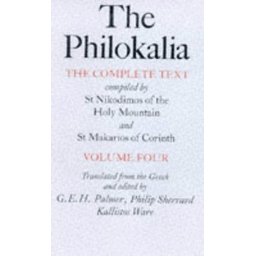 The PhilokaliaThe multi-volume anthology of Eastern Christian writings on prayer that the pilgrim carries - the deep source, best read after the Pilgrim.
 The Ladder of Divine AscentSt. John Climacus's rigorous thirty-step map of the spiritual life - more structured and demanding than the Pilgrim's gentle narrative.
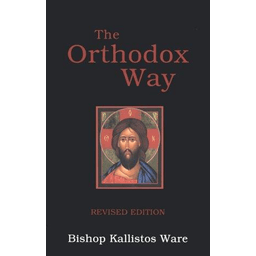 The Orthodox WayBishop Kallistos Ware's modern, accessible overview of Orthodox Christian faith and practice - helpful context for the world the Pilgrim assumes.Ancient Faith MinistriesA large free library of Orthodox podcasts, articles, and audiobooks - a living companion to the classics, with material on the Jesus Prayer.
Frequently asked questions
What is The Way of a Pilgrim about?
It is the first-person account of an anonymous 19th-century Russian wanderer who hears the command 'pray without ceasing' and sets out to learn how anyone could actually do it. Guided by a spiritual father and the Philokalia, he learns the Jesus Prayer and practices it until it becomes continuous. The book follows him across Russia as that single practice reshapes his life.
What is the Jesus Prayer?
The Jesus Prayer is the short sentence at the heart of the book: 'Lord Jesus Christ, Son of God, have mercy on me, a sinner.' In the practice the book describes, it is repeated - at first a set number of times, then continually - until it sinks from the lips into the mind and heart and continues on its own. It is central to the contemplative tradition of the Christian East, and The Way of a Pilgrim is its best-known popular introduction.
Who wrote The Way of a Pilgrim?
The book is anonymous. It presents itself as the diary of an unnamed Russian pilgrim and was first published in Russian around 1884. Its exact origins and authorship are uncertain and have been debated, which is part of why it is usually published simply as an anonymous Russian spiritual classic.
Is The Way of a Pilgrim only for Orthodox readers?
No. It is unmistakably a product of the Russian Orthodox devotional world and is read most closely within it, but for well over a century it has also drawn interested readers from Catholic, Protestant, and other backgrounds who are drawn to contemplative prayer. The longing at its center - how to pray continually - is one that occurs to people across traditions.
Which translation or edition should I read?
Start with a free public-domain text (Project Gutenberg and similar) to see whether the book grabs you. If the older 19th-century diction slows you down, the Olga Savin and R.M. French modern translations read more smoothly and usually include the sequel; as of writing they run roughly $12-16 in paperback. Audiobook editions exist as well, and their contemplative pacing suits listening.
Is there a sequel?
Yes. The Pilgrim Continues His Way carries the same voice forward and goes deeper into the material, and many modern editions print the two books together in a single volume. If the first book lands for you, the sequel is the natural next read.
Where should I go after The Way of a Pilgrim?
The most natural next step is the Philokalia, the anthology the pilgrim quotes throughout - the Pilgrim works well as a gentle on-ramp to it. For a structured map of the spiritual life there is The Ladder of Divine Ascent, and for accessible modern context on the tradition the book assumes, Kallistos Ware's The Orthodox Way is widely recommended.
Sources & further reading
More Orthodox Christian Books
 On the IncarnationThe short 4th-century treatise on why God became man - the one early-Church book modern readers actually finish, and the one C.S. Lewis told everyone to start with.
 The Orthodox ChurchThe Penguin paperback that has introduced more English readers to Eastern Orthodoxy than any other single book - half history, half doctrine, and still the first title nearly everyone names.The Orthodox WayThe slim companion to The Orthodox Church that trades history for the lived path - Kallistos Ware walking a reader through God as Mystery, Trinity, Creator, Man, Spirit, and Prayer, in fewer than two hundred pages.
 For the Life of the WorldAlexander Schmemann's slim, much-loved meditation on sacramental theology - the book that taught a generation to see the whole world as a gift to be received and offered back in thanksgiving.The PhilokaliaThe great Eastern Orthodox anthology on inner watchfulness and the prayer of the heart - eleven centuries of monastic teachers, compiled on Mount Athos, and still the master text of the Jesus Prayer.The Ladder of Divine AscentThe thirty-rung monastic classic from 7th-century Mount Sinai that has shaped Eastern Orthodox spiritual life for over a thousand years - read in monasteries every Lent, demanding by design, and unlike anything else on the shelf.