- Starting price
- Free (public-domain translations)
- Free tier
- Yes
- Platforms
- Print · Kindle · Free (public domain)
- Developer
- Various / Public domain
- Launched
- 600
- Updated
- May 31, 2026
The verdict
One of the foundational texts of Eastern Orthodox spirituality - a single sustained treatise of thirty rungs on renouncing the world, fighting the passions, and climbing toward stillness and love. Written for monks by a monk around the 7th century, it is demanding, frank, and severe in its imagery, and still read aloud in Orthodox monasteries every Great Lent. Approach it slowly, ideally with guidance, and it remains one of the great maps of the inner life.
Try The Ladder of Divine Ascent ↗Opens holytransfiguration.org
The Ladder of Divine Ascent has quietly held its place for thirteen centuries as one of the central books of Eastern Orthodox spiritual formation. It is read aloud in monasteries during Great Lent and depicted on one of the most famous icons in the Christian East - a ladder of thirty rungs with monks climbing toward Christ at the top while others are pulled off by demons along the way. That a 7th-century monastic treatise still occupies that real estate, and still gets handed to novices in their first year, is worth understanding.
The book was written by St. John Climacus - "John of the Ladder," the name he earned from this very work - abbot of the great monastery at the foot of Mount Sinai, traditionally placed around the 6th and 7th centuries. He wrote it, the tradition says, at another abbot's request for a guide to the monastic life. It is not a systematic theology. It is not a devotional in the modern sense. It is not a book for the curious browser. It is a hard-won, practical manual of the spiritual struggle, set down by a man who had spent decades at it.
What you actually get is a single structured treatise built on one governing image: a ladder of thirty steps, each step a chapter, rising from the renunciation of worldly life toward the summit of faith, hope, and love. The number thirty answers, in the tradition's reading, to the thirty hidden years of Christ's life before his public ministry. The lower rungs treat breaking from the world; the long middle is an unsparing anatomy of the passions - anger, gluttony, vainglory, and above all pride - and the virtues that answer them; the highest rungs turn to stillness (hesychia), prayer, and dispassion crowned by love. It is one of the most influential maps of the inner life ever written in the Christian East.
✓ The good
- One of the foundational texts of Eastern Orthodox spirituality - for the monastic and ascetic tradition, a primary source nearly everything else points back to
- A single sustained work with a clear plan - thirty ordered steps make it more readable as one book than a sprawling anthology like the Philokalia
- Unusually frank about the inner life - the long middle steps name anger, vainglory, gluttony, and the subtle workings of pride with a precision most modern devotional writing never attempts
- The governing image is unforgettable - a ladder of ascent, rung by rung, gives the whole spiritual struggle a shape a reader can hold in mind
- Read and quoted far beyond its home tradition - students of Christian contemplative and ascetic spirituality across traditions return to it
- Re-readable for a lifetime - pages monastics revisit for decades and read afresh every Lent, not a book you finish and shelve
- Available free in the public domain - older English translations are out of copyright, so a complete text is one click away
✗ Watch out
- Written by and for monks - the world it describes is the monastery, the cell, and lifelong ascetic obedience, and lay readers must do real interpretive work to apply it to ordinary life
- Demanding asceticism - the counsel on fasting, vigil, tears, and renunciation is rigorous by design, and some is specific to the monastic vocation rather than general readership
- The imagery can be severe by modern lights - its treatment of sin, mourning, judgment, and the struggle against the passions is stark, and a first-time reader should expect intensity
- Translation choice matters a great deal - the reading experience varies widely between the older free versions and the modern editions, and the wrong one can make hard material harder
- Rewards slow, guided reading - meant to be worked through patiently, ideally alongside an experienced guide, rather than read straight through like a narrative
Best for
- Readers drawn to the Eastern Orthodox ascetic and monastic tradition who want a primary source
- Anyone studying the history of Christian spiritual struggle and the virtues
- Patient readers willing to work through demanding material slowly and selectively
- Orthodox Christians moving from introductory books into the tradition's own classics
Avoid if
- You want a gentle, modern daily devotional you can read in five minutes
- You are brand new to the subject and have not read an introduction to the tradition first
- You want practical application to lay, work, or family life spelled out for you
- You bounce off severe, ascetic imagery and prefer warm, affirming spiritual writing
What The Ladder of Divine Ascent is
The Ladder of Divine Ascent is a foundational Eastern Orthodox ascetic classic, written by St. John Climacus, abbot of the monastery at Mount Sinai, around the 7th century (c. AD 600). It is a single sustained treatise of thirty "steps," or rungs of a ladder, each its own chapter, charting the spiritual life from the renunciation of worldly concerns, through a long struggle against the passions, toward the virtues, inner stillness (hesychia), and, at the summit, the union of faith, hope, and love.
It is not a confession of any one position or a systematic theology; it is a practical guide to the inner struggle, written by a monk for monks and read within Orthodox monasticism ever since - traditionally aloud in community during Great Lent. Older English translations are public-domain; the widely used modern editions come from Holy Transfiguration Monastery and from the Paulist Press Classics of Western Spirituality series. Within Eastern Orthodoxy the book is less something read once than a companion returned to over years, customarily under the guidance of an experienced spiritual elder.
Why readers reach for the Ladder
Much of the great Eastern Christian writing on prayer survives as anthology or fragment - sayings of the desert fathers, the gathered authors of the Philokalia, scattered letters and treatises. The Ladder is different: one author, one plan, a single structure built from bottom to top. A reader who wants not a collection but a coherent map - first this struggle, then that one, each rung resting on the one below - finds a sustained itinerary of the spiritual life. The ladder is not decoration; it is the organizing logic of the whole book.
The other distinctive is its candor about the interior life. John Climacus describes the movements of anger, the disguises of vainglory, the long work of mourning over sin, and the subtle persistence of pride with a clinical exactness that can feel startling next to gentler modern devotional writing. For readers who suspect their own inner life is more complicated than most spiritual books admit, that frankness is the appeal - though the text is equally candid that the climb is demanding, monastic in its setting, and best undertaken with guidance rather than on the strength of a book alone.
The ladder of thirty steps: the governing structure
The whole book is built on one image: a ladder of thirty rungs reaching from earth to heaven, each rung a chapter and a stage of the spiritual life. The lowest steps treat the break from the world - renunciation, detachment, exile, obedience - the foundations everything else rests on. The long central stretch is an unsparing anatomy of the passions and their opposing virtues: anger and meekness, despondency, gluttony, avarice, and the subtle vices of vainglory and pride that John treats as most dangerous precisely because they attach themselves to spiritual progress. The highest steps turn toward stillness, prayer, dispassion, and the crowning union of faith, hope, and love. The number thirty answers, in the tradition's reading, to the thirty hidden years of Christ's life before his public ministry.
This architecture sets the Ladder apart from the anthologies it is so often read beside. Because it is one author with one design, the reader is led step by step rather than left to assemble a picture from fragments - and the ladder image makes the progression memorable, part of why the book has been painted on icons and woven into monastic life so durably. The rungs are climbed in sequence, each presupposing the work of the ones below.
The war on the passions: an anatomy of the inner life
The heart of the Ladder is its detailed treatment of the passions - the disordered drives the ascetic tradition sees as the chief obstacles to communion with God - and the virtues that answer them. John gives whole steps to anger and the meekness that overcomes it, to despondency, gluttony, and avarice, and famously to the linked pair of vainglory and pride, which he portrays as most insidious because they feed on a person's own progress. He names the tactics of each, the way one passion disguises itself as another, and the disciplines - including the gift of tears and mourning over sin - by which they are resisted.
It is worth reporting this neutrally: the Ladder describes a specific Eastern Orthodox ascetic understanding of the spiritual struggle, developed within and for the monastic life, and it does not pause to argue the framework against alternatives. The imagery is frank and at times severe by modern lights. What the book offers is the ascetic tradition's own fine-grained map of the interior life, with all its rigor intact - which is why generations of readers have found it both demanding and clarifying.
Stillness, dispassion, and the summit of love
The upper rungs turn from the struggle against the passions toward what John presents as its fruit: inner stillness, or hesychia - the quiet, attentive repose of a heart no longer torn by competing drives - together with prayer, dispassion, and at the very top the union of faith, hope, and love, with love as the highest rung of all. These steps describe the contemplative end the whole ascent has been climbing toward, and they connect the Ladder to the broader hesychast current of Eastern Christian prayer that later texts, including the Philokalia, would gather and develop.
Here too the book is candid that this is high country. John writes of these final steps as the territory of those who have done the long lower work, and the tradition has always treated the summit as something approached gradually and under guidance, not seized from a description on the page. Reported plainly, this is the Orthodox ascetic vision of where the spiritual life is meant to arrive - not a feeling to be manufactured but a state slowly given - and the Ladder lets a reader see the whole climb laid out, from the first renunciation to a love that never fails.
Pricing
Free (public domain)
$0
Older English translations are out of copyright, so a complete text is freely readable online and in free ebook editions. The way many people first encounter it.
Paperback reprint
~$8-15
Inexpensive print editions of the public-domain translation are widely available. A cheap physical copy if you prefer paper over a screen.
Holy Transfiguration Monastery edition
~$25-30
The widely used modern Orthodox translation, with introductions and notes oriented to the tradition. The edition many Orthodox readers settle on.
Paulist Press (Classics of Western Spirituality)
~$25-30
The scholarly Colm Luibhéid and Norman Russell translation, with a substantial introduction by Kallistos Ware - strong for study and first-time readers wanting context.
Kindle / ebook
Free-~$20
Free for the public-domain text; a modern translation runs more. Searchable, which genuinely helps with a book this cross-referenced.
The Ladder of Divine Ascent is, for practical purposes, available free. Because the older English translations are out of copyright, a complete text is one click away online and in free ebook editions, and that is how many people first read it. The free text is a genuine option, not a stripped-down sample - though, like most older translations, the prose can feel dated, and a difficult book is not always best met in its hardest English.
Print is inexpensive too. Reprints of the public-domain translation run roughly eight to fifteen dollars new. For a text this demanding, though, the translation you choose does real work, and the modern editions are where most serious readers end up.
Two modern translations are the ones most often recommended. The Holy Transfiguration Monastery edition is the widely used Orthodox translation, with introductions oriented to the tradition; the Paulist Press volume in the Classics of Western Spirituality series carries the Colm Luibhéid and Norman Russell translation with a substantial introduction by Kallistos Ware, especially helpful for first-time readers wanting context. As of writing, both run roughly $25-30 new, with ebook versions usually a little cheaper.
The honest recommendation: to simply taste the book, start with the free text. To actually work through it - which is how it is meant to be read - buy a modern translation, leaning toward the Paulist Press edition for the fuller scholarly introduction or the Holy Transfiguration edition for the rendering more Orthodox readers settle on. A modern translation is worth the difference once you know you want to climb.
Where The Ladder of Divine Ascent falls behind
Written for the monastery. The world the Ladder describes is the cell, the community, and a lifetime of ascetic obedience, and it does not stop to translate that world for anyone else. That is not a defect - it is what the book is - but lay readers have to do real interpretive work to carry the teaching over to jobs, families, and ordinary days. Some counsel, on fasting and vigil and the structures of monastic life, is specific to that vocation.
Demanding by design. The asceticism is rigorous and meant to be: the steps on renunciation, mourning, fasting, and the war on the passions ask a great deal, and the book never pretends the climb is easy or quick. A reader hoping for encouragement and gentle pacing will find a frank, exacting itinerary instead.
Severe imagery. The Ladder treats sin, judgment, repentance, and the gift of tears with a starkness that can land hard on a modern reader. It is not gratuitous - it is the ascetic tradition speaking in its own register - but a first-time reader should expect intensity rather than reassurance, and a study group will want to talk about that register going in.
Translation makes or breaks it. More than with most classics, the English you read matters: the older free translations are faithful but heavy going, while the modern editions read far more clearly and supply the introductions a newcomer needs. The wrong edition makes already-hard material harder.
Meant to be read slowly, with guidance. The Ladder is not a book to power through in a weekend. It is structured to be climbed rung by rung, returned to over time, and - in the tradition's own counsel - read alongside an experienced guide. The book is candid that it was never meant to stand entirely on its own.
The Ladder of Divine Ascent vs. the Philokalia vs. The Way of a Pilgrim
These three are the classics a reader drawn to Eastern Christian spirituality most often meets together, and they do different jobs. The Ladder of Divine Ascent (St. John Climacus, c. AD 600) is a single sustained treatise - thirty ordered rungs on renunciation, the passions, the virtues, and the ascent toward stillness and love - written for monastics. The Philokalia (compiled in the 18th century from many earlier authors) is the great anthology of the tradition: dense, multi-volume, organized for sustained study rather than a single reading. The Way of a Pilgrim (anonymous, c. 1884) is the popular doorway - a short, narrative account of a Russian wanderer learning the Jesus Prayer, asking almost nothing of the reader except curiosity.
Different strengths. The Way of a Pilgrim is the most accessible and the right place to begin if the tradition is new to you - a book you finish in an afternoon and understand from the inside. The Ladder is the most structured single classic: one author, one plan, more readable as a whole than the Philokalia because it is a single ordered work rather than an anthology. The Philokalia is the broadest and deepest, but it is where you go after a doorway, not instead of one. If you want one short narrative, read the Pilgrim. If you want a rigorous, ordered map of the inner life, the Ladder. If you want the tradition's gathered sources, the Philokalia.
All three belong to the Eastern Orthodox tradition and are read most fully within it, though all three are also read with interest by Catholic, Protestant, and other readers studying the history of Christian contemplative and ascetic spirituality. These are companion volumes more than competitors - the Pilgrim introduces, the Ladder structures, the Philokalia supplies - and many readers who meet one find their way to the others.
The bottom line
The Ladder of Divine Ascent is one of the enduring classics of Eastern Orthodox spirituality, and for a reader serious about the ascetic tradition there is little else quite like it - a single, ordered map of the whole climb, written by a monk who had walked it. It is also genuinely demanding: monastic in its setting, rigorous in its asceticism, severe in its imagery, and meant to be read slowly and with guidance rather than alone. Start with a modern translation, take it a rung at a time, and do not expect a quick or comfortable read. Approached patiently, it is one of the great books of the spiritual life in any language.
Alternatives to The Ladder of Divine Ascent
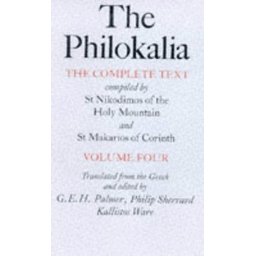 The PhilokaliaThe multi-volume anthology of Eastern Christian writings on prayer and watchfulness - the deep source the Ladder is read alongside.
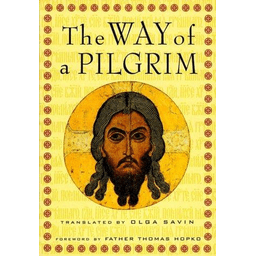 The Way of a PilgrimThe short 19th-century Russian narrative that introduced most modern readers to the Jesus Prayer - a gentle doorway into the tradition the Ladder belongs to.
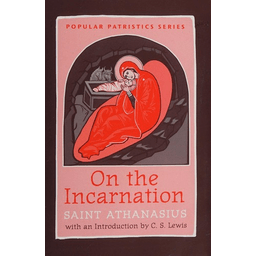 On the IncarnationSt. Athanasius's classic on why God became man - a foundational text of the Christian East, more readable than the Ladder for a first encounter with the Fathers.Ancient Faith MinistriesThe hub for Orthodox podcasts, books, and teaching - a living companion for readers exploring the tradition the Ladder comes from.
Frequently asked questions
What is The Ladder of Divine Ascent, in one sentence?
It is a foundational Eastern Orthodox ascetic classic by St. John Climacus, written around the 7th century at the monastery of Mount Sinai, structured as thirty "steps" of a ladder that chart the spiritual life from renunciation of the world, through the struggle against the passions, toward stillness and love.
Who was St. John Climacus?
A monk and abbot of the monastery at Mount Sinai, traditionally placed around the 6th and 7th centuries. His name - "John of the Ladder" - comes from this book, which the tradition says he wrote at another abbot's request for a guide to the monastic life, drawing on his own decades of ascetic experience.
Why thirty steps?
The book is built on a ladder of thirty rungs, each a chapter and a stage of the spiritual life. The number answers, in the tradition's reading, to the thirty hidden years of Christ's life before his public ministry. The lowest rungs treat renunciation, the long middle the passions and the virtues, the highest rungs stillness, prayer, and the union of faith, hope, and love.
Is The Ladder of Divine Ascent hard to read?
For most newcomers, yes. It was written by a monk for monks, its asceticism is demanding, and its imagery about sin, mourning, and the passions is frank and at times severe by modern lights. Most readers are better served reading an introduction to the tradition first and taking the book slowly, a rung at a time.
Which translation or edition should I read?
Older English translations are public-domain and free but can be heavy going. The two modern editions most often recommended are the Holy Transfiguration Monastery translation (the one many Orthodox readers settle on) and the Paulist Press Classics of Western Spirituality volume - the Colm Luibhéid and Norman Russell translation, with a substantial introduction by Kallistos Ware. As of writing, both run roughly $25-30.
Is The Ladder only for Orthodox Christians or for monks?
It was written within Eastern Orthodox monasticism and is read most fully there - still aloud in monasteries every Great Lent. But it has long drawn interested readers from Catholic, Protestant, and other backgrounds studying the history of Christian ascetic and contemplative spirituality, who do some interpretive work to carry its monastic counsel into ordinary life.
Where should I start if the Ladder feels intimidating?
Begin with The Way of a Pilgrim, the short narrative that gently introduces the tradition, or an accessible overview such as Kallistos Ware's The Orthodox Way. Then come to the Ladder in a modern translation, reading slowly and selectively, ideally with some guidance. The Philokalia is the natural deeper step after that.
Sources & further reading
More Orthodox Christian Books
On the IncarnationThe short 4th-century treatise on why God became man - the one early-Church book modern readers actually finish, and the one C.S. Lewis told everyone to start with. The Orthodox ChurchThe Penguin paperback that has introduced more English readers to Eastern Orthodoxy than any other single book - half history, half doctrine, and still the first title nearly everyone names.
 The Orthodox WayThe slim companion to The Orthodox Church that trades history for the lived path - Kallistos Ware walking a reader through God as Mystery, Trinity, Creator, Man, Spirit, and Prayer, in fewer than two hundred pages.
 For the Life of the WorldAlexander Schmemann's slim, much-loved meditation on sacramental theology - the book that taught a generation to see the whole world as a gift to be received and offered back in thanksgiving.The PhilokaliaThe great Eastern Orthodox anthology on inner watchfulness and the prayer of the heart - eleven centuries of monastic teachers, compiled on Mount Athos, and still the master text of the Jesus Prayer.The Way of a PilgrimThe anonymous 19th-century Russian classic that taught the modern world the Jesus Prayer - a wandering pilgrim, a worn copy of the Philokalia, and one short sentence repeated until it never stops.