- Starting price
- ~$25 hardcover
- Free tier
- No
- Platforms
- Print · Kindle · Web
- Developer
- Zondervan
- Launched
- 2010
- Updated
- May 31, 2026
The verdict
A serious, beautifully assembled daily prayer book that pulls fixed-hour prayer out of the cathedral and into the everyday life of a reader who cares about justice and community. The format is demanding and the social-justice emphasis is unmistakable - but for the right reader, it is the rare prayer book that actually changes how a year feels.
Try Common Prayer ↗Opens commonprayer.net
Common Prayer: A Liturgy for Ordinary Radicals is a daily prayer book - a full year of morning prayers, plus shorter midday and evening prayers, plus a set of occasional liturgies for events from a wedding to a protest. It was published by Zondervan in 2010 and assembled by Shane Claiborne, Jonathan Wilson-Hartgrove, and Enuma Okoro, three writers associated with the new-monastic movement. In a category crowded with single-author daily devotionals and breezy app-based reading plans, it is the unusual entry: a structured, fixed-hour prayer book built for ordinary people who do not live in a monastery.
It is not a devotional in the familiar sense. It is not a how-to on prayer. It is not a study of Scripture. It is the liturgy itself - a daily order of prayer with a call to worship, Scripture readings, a song, prayers of confession and intercession, and a sending. Each morning entry opens by remembering a saint, a martyr, a reformer, or an activist whose life sits on that calendar date, and the readings and prayers fan out from there. Almost every morning ends the same way: turned outward, toward the world the reader is about to walk back into.
The book has quietly become the favorite of college ministries that pray it together before breakfast, of intentional communities that read it aloud in shared houses, of pastors who borrow its liturgies for special services, and of individual readers who wanted the rhythm of historic daily prayer without the steep learning curve of a traditional breviary. That last group - readers who want fixed-hour prayer but found the Divine Office daunting - is the one this review is really for.
✓ The good
- Real fixed-hour structure made approachable - morning, midday, and evening prayer in a single book, with none of the ribbon-juggling a traditional breviary demands
- Rooted in the historic tradition - the prayers, canticles, and church-calendar rhythm draw on centuries of Christian liturgy rather than starting from scratch
- A saint or witness every morning - each day remembers a figure from church history (and from modern justice movements), which doubles as a year-long education
- Beautifully made - Zondervan produced it as a substantial hardcover with two-color printing and printed music, built to sit open on a table
- Genuinely communal - the call-and-response format is designed to be prayed out loud by a group, which few modern devotionals attempt
- Outward-facing - the prayers consistently turn toward the world, the poor, and the reader’s neighbors, which keeps the book from collapsing into private introspection
- Companion formats exist - a pocket edition for travel and a long-running companion website and app extend the book beyond the hardcover
✗ Watch out
- A pronounced justice and peacemaking emphasis - the new-monastic lens runs through the whole book, which resonates strongly with some readers and feels like a mismatch to others
- A full year-long daily commitment - the book is built for sustained fixed-hour practice, and a reader looking for a quick five-minute hit will feel the weight of the structure
- Fixed, written prayers are not every tradition’s habit - readers used to spontaneous or free-form prayer can find the set liturgy stiff at first
- Repetition by design - the daily order repeats its shape, and some readers find the familiarity grounding while others find it monotonous over months
- Heavier than a pocket devotional - the main hardcover is a sit-down-at-a-table book, not a slip-in-a-bag one (the pocket edition addresses this only partly)
- Music and call-and-response shine in a group - a solo reader gets real value but misses some of what the format was built for
Best for
- Readers who want historic fixed-hour prayer without the breviary learning curve
- Intentional communities, shared houses, and small groups praying together
- Christians drawn to a faith expressed through justice, peacemaking, and service
- Anyone who wants the church calendar and the lives of the saints woven into daily prayer
Avoid if
- You want a short, gentle, five-minute daily devotional rather than a full liturgy
- A strong social-justice and activist emphasis is not what you are looking for in prayer
- Written, fixed prayers feel constraining and you prefer spontaneous prayer
- You want a verse-by-verse study of Scripture rather than a prayer order
What Common Prayer is
Common Prayer is a single-volume daily prayer book organized around the calendar year. The heart of it is a morning prayer for every day - a fixed order that moves through a call to worship, Scripture readings, a song or canticle, prayers of confession and intercession, and a closing sending - bracketed by shorter midday and evening prayers that a reader can fold in as the day allows. Following the daily prayers is a section of occasional liturgies: orders for things like a meal, a baptism, a wedding, a funeral, the founding of a community, and acts of public witness. It is the liturgy itself, in order, ready to be prayed.
The three compilers - Shane Claiborne, Jonathan Wilson-Hartgrove, and Enuma Okoro - are writers connected to the new-monastic movement, a contemporary stream that draws on ancient monastic practices (fixed-hour prayer, shared life, hospitality) while emphasizing justice, simplicity, and care for the poor. They drew the bones of the book from the historic Christian prayer tradition and the church calendar, then wove in daily remembrances of saints, martyrs, reformers, and modern figures associated with peacemaking and social action. The result reads less like one author’s devotional and more like a community’s shared prayer book.
Why readers reach for Common Prayer instead of a traditional breviary
The single biggest practical difference between Common Prayer and a traditional breviary or the Book of Common Prayer is that it was built to be picked up cold. A reader who opens the Divine Office or a full Anglican daily office for the first time often faces a real learning curve - antiphons, seasonal propers, multiple ribbons, instructions about what to read when. Common Prayer flattens that. Each day is laid out in a single readable order, front to back, with no cross-referencing required. The fixed-hour tradition is preserved; the navigation tax is mostly removed.
The other defining difference is the lens. This is fixed-hour prayer assembled by people for whom following Jesus is inseparable from justice, peacemaking, and life shared in community - and that emphasis is woven through the whole book, from which witnesses are remembered each morning to which concerns the intercessions name. For readers who already feel that pull, it is the rare prayer book that prays the way they already think. For readers who do not, the emphasis is worth knowing about going in: it is a genuine and intentional flavor, not a neutral one, and it shapes the experience of the year.
The daily office, made usable: morning, midday, evening
The spine of Common Prayer is a complete morning prayer for all 365 days, written as a single uninterrupted order a reader can pray straight through. A typical morning moves from an opening call and response, into the remembrance of the day’s saint or witness, through one or more Scripture readings, a song or psalm, prayers of confession and intercession, the Lord’s Prayer, and a closing sending. Alongside the daily morning prayers sit a set of midday prayers and a set of evening prayers - shorter, repeatable orders meant to mark the noon hour and the close of the day. Together they recreate the ancient rhythm of praying at fixed hours rather than only when the mood strikes.
This sounds like a small thing. In practice it changes the shape of a day. Praying at set hours, from a set order, takes prayer off the list of things a reader has to feel inspired to do and turns it into something closer to a meal or a heartbeat - a return the day is built around. The genius of this particular book is that it delivers that ancient discipline without the apparatus that usually guards it. There are no ribbons to track and no rubrics to decode. A reader who has never prayed a fixed office in their life can sit down on an ordinary Tuesday, open to the date, and pray it correctly on the first try.
A saint, a martyr, or a witness every single morning
Every morning entry opens by remembering a figure whose life sits on that calendar date - and the range is wide on purpose. One day it is an ancient martyr or a medieval monastic; the next it is a Reformation-era reformer; the next a more recent figure associated with peacemaking, civil rights, or care for the poor. The Scripture readings and prayers for the day often pick up a thread from that person’s life. Over a full year, a reader who prays the book daily moves through a kind of rolling survey of Christian history, told not as dates and doctrines but as lives.
The effect is formative in a way a reader does not always notice until months in. Daily prayer in this book is never only about the reader’s own interior weather; it is constantly populated by other people who prayed and acted before. That communal-across-time quality is one of the book’s real gifts, and it is also where its particular emphasis shows most clearly - the roster of remembered witnesses leans toward those known for justice, nonviolence, and solidarity with the poor alongside the classic saints. A reader who loves that emphasis will find the calendar inspiring; a reader who does not will still get a genuine, centuries-spanning education in the company of the faithful.
Occasional liturgies: prayer for the events of an ordinary life
Beyond the daily office, Common Prayer includes a substantial section of occasional liturgies - written orders of prayer for specific moments in the life of a person or a community. These range from the familiar (a liturgy for a meal, for a birthday, for a wedding or a funeral) to ones rarely found in a mass-market prayer book (a liturgy for forming a new community, for moving into a home, for healing, for marking acts of public witness and protest). Each is laid out in the same approachable call-and-response style as the daily prayers, so a group can pray it together with no rehearsal.
For many readers this section is what lifts the book from a personal devotional into a genuine household and community resource. A shared house can use it to mark a move-in; a small group can pray a healing liturgy over a sick member; a campus ministry can borrow a liturgy for a service of remembrance. It reflects the book’s underlying conviction that prayer belongs in the ordinary and public events of life, not only in the quiet morning hour - and it is part of why intentional communities have adopted the book so readily. A solo reader will use this section less, but even alone it is a reminder that the milestones of a life are occasions for prayer.
Pricing
Hardcover
~$25
The standard full edition from Zondervan - two-color interior, printed music, the complete year of daily and occasional liturgies. The copy most readers own.
Pocket Edition
~$15
A smaller, lighter abridgement of the daily prayers for travel and on-the-go use. Pairs well with the full hardcover at home.
Kindle
~$15
The full text on Kindle. Convenient and searchable, though the printed music and table-friendly layout read better on paper.
Companion website / app
Free / varies
A long-running companion site (commonprayer.net) and app surface the day’s prayer online. Coverage and upkeep vary; treat it as a supplement, not a replacement.
The main hardcover runs around $25, which is on the higher end for a prayer book but reflects what you are getting: a substantial, two-color, music-printed volume designed to be prayed from for years rather than read once and shelved. For most buyers, this is the right tier - it contains the full year of daily prayers, the midday and evening offices, and the complete set of occasional liturgies, and it holds up to being left open on a table every morning.
The pocket edition at roughly $15 is the travel companion. It abridges the daily prayers into a lighter, smaller book that actually fits in a bag, which solves the main physical complaint about the hardcover. Many readers who pray the book daily end up owning both - the full hardcover for home and the pocket edition for the road.
Kindle, also around $15, is the cheapest digital way in and is fully searchable, though the printed music and the table-friendly two-column layout of the print edition translate imperfectly to a screen. A long-running companion website (commonprayer.net) and an app have, over the years, surfaced the day’s prayer online for free; coverage and upkeep have varied across the book’s life, so it is best treated as a helpful supplement rather than a guaranteed substitute for the book.
There is no free first-party edition of the complete text and no perpetual sample beyond what retailers preview. For a full-year liturgical book that has stayed in print since 2010, that is unsurprising.
Where Common Prayer falls behind
No instruction on prayer itself. The book is the liturgy, not a teaching about it - there is no introduction to method, no theology-of-prayer chapter, no coaching on how to pray when you do not feel like it. A reader who wants to understand prayer before practicing it will want to pair this with a book like Tim Keller’s Prayer; Common Prayer assumes you are ready to begin and simply hands you the order.
A built-in emphasis that is a feature for some and a mismatch for others. The justice, peacemaking, and new-monastic flavor is woven through the whole book - the witnesses remembered, the concerns named, the occasional liturgies chosen. Readers who share that orientation will find it the book’s greatest strength; readers who do not, or who want their prayer life kept separate from social concern, should know the emphasis is constant and intentional, not something that can be skipped past.
A real year-long commitment. This is fixed-hour prayer, and it rewards sustained daily practice rather than occasional dipping. A reader looking for a short, low-effort devotional will feel the weight of the structure and may find the format more than they wanted. The discipline is the point - but it is a discipline, and it asks for buy-in.
Fixed written prayers will not suit every habit. For readers raised on spontaneous, free-form, or extemporaneous prayer, praying a set liturgy from a page can feel stiff or impersonal at first. Many such readers grow into it and come to value the structure; some never fully warm to it. The print or Kindle sample will tell you quickly which group you are in.
It shines brightest in community. The call-and-response format and the printed music were built for a group praying out loud together. A solo reader still gets substantial value from the daily office and the readings, but parts of the book are quieter and less alive when there is no one to respond - a gap worth knowing about if you intend to pray it alone.
Common Prayer vs. the Book of Common Prayer vs. The Valley of Vision
These three turn up together whenever someone wants to move from spontaneous prayer toward something more structured, but they do very different work. Common Prayer is a modern, approachable daily office with a new-monastic, justice-minded emphasis - fixed-hour prayer for ordinary people, assembled from the tradition but freshly arranged. The Book of Common Prayer is the historic Anglican liturgical standard, the centuries-old ancestor that gives the Western Protestant world much of its public worship and daily office; it is broader, more formal, and more tightly bound to a specific tradition’s rites. The Valley of Vision is not a daily office at all - it is a thematically arranged collection of Puritan-Reformed prayers, with no calendar, no call-and-response, and no fixed hours.
Different strengths. Common Prayer is better at getting a complete beginner praying a fixed office on the first morning, and at carrying an outward, communal, justice-shaped sensibility through the year. The Book of Common Prayer is broader and more authoritative - the full sweep of historic Anglican worship, daily office, sacramental rites, psalter, and all, and the natural choice for a reader who wants the actual liturgical inheritance. The Valley of Vision is better at supplying you with dense, Christ-saturated words to pray when your own have gone thin, with none of the structure or commitment of an office.
Most readers who go deep into this category eventually keep more than one. Common Prayer is the one a household or a beginner reaches for to establish a daily rhythm. The Book of Common Prayer is the one a reader graduates into who wants the full historic liturgy. The Valley of Vision is the one kept on the desk and opened at random when the heart needs language. If you specifically want fixed-hour prayer that is easy to start and oriented toward the world, Common Prayer is the one built for exactly that.
The bottom line
Common Prayer is the most approachable on-ramp to historic fixed-hour prayer in print - a full year of daily and occasional liturgies that takes the ancient rhythm of morning, midday, and evening prayer out of the cathedral and into an ordinary reader’s kitchen table. Its new-monastic emphasis on justice, peacemaking, and community is woven through the whole book; that is its great strength for readers who share it and the main thing to weigh for readers who do not. It will not teach you how to pray, and it asks for a real year-long commitment. But for a beginner who wants the daily office without the breviary’s learning curve, or for a community that wants to pray out loud together, the hardcover at around $25 is the rare prayer book that can reshape how a whole year feels.
Alternatives to Common Prayer
 The Valley of VisionArthur Bennett’s collection of Puritan prayers. Not a daily office, but the prayer book most often kept alongside one for dense, Christ-centered language.
 Lectio 365A free daily-prayer app with morning and evening guided sessions. The app-native alternative for readers who want structure on a phone rather than in a book.
 Prayer (Tim Keller)Keller’s comprehensive theological and pastoral treatment of prayer. The book to pair with Common Prayer if you also want to understand the practice, not just do it.
Frequently asked questions
What exactly is Common Prayer: A Liturgy for Ordinary Radicals?
It is a daily prayer book published by Zondervan in 2010, assembled by Shane Claiborne, Jonathan Wilson-Hartgrove, and Enuma Okoro. It contains a full year of morning prayers, plus shorter midday and evening prayers, and a section of occasional liturgies for events like meals, weddings, funerals, healing, and public witness. It draws on the historic Christian prayer tradition and the church calendar, with a distinct emphasis on justice, peacemaking, and community.
Do I need to be part of a community to use it?
No. The book is built so a group can pray it aloud together using its call-and-response format, and that is where it shines most. But a solo reader still gets substantial value from the daily office, the Scripture readings, and the remembrance of a saint or witness each morning. You will simply use the call-and-response and printed music less when praying alone.
How is it different from the Book of Common Prayer?
The Book of Common Prayer is the centuries-old Anglican liturgical standard - broader, more formal, and tied to a specific tradition’s full set of rites. Common Prayer is a modern, more approachable daily office that draws on the wider historic tradition and arranges it for ordinary people with no liturgical background, and it carries a deliberate new-monastic, justice-minded sensibility. Many readers begin with Common Prayer and move toward the Book of Common Prayer later if they want the fuller historic liturgy.
Is there a strong political or social-justice slant?
There is a clear and intentional emphasis on justice, peacemaking, and care for the poor, reflecting the new-monastic background of its compilers. It shows in which witnesses are remembered each day, in the concerns the prayers name, and in some of the occasional liturgies. Readers drawn to that orientation tend to love the book; readers who are not should know the emphasis runs throughout and is part of the book’s identity rather than an occasional aside.
Which edition should I buy first?
For most readers, the standard hardcover at around $25 is the right starting point - it has the complete year of daily prayers, the midday and evening offices, and the full set of occasional liturgies, and it is built to be prayed from for years. The pocket edition at roughly $15 is a lighter abridgement worth adding for travel, and many daily users eventually own both.
Is the text available for free online?
A long-running companion website (commonprayer.net) and an app have, across the book’s life, surfaced the day’s prayer online, often at no cost. Coverage and upkeep have varied over the years, so it is best treated as a helpful supplement rather than a guaranteed free version of the complete book. There is no official free edition of the full printed text.
Will it work if I am used to praying spontaneously?
It can, but it is an adjustment. Praying a fixed, written liturgy is a different habit from extemporaneous prayer, and it can feel stiff at first to readers raised on free-form prayer. Many such readers grow to value the structure precisely because it carries them on days when words do not come. If you are unsure, the print or Kindle sample will give you a quick sense of whether the fixed-prayer format fits how you pray.
Sources & further reading
More Devotional Books
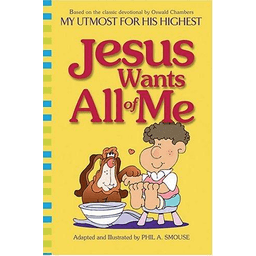 My Utmost for His HighestThe 90-year-old daily devotional that still outsells most new releases - short, dense, and famously unwilling to let a reader off the hook.
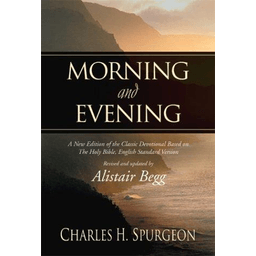 Morning and EveningThe 1865 twice-daily devotional from the Prince of Preachers - still in print, still in the morning routine of millions, and still doing something almost no other devotional even tries.For the Love of GodA two-volume daily devotional that does something almost no other devotional attempts: it walks you through the whole Bible in a year and teaches you to read it as one connected story - and Crossway gives the entire text away for free.The Songs of JesusTim and Kathy Keller’s 365-day walk through every Psalm has quietly become the daily-practice companion to Keller’s Prayer - a short passage, a brief reflection, and a written prayer for each morning of the year.
 Streams in the DesertThe hundred-year-old daily devotional that gets handed to people in the hospital, at the funeral, after the diagnosis - and the one question worth answering before you buy it.
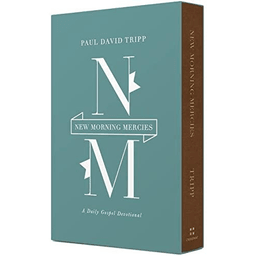 New Morning MerciesA 365-day devotional built on one stubborn idea: the gospel is not just the door you walked through, it’s the air you keep breathing - and Paul David Tripp will not let you forget it.