- Starting price
- ~$16 paperback
- Free tier
- No
- Platforms
- Print · Kindle
- Developer
- Alfred A. Knopf
- Launched
- 1994
- Updated
- May 31, 2026
The verdict
Crossing the Threshold of Hope is the rare book in which a sitting Pope answers a journalist’s blunt questions in his own voice. John Paul II takes on the hard ones - does God exist, why does He stay hidden, why is there suffering, what about other religions, is there life after death - and answers as a pastor and philosopher rather than as a press office. It presents the Catholic faith from the Pope’s own vantage, and it is written for a broad audience rather than a scholarly one. As a direct, accessible window into how one of the 20th century’s most consequential religious figures thought, it has few equals.
Try Crossing the Threshold of Hope ↗Opens penguinrandomhouse.com
Crossing the Threshold of Hope has quietly become the book people reach for when they want to hear a Pope think out loud rather than read about him. It began as a television project that fell through: the Italian journalist Vittorio Messori had been granted an unprecedented interview with Pope John Paul II for Italian state television, the schedule collapsed, and the Pope - rather than let the questions go - answered them in writing instead. Messori’s questions, sharp and sometimes pointed, came back with the Pope’s own written responses, and the result was published in 1994 as a book that landed in dozens of languages at once and became an international bestseller.
It is not an encyclical and it is not a catechism. It does not issue teaching from on high in formal church language. It does not hide behind committees or qualifications. It does not dodge the questions a skeptic would actually ask. Messori puts the hard ones directly - why does God permit suffering, why does He seem so silent, what is the Catholic Church to say to Buddhists and Muslims and Jews, is the talk of eternal life anything more than wishful thinking - and the Pope answers them one at a time, as a man who had been a philosophy professor, a parish priest under two totalitarian regimes, and then the head of a global church. The voice is personal, unhurried, and unmistakably his own.
The book presents the Catholic faith from the Pope’s own vantage - it is John Paul II explaining what he believes and why, as the leader of the Catholic Church, not a neutral comparison of religions. That is the point of the book and the source of its interest: readers get the questions a secular journalist would press, met by the considered answers of the man who held the office. The title comes from the Pope’s own recurring exhortation, drawn from his first words as Pope - "Be not afraid" - an invitation to cross the threshold of fear into hope. It remains one of the most accessible doorways into how John Paul II thought, and it has been read far beyond Catholic readers since it appeared.
✓ The good
- A sitting Pope answering hard questions in his own voice - a genuinely rare document, not a ghostwritten statement or a formal teaching text
- Built around a skeptic’s questions - Messori presses the things people actually wonder about (suffering, God’s silence, other religions, eternal life), which keeps the book grounded and direct
- Accessible to a broad audience - written for ordinary readers, not theologians, by a Pope who had spent years as a teacher and a parish priest
- Covers the big questions in one short volume - the existence and hiddenness of God, prayer, suffering, salvation, other faiths, and hope all get a chapter
- A window into a historic figure - John Paul II shaped the late 20th century, and the book lets readers hear how he reasoned, in plain terms
- Personal and pastoral in tone - the Pope often answers as a pastor speaking to a worried person rather than as an institution issuing a ruling
- An on-ramp to his larger thought - readers who connect with it often go on to his encyclicals and his more substantial philosophical and theological writing
✗ Watch out
- It presents the Catholic faith from the Pope’s own vantage - an affirming statement of belief, not a neutral comparative survey, which a reader looking for even-handed weighing should know going in
- The interview frame is loose - because the Pope answered in writing rather than live, some replies read more like short essays than back-and-forth dialogue, and a few questions get more direct answers than others
- Broad rather than deep - with this many large questions in one short book, each gets a thoughtful overview rather than an exhaustive treatment
- Occasionally philosophical - the Pope was a trained philosopher, and a few passages reason at a level a casual reader has to slow down for
- Tied to its moment - written in the early 1990s, it carries the concerns and references of that period, and some context will feel dated to a reader today
Best for
- Readers curious how Pope John Paul II thought, in his own words
- Anyone wanting the big questions of faith answered directly and accessibly
- Catholics seeking one short book that gathers the Pope’s pastoral thinking
- Non-Catholics who want a clear statement of belief from a major religious figure
Avoid if
- You want a neutral comparison of religions rather than one figure’s convictions
- You want a systematic reference to Catholic teaching - that is the Catechism
- You want deep, specialist treatment of a single question rather than a survey
- You expect a live, back-and-forth interview rather than written answers
What Crossing the Threshold of Hope is
Crossing the Threshold of Hope is a book-length set of answers given by Pope John Paul II to questions posed by the Italian journalist Vittorio Messori, published by Alfred A. Knopf in 1994. It grew out of a planned television interview that could not be filmed; rather than abandon the project, the Pope responded to Messori’s questions in writing, and those questions and answers became the book. It is organized as a series of chapters, each built around one of Messori’s questions - on the existence and hiddenness of God, on prayer, on why God permits suffering, on salvation and other religions, on the meaning of hope, and on eternal life - answered in the Pope’s own voice.
It is a presentation of the Catholic faith from the Pope’s own vantage. John Paul II is not attempting a neutral survey that weighs Catholicism against other positions; he is explaining what he believes and why, as the head of the Catholic Church, to a broad worldwide audience. The tone is pastoral and personal rather than formal and institutional - closer to a thoughtful conversation than to an official teaching document. It is best understood as one historic figure’s accessible answers to the perennial questions about faith, not as a systematic theology or a reference work, and it has been read widely beyond Catholic readers since publication.
Why readers reach for this book
There is almost no other book like it. Popes write encyclicals, exhortations, and formal teaching documents - careful, weighty, written in the measured voice of the office and usually with the help of theologians and the machinery of the Vatican. Crossing the Threshold of Hope is something else: a Pope answering, in the first person, the kind of blunt questions a working journalist would actually ask. Vittorio Messori does not lob softballs. He presses on God’s silence, on suffering, on whether other religions are simply wrong, on whether eternal life is more than consolation - and the Pope takes each one head-on. The frame is what makes the book; it forces a global religious leader to speak plainly to ordinary readers’ real doubts.
The result works for two kinds of reader at once. A Catholic reader hears their own tradition explained warmly and personally by the man who led it, with the pastoral instincts of someone who had been a parish priest before he was a Pope. A reader from another tradition - Protestant, Orthodox, Latter-day Saint, or simply curious - gets a clear, direct statement of how this particular figure understood the largest questions, in his own words rather than filtered through commentators. John Paul II is plainly explaining and commending what he believes; he is not pretending to neutrality. Knowing that, many readers find the personal, first-person window more illuminating than a detached survey would be.
The interview that became a book: Messori’s questions, the Pope’s answers
The book’s defining feature is its origin and its structure. Vittorio Messori, a prominent Italian journalist and writer, had been granted a rare interview with John Paul II; when the planned broadcast fell through, the Pope chose to answer Messori’s questions in writing rather than let them go unanswered, an unusual decision that produced an even more unusual book. Each chapter is anchored to one of Messori’s questions, and the questions themselves are pointed - the kind a thoughtful skeptic, not a deferential admirer, would put to a Pope. That framing keeps the book honest and concrete; it is organized around real doubts rather than around a curriculum.
Because the Pope answered in writing rather than live, the "interview" is looser than the label suggests. Some chapters read less like rapid back-and-forth and more like short, considered essays prompted by a question, and the give-and-take of a real conversation is muted. For most readers that is a fair trade: the written form let the Pope answer carefully and at length, and the result is more substantial than an off-the-cuff exchange would have been. But a reader expecting a live, combative interview should know that this is a Pope taking his time on the page, with Messori’s questions setting the agenda.
The hard questions: suffering, God’s silence, other religions, eternal life
What gives the book its staying power is that it does not flinch from the questions people actually struggle with. Messori asks why God, if He exists, stays so hidden; why a good and powerful God permits suffering and evil; what the Catholic Church can possibly say about salvation to the followers of other great religions; and whether the Christian hope of eternal life is anything more than a comforting story. These are the questions that keep people up at night and drive others away from faith entirely, and the Pope takes them in turn rather than around.
His answers are pastoral as much as philosophical. On suffering he speaks as someone who lived through the Nazi occupation and Soviet domination of Poland and lost his family young, not as a theorist; on God’s hiddenness and on hope he writes as a man trying to console as well as to explain. On other religions and on salvation he sets out the Catholic understanding plainly - explaining what the Church holds and why, as a Catholic who holds it, rather than weighing it neutrally against other positions. A reader from another tradition will find these chapters the clearest statement of how John Paul II himself understood the contested questions, in his own terms.
"Be not afraid": hope as the book’s organizing theme
The title is not decorative. "Be not afraid" was among John Paul II’s first public exhortations as Pope, and the whole book is shaped by the conviction behind it - that the deepest human temptation is fear, and that faith is an invitation to cross the threshold of that fear into hope. Messori’s hardest questions, in the Pope’s handling, keep circling back to this: the existence of God, the problem of suffering, the silence of heaven, and the prospect of death are all, in the end, occasions either for fear or for hope, and the book is a sustained argument for choosing hope.
That organizing theme is part of why the book reached so far. It is not primarily a work of apologetic point-scoring; it is, in its own register, an act of encouragement from a religious leader to a worried world, written in the early 1990s as the Cold War ended and a new and uncertain era began. The Pope is unmistakably commending his own faith as the ground of that hope - he is an advocate, not a neutral guide - but the warmth of the appeal is much of what readers across traditions responded to. It reads less like a ruling handed down than like a steadying word offered.
Pricing
Paperback
~$16
The standard Knopf trade paperback. The copy most readers own and the one quotations are usually keyed to.
Kindle / ebook
~$12
Searchable and highlight-syncs across devices - handy for a book organized around discrete questions you may want to find again.
Used paperback
~$3-8
Very widely available secondhand - it was an enormous bestseller in 1994, so used copies are everywhere and cheap.
Hardcover (first edition)
~$15-25
The original 1994 Knopf hardcover, still easy to find used; a sturdier copy for readers who prefer hardback.
Crossing the Threshold of Hope is not free. It was an enormous bestseller when Knopf published it in 1994, so the easiest and cheapest way in is a used copy - paperbacks and the original hardcover turn up at library sales, thrift stores, and online for just a few dollars, which is how many readers acquire one. A new trade paperback runs around sixteen dollars and is the everyday default, the edition most quotations and page references are keyed to.
The Kindle edition runs a few dollars under the paperback, with highlighting that syncs across devices - useful for a book built around discrete questions you may want to find and revisit. Because each chapter answers a specific question, having the text searchable is more helpful here than it would be for a continuous narrative.
The original 1994 Knopf hardcover is still easy to find used, often in the same price range as a new paperback, and it is the natural pick for a reader who simply prefers hardback or wants a sturdier copy. Most readers do not need anything beyond the paperback, which is the balanced default. Prices drift, so treat every figure here as approximate and check the current edition before buying.
Where Crossing the Threshold of Hope falls behind
Not a neutral survey. Crossing the Threshold of Hope presents the Catholic faith from the Pope’s own vantage - that is its whole reason for existing, not a flaw, but it means a reader hoping for an even-handed comparison of religions is reaching for the wrong book. John Paul II is explaining and commending what he believes. Read alongside resources from other traditions if a balanced weighing is what you are after.
A loose interview. Because the Pope answered Messori’s questions in writing rather than live, the book is less a dialogue than a set of considered essays prompted by questions. Some answers are more direct than others, and the spark of a real back-and-forth is missing. A reader expecting a sharp, live exchange should adjust expectations; what they get is a Pope thinking carefully on the page.
Breadth over depth. Taking on the existence of God, suffering, prayer, salvation, other religions, and eternal life in one short book means each gets a thoughtful overview rather than a specialist’s deep dive. That is the right call for a book pitched at a broad audience. It does mean Crossing the Threshold of Hope is a starting point on any given question, and a reader who wants to go deep will need to read further.
Tied to its moment. The book was written in the early 1990s, and it carries the references and concerns of that period - the end of the Cold War, the shape of the world as it then looked. Much of what the Pope says is timeless, but some context will read as dated to someone picking it up today. That is worth knowing, not a defect; it simply situates the book in its era.
Crossing the Threshold of Hope vs. Catholicism vs. Introduction to Christianity
These three are a natural shortlist for a reader who wants the Catholic faith from inside the tradition, and they do genuinely different jobs. Crossing the Threshold of Hope (John Paul II, 1994) is the personal, question-driven one - a Pope answering a journalist’s hard questions about faith, suffering, and hope in his own pastoral voice, pitched at the broadest possible audience. Catholicism (Robert Barron, 2011) is the accessible, beauty-first tour - it reads the faith through art, architecture, and the saints and is built as a guided introduction, especially for readers watching its companion film series. Introduction to Christianity (Joseph Ratzinger, later Pope Benedict XVI) is the theologian’s classic - a profound, demanding meditation on the Creed that rewards a reader willing to think hard.
Different strengths. John Paul II is the most personal and the most direct - the book to read if you want to hear how one historic figure answered the questions a skeptic would actually ask. Barron is the most inviting and the most visual - the place to start if you want a wide, well-written tour of the whole faith. Ratzinger is the deepest - the book for a reader who already has the basics and wants serious theological substance on what the Creed claims. If you want a Pope’s plain answers to the hard questions, it is John Paul II. If you want a broad, beautiful introduction, it is Barron. If you want to think at the level of a major theologian, it is Ratzinger.
All three present the Catholic faith from within the tradition. John Paul II writes in the first person as the head of the Church; Barron writes as a teacher and bishop for the broadest audience; Ratzinger writes as one of the era’s most significant theologians. A reader from another tradition can learn a great deal from any of them about how Catholics understand their own faith, in Catholic terms.
The bottom line
Crossing the Threshold of Hope is a genuinely unusual book: a sitting Pope answering, in his own voice, the questions a skeptical journalist would press rather than the ones a press office would prefer. John Paul II takes on God’s silence, the problem of suffering, other religions, and the hope of eternal life as a philosopher and a pastor at once, and he does it in language a broad readership can follow. It presents the Catholic faith from the Pope’s own vantage, not as a neutral survey, and it is broad rather than deep by design. But if you want to hear how one of the 20th century’s most consequential religious figures actually thought about the biggest questions, this is still the book to read.
Alternatives to Crossing the Threshold of Hope
 CatholicismBishop Robert Barron’s art-soaked, accessible tour of the whole Catholic faith - the broad, beautiful introduction to set beside the Pope’s answers.
 Introduction to ChristianityJoseph Ratzinger’s (later Benedict XVI) classic meditation on the Creed - the deep theological end of what John Paul II introduces in plain terms.
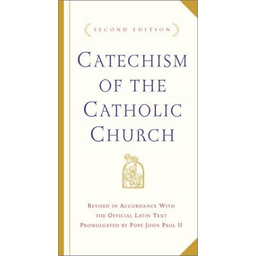 Catechism of the Catholic ChurchThe Church’s own comprehensive, systematic reference - where to look up exactly what the Catholic Church teaches on any point.
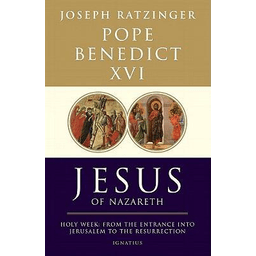 Jesus of NazarethPope Benedict XVI’s study of the Gospels - another Pope writing accessibly for a broad readership, focused squarely on the person of Jesus.
Frequently asked questions
What is Crossing the Threshold of Hope about?
It is a book of answers Pope John Paul II gave, in writing, to questions posed by the Italian journalist Vittorio Messori, published in 1994. It takes on the big questions of faith - does God exist, why is He hidden, why is there suffering, what about other religions, is there eternal life - and the Pope answers each one in his own pastoral and philosophical voice. The title echoes his recurring exhortation, "Be not afraid."
How did the book come about?
Vittorio Messori had been granted a rare television interview with John Paul II. When the planned broadcast could not happen, the Pope chose to answer Messori’s questions in writing rather than abandon the project, and those written questions and answers became the book. It is why the "interview" reads at times more like a series of short essays than a live exchange.
Is it a neutral, comparative book or a Catholic one?
It presents the Catholic faith from the Pope’s own vantage. John Paul II is explaining and commending what he believes as the head of the Catholic Church - not weighing it neutrally against other traditions. That is the book’s design. A reader from any background can learn a great deal from it about how the Pope understood the largest questions, as long as they read it for what it is.
Is the book good for non-Catholic readers?
Many non-Catholics find it valuable precisely because it offers a clear, first-person statement of how a major religious figure understood faith, suffering, other religions, and hope - in his own words rather than filtered through commentators. If you want a direct account of one historic leader’s convictions, it serves that purpose well. If you want an even-handed comparison of several traditions, pair it with resources from those traditions.
Is it hard to read?
It is written for a broad audience and is mostly accessible, since the Pope had spent years as a teacher and parish priest. A few passages reason at a philosophical level - John Paul II was a trained philosopher - and ask the reader to slow down, but the book as a whole is pitched at ordinary readers rather than scholars, and most move through it comfortably.
How is it different from a Vatican document or encyclical?
An encyclical is a formal teaching document written in the measured voice of the office. Crossing the Threshold of Hope is a Pope answering a journalist’s questions in the first person, in a personal and pastoral tone - closer to a thoughtful conversation than to official teaching. It is one of the most accessible ways to hear how John Paul II thought, rather than what the Church formally teaches on a point, which is the Catechism’s job.
Which edition should I buy?
The standard paperback (around $16) is the right default for most readers, and used copies are easy to find for just a few dollars since the book was a huge bestseller. The Kindle edition (a little less) is handy because the book is organized around discrete questions you may want to search. The original 1994 Knopf hardcover is also widely available used if you simply prefer hardback.
Sources & further reading
More Catholic Books
Catechism of the Catholic ChurchThe official, full-length compendium of Catholic doctrine - four pillars, ~2,865 numbered paragraphs, free online at the Vatican, and the reference nearly every other Catholic resource quotes. Compendium of the Catechism of the Catholic ChurchThe official 598-question summary of the full Catechism - Catholic doctrine in a portable question-and-answer format, with the complete text free at vatican.va.CatholicismBishop Robert Barron's richly illustrated tour of the Catholic faith - the companion book to the Word on Fire documentary series, written to walk a curious reader from Jesus to the last things.Introduction to ChristianityThe 1968 lectures that a young Joseph Ratzinger - later Pope Benedict XVI - turned into one of the 20th century's most cited works of Catholic theology, built section by section on the Apostles' Creed.Jesus of NazarethA sitting pope's personal, scholarly reading of the Gospels - three volumes that engage modern biblical criticism while searching for the Jesus the Gospels actually present.
 Story of a SoulThe spiritual autobiography of a young Carmelite nun who died at 24 - the small, warm book that taught a century of readers a path of holiness through little things done with great love.