- Starting price
- Free (public domain)
- Free tier
- Yes
- Platforms
- Print · Kindle · Web (free)
- Developer
- Various / Public domain
- Launched
- 1935
- Updated
- May 31, 2026
The verdict
God Calling is the quiet 1930s ancestor of the modern first-person devotional - short, tender, and written as messages two anonymous women believed they received from Jesus. Beloved for ninety years and approached cautiously by some for the same reason. Whether it belongs on your nightstand depends on how you read a book written in that voice.
Try God Calling ↗Opens en.wikisource.org
God Calling has quietly outlasted almost everything published alongside it. First released in 1935 and never out of print since, it is the small daily devotional that sits in church lending libraries, second-hand shops, and grandparents' nightstands across the English-speaking world. Most readers meet it the way devotionals are usually met - somebody who loved it pressed a battered copy into their hands during a hard stretch and said, "read a page a day." Nine decades on, people still do.
It does not hide what it is. It doesn't disguise the voice. It doesn't add a scholarly frame. It doesn't apologize for its origin - a daily one-page entry written, as the editor A.J. Russell explains in his preface, by two anonymous Englishwomen who described sitting quietly each day, listening in prayer, and writing down what they believed Jesus was saying to them, in his own first-person voice. That single editorial decision is the entire conversation around this book, the same way it would later be the entire conversation around Sarah Young's Jesus Calling, which Young has named God Calling as an inspiration for.
This review tries to do what the internet tends not to do with a book like this: take both responses seriously. The warmth readers feel toward it is real, and decades of devotion testify to it. The caution other readers feel about a book written in the voice of Christ is also real, and worth naming plainly. We will lay out what the book is, how it reads, who wrote it and how it came to be, where the conversation about its format lives, and who is most and least likely to be helped by it. The conclusion is yours to draw.
✓ The good
- Genuinely tender and consoling - the gentle, intimate register is why the book has stayed in print for ninety years and across dozens of editions
- Very short daily entries - usually a single short paragraph with a title and a date, the kind of thing an exhausted or grieving reader will actually finish in two or three minutes
- Each entry closes with a brief scripture reference, pointing the reader back toward the Bible itself
- Freely and legally available - the text is in the public domain in many editions, readable online at no cost, with inexpensive print and ebook versions for those who want a physical copy
- A genuine piece of devotional history - the acknowledged forerunner of the modern first-person devotional, including Jesus Calling, which makes it interesting to read on its own terms
- Themes of trust, stillness, and dependence land softly - readers in anxious or weary seasons often describe it as the book that finally stayed on the nightstand for a whole year
✗ Watch out
- The first-person "Jesus speaking" voice is the central thing to weigh - readers across several traditions warmly embrace it, while others prefer devotionals that point to Scripture rather than speak as Christ
- The 1935 idiom can feel dated - "thou," "ye," and an early-twentieth-century English cadence that some readers find quaint and others find a barrier
- Gentle, sentimental tone throughout - the emotional register stays close to comfort and reassurance, with little lament, doctrine, or wrestling
- Scripture is referenced briefly at the close of an entry rather than expounded - the body of each day is the listeners' own prose, which is easy to conflate with the verse it points to
- Not a Bible study - daily use can quietly substitute for, rather than supplement, time in Scripture itself
- Edition quality varies widely - because the text is public domain, print copies range from carefully typeset to hastily assembled
Best for
- Readers in seasons of grief, illness, or anxiety who want a short, gentle daily anchor
- Readers curious about the historical roots of the modern first-person devotional, including Jesus Calling
- People rebuilding a devotional habit who want something they can finish in a few minutes
- Gift-givers wanting a warm, inexpensive, time-tested daily reading for a friend who does not read theology
Avoid if
- You prefer devotionals that point to Scripture rather than speak in the first-person voice of Jesus
- You want verse-by-verse exposition or a guided Bible study - this is not that
- Early-twentieth-century "thee and thou" English tires you out rather than charming you
- You want a devotional with doctrinal weight, lament, or sustained wrestling rather than gentle reassurance
What God Calling is
God Calling is a 365-day devotional first published in 1935 and edited by the British journalist A.J. Russell. The actual writing is credited to "Two Listeners" - two anonymous Englishwomen who chose never to publish their names. Each day is a single short page: a titled reflection, usually one or two compact paragraphs, written in the first-person voice as if Jesus is speaking directly to the reader, closing with a brief scripture reference. As with most daily devotionals, the architecture is simply the calendar - January 1 through December 31, one entry a day.
According to Russell's preface, the two women had begun a practice of sitting in quiet prayer together and writing down the words they believed they were receiving, and Russell - already known for the bestselling spiritual book For Sinners Only - helped shape and publish the collection. The book became a steady bestseller and has remained continuously in print since, spawning companion volumes such as God at Eventide. Because the original text has passed into the public domain in many places, it now circulates in a wide range of editions, from inexpensive paperbacks to carefully produced gift bindings, as well as free online.
Why so many everyday readers have kept reaching for God Calling
The honest answer is the same one that explains its descendants: the format and the tone. A single short page, written in a voice that addresses the reader directly, is exactly the kind of thing a tired or grieving person can actually pick up at the start or end of a day and finish. The entries are brief - often under two hundred words - in warm, plainspoken sentences (period idiom aside), and the reader is the one being spoken to. For readers who have bounced off longer, denser devotionals, that brevity is the whole appeal.
The second answer is the emotional register. The recurring themes - trust, stillness, dependence, the steady reassurance of presence in fear or hardship - match how many readers actually feel when they reach for a devotional in a low season. The book asks very little of the reader on a hard day; it mostly offers comfort. That is either its great gift or its central limitation, depending on what a reader wants a devotional to do. Either way, it is the quality that has carried the book across ninety years and into the hands of readers who never knew its origin.
The one-page-a-day format: why it has worked for ninety years
Open God Calling to today's date and you get the same shape every time - a short title, a date, one or two compact paragraphs of devotional prose, and a brief scripture reference at the close. The whole thing takes two or three minutes to read. That brevity is not an accident of the era; it is the reason the book travels so well. It fits in a hospital waiting room, a lunch break, the last few minutes before sleep. The constraint is the point, and it is the same constraint that later first-person devotionals would build their whole appeal around.
In practice, this is the feature that has kept the book in print across generations. Most readers do not sustain devotionals that demand twenty focused minutes a day; they sustain the one they can finish before the household wakes up. God Calling fits in the smallest possible window of a day, which is why so many readers who abandoned longer books describe this as the one that stayed by the bed for a full year. The fair counterpoint is that two minutes of someone else's prose is not the same act as reading the Bible itself. The book points to Scripture with its closing references; it does not contain or unpack it. Used one way, it is a doorway. Used another, it can quietly become a substitute.
The first-person voice: the heart of the conversation
This is the feature that defines the book and the discussion around it. Every entry is written as a direct first-person message - words of reassurance, instruction, and comfort, phrased as if spoken by Jesus to the reader. In the preface, A.J. Russell describes how the two anonymous writers arrived at the material: through a daily practice of sitting quietly, listening in prayer, and writing down what they believed they were being given, then setting it on the page in that first-person voice. The literary result - Christ speaking in the first person, every day for a year - is the device that makes the book what it is.
Readers respond to that device in two broad ways, and both are worth stating plainly and without adjudication. Many readers - across a range of Christian traditions, including those who affirm that God still speaks - embrace the first-person voice warmly, receiving it as an intimate and encouraging way into prayer, and they have done so for decades. Other readers approach the "received messages" origin and the first-person-of-Jesus framing with caution, preferring devotionals that point to Scripture and speak about Christ rather than as him; for them the format is precisely the thing to weigh before starting. The aim here is not to settle which response is right. It is to make clear that the voice is the book, and a reader should know going in that this very feature is what readers have responded to in such different ways for ninety years.
The "Two Listeners" and A.J. Russell: how the book came to be
The two authors chose anonymity and kept it; their names were never published, and they are known to readers only as the "Two Listeners." What is recorded, in Russell's preface and in the book's own framing, is the practice behind it: two Englishwomen, friends in difficult financial and personal circumstances during the early 1930s, who began meeting to pray and to write down what they sensed in those quiet times. The material accumulated into a year's worth of short daily entries. Their decision to stay unnamed has meant the book has always been read for its content rather than its authors' reputations.
A.J. Russell, the editor, was a British newspaperman and the author of For Sinners Only, a bestselling account of the Oxford Group spiritual movement of the era. He brought the Two Listeners' writings to print and wrote the framing preface that has accompanied the book ever since. That 1930s context matters for reading God Calling well: the gentle idiom, the emphasis on quiet listening and daily trust, and the absence of any claim to scholarly or formal authority all belong to the devotional world the book came out of. Readers who keep that origin in view tend to read the book on its own terms - a tender daily companion from a particular time and practice, rather than a reference work.
Pricing
Free (public domain / web)
Free
The text is in the public domain in many editions and can be read online at no cost. The simplest way to sample the book before deciding whether the voice and tone are for you.
Kindle / ebook
~$2-5
Inexpensive e-book editions with date navigation. Convenient for travel or for reading a single entry on a phone; quality of typesetting varies by publisher.
Paperback
~$10
The standard print edition most readers picture - small, lightweight, easy to keep by the bed. Editions differ in layout and binding because the text is public domain.
Gift / hardcover edition
~$15-18
Cloth- or leather-look bound editions with ribbon markers, marketed as gift copies. The version most often given as a get-well or condolence present.
There is, unusually for a book, a genuine free tier - God Calling has passed into the public domain in many editions, and the full text can be read online at no cost. For a reader simply wanting to find out whether the voice and tone suit them, the free web text is the obvious place to start.
For readers who want a physical copy, the standard paperback runs around $10. Because the text is public domain, print editions vary more than usual - some are carefully typeset with a clean daily layout, others are quickly assembled reprints - so it is worth glancing at a sample page or reviews before buying a particular edition.
Kindle and other ebook editions are inexpensive, typically in the $2-5 range, and add date navigation that makes finding the day's entry easy. A gift or hardcover edition, usually around $15-18 with a sturdier binding and a ribbon marker, is the version most often given as a get-well or condolence present.
For most readers, the free online text is the best value outright; the paperback at around $10 is the natural next step for anyone who, having sampled it, wants a copy by the bed. Spending more buys binding and presentation, not different content.
Where God Calling falls behind
No exposition of the scripture references. Each entry closes with a brief verse pointer rather than an explanation of it, so a reader who wants to understand why a particular passage anchors the day's reflection has to go look it up. Most do not, and the body of the entry - the listeners' own prose - can blur together with the verse it gestures toward.
Little room for lament or doctrinal weight. The register stays close to comfort, trust, and reassurance, and the book rarely moves into harder territory. A reader who wants a devotional that wrestles with suffering, judgment, doubt, or doctrine in any sustained way will find little of it here.
Dated language. The 1935 idiom - "thee," "thou," "ye," and the longer cadences of early-twentieth-century English - charms some readers and slows others down. There is no modernized-language standard edition the way there is for some other classics, so the period voice is largely what you get.
No reading plan or study structure. God Calling is sometimes mistaken for a Bible-in-a-year or study resource. It is not. It is one short page of original devotional writing per day with a closing verse, and a reader wanting to actually move through a book of the Bible will need a separate resource alongside it.
No engagement with the format question inside the book. The preface explains how the material was written, but the daily entries never pause to remind the reader that what they are reading is the listeners' prose in a first-person frame. That is exactly the feature some readers want named, and once inside the daily reading the book does not address it.
God Calling vs. Jesus Calling vs. Streams in the Desert
These three are the devotionals readers most often compare when they are drawn to a gentle, comforting daily reading. Different strengths. God Calling (1935) is the historical original of the first-person form - short, tender, period idiom, written as messages the Two Listeners believed they received. Jesus Calling, by Sarah Young (2004), is the modern parallel that Young has said God Calling helped inspire - the same first-person-of-Jesus device, in contemporary English, with a few scripture references printed under each entry. Streams in the Desert, compiled by Lettie Cowman in 1925, is the close period peer that does not use the first-person device at all - it pairs a passage, a story, and a reflection, oriented toward readers walking through suffering and waiting.
A reader choosing among them is mostly choosing voice and era. God Calling and Jesus Calling share the same first-person framing - and the same conversation around it; readers vary on whether that device works for them, and it is worth knowing about before starting, though it has not blunted either book's reach. The practical difference between the two is mostly age and language: God Calling is the 1930s ancestor in period English and freely available in the public domain, while Jesus Calling is the modern, in-print descendant. Streams in the Desert is the alternative for a reader who wants the same consoling, suffering-aware tone without a devotional written in the voice of Christ.
Different jobs. God Calling is the historical, tender original. Jesus Calling is its contemporary continuation. Streams in the Desert is the companion-through-hardship that keeps scripture and story in the foreground. A reader might reasonably keep more than one and rotate by season - and reading God Calling first is the natural way to understand where the whole modern first-person form came from.
The bottom line
God Calling is the quiet 1930s root of a devotional form that millions of readers now know through Jesus Calling - short, tender, written in the first-person voice of Christ, and freely available in the public domain. Its warmth is real and decades-tested, and its 1935 idiom and gentle register are part of the package. It is also a book whose first-person-of-Jesus voice and "received messages" origin some readers embrace warmly and others approach with caution, preferring devotionals that point to Scripture. Read it knowing both responses are honest. If that voice is something you can receive as a tender frame for prayer, the book has real comfort to offer; if not, there are fine devotionals on the next shelf over.
Alternatives to God Calling
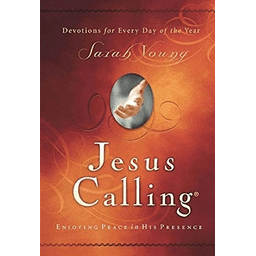 Jesus CallingSarah Young's modern first-person daily devotional - the contemporary parallel to God Calling, which Young named as an inspiration. Same format, same conversation, in present-day English.
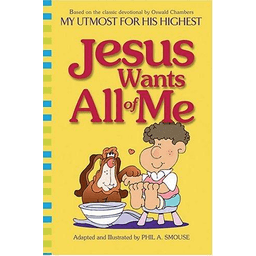 My Utmost for His HighestOswald Chambers' demanding 1935 classic - tonally the opposite of God Calling. Dense, surrender-focused theology rather than gentle first-person comfort.
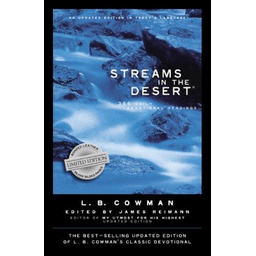 Streams in the DesertLettie Cowman's 1925 devotional for readers in suffering and waiting - the close period peer that pairs passage, story, and reflection without the first-person-of-Jesus device.Daily Light on the Daily PathThe classic devotional made entirely of woven scripture passages - a natural choice for a reader who wants a daily reading composed of the Bible's own words.
Frequently asked questions
Who actually wrote God Calling?
The book is credited to "Two Listeners" - two anonymous Englishwomen who chose never to publish their names - and was edited and brought to print by the British journalist A.J. Russell in 1935. Russell's preface describes how the two women wrote the material during a daily practice of quiet, listening prayer.
Is God Calling related to Jesus Calling?
Yes, in spirit. Sarah Young has named God Calling as an inspiration for Jesus Calling (2004). Both are daily devotionals written in the first-person voice of Jesus. God Calling is the earlier 1935 book in period English; Jesus Calling is the modern, in-print descendant. They share the same format and the same ongoing conversation about that format.
Why do some readers approach God Calling with caution?
The discussion centers on the first-person voice and the book's "received messages" origin. Many readers warmly embrace a devotional written as if Jesus is speaking directly to them. Other readers prefer devotionals that point to Scripture and speak about Christ rather than as him, and so approach the format carefully. It is a genuine difference in how people read a book like this, worth knowing about before you begin.
Is God Calling free?
In many editions, yes. The original text has passed into the public domain in numerous places and can be read online at no cost. Inexpensive Kindle editions (around $2-5) and paperbacks (around $10) exist for readers who want a copy of their own, along with sturdier gift editions.
How long does each daily entry take to read?
About two or three minutes. Each day is a single short page - a title, a date, one or two compact paragraphs, and a brief scripture reference at the close. The brevity is the whole point of the format, designed to fit into the smallest window of a busy or weary day.
Can God Calling replace daily Bible reading?
It is not designed to. Each entry closes with a scripture reference but does not contain or expound the passage. Readers who use it well treat it as a short daily companion alongside actual Bible reading rather than a substitute for it.
Which edition should I get?
Start with the free online text to see whether the voice and 1935 idiom suit you. If they do, a standard paperback at around $10 is the natural pick for a copy by the bed. Because the text is public domain, print editions vary in layout and binding, so it is worth checking a sample page or reviews before buying a particular one.
Sources & further reading
More Devotional Books
My Utmost for His HighestThe 90-year-old daily devotional that still outsells most new releases - short, dense, and famously unwilling to let a reader off the hook.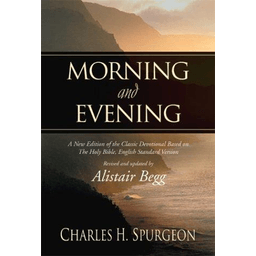 Morning and EveningThe 1865 twice-daily devotional from the Prince of Preachers - still in print, still in the morning routine of millions, and still doing something almost no other devotional even tries.For the Love of GodA two-volume daily devotional that does something almost no other devotional attempts: it walks you through the whole Bible in a year and teaches you to read it as one connected story - and Crossway gives the entire text away for free.The Songs of JesusTim and Kathy Keller’s 365-day walk through every Psalm has quietly become the daily-practice companion to Keller’s Prayer - a short passage, a brief reflection, and a written prayer for each morning of the year.Streams in the DesertThe hundred-year-old daily devotional that gets handed to people in the hospital, at the funeral, after the diagnosis - and the one question worth answering before you buy it.
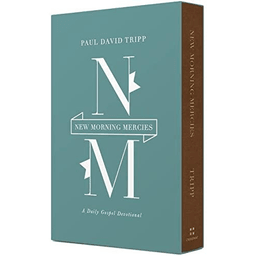 New Morning MerciesA 365-day devotional built on one stubborn idea: the gospel is not just the door you walked through, it’s the air you keep breathing - and Paul David Tripp will not let you forget it.