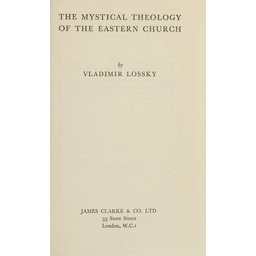
- Starting price
- ~$22 paperback
- Free tier
- No
- Platforms
- Print · Kindle
- Developer
- St. Vladimir's Seminary Press
- Launched
- 1944
- Updated
- May 31, 2026
The verdict
The Mystical Theology of the Eastern Church is the single most influential modern statement of how the Christian East understands theology - as something inseparable from the experience of God. Lossky moves through apophatic theology, the Trinity, the divine energies, creation, the image of God, and deification with rigor and conviction. It is demanding, it assumes real theological literacy, and it is not an introductory book. But for anyone who wants to understand Eastern Orthodox theology as the tradition presents itself, this is the door.
Try The Mystical Theology of the Eastern Church ↗Opens svspress.com
The Mystical Theology of the Eastern Church has quietly become the book people reach for when they want to understand Eastern Orthodox theology from the inside rather than from a Western summary of it. Catholic theologians cite it. Protestant seminarians assigned a unit on the East are pointed to it. Orthodox readers treat it as a touchstone of the 20th-century revival of patristic theology. Its central claim is unusual and worth stating plainly at the start: in the Christian East, Lossky argues, theology and mysticism are not two activities but one. Doctrine is not abstract speculation that the spiritual life later applies - it is the framing of an experience the whole tradition is reaching toward.
The book came out of a particular world. Vladimir Lossky (1903-1958) was a Russian theologian whose family fled the Revolution and settled, like so many Orthodox intellectuals of his generation, in Paris - which turned out to be one of the most fertile theological environments of the century. The Mystical Theology was published in French in 1944, while Paris was under occupation, and reached English readers in translation a few years later. It does not read like a survey. It does not read like a textbook. It reads like a thinker working out, chapter by chapter, what holds the whole Eastern vision together.
What you actually get is a sequence of linked essays - on the apophatic way, the divine darkness, the Trinity, the uncreated energies, creation, the image and likeness of God in humanity, the Church, and finally theosis, the deification of the human person, which Lossky presents as the goal of the entire Christian life. The argument is cumulative and tightly woven; later chapters lean on earlier ones. The prose is dense, allusive, and saturated with the Greek Fathers - Dionysius the Areopagite, the Cappadocians, Maximus the Confessor, Gregory Palamas. This is not a book you skim. It is a book you sit with, and the readers who sit with it tend to say it reorganized how they think about the whole shape of Christian doctrine.
✓ The good
- The most influential single statement of modern Orthodox theology - for two generations it has been the book Western readers are handed to understand the East on its own terms
- Presents Eastern Orthodox theology as the tradition understands itself - apophaticism, the divine energies, and theosis are framed from inside the tradition rather than as objects of outside comparison
- Deeply rooted in the Greek Fathers - Dionysius, the Cappadocians, Maximus the Confessor, and Gregory Palamas are read closely, not name-dropped, which is part of why scholars still assign it
- The central thesis - that theology and mystical experience are inseparable in the East - is stated with unusual clarity and carried consistently through every chapter
- Lossky's treatment of the essence-energies distinction (the Palamite teaching) is the clearest modern entry point into a notoriously technical area of Eastern theology
- The closing chapters on the image of God and theosis give the book a real arc - it builds toward the goal of the Christian life rather than just cataloguing doctrines
- Short relative to its weight - around 250 pages that have shaped far more theology than their length suggests
✗ Watch out
- Genuinely demanding - Lossky assumes a reader already comfortable with patristic and philosophical theology, and the prose rewards re-reading rather than a single pass
- Not an introduction - newcomers to Orthodoxy are almost always better served starting with a more accessible book and coming to Lossky second
- Heavily reliant on the Greek Fathers by name and concept - readers who haven't met Dionysius, Maximus, or Palamas will need to read with reference material at hand
- The chapters build on one another, so dipping in and out works poorly - the book really wants to be read straight through, in order
- The 1944 French academic register, even in translation, can feel formal and compressed to a modern reader used to a more conversational voice
Best for
- Readers ready to engage Eastern Orthodox theology as the tradition presents itself
- Seminary and graduate students assigned a serious unit on the Christian East
- Catholic, Protestant, or other readers wanting to understand Orthodoxy beyond a one-paragraph summary
- Anyone who has read an introduction to Orthodoxy and wants the deeper, systematic-mystical level
Avoid if
- You are brand new to Orthodoxy and want a first, accessible overview
- You want a light or devotional read rather than rigorous theology
- You prefer a conversational modern voice over dense academic prose
- You want a neutral comparative survey of East and West rather than the Eastern tradition in its own voice
What The Mystical Theology of the Eastern Church is
The Mystical Theology of the Eastern Church is Vladimir Lossky's foundational statement of Eastern Orthodox theology, published in French in 1944 and in English translation shortly after. It is relatively short - around 250 pages - and organized as a series of linked chapters that move from method to content: the apophatic (negative) way of speaking about God, the divine darkness, the doctrine of the Trinity, the distinction between God's unknowable essence and His uncreated energies, the act of creation, the image and likeness of God in the human person, the Church, and finally theosis, the deification of humanity, which Lossky names as the goal of the Christian life.
The book is a work of Eastern Orthodox theology written from within that tradition. Lossky's organizing conviction - announced in the first chapter and threaded through the rest - is that in the Christian East theology and mysticism are inseparable: right teaching about God and the experiential knowledge of God are two sides of one reality, not separate disciplines. He reads the Greek Fathers as living guides to that union rather than as historical figures to be catalogued. Where the book touches points on which East and West have historically differed - the filioque clause in the Creed, or the essence-energies distinction - it presents the Eastern position as the tradition holds it. Reporting that is part of describing what the book is.
Why readers reach for Lossky to understand the East
Most Western treatments of Eastern Orthodoxy are written looking in from the outside - a chapter in a survey, a comparison set against a Western baseline, a summary that translates Eastern ideas into Western categories before the reader ever meets them. Lossky does the opposite. He writes from inside the tradition, in its own grammar, and lets the categories be Eastern from the first page. The reader is not handed a comparison; the reader is handed the thing itself and asked to follow it on its own terms.
That is exactly why the book travels across confessional lines. A Catholic theologian can read it to understand how the East actually thinks about the Trinity and the energies, rather than a secondhand account. A Protestant student can meet apophatic theology and theosis as the tradition frames them rather than as a foil. The book does not argue you out of your own tradition and it does not pause to defend itself against Western objections - it sets out the Eastern vision whole and lets it stand. For readers who want to understand Orthodoxy as Orthodoxy understands itself, that single editorial decision is what makes Lossky the standard reference.
Apophatic theology: knowing God by way of unknowing
The book opens with method, and the method is apophatic - the way of negation. Drawing heavily on Dionysius the Areopagite, Lossky argues that the most exact thing the mind can do with God is to deny that any of its concepts capture Him: God is not this, not that, beyond being, beyond goodness as we conceive it, beyond every name. Apophatic theology is not, in this account, mere intellectual caution or a verbal trick. It is a movement of the whole person - a stripping away of concepts that clears the way toward union with the God who exceeds them. Negation, for Lossky, is the doorway, not the dead end.
This sets the terms for everything that follows, and it is why the first chapter is the one to read slowly. Lossky is establishing that in the Eastern understanding the goal of theology is not a complete conceptual system but communion with a God who remains, in His essence, beyond comprehension. The reader who grasps the apophatic move finds the later chapters on the Trinity and the divine energies click into place; the reader who skips past it tends to find them opaque. It is the keystone of the book, and Lossky presents it as the keystone of the Eastern vision itself.
The divine energies: the essence-energies distinction
At the center of the book sits the distinction most associated with Gregory Palamas and the 14th-century hesychast controversy: the distinction between God's essence and His energies. God in His essence, Lossky explains, is utterly unknowable and unparticipable - no creature can know what God is. Yet God is genuinely present and knowable in His uncreated energies - His acts, His grace, His self-communication to creation. The divine light the saints experience, on this teaching, is not a created effect standing in for an absent God but God Himself, truly given, while His essence remains beyond reach. The distinction is how the East holds together two things at once: that God is wholly transcendent and that God is really, savingly present.
Lossky's handling of this material is the clearest modern entry point into a genuinely technical area, and it is one of the places where East and West have historically differed. He presents the essence-energies distinction as the Eastern tradition holds it - as the framework that makes deification coherent rather than as a contested proposition to be weighed against Western alternatives. For the reader, the payoff is understanding why the energies are not a side topic in Orthodox theology but the hinge on which its account of salvation turns. Whatever tradition the reader comes from, this is the chapter that most repays careful attention.
Theosis: deification as the goal of the Christian life
The book builds toward its final theme: theosis, the deification of the human person. Lossky has spent the earlier chapters laying the groundwork - the apophatic God, the Trinity, the energies through which God gives Himself, the image of God that makes the human person capable of receiving that gift. Theosis is where it all converges. In the Eastern understanding Lossky sets out, salvation is not only forgiveness but transformation: the human person, by grace and through participation in the divine energies, is remade into the likeness of God and brought into genuine communion with Him. This, for Lossky, is the goal toward which creation, incarnation, and Church all move.
Lossky grounds the teaching in a line the Greek Fathers return to again and again - that God became man so that man might become god, deified by grace. He is careful, as the tradition is careful, about what the language does and does not claim: deification by grace and participation, not a blurring of creature into Creator. Readers from different traditions will hear this chapter through their own theological vocabulary, and the historic resonances run wide - the language of glorification, of adoption, of human destiny. Lossky's task is not to adjudicate those echoes but to present theosis as the Eastern tradition understands it, the summit toward which the whole book has been climbing.
Pricing
Paperback
~$22
The standard St. Vladimir's Seminary Press edition. The copy most readers own and the one most citations key to.
Kindle / ebook
~$15-20
Searchable and highlight-syncing, which helps with a book this densely cross-referenced. Pricing varies by retailer.
Used paperback
~$8-14
Widely available secondhand given decades in print; condition and edition vary, so check the printing.
Alternate publisher edition
~$20-28
A James Clarke & Co. edition has also circulated over the years; pagination differs from the SVS Press text.
The Mystical Theology of the Eastern Church is not free. A new St. Vladimir's Seminary Press paperback runs around $22 as of writing - call it the everyday default - and is the edition most quotations in print are keyed to. Given the book's decades in circulation, used copies are easy to find for roughly $8-14, which is how a lot of students still acquire their first one. Check the printing if a citation matters to you, since pagination has shifted across editions.
The Kindle and ebook editions tend to run a little under the paperback, somewhere in the $15-20 range depending on retailer and sale. For a book this densely cross-referenced - Lossky cites Fathers constantly and his chapters lean on one another - searchable text and syncing highlights are genuinely useful, and the ebook is a reasonable pick for that reason alone.
An alternate edition from James Clarke & Co. has also circulated over the years, usually in a similar price range; its pagination differs from the SVS Press text, so a reading group should standardize on one edition to keep page references aligned. Most readers do not need to hunt for a specific printing - the standard SVS Press paperback is the balanced default and the copy you will reach for again.
Where The Mystical Theology of the Eastern Church falls behind
Not an introduction. This is the book's main practical limitation, and it is worth being clear-eyed about going in. Lossky assumes a reader already at home with patristic and philosophical theology, and he does not pause to onboard a newcomer. A reader meeting Orthodoxy for the first time will usually get far more out of an accessible overview first and Lossky second.
Density. The prose is compressed, allusive, and demanding even in a good translation. Sentences carry a lot of weight, and the book rewards re-reading rather than a single pass. This is a feature for the right reader and a wall for the wrong one.
Assumed familiarity with the Fathers. Dionysius, the Cappadocians, Maximus the Confessor, and Gregory Palamas are everywhere in these pages - by name, by concept, by quotation. A reader who has not encountered them will want a patristics reference or a companion volume within reach, or a good deal of the argument will pass by unread.
Hard to dip into. Because each chapter builds on the last, the book reads poorly in fragments. It really wants to be read straight through, in order, which makes it a poor fit for someone looking to consult a single topic and move on. That is the cost of how tightly Lossky has woven it.
Lossky vs. The Orthodox Way vs. The Orthodox Church
These three are the short list for understanding Eastern Orthodoxy in English, and they do genuinely different jobs. The Mystical Theology of the Eastern Church (Lossky, 1944) is the systematic-mystical deep end - a rigorous, demanding account of Orthodox theology written from inside the tradition for a reader ready to work. The Orthodox Way (Kallistos Ware) is the spiritual-theological introduction - warmer, more accessible, organized around the soul's journey to God, and the book most people are handed first. The Orthodox Church (also Ware) is the survey - history, structure, and belief laid out as an overview of the tradition as a whole.
Different strengths. Lossky is the deepest and most demanding - the book you grow into rather than start with. Ware's The Orthodox Way is the most welcoming on-ramp for a reader new to Orthodox spirituality. Ware's The Orthodox Church is the most useful if your first question is simply what Orthodoxy is, where it came from, and how it is organized. If you are starting from zero, begin with one of the Ware titles. When you want the systematic-mystical level underneath them, that is when you come to Lossky.
All three are written from within the Eastern Orthodox tradition and present its theology in its own voice. Lossky is the most rigorous and the most concentrated on the inner logic of the doctrine; Ware is the more pastoral and accessible of the two authors. Read in sequence - an introduction first, Lossky after - they complement one another well.
The bottom line
The Mystical Theology of the Eastern Church is the standard modern statement of how the Christian East understands theology, and it has earned that standing for good reason. Lossky writes from inside the tradition, in its own categories, and carries a single thesis - that theology and the experience of God are inseparable - through apophaticism, the Trinity, the divine energies, and theosis with rare consistency. It is dense, it assumes real theological literacy, and it is not where a newcomer should start. But for the reader ready to meet Eastern Orthodox theology as the tradition presents itself, this is still the book to read.
Alternatives to The Mystical Theology of the Eastern Church
 The Orthodox WayKallistos Ware's accessible introduction to Orthodox spirituality - the natural first read before Lossky.
 The Orthodox ChurchWare's standard survey of Orthodox history, structure, and belief - the overview many readers start with.
 For the Life of the WorldAlexander Schmemann's classic on Orthodox sacramental theology - a different angle on the same tradition.Ancient Faith MinistriesOrthodox podcasts, books, and articles - a free way to go deeper after reading Lossky.
Frequently asked questions
Who was Vladimir Lossky?
Vladimir Lossky (1903-1958) was a Russian Orthodox theologian whose family left Russia after the Revolution and settled in Paris, where he became one of the leading figures of the 20th-century Russian emigration. The Mystical Theology of the Eastern Church, published in French in 1944, is his best-known work and one of the most influential statements of modern Orthodox theology.
Is The Mystical Theology of the Eastern Church a good place to start with Orthodoxy?
For most readers, no - not first. It is rigorous and assumes real familiarity with patristic and philosophical theology. The common recommendation is to begin with a more accessible introduction, such as Kallistos Ware's The Orthodox Way or The Orthodox Church, and then come to Lossky for the deeper, systematic-mystical level.
What does "mystical theology" mean in the title?
It points to Lossky's central thesis: that in the Christian East, theology and mystical experience are inseparable. Doctrine is not abstract speculation that the spiritual life later applies - right teaching about God and the experiential knowledge of God are presented as two sides of one reality. The title names that union.
What is the essence-energies distinction the book discusses?
It is a distinction, associated especially with Gregory Palamas, between God's essence and His energies. In the teaching Lossky presents, God's essence is utterly unknowable and unparticipable, while God is genuinely present and knowable in His uncreated energies - His grace and self-communication to creation. Lossky sets it out as the Eastern tradition holds it, as the framework that makes deification coherent.
What is theosis, and why is it central to the book?
Theosis, or deification, is the teaching that the human person is remade into the likeness of God and brought into communion with Him by grace and participation in the divine energies. Lossky presents it as the goal of the Christian life and the theme the whole book builds toward. The tradition is careful that this means deification by grace and participation, not a blurring of creature into Creator.
Does the book engage differences between Eastern and Western theology?
Yes, at points - the filioque clause in the Creed and the essence-energies distinction are the main ones. Where it does, the book presents the Eastern position as the tradition holds it rather than arguing comparatively. It is written from within Eastern Orthodoxy and reads the Greek Fathers as living guides to that tradition.
Where should I go after reading Lossky?
Within Orthodox theology, Alexander Schmemann's For the Life of the World (sacramental theology) and Kallistos Ware's books are common next reads, along with the Greek Fathers Lossky leans on most - Dionysius, the Cappadocians, Maximus the Confessor, and Gregory Palamas. Ancient Faith Ministries offers a large library of free Orthodox podcasts and articles for going further.
Sources & further reading
More Orthodox Christian Books
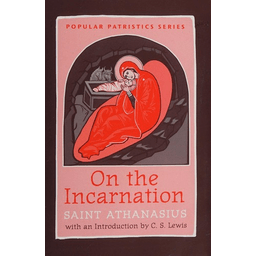 On the IncarnationThe short 4th-century treatise on why God became man - the one early-Church book modern readers actually finish, and the one C.S. Lewis told everyone to start with.The Orthodox ChurchThe Penguin paperback that has introduced more English readers to Eastern Orthodoxy than any other single book - half history, half doctrine, and still the first title nearly everyone names.The Orthodox WayThe slim companion to The Orthodox Church that trades history for the lived path - Kallistos Ware walking a reader through God as Mystery, Trinity, Creator, Man, Spirit, and Prayer, in fewer than two hundred pages.For the Life of the WorldAlexander Schmemann's slim, much-loved meditation on sacramental theology - the book that taught a generation to see the whole world as a gift to be received and offered back in thanksgiving.
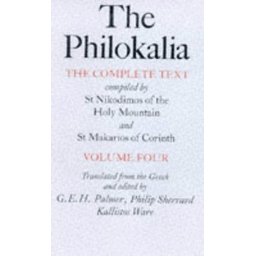 The PhilokaliaThe great Eastern Orthodox anthology on inner watchfulness and the prayer of the heart - eleven centuries of monastic teachers, compiled on Mount Athos, and still the master text of the Jesus Prayer.
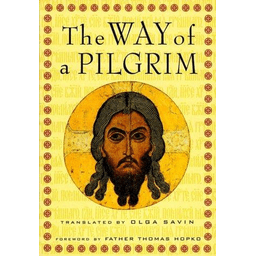 The Way of a PilgrimThe anonymous 19th-century Russian classic that taught the modern world the Jesus Prayer - a wandering pilgrim, a worn copy of the Philokalia, and one short sentence repeated until it never stops.