- Starting price
- Free
- Free tier
- Yes
- Platforms
- Gospel Library app · Print · Audiobook · Web
- Developer
- The Church of Jesus Christ of Latter-day Saints
- Launched
- 2018
- Updated
- May 31, 2026
The verdict
Saints: The Story of the Church of Jesus Christ in the Latter Days is the Church’s own four-volume narrative history, written in an accessible, story-driven style meant to read like a true story rather than a textbook. Published between 2018 and 2024, it is free in the Gospel Library app and on the Church website, with low-cost print volumes and a full audio edition. For a Latter-day Saint who wants to know their own history as a continuous narrative - and for anyone curious about how the tradition tells its own story - it is the natural first stop, and the price makes it an easy one.
Try Saints ↗Opens churchofjesuschrist.org
Saints is the book a Latter-day Saint reaches for when they want to read their own history as a story rather than look up dates. For most of the Church’s modern life, its narrative history lived in scholarly volumes and Sunday-lesson summaries; Saints was the project to gather that history into a single, continuous, readable account - four volumes that carry the story from the tradition’s beginnings in the early nineteenth century all the way to the present. Its whole reason for existing is accessibility: to let an ordinary member, of any age, sit down and read the history the way they would read any absorbing true story.
The work is published by The Church of Jesus Christ of Latter-day Saints itself, which makes it an official history rather than an independent one, and it was released a volume at a time between 2018 and 2024. The style is the headline. It doesn’t read like a reference book. It doesn’t open with a thesis to defend. It doesn’t lean on dense academic prose. Instead it is written in narrative - scenes, people, and events told in sequence, with named individuals whose lives the reader follows, so that the history moves rather than merely informs.
That narrative approach is the engine of the project. The four volumes are organized chronologically, each covering a stretch of the Church’s story, and together they form one long account from the first volume’s early-nineteenth-century opening through the global Church of the recent past. Because each volume stands as a readable book in its own right, a reader can start at the beginning and go straight through, or pick up the era they are curious about. The point throughout is the same: to make the history legible and engaging to a general reader rather than only to a historian.
This review treats Saints the way this site treats every resource - with practical notes on what it is, where to read it for free, what the print and audio cost, and who it serves. It is an official history written from within the Latter-day Saint tradition for a broad audience, and on the plain terms of a reader’s decision, it is one of the most accessible and generously distributed multi-volume histories any faith puts out.
✓ The good
- Free, everywhere - all four volumes are free in the Gospel Library app and on churchofjesuschrist.org, with no premium tier and no upsell, plus a free audio edition
- Genuinely readable narrative - written in a story-driven style with scenes and named people, so it reads like a true story rather than a textbook, which is rare for an official history
- Complete four-volume arc - together the volumes carry the story from the tradition’s early-nineteenth-century beginnings to the recent global Church, so the history is continuous rather than piecemeal
- Multiple formats from one source - the same text is available free digitally, in low-cost print volumes, and as a full audiobook, so a reader can read, carry, or listen as they prefer
- Accessible to any age - the prose is written for a general readership rather than scholars, making it a workable family or youth read as well as an adult one
- Official and documented - as the Church’s own history it draws on its archives and sources, and the digital edition links to supporting references for readers who want to dig further
- Low commitment to start - because volume one is free and self-contained, a curious reader can begin with no cost and decide from there whether to continue
✗ Watch out
- It is a four-volume set - read in full it is a long commitment, not a single book, so a reader wanting one short history will find it more than they bargained for
- Narrative style trades some analysis for story - by choosing scenes and people over sustained academic argument, it reads beautifully but is not a critical-historiography monograph
- It is an official history - written and published by the Church itself for its own readers, so a reader specifically wanting an outside or independent treatment should know its standpoint going in
- Released over several years - because the volumes appeared between 2018 and 2024, earlier readers experienced it incrementally, and a newcomer is picking up a project that took time to complete
- The print set is several books to shelve and buy - while each volume is inexpensive, collecting the whole set in print adds up and takes shelf space the free digital edition does not
Best for
- Latter-day Saints who want to read their own history as one continuous, engaging story
- Members and families looking for an accessible, age-friendly narrative history to read together
- Curious neighbors who want to understand how the tradition tells its own story, for free
- Listeners who would rather take in a long history as a narrated audiobook on a commute
Avoid if
- You want a single short history rather than a four-volume narrative read across many sittings
- You specifically want an independent or outside account rather than the Church’s own official history
- You prefer a dense, citation-driven academic monograph to a story-driven narrative
- You want a quick reference of dates and facts rather than a continuous, scene-by-scene story
What Saints is
Saints: The Story of the Church of Jesus Christ in the Latter Days is the official narrative history of The Church of Jesus Christ of Latter-day Saints - a four-volume account published between 2018 and 2024. It is written in an accessible, story-driven style, deliberately closer to a true story than a textbook: the history unfolds through scenes, events, and the lives of named individuals, told in chronological sequence across the four volumes. Together they trace the Church’s story from its beginnings in the early nineteenth century through the global Church of the recent past.
As an official history, it is produced by the Church itself and draws on its archives and sources, with the digital edition linking to supporting references for readers who want to go deeper. As neutral buyer information: it is written from within the Latter-day Saint tradition and for a broad readership in it, and it tells the tradition’s story in the tradition’s own voice. It is free to read in the Gospel Library app and on the Church website, free as audio, and available in low-cost print volumes for readers who want a physical copy.
Why Latter-day Saints read their history this way
The single biggest practical difference between Saints and most institutional histories is that it was written to be read for pleasure, not consulted for reference. A great many official histories are organized to be authoritative and thorough at the expense of being inviting - you look things up in them. Saints inverts that priority: it is built as a narrative, with people you follow and scenes that move, so that an ordinary member can sit down in the evening and simply read it the way they would read any good true story. The accessibility is not incidental; it is the entire design goal.
That changes how the history functions in a member’s life. Rather than encountering their tradition’s past as a list of dates and doctrines absorbed in fragments, a reader can take it in as a continuous story with a beginning and a through-line - early gatherings and migrations, growth and hardship, expansion into a worldwide Church. Because the four volumes are chronological and each reads as its own book, a member can follow the whole arc or drop into the era they care about. For the reader inside the tradition, Saints turns “Church history” from a subject into a story they can actually live inside for a few hundred pages at a time.
A four-volume story told as narrative
The defining feature of Saints is its form: it is narrative history, written in scenes. Where a conventional institutional history might proceed topic by topic, Saints proceeds the way a story does - following named people through the events of their lives, rendering moments rather than summarizing them, and letting the chronology carry the reader forward. Across four volumes, that approach builds one long, continuous account, from the tradition’s early-nineteenth-century origins through the recent, global Church, with each volume covering a defined stretch of the timeline.
The reason this matters is that it makes a long and complex history legible to a general reader. A scene with people in it is far easier to remember and care about than a paragraph of dates, and Saints leans on that throughout. The choice has a tradeoff - narrative emphasis means the books read more like story than like sustained analytical argument - but it is the right trade for the project’s purpose. For a member who has only ever known their history in pieces, the four volumes assemble those pieces into something that finally reads as a whole.
Free in Gospel Library, with print and audio to match
Access is where Saints is unusually generous, and the headline is simple: it is free. All four volumes are complete in the Gospel Library app and on churchofjesuschrist.org, with no premium tier and nothing paywalled. The digital edition links to supporting references for readers who want to trace a source, and a free Church account syncs reading progress and notes across devices, though you do not need one to read. A full audio edition is free as well - which matters for a history this long, since many readers will take it in by listening on a commute or a walk.
For readers who want a physical copy, the print volumes are sold near cost through Church distribution and retailers - typically only a few dollars each, with the complete four-volume set running modestly for what it is. The practical upshot is that no format is gated behind another: a reader can start free on a phone, switch to audio for the long stretches, and pick up the print volumes if they want something on the shelf. Few multi-volume histories of any institution are this accessible across this many formats at this price.
An official, documented account written for everyone
Saints is the Church’s own history, and that standpoint shapes what it is. As an official account it draws on the Church’s archives and historical sources, and the digital edition surfaces references so a reader can follow the documentation behind the narrative. At the same time, it is written deliberately for a general readership rather than for specialists - the prose is plain and the storytelling is foregrounded, so the documentation supports the narrative without burdening it. The result is a history that is both sourced and readable.
That dual character - official and accessible - is the point of difference a reader should understand going in. Because it is produced by the Church for its members, it tells the tradition’s story from within the tradition, in the tradition’s voice; a reader specifically seeking an outside or independent treatment should know that this is not that. What it is, instead, is the authoritative narrative version of how the Latter-day Saint tradition tells its own story - written so a teenager, a new convert, or a lifelong member can all read it with equal ease, and documented enough that a curious reader can keep pulling threads.
Pricing
Free - Gospel Library & web
Free
All four volumes complete in the Gospel Library app and at churchofjesuschrist.org, with linked references and a free audio edition. No account needed to read; a free account syncs progress and notes. The everyday default - most readers use this.
Free audiobook
Free
A full narrated reading of the volumes is available at no cost through the Church’s channels - the natural way to take in a long history while commuting or walking.
Print volume (each)
~$5-10
Low-cost softcover volumes sold through Church distribution and retailers for readers who want a physical copy. Priced near cost, in keeping with the Church’s other materials.
Print set (all four)
~$20-40
The complete four-volume set in print for a reader assembling the whole history on a shelf. Inexpensive per volume, though collecting all four adds up.
The headline is the best kind: Saints is free, and not in a freemium sense. All four volumes live complete in the Gospel Library app and on churchofjesuschrist.org with nothing gated, and a full audio edition is free alongside the text. Mark the free digital tier as the everyday default - it is how most readers will actually read it, and it adds linked references and (with a free account) syncing across devices.
The free audiobook deserves its own mention, because it changes the math on a four-volume history. Listening turns a long read into something you can do while driving or walking, and at no cost it is an easy way to get through the volumes that a reader might otherwise put off. For many people, audio is how Saints actually gets finished.
Print is inexpensive for those who want it. Individual softcover volumes run only a few dollars each through Church distribution and retailers, in keeping with the Church’s near-cost pricing on its materials. Collecting the complete four-volume set in print is still modest in absolute terms, though buying all four naturally adds up and takes more shelf space than the free digital edition.
Most readers do not need to spend anything at all - the free digital and audio editions are complete. The print set is the pick for a reader who wants the physical books to keep or to read away from a screen. Either way, the cost of entry to a major multi-volume history is, unusually, nothing, which makes starting it a very low-stakes decision.
Where Saints falls behind
Length. This is a four-volume set, and read in full it is a real commitment rather than a single sitting. A reader who wants one short, brisk history of the tradition will find Saints more than they were looking for. The free audio edition softens this - long histories go down easier listened to - but the scope is what it is, and a newcomer should know they are starting a multi-book project, not a weekend read.
Narrative over analysis. By design, Saints tells its story through scenes and people rather than through sustained academic argument, and that choice has a cost for some readers. It is not a critical-historiography monograph weighing competing interpretations at length; it is a readable narrative. That is the right call for its purpose and audience, but a reader who specifically wants dense analytical history will experience the storytelling emphasis as a limit rather than a strength.
An official standpoint. Saints is written and published by the Church itself, for its own readers, and it tells the tradition’s story from inside the tradition. That is exactly what many readers want, but a reader seeking an outside or independent account should understand the book’s vantage point before they begin. It is the authoritative in-house narrative, not a third-party one.
Released incrementally. Because the volumes appeared over several years, from 2018 to 2024, the project was experienced piecemeal by its first readers, who waited between installments. A newcomer today picks it up complete, which is the better position - but it is worth knowing that what now reads as a finished four-volume arc was a multi-year publishing effort rather than a single release.
Saints vs. the Joseph Smith Papers vs. Gospel Library
It helps to see where Saints sits among the historical resources a Latter-day Saint might use, because they do genuinely different jobs. Saints is the narrative - the accessible, story-driven account written for a general reader to sit and read. The Joseph Smith Papers, by contrast, is the documentary project: a scholarly edition of the foundational documents themselves, transcribed and annotated for researchers and serious students. Where Saints tells you the story, the Papers hand you the primary sources behind a key part of it.
Different strengths. Saints is the one to read first - it is broad, continuous, and built for engagement, carrying the whole arc from the early nineteenth century to the recent past. The Joseph Smith Papers is deeper and narrower - invaluable when you want to go to the documents rather than the narrative, but far more than a casual reader needs. Many people read Saints for the story and dip into the Papers only when a particular episode makes them want the original record. If your need is to understand the history, start with Saints; if it is to examine the sources, that is the Papers’ territory.
If you are deciding where to read rather than what, the companion is the app. Gospel Library is the official, free home that hosts Saints, the Joseph Smith Papers materials, the scriptures, and much more together in one place. The history is the same wherever you read it - the question is which environment fits how you study, and for most readers Gospel Library is simply where Saints already lives, free and synced, alongside everything else.
The bottom line
Saints: The Story of the Church of Jesus Christ in the Latter Days is the official, four-volume narrative history a Latter-day Saint reaches for when they want their tradition’s past as a continuous, readable story rather than a list of dates. Written in a story-driven style and published between 2018 and 2024, it is free in the Gospel Library app and on the Church website, free as audio, and available in low-cost print volumes. It is long - four volumes is a commitment - and it tells the story from within the tradition. But it is unusually engaging for an institutional history, generously distributed across every format, and free to start. For a member or a curious reader, it is the natural first stop.
Alternatives to Saints
 churchofjesuschrist.orgThe official website of The Church of Jesus Christ of Latter-day Saints - where Saints, the scriptures, and the Church’s other materials live free online.
 Gospel LibraryThe official free app that hosts Saints alongside the scriptures and the wider Latter-day Saint library, with audio and syncing built in.
 The Joseph Smith PapersThe scholarly documentary edition of the foundational sources - the primary-document counterpart to the readable narrative Saints provides.
 Doctrine and CovenantsThe volume of modern-era revelations in the Latter-day Saint canon - closely tied to the historical period the early volumes of Saints narrate.
Frequently asked questions
What is Saints?
Saints: The Story of the Church of Jesus Christ in the Latter Days is the official narrative history of The Church of Jesus Christ of Latter-day Saints - a four-volume account published between 2018 and 2024. It is written in an accessible, story-driven style and tells the Church’s story chronologically, from its early-nineteenth-century beginnings to the recent global Church. (It shares its one-word title with other things, but this is the Church’s own multi-volume history.)
How much does it cost?
For most readers, nothing. All four volumes are free in the Gospel Library app and on churchofjesuschrist.org, and a full audio edition is free as well. If you want a physical copy, the print volumes are sold near cost - typically only a few dollars each, with the complete four-volume set running modestly for what it is.
How many volumes are there, and what do they cover?
There are four volumes, released between 2018 and 2024. Together they form one continuous, chronological account of the Church’s history, carrying the story from its beginnings in the early nineteenth century through the recent, worldwide Church. Each volume covers a defined stretch of the timeline and reads as its own book.
Is it a scholarly history or a popular one?
It is written for a general readership in an accessible, narrative style - it reads like a true story rather than a textbook. At the same time it is an official, documented history that draws on the Church’s archives, and the digital edition links to supporting references for readers who want to trace the sources. So it is both sourced and readable, with the storytelling foregrounded.
Is this an official Church history?
Yes. Saints is produced and published by The Church of Jesus Christ of Latter-day Saints itself, which makes it an official, in-house history that tells the tradition’s story from within the tradition. A reader specifically wanting an outside or independent account should know its standpoint going in; what Saints offers is the authoritative narrative version of how the tradition tells its own story.
Where is the best place to read it?
The Gospel Library app and churchofjesuschrist.org are the easiest places - all four volumes are there free, with linked references and (with a free account) syncing across devices. For a long history, many readers prefer the free audio edition, and print volumes are available near cost for anyone who wants the physical books.
Who is Saints best for?
Latter-day Saints who want to read their own history as one continuous, engaging story; families looking for an accessible, age-friendly history to read or listen to together; and curious neighbors who want to understand how the tradition tells its own story, for free. It is less suited to readers who want a single short history or a dense, citation-driven academic monograph.
Sources & further reading
More Latter-day Saint Books
The Doctrine and CovenantsThe volume of modern revelations at the center of Latter-day Saint scripture - 138 sections, two Official Declarations, and the founding document of a still-growing church. The Pearl of Great PriceThe shortest of the four Latter-day Saint standard works - five short texts that hold the First Vision account, the Articles of Faith, and some of the tradition’s most-quoted scripture.
 The Standard Works (Quad)The four-in-one scripture set most Latter-day Saints carry - King James Bible, Book of Mormon, Doctrine and Covenants, and Pearl of Great Price, bound with one of the most thorough study apparatuses in print.
 Jesus the ChristJames E. Talmage's 1915 study of the life and mission of Jesus Christ - for over a century the standard Latter-day Saint treatment of the Messiah, and now free in the public domain.
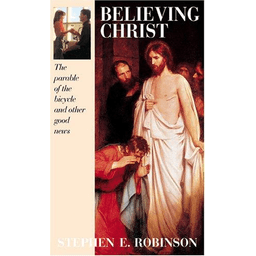 Believing ChristThe short Latter-day Saint book on grace that quietly reframed how a generation of readers understood the Atonement - built around one homely parable about a girl, a bicycle, and a father.
 Come, Follow MeThe official home-centered, church-supported study curriculum of the Church of Jesus Christ of Latter-day Saints - the weekly reading schedule the whole Church follows together, free in Gospel Library and in print.