- Starting price
- Free (addresses online)
- Free tier
- Yes
- Platforms
- Print · Kindle · Web (addresses free) · Study guides
- Developer
- Pauline Books & Media
- Launched
- 1984
- Updated
- May 31, 2026
The verdict
Theology of the Body is Pope John Paul II's sustained reflection on what it means to be a human person who is embodied - male and female, made for communion. Delivered as 129 general-audience addresses between 1979 and 1984, it is dense, philosophical, and long. Most readers meet it first through a study guide or a popularizer rather than the primary text. If you want the foundational document of one of the most-discussed bodies of modern Catholic teaching, this is it.
Try Theology of the Body ↗Opens vatican.va
Theology of the Body has quietly become one of the most cited bodies of teaching in modern Catholic thought. It is not, strictly, a single book. It began as a series of 129 short addresses delivered by Pope John Paul II at his Wednesday general audiences between September 1979 and November 1984 - fifteen or twenty minutes at a time, week after week, to crowds in St. Peter's Square. Collected and translated, those addresses became the work now studied in seminaries, marriage-prep programs, and parish reading groups across the Catholic world.
The project is more ambitious than its piecemeal delivery suggests. John Paul II set out to read the human person through the lens of the body - to ask what it means that human beings are created male and female, what the body itself reveals about the person, and how that bears on marriage, celibacy, and the human vocation to love. It is not a how-to book. It is not a marriage manual. It is not a quick read. It is a long, layered meditation built almost entirely out of close readings of Genesis and the Gospels.
What you actually get, in the standard modern edition, is a single large volume: "Man and Woman He Created Them: A Theology of the Body," translated with extensive commentary by Michael Waldstein and published by Pauline Books & Media in 2006. The addresses themselves are also freely available on the Vatican's website. The voice is that of a philosopher-pope working slowly through a text, circling a question, returning to it from a new angle. Readers tend to describe the experience the same way: demanding, occasionally dense to the point of opacity, and - for those who stay with it - unusually rich. It is one of the most discussed Catholic works of the last half-century, and it earns that status one careful reader at a time.
✓ The good
- The foundational text behind a major stream of modern Catholic teaching - the primary source everyone else is summarizing
- Built on sustained, close readings of Scripture - the addresses work line by line through Genesis and the Gospels rather than arguing in the abstract
- Comprehensive in scope - the meaning of the body, masculinity and femininity, marriage, celibacy, and the vocation to love, in one coherent framework
- The Waldstein edition is genuinely well-made - the 2006 translation adds a long introduction and footnotes that orient a first-time reader
- The primary addresses are free - all 129 catecheses are available in full on the Vatican website, so the entry cost can be zero
- A large, mature ecosystem of guides - because the work is widely taught, there are accessible popularizations and courses at every level
- Rewards re-reading - passages that feel opaque the first time tend to open up on a second or third pass
✗ Watch out
- Dense and philosophical - the prose works through ideas slowly, and many first-time readers find the primary text heavy going
- Long - 129 addresses add up to a substantial volume, and the Waldstein edition is a large book by any measure
- Most readers approach it indirectly - in practice the majority meet it through a study guide or a popularizer rather than the primary addresses
- Presumes a framework - written from within the Catholic theological and moral tradition, it assumes familiarity with its categories and vocabulary
- Not a practical handbook - it is a work of reflection and catechesis, not a step-by-step guide to marriage or relationships
- Translation matters - the experience varies between editions, and the older translations read differently from the 2006 Waldstein text
Best for
- Readers who want the primary source behind the popularizations
- Seminarians, catechists, and marriage-prep leaders studying the text closely
- Patient readers comfortable with dense, philosophical prose
- Study groups working through the addresses with a guide
Avoid if
- You want a short, practical introduction rather than the full work
- You prefer a conversational popularization to a dense primary text
- You are looking for a marriage or relationship how-to manual
- You want a quick weekend read
What Theology of the Body is
Theology of the Body is the collected title given to a series of 129 general-audience addresses delivered by Pope John Paul II between 1979 and 1984. Across those addresses he develops a sustained reflection on the human person as embodied - what it means that human beings are created male and female, what the body discloses about the person, and how that bears on marriage, celibacy, and the call to love. The reflections proceed largely through close readings of Genesis and passages from the Gospels, building a single framework piece by piece over five years of Wednesday audiences.
The definitive modern English text is "Man and Woman He Created Them: A Theology of the Body," translated with commentary by Michael Waldstein and published by Pauline Books & Media in 2006. That edition gathers all 129 addresses into one volume, adds a substantial introduction, and supplies footnotes that situate the work in its philosophical context. The original addresses remain freely available on the Vatican website. The work is studied widely in Catholic settings - seminaries, catechetical programs, marriage preparation - and has been popularized for general audiences by teachers such as Christopher West.
Why readers go to the primary text
Most people first encounter Theology of the Body the way they encounter any influential idea - secondhand, through a talk, a study course, or a popular book that summarizes it. Those summaries are useful, and for many readers they are the right starting point. But summaries compress, and a summary of a 129-address meditation necessarily leaves a great deal on the cutting-room floor. Readers who want to see how John Paul II actually builds the argument - how slowly, how textually, how much weight he places on a single phrase in Genesis - eventually find their way to the addresses themselves.
That is the case for the primary text. The Waldstein edition exists precisely for the reader who has heard the popular version and wants the original: the full sequence of addresses, in order, with the scholarly apparatus to follow them. It is more demanding than any popularization, and it is not where most people should begin. But it is the document everyone else is drawing on, and for catechists, students, and serious readers it is worth meeting on its own terms rather than only through someone else's paraphrase.
A reading of Genesis: the human person "in the beginning"
The opening movement of the work is a sustained meditation on the early chapters of Genesis. John Paul II returns again and again to the creation accounts - the creation of the human person, the creation of male and female, the description of the man and woman in the garden. He reads these texts closely, lingering on particular words and asking what they reveal about the human person as such: that the person is bodily, that the person is made for relationship, that masculinity and femininity are written into what it means to be human.
This is the methodological heart of the whole project, and it sets the pattern for everything that follows. Rather than beginning from abstract principles, the addresses begin from the biblical text and work outward. The reflection on Genesis establishes the categories - the body as something that discloses the person, the human vocation to communion - that the later addresses develop and apply. Readers who grasp this opening section find the rest of the work far more navigable; readers who skip it tend to find the later material harder to follow.
The "spousal meaning of the body" and the vocation to love
One of the work's recurring and most-discussed phrases is the "spousal meaning of the body" - John Paul II's term for the way the body, as male and female, expresses the human person's capacity and call to make a gift of self to another. From this he develops his treatment of the human vocation to love, and of marriage as one form in which that self-gift is lived out. The addresses approach these themes through Scripture and through careful philosophical reflection on what it means for an embodied person to love.
This is the section of the work most readers come for, and it is also where the addresses range most widely - taking up marriage, the meaning of the body's language, and the place of self-giving love in the human person's fulfillment. The treatment is reflective and theological rather than practical; it describes a vision of the person and of love rather than prescribing techniques. Reported neutrally, this is what the work explores, and it is the material that the popular courses and study guides most often draw from when introducing newcomers to the project.
Marriage and celibacy: two ways of living the gift
A substantial portion of the addresses takes up marriage and celibacy together, as two distinct ways in which the human person lives out the call to self-giving love. John Paul II treats marriage at length - its meaning, its place within his account of the body and the person - and he treats consecrated celibacy alongside it, reading both through the framework the earlier addresses established. The later catecheses also engage specific magisterial teaching on married life.
Within the Catholic tradition from which the work is written, these two states of life are presented as complementary rather than competing, each expressing in its own way the vocation to love that the work develops throughout. The addresses describe and reflect on this teaching rather than debating it; they assume the framework of the tradition and work within it. For a reader, the practical takeaway is descriptive: this is one of the larger themes the work covers, and it is treated as a unified meditation rather than as a set of separate topics.
Pricing
Vatican addresses (web)
Free
All 129 general-audience addresses are published in full on vatican.va. The complete primary source at no cost.
Waldstein edition (paperback)
~$25-30
"Man and Woman He Created Them," translated with commentary by Michael Waldstein (Pauline, 2006). The definitive modern English text.
Kindle
~$20-25
Searchable digital edition of the Waldstein translation. Useful for a work you will want to cross-reference.
Study guides / popularizations
~$10-20
Accessible companions and group courses that walk through the material. The way most readers first meet it.
Theology of the Body has an unusual pricing profile for a major work: the full primary text is free. Every one of the 129 general-audience addresses is published in its entirety on the Vatican website, in order, at no cost. For a reader who simply wants to read what John Paul II actually said, that is the complete source - call it the zero-dollar option - and it is the same text the print editions are built from.
The reason most readers still buy a book is the apparatus. The Waldstein edition - "Man and Woman He Created Them," Pauline Books & Media, 2006 - gathers all the addresses into one volume, adds a long scholarly introduction, and footnotes the philosophical background. As of writing it runs around $25 to $30 in paperback, with the Kindle edition typically a few dollars less. For a dense work you will want to cross-reference, the searchable digital edition earns its keep.
The most common entry point, though, is neither the free addresses nor the full volume but a study guide or popularization. Accessible companions and group courses run roughly $10 to $20 and walk a newcomer through the material at a manageable pace. Most first-time readers do not need to start with the primary text. The free addresses are there when you want the source, the Waldstein edition is the balanced default for serious study, and a good guide is the gentlest on-ramp.
Where Theology of the Body falls behind
Density. This is the first thing every reader notices. The addresses move slowly and philosophically, circling ideas and returning to them, and the primary text presumes a patience that not every reader brings. It is rewarding for those who stay with it, but it is not a casual read, and a first-time reader who opens the Waldstein volume cold can find the going heavy.
Length. There are 129 addresses, and collected they make a large book. The scope is part of the work's value, but it also means this is a commitment measured in months of study rather than an afternoon - which is one reason guided courses, paced over many sessions, are so common.
Indirect access. In practice most people meet Theology of the Body through a popularizer or a study guide rather than the addresses themselves. That is not a flaw in the work so much as a fact about how it is read: the primary text is demanding enough that a bridge is usually welcome, and the available bridges vary in how faithfully they represent it.
Assumed framework. The addresses are written from within the Catholic theological and moral tradition and assume its categories and vocabulary. A reader coming from outside that framework, or new to it, will find some sections presuppose background that the text does not stop to supply - which, again, is where a guide or an annotated edition helps.
Theology of the Body vs. the Catechism vs. Introduction to Christianity
These three are often shelved near one another, and they do genuinely different jobs. Theology of the Body (John Paul II, addresses 1979-1984) is a sustained, focused meditation - it works through one set of questions, about the human person as embodied and the vocation to love, in great depth and through close readings of Scripture. The Catechism of the Catholic Church is a comprehensive reference - it states the whole of Catholic teaching across faith, sacraments, morality, and prayer in an organized, lookup-friendly form. Introduction to Christianity (Joseph Ratzinger, 1968) is a single-volume theological reflection on the Creed - broader than Theology of the Body in subject, more compact in length.
Different strengths. Theology of the Body is the deepest on its particular themes - there is nothing else that treats the meaning of the body at this length. The Catechism is the broadest and the one you reach for to look something up. Introduction to Christianity is the most efficient entry into Ratzinger's theological mind and the structure of the Creed. If your interest is specifically the body, marriage, and the human person, Theology of the Body is the primary text. If you want the full map of Catholic teaching, the Catechism is the reference. If you want a single accessible volume on the foundations of the faith, Introduction to Christianity is the place to start.
The bottom line
Theology of the Body is the primary source behind one of the most-discussed streams of modern Catholic teaching, and for the reader who wants the original rather than a summary, there is no substitute for it. It is dense, philosophical, and long - most people are right to meet it first through a study guide or a popularizer, and the free Vatican addresses are there when they want the source itself. For serious study, the Waldstein edition is the one to own. If you have heard the popular version of Theology of the Body and want to see how John Paul II actually builds it, this is the work to read.
Alternatives to Theology of the Body
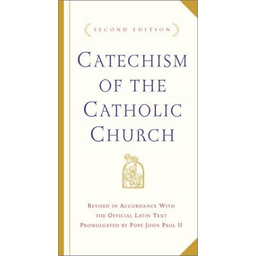 Catechism of the Catholic ChurchThe comprehensive reference for Catholic teaching across faith, morality, sacraments, and prayer - the lookup companion to a focused work like this.
 CatholicismBishop Robert Barron's accessible book-and-film tour of the Catholic faith - a far gentler on-ramp than a dense primary text.
 Introduction to ChristianityJoseph Ratzinger's single-volume reflection on the Creed - broader in subject and more compact, for readers wanting the foundations.
 Word on FireBishop Barron's media ministry - videos, articles, and study materials that often introduce themes from the Catholic tradition for general audiences.
Frequently asked questions
What exactly is Theology of the Body?
It is a series of 129 general-audience addresses delivered by Pope John Paul II between 1979 and 1984, later collected into book form. Across them he develops a sustained reflection on the human person as embodied - the meaning of the body, masculinity and femininity, marriage, celibacy, and the human vocation to love - built largely on close readings of Genesis and the Gospels.
Which edition should I read?
The definitive modern English edition is "Man and Woman He Created Them: A Theology of the Body," translated with commentary by Michael Waldstein (Pauline Books & Media, 2006). It gathers all 129 addresses into one volume with an introduction and footnotes. The original addresses are also freely available in full on the Vatican website.
Is it free to read?
The complete primary text is free: all 129 addresses are published on vatican.va. Most readers still buy the Waldstein edition (around $25-30 in paperback) for its translation and scholarly apparatus, or start with a lower-cost study guide. So the entry cost can be zero.
Is it hard to read?
For many readers, yes. The addresses are dense and philosophical, moving slowly through ideas, and the primary text presumes patience and familiarity with the Catholic theological tradition. It rewards careful and repeated reading, but it is not a quick or casual book. This is why most people approach it through a study guide or a popularizer first.
Should I start with the addresses or with a study guide?
For most first-time readers, a study guide or a popularization (such as the work of Christopher West) is the gentler starting point, because it paces the material and supplies background. Readers who want the original in full, or who are studying it closely for catechesis or seminary, go to the Waldstein edition or the free addresses.
Who studies Theology of the Body?
It is studied widely in Catholic settings - seminaries, catechetical and marriage-preparation programs, and parish reading groups - and has been popularized for general audiences by various teachers. It is one of the most-discussed bodies of teaching in modern Catholic thought, which is why a large ecosystem of guides and courses has grown up around it.
What does the work actually cover?
Reading closely through Genesis and the Gospels, it takes up the meaning of the human body, masculinity and femininity, the "spousal" meaning of the body, the human vocation to love, and the states of marriage and celibacy - all within a single framework. It is a work of theological reflection and catechesis rather than a practical handbook on relationships or marriage.
Sources & further reading
More Catholic Books
Catechism of the Catholic ChurchThe official, full-length compendium of Catholic doctrine - four pillars, ~2,865 numbered paragraphs, free online at the Vatican, and the reference nearly every other Catholic resource quotes. Compendium of the Catechism of the Catholic ChurchThe official 598-question summary of the full Catechism - Catholic doctrine in a portable question-and-answer format, with the complete text free at vatican.va.CatholicismBishop Robert Barron's richly illustrated tour of the Catholic faith - the companion book to the Word on Fire documentary series, written to walk a curious reader from Jesus to the last things.Introduction to ChristianityThe 1968 lectures that a young Joseph Ratzinger - later Pope Benedict XVI - turned into one of the 20th century's most cited works of Catholic theology, built section by section on the Apostles' Creed.
 Jesus of NazarethA sitting pope's personal, scholarly reading of the Gospels - three volumes that engage modern biblical criticism while searching for the Jesus the Gospels actually present.
 Story of a SoulThe spiritual autobiography of a young Carmelite nun who died at 24 - the small, warm book that taught a century of readers a path of holiness through little things done with great love.