1 Corinthians 8
People in this chapter
In Corinth the meat at market had usually passed through a temple first. Part burned on the altar, part fed the priests, part went on sale to the public1. A new believer would see that cut of beef and feel the pull of an old life. So can you eat it? The strong say yes, an idol is nothing. The weak are not so sure. Paul takes their side.
Tap any highlighted phrase to jump to the commentary that unpacks it.
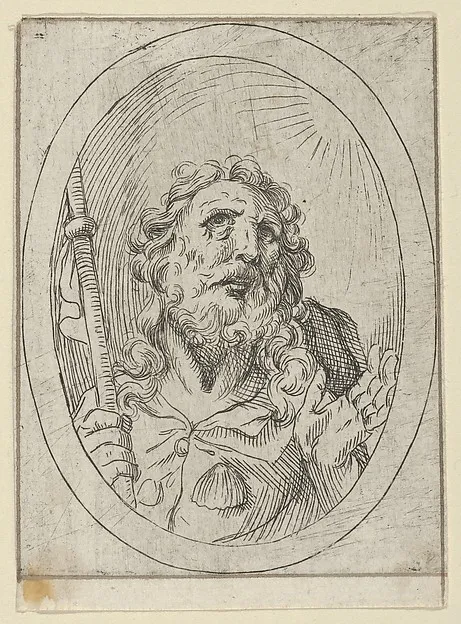
1 Corinthians 8:1-2Knowledge Puffeth Up
1Now as touching things offered unto idols, we know that we all have knowledge. Knowledge puffeth up, but charity edifieth. 2And if any man think that he knoweth any thing, he knoweth nothing yet as he ought to know.
The Greek under “puffeth up” is physioō, to inflate, like air filling a bladder. That is what knowledge does on its own. It swells a person with self-regard. You can hear the tone it produces: I know, you don't, I'm right, you're blind. Information without love simply makes you bigger in your own eyes. Love does the opposite. It builds the other person up.
There is a Corinthian swagger in verse 2, the settled confidence of someone who has arrived. I know, therefore I am wise, therefore I am finished. Paul slips the floor out from under it. The moment you treat your knowing as complete, you have shown you never grasped what knowing is for. The truly wise stay teachable. Certainty that has stopped listening is its own kind of blindness.
The proud man has not yet learned how to know, the shape real knowledge is meant to take. Facts can be true and still held all wrong. Knowledge is a tool you carry to love people better, and lay down the moment it stops doing that.
1 Corinthians 8:3-4To Be Known of God
3But if any man love God, the same is known of him. 4As concerning therefore the eating of those things that are offered in sacrifice unto idols, we know that an idol is nothing in the world, and that there is none other God but one.
This is the pivot. Not "if any man knows God," but "if any man loves God, the same is known of God." The direction matters. Your knowledge of God matters less than God's knowledge of you - His choice, His acceptance, His election. You are known. You matter. And that status does not depend on how much theology you have figured out.
Now Paul turns to the question itself, and the logic looks airtight. An idol is nothing in the world. Wood or stone, not a god. No real power lives in it. So the believer who eats that meat is not yielding to anything, because there is nothing there to yield to. Hold that thought. Paul is about to let it stand, and then walk straight past it.
Underneath the whole argument runs the oldest confession Israel knew2: one God, and no other. Not the crowd of idols the Corinthians grew up fearing. Not the gods of the neighbors. One. The logic that follows is clean. One God means idols are nothing, and nothing cannot defile a dinner. The strong have done their math correctly. And Paul is about to overturn the whole thing anyway.
1 Corinthians 8:5-6One Lord Jesus Christ
5For though there be that are called gods, whether in heaven or in earth, (as there be gods many, and lords many,) 6But to us there is but one God, the Father, of whom are all things, and we in him; and one Lord Jesus Christ, by whom are all things, and we by him.
Paul acknowledges the world the Corinthians live in: a world full of gods, many and lords many. The pagan cosmos is crowded with deity claims. And then Paul narrows it to a point: "But to us there is but one God, the Father, of whom are all things, and we in him." All creation flows from the Father. We exist in Him - not in any other power, not under any idol's thumb.
Then a second clause lands beside the first, in the same breath. One Lord, Jesus Christ, and all things came to be through Him. The Corinthians lived among lords many. Paul names one. Christ stands where the Father stands, the one through whom everything was made and through whom these believers themselves were made and bought. The Lord, sovereign above all.
1 Corinthians 8:7But Not Everyone Knows This
7Howbeit there is not in every man that knowledge: for some with conscience of the idol unto this hour eat it as a thing offered unto an idol; and their conscience being weak is defiled.
Here is the turn. Paul acknowledges the simple fact: not everyone has the knowledge he has just expounded. Not everyone knows that an idol is nothing. Not everyone knows that there is one God. Some have been Christians five years. Others five weeks. The knowledge that seems obvious to the strong is still distant to the weak.
Here is the wound. A weak believer eats the meat while every nerve is still whispering idolatry, and so eats against his own conscience. The act leaves him stained, ashamed, weaker in faith than before. Same plate, two different men. The strong one eats and tastes freedom. The weak one eats and tastes betrayal of the Lord he loves.
1 Corinthians 8:10-11Through Thy Knowledge
10For if any man see thee which hast knowledge sit at meat in the idol’s temple, shall not the conscience of him which is weak be emboldened to eat those things which are offered to idols; 11And through thy knowledge shall the weak brother perish, for whom Christ died?
Paul paints the scene: the strong believer, sure of their freedom, sits down at a meal in the idol's temple. It is a real place in Corinth - a building devoted to a pagan god, where sacrifices are made and public meals are held. The believer sits there, eats freely, unconcerned. And someone sees them.
The weak believer sees the strong one eating there. "If they do it, maybe I can too." The conscience that has been saying "No, this is idolatry, you cannot" suddenly yields. The weak believer, pressured by the example of the strong, eats the meat against their own conscience1. And in that moment, their faith sustains a wound.
The verb is brutal, and Paul chose it on purpose: perish. Your knowledge, your clear-eyed liberty, can actually undo a person's faith. Teach someone to override his own conscience and you dull the very instrument God speaks through in him. Freedom wielded carelessly can ruin the weak.
Then four words reset the whole weight of it. This timid, fearful, half-formed brother is someone Christ died for. He was worth the cross. He is purchased, he is loved at that price, and his faith is fragile enough that you hold real power over it. Paul is asking you to see them the way the Lord who bled for them already does.
1 Corinthians 8:12Ye Sin Against Christ
12But when ye sin so against the brethren, and wound their weak conscience, ye sin against Christ.
To wound a weak conscience is sin. Paul is clear. To put pressure on someone to violate their own moral sense, their own compass toward God - that is a violation of the first commandment in the other person. You are asking them to betray their conscience, and conscience is where the voice of the Spirit is still learning to speak in them.
Then the sentence turns and takes your breath. Sin against the brethren and you sin against Christ Himself. He has bound His life to His people so tightly that what bruises them bruises Him. The weak brother you find tiresome is not standing alone. Christ is standing with him, and counting the blow as His own.
1 Corinthians 8:13I Will Eat No Flesh
13Wherefore, if meat make my brother to offend, I will eat no flesh while the world standeth, lest I make my brother to offend.
To cause someone to offend is to place a stumbling block in their path. The Greek word is skandalon - a trap, a snare. Paul is saying: if my meat-eating becomes a trap that catches my brother and causes him to fall, then I must not eat it.
And here Paul stakes his own life on it. He has every right to the meat, and he gives it up. Not for a season. For as long as the world stands, for the rest of his days, if that is what keeps one fragile brother from falling. The man who wrote the chapter is the first to pay for it. The whole argument lands here, on a plate he pushes away.
Research trail
Sources & further study
These references support the historical, linguistic, manuscript, and contextual notes in this chapter. Scripture remains the primary text; external sources are provided so readers can inspect the research directly.
- Apostolic Decree (Acts 15:20-29) and Idol MeatCross-reference linking the Jerusalem Council's prohibition on idol meat (Acts 15:29) with Paul's nuanced teaching on the same subject in 1 Corinthians 8.
- Deuteronomy 6 (The Shema)Full text and commentary on the Shema - "Hear O Israel, the Lord thy God is one Lord" - Israel's foundational confession of monotheism underlying Paul's claim at 1 Corinthians 8:4.
- Eidōlon (εἴδωλον) - IdolGreek lexicon entries and morphological analysis of eidōlon, showing its roots and semantic field across classical and biblical texts.
Where this echoes in Scripture
Knowledge Puffeth Up
- 1 Corinthians 13:2Though I have all knowledge, and have not charity, I am nothing.Knowledge without love adds up to zero - Paul's own gloss on this chapter.
- John 13:35By this shall all men know that ye are my disciples, if ye have love one to another.Jesus makes love the mark of a disciple.
- Romans 14:19Let us therefore follow after the things which make for peace, and things wherewith one may edify another.The same verb for building up that Paul sets against knowledge here.
To Be Known of God
- Deuteronomy 6:4Hear, O Israel: The LORD our God is one LORD.The Shema - the one-God confession Paul leans on at verse 4.
- Galatians 4:9Now, after that ye have known God, or rather are known of God.The same reversal: being known by God matters more than knowing.
- Psalm 115:4-7Their idols are silver and gold, the work of men's hands. They have mouths, but they speak not.Why an idol is “nothing in the world” - it is only handmade stuff.
One Lord Jesus Christ
- Colossians 1:16For by him were all things created, that are in heaven, and that are in earth.All things made by Christ and for Christ - the fuller statement of verse 6.
- John 1:3All things were made by him; and without him was not any thing made that was made.The Word as the one through whom everything came to be.
- Hebrews 1:2His Son... by whom also he made the worlds.The Son as the agent of creation, echoing “by whom are all things.”
But Not Everyone Knows This
- Romans 14:23He that doubteth is damned if he eat, because he eateth not of faith.To act against your own conscience is itself the sin.
- 1 Corinthians 10:28-29Eat not for his sake that shewed it, and for conscience sake.Paul returns to idol meat and again protects the other person's conscience.
- Titus 1:15Unto them that are defiled and unbelieving is nothing pure; but even their mind and conscience is defiled.How a conscience becomes defiled when its convictions are crossed.
Through Thy Knowledge
- Matthew 25:40Inasmuch as ye have done it unto one of the least of these my brethren, ye have done it unto me.Christ counts what is done to the least as done to Himself.
- Romans 14:15Destroy not him with thy meat, for whom Christ died.The same plea, almost word for word, in a parallel letter.
- Romans 15:1We then that are strong ought to bear the infirmities of the weak, and not to please ourselves.The strong carry the weak, setting aside their own rights.
Ye Sin Against Christ
- Acts 9:4Saul, Saul, why persecutest thou me?Christ identifies with His people - harm to them is harm to Him.
- Matthew 18:6Whoso shall offend one of these little ones... it were better for him that a millstone were hanged about his neck.Jesus' own warning about wounding a vulnerable believer.
- Zechariah 2:8He that toucheth you toucheth the apple of his eye.The Lord takes injury to His people personally - an older echo of the same bond.
I Will Eat No Flesh
- 1 Corinthians 11:1Be ye followers of me, even as I also am of Christ.Paul's self-denial here is the imitation of Christ he calls others to.
- Philippians 2:6-7Who, being in the form of God... made himself of no reputation, and took upon him the form of a servant.Christ laying down His rights - the pattern Paul follows over a meal.
- Romans 15:3For even Christ pleased not himself.The one-line summary of the whole chapter's ethic.