2 Chronicles 1
People in this chapter
Solomon is brand new on the throne, David just buried, a whole nation suddenly his to govern. He does not begin with armies or a building project. He gathers the leaders of Israel and leads them, a nation in procession, up to the old tent Moses made at Gibeon, and there offers a thousand burnt offerings. It is worship on a scale that matches the task.1
Tap any highlighted phrase to jump to the commentary that unpacks it.
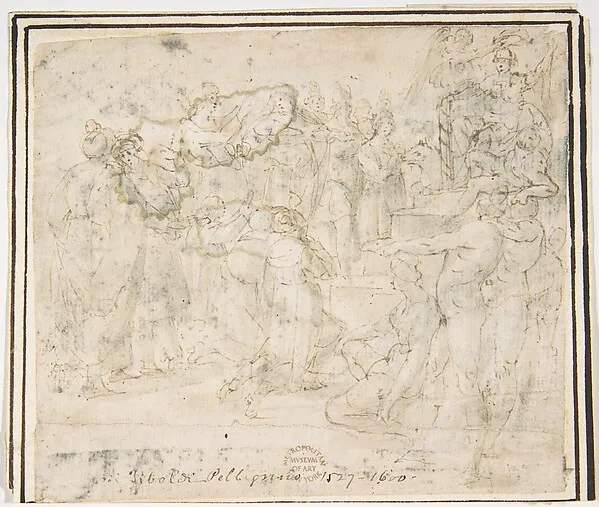
2 Chronicles 1:1-3Solomon Gathers All Israel to Gibeon
1And Solomon the son of David was strengthened in his kingdom, and the LORD his God was with him, and magnified him exceedingly. 2Then Solomon spake unto all Israel, to the captains of thousands and of hundreds, and to the judges, and to every governor in all Israel, the chief of the fathers. 3So Solomon, and all the congregation with him, went to the high place that was at Gibeon; for there was the tabernacle of the congregation of God, which Moses the servant of the LORD had made in the wilderness.
Every clause of the opening verse is doing work. Solomon is named first as the son of David - the heir of the promises God made to his father, the next link in a covenant line. He is strengthened in his kingdom, the throne now firm beneath him after the uncertainties that shadowed David's last days. But the sentence is careful to say where that strength comes from: the LORD his God was with him. Solomon is great because God is with him and has chosen to magnify him.
The Chronicler sets this down before anything else so the whole reign is read in its light. Whatever Solomon goes on to build or acquire, the foundation is the presence and favor of God. A reign that began any other way would rest on sand.
Solomon's first recorded act as king is to gather the nation for worship. Then Solomon spake unto all Israel, to the captains of thousands and of hundreds, and to the judges, and to every governor in all Israel, the chief of the fathers (v. 2). The whole leadership of the people is summoned - military officers, judges, governors, the heads of families - and they go up together, all the congregation with him (v. 3). This is a deliberately public beginning.
The young king does not slip away to seek God in private; he leads an entire nation in procession to the place of sacrifice, so that the reign is launched, from its first day, on its knees before the LORD. There is something instructive in the order. Before Solomon asks God for anything, before he builds the temple or organizes the kingdom, he brings the people he is to lead into the presence of God.
The leader sets the direction of the led; Solomon points the whole company Godward at the very start.
2 Chronicles 1:4-6A Thousand Burnt Offerings at Gibeon
4But the ark of God had David brought up from Kirjathjearim to the place which David had prepared for it: for he had pitched a tent for it at Jerusalem. 5Moreover the brasen altar, that Bezaleel the son of Uri, the son of Hur, had made, he put before the tabernacle of the LORD: and Solomon and the congregation sought unto it. 6And Solomon went up thither to the brasen altar before the LORD, which was at the tabernacle of the congregation, and offered a thousand burnt offerings upon it.
The destination is carefully explained, because at this moment Israel's worship is split between two places. Solomon goes to the high place that was at Gibeon; for there was the tabernacle of the congregation of God, which Moses the servant of the LORD had made in the wilderness (v. 3). Gibeon holds the ancient tent itself - the structure raised in the days of Moses - and standing before it, the brasen altar that Bezaleel the son of Uri had made (v. 5), the very craftsman God filled with skill to build the tabernacle's furnishings at Sinai.
Meanwhile, as verse 4 notes, the ark of God is no longer there; David had already brought it up to a tent he pitched for it in Jerusalem. So the altar of sacrifice and the ark of God's presence are, for now, in two different cities. Solomon goes to where the altar is - to the place of approach and offering, where the whole congregation may draw near. He honors the old, God-given pattern of worship handed down from Moses, seeking God at the appointed altar.
The detail is not antiquarian clutter; it shows a king who begins by reverencing what God had already established.
At Gibeon Solomon does not offer a token sacrifice. And Solomon went up thither to the brasen altar before the LORD… and offered a thousand burnt offerings upon it (v. 6). The number is staggering - a thousand animals given wholly to God, the burnt offering being the one sacrifice in which nothing is kept back for the worshipper and the whole is consumed on the altar. There is no calculation here, no minimal compliance. It is devotion poured out on a scale that matches the magnitude of what Solomon is undertaking.
The lavishness says something about the king's heart at this hour: facing a task far larger than himself, he comes to God with open hands. And the timing matters. This great act of self-giving worship comes before the night when God will appear and make His offer. Solomon seeks God first, with everything, and only afterward does God draw near to ask what He shall give. The order is its own quiet lesson - the seeking precedes the receiving.
2 Chronicles 1:7-9Ask What I Shall Give Thee
7In that night did God appear unto Solomon, and said unto him, Ask what I shall give thee. 8And Solomon said unto God, Thou hast shewed great mercy unto David my father, and hast made me to reign in his stead. 9Now, O LORD God, let thy promise unto David my father be established: for thou hast made me king over a people like the dust of the earth in multitude.
There are no conditions attached to the offer, no narrowing of the field. God appears that night and holds out an open hand to a young king - Ask what I shall give thee (v. 7), whatever you ask, I will give. The breadth of it is the whole point. This is not a riddle to be solved; it is a blank space, and Solomon is invited to fill it, and in the filling, to reveal what his heart most truly wants.
A person can hide a great deal, but not this. When every door stands open and the choice is genuinely free, what you reach for is what you love. So the offer is, quietly, a mirror. It comes, too, right on the heels of Solomon's thousand offerings - God answering an act of wholehearted worship by drawing near and asking what He shall give. The grace runs ahead of the request. Before Solomon asks, God is already offering.
Solomon's answer begins not with a request but with remembrance and worship. Thou hast shewed great mercy unto David my father, and hast made me to reign in his stead. Now, O LORD God, let thy promise unto David my father be established (vv. 8-9). Before he asks for anything, he names what God has already done - the great mercy shown to David, the throne given to David's son - and he asks, above all, that God's own promise would stand.
His mind is on the covenant, not on himself. Then he frames the difficulty that presses on him: thou hast made me king over a people like the dust of the earth in multitude (v. 9). The image is deliberate. The people are like the dust of the earth - the very phrase of the promise to Abraham - too many to count, far beyond what one young man could possibly govern in his own strength. Solomon feels the weight of a task too big for him, and that honest sense of inadequacy is the soil his prayer grows in.
He approaches the open offer as a man staggered by a responsibility he cannot carry alone.
2 Chronicles 1:10-12Wisdom and Knowledge Granted
10Give me now wisdom and knowledge, that I may go out and come in before this people: for who can judge this thy people, that is so great? 11And God said to Solomon, Because this was in thine heart, and thou hast not asked riches, wealth, or honour, nor the life of thine enemies, neither yet hast asked long life; but hast asked wisdom and knowledge for thyself, that thou mayest judge my people, over whom I have made thee king: 12Wisdom and knowledge is granted unto thee; and I will give thee riches, and wealth, and honour, such as none of the kings have had that have been before thee, neither shall there any after thee have the like.
Out of that sense of need comes the request itself: Give me now wisdom and knowledge, that I may go out and come in before this people: for who can judge this thy people, that is so great? (v. 10). Notice everything Solomon does not ask for. Offered anything in the world, he passes over riches, over the defeat of his enemies, over a long and comfortable life. What he asks for is the one thing the task in front of him actually demands - the wisdom to lead.
The phrase go out and come in before this people is an old idiom for the daily work of leadership, the whole business of guiding a people through their affairs day after day. And the reason he gives is telling: who can judge this thy people, that is so great? He calls them thy people, not his - they belong to God, and Solomon is only the steward set over them. His request is shaped entirely by service.
He wants wisdom not to exalt himself but to do right by the people God has entrusted to him. It is the prayer of a man who has measured the job, found himself too small for it, and asked God for exactly what the job requires.1
God's reply fastens first on Solomon's heart: Because this was in thine heart, and thou hast not asked riches, wealth, or honour, nor the life of thine enemies, neither yet hast asked long life; but hast asked wisdom and knowledge for thyself, that thou mayest judge my people (v. 11). God reads the request back to him as a verdict on his character - lingering over each thing Solomon might have grasped for and did not.
The young king passed the test of the open hand. And so the gift is granted, and then exceeded: Wisdom and knowledge is granted unto thee; and I will give thee riches, and wealth, and honour, such as none of the kings have had that have been before thee, neither shall there any after thee have the like (v. 12). Here is the chapter's great principle, written plain. Solomon asked for the one thing; God gives him that and adds the very things he declined to seek.
Because he sought wisdom to serve rather than wealth to enjoy, he receives both wisdom and wealth - the latter as the overflow of the former. God gives riches, here, to the man who proved he would not put them first. The reward fits the heart it answers.
2 Chronicles 1:13-17Silver and Gold as Plenteous as Stones
13Then Solomon came from his journey to the high place that was at Gibeon to Jerusalem, from before the tabernacle of the congregation, and reigned over Israel. 14And Solomon gathered chariots and horsemen: and he had a thousand and four hundred chariots, and twelve thousand horsemen, which he placed in the chariot cities, and with the king at Jerusalem. 15And the king made silver and gold at Jerusalem as plenteous as stones, and cedar trees made he as the sycomore trees that are in the vale for abundance. 16And Solomon had horses brought out of Egypt, and linen yarn: the king’s merchants received the linen yarn at a price. 17And they fetched up, and brought forth out of Egypt a chariot for six hundred shekels of silver, and an horse for an hundred and fifty: and so brought they out horses for all the kings of the Hittites, and for the kings of Syria, by their means.
The night vision over, Solomon returns to take up the reign now confirmed by God's own word: Then Solomon came from his journey to the high place that was at Gibeon to Jerusalem, from before the tabernacle of the congregation, and reigned over Israel (v. 13). The verse marks a turning. The worship at Gibeon and the encounter with God are complete; now Solomon goes back to the capital to govern. And the Chronicler is careful to note where he came from - from before the tabernacle of the congregation. The reign that follows flows out of that altar and that promise.
Everything the chapter goes on to describe - the chariots, the horsemen, the silver and gold heaped up in Jerusalem - is meant to be read as the keeping of God's word in verse 12. Solomon does not seize this abundance; it is given. He had asked for wisdom; God said He would add riches and honour besides; and the closing verses simply show that promise coming true on a scale the world would long remember.
The first sign of the promised abundance is military might on an enormous scale: And Solomon gathered chariots and horsemen: and he had a thousand and four hundred chariots, and twelve thousand horsemen, which he placed in the chariot cities, and with the king at Jerusalem (v. 14). Chariots were the most formidable weapon of the age - the heavy armor of ancient warfare - and Solomon amasses them in the thousands, distributing them among fortified chariot cities and keeping a force with himself in the capital.
The numbers underscore how thoroughly God's word in verse 12 is being fulfilled: here is a king of unrivaled resource and reach. The Chronicler records the strength plainly, as one of the marks of the greatness God granted. The reader who knows the wider law of Scripture may feel a quiet undercurrent here - for the king was warned in the law of Moses not to multiply horses for himself - but the chapter does not pause on that note.
Its eye is on the gift: the wisdom Solomon asked for has brought, in its train, a kingdom of remarkable power, exactly as God said it would.
The picture of abundance then rises to something almost beyond imagining: And the king made silver and gold at Jerusalem as plenteous as stones, and cedar trees made he as the sycomore trees that are in the vale for abundance (v. 15). The images are chosen to overwhelm. Silver and gold - the rarest and most coveted of metals - became as common in Jerusalem as stones, as ordinary as the rubble underfoot. The prized cedar of Lebanon, costly timber hauled from far away, became as plentiful as the lowly sycamore that grew wild in the foothills.
This is the language of a wealth so vast that what is precious everywhere else is commonplace here. And it is precisely the fulfillment of verse 12 - riches, and wealth, and honour, such as none of the kings have had. The man who, offered anything, refused to ask for riches now finds them poured out at his feet in measureless supply. The chapter sets the two scenes side by side without comment, and the lesson sits in the seam between them: Solomon sought wisdom, and the wealth he did not seek came flooding in after it.
What he would not chase, God gave.
The final verses turn to the machinery of all this wealth - a flourishing trade in horses and chariots: And Solomon had horses brought out of Egypt, and linen yarn… And they fetched up, and brought forth out of Egypt a chariot for six hundred shekels of silver, and an horse for an hundred and fifty: and so brought they out horses for all the kings of the Hittites, and for the kings of Syria, by their means (vv. 16-17).
Solomon's kingdom sits astride the great trade routes, and his merchants become the middlemen of the region's arms trade, importing horses and chariots from Egypt and selling them on to the kings of the surrounding nations. The detail rounds out the portrait of a reign of immense commercial reach and wealth - Israel at the crossroads of the nations, prosperous and influential. The chapter ends, then, exactly where God's promise pointed: a king lifted to greatness, his treasuries overflowing, his name and reach extending far beyond his own borders.
It is the visible answer to the prayer of verse 10 - a man who asked for wisdom to serve, and was given a kingdom whose splendor the world would not forget.1
Research trail
Sources & further study
These references support the historical, linguistic, manuscript, and contextual notes in this chapter. Scripture remains the primary text; external sources are provided so readers can inspect the research directly.
- 2 Chronicles 1 - Translators' NotesThe NET Bible's detailed footnotes on 2 Chronicles 1 - the standing of the tabernacle and brasen altar at Gibeon (vv. 3-6), the idiom “go out and come in before this people” for the work of leadership (v. 10), and the trade in chariots and horses from Egypt in the closing verses (vv. 16-17).
- 2 Chronicles 1 · Hebrew + classical Jewish commentaryThe Hebrew text of 2 Chronicles 1 with Rashi, Ibn Ezra, and other classical commentators side by side - useful for chokmah and madda (v. 10, the “wisdom and knowledge” Solomon sought), for olah (v. 6, the “burnt offering” wholly consumed), and for the much-discussed phrase rendered “go out and come in before this people.”
- 2 Chronicles 1 ↔ 1 Kings 3 · Matthew 6 · James 1 · 1 Corinthians 1Traces the threads tying 2 Chronicles 1 to the rest of Scripture - Solomon's night vision and prayer (vv. 7-12) read alongside its parallel in 1 Kings 3, and the heart that seeks wisdom first and receives the rest besides (v. 12) read beside seek ye first the kingdom of God… and all these things shall be added (Matt. 6:33) and if any of you lack wisdom, let him ask of God (Jas. 1:5).
Where this echoes in Scripture
A Thousand Burnt Offerings at Gibeon
- 1 Kings 3:4the king went to Gibeon to sacrifice there; for that was the great high place: a thousand burnt offerings did Solomon offer upon that altar.The parallel account of verses 3-6 - the same journey to Gibeon and the same thousand offerings.
- 2 Samuel 7:12-13I will set up thy seed after thee... and I will stablish the throne of his kingdom for ever.The promise behind verse 1 - the covenant with David that makes his son a king established by God.
- Luke 1:32-33the Lord God shall give unto him the throne of his father David... and of his kingdom there shall be no end.The throne of David in verse 1 carried to its end - the Son whose reign does not pass away.
- Matthew 1:1The book of the generation of Jesus Christ, the son of David, the son of Abraham.David's line (v. 1) arriving at last - the Gospels open by naming its greater heir.
- Philippians 2:9Wherefore God also hath highly exalted him, and given him a name which is above every name.Solomon was magnified for a season (v. 1); the greater Son was raised and exalted past every king.
- Exodus 31:2-5I have called by name Bezaleel... and I have filled him with the spirit of God, in wisdom... to work in gold, and in silver, and in brass.The maker of the brasen altar in verse 5 - the Spirit-filled craftsman of the tabernacle at Sinai.
- Romans 12:1that ye present your bodies a living sacrifice, holy, acceptable unto God, which is your reasonable service.The burnt offering of verse 6 carried forward - the whole self given to God, nothing held back.
- Psalm 84:7They go from strength to strength, every one of them in Zion appeareth before God.The congregation going up together to seek God (vv. 2-3) - a whole people in procession toward His presence.
Wisdom and Knowledge Granted
- 1 Kings 3:9-13Give therefore thy servant an understanding heart to judge thy people... lo, I have given thee a wise and an understanding heart... And I have also given thee that which thou hast not asked, both riches, and honour.The fuller account of verses 7-12 - the same prayer for wisdom, the same gift granted with riches added.
- James 1:5If any of you lack wisdom, let him ask of God, that giveth to all men liberally, and upbraideth not; and it shall be given him.Solomon's prayer (v. 10) opened to everyone - the wisdom God gives freely to all who ask.
- Matthew 6:33But seek ye first the kingdom of God, and his righteousness; and all these things shall be added unto you.The principle of verse 12 stated by Christ - the right thing sought first, the rest given besides.
- Matthew 12:42The queen of the south... came from the uttermost parts of the earth to hear the wisdom of Solomon; and, behold, a greater than Solomon is here.The wisdom granted in verse 12 surpassed - the greater Wisdom standing among His own people.
- Proverbs 2:6For the LORD giveth wisdom: out of his mouth cometh knowledge and understanding.The source of Solomon's gift (v. 12) - wisdom and knowledge as things God Himself bestows.
- 1 Corinthians 1:24, 30Christ the power of God, and the wisdom of God... who of God is made unto us wisdom.The wisdom Solomon prayed for (v. 10) named as a Person - Christ Himself made wisdom for us.
- Hebrews 13:20that great shepherd of the sheep, through the blood of the everlasting covenant.Solomon led a vast flock (v. 10); the greater Son shepherds His people and gives Himself for them.
Silver and Gold as Plenteous as Stones
- 1 Kings 10:27And the king made silver to be in Jerusalem as stones, and cedars made he to be as the sycomore trees that are in the vale, for abundance.The same abundance as verse 15 - the wealth of Solomon's reign described in nearly identical words.
- Matthew 6:19-21Lay not up for yourselves treasures upon earth... But lay up for yourselves treasures in heaven... For where your treasure is, there will your heart be also.The heaped silver and gold of verse 15 set against the treasure that does not corrupt.
- Colossians 2:3In whom are hid all the treasures of wisdom and knowledge.The wisdom and the wealth of this chapter joined in One - Christ, in whom both are stored.
- Ephesians 3:8that I should preach among the Gentiles the unsearchable riches of Christ.Solomon's gold made earth's riches commonplace (v. 15); a greater wealth is held out to all.
- Ecclesiastes 2:9-11So I was great, and increased more than all that were before me in Jerusalem... then I looked on all the works that my hands had wrought... and, behold, all was vanity.A later word on the very abundance of verses 14-17 - greatness real, yet not the final good.
- Psalm 20:7Some trust in chariots, and some in horses: but we will remember the name of the LORD our God.The chariots and horsemen of verse 14 weighed against the trust that rests in God alone.