Ecclesiastes 7
The Preacher stops chasing and starts weighing. His scale has one word stamped on it: better. A good name beats precious ointment. The funeral teaches more than the feast. Sorrow shapes the heart deeper than laughter. None of it sounds right at first. He is pointing you to where wisdom is actually born.1
Tap any highlighted phrase to jump to the commentary that unpacks it.
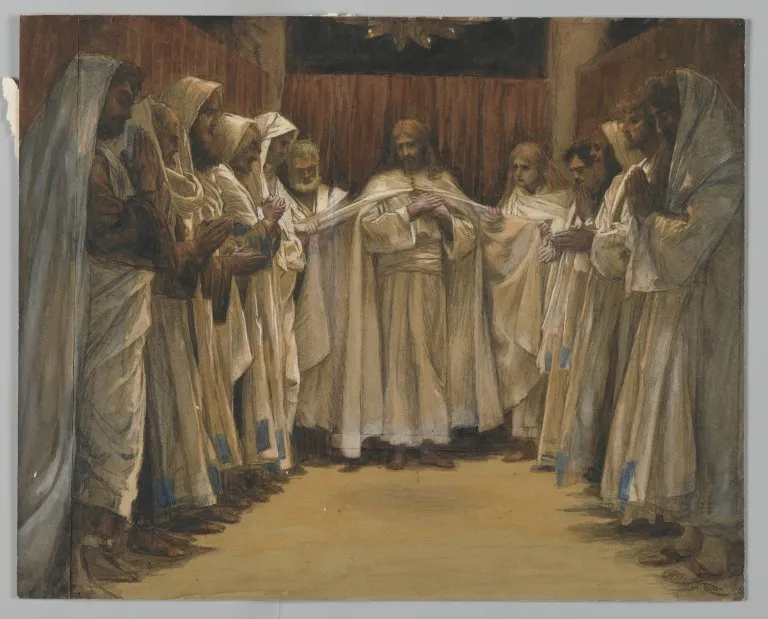
Ecclesiastes 7:1-2A Good Name Is Better Than Precious Ointment
1A good name is better than precious ointment; and the day of death than the day of one’s birth. 2It is better to go to the house of mourning, than to go to the house of feasting: for that is the end of all men; and the living will lay it to his heart.
In the ancient world a flask of fine perfumed oil was a small fortune - poured at feasts, lavished on honored guests, kept as treasure like silver. The Preacher sets that flask on one pan of his scale and a good name on the other, and the name wins. It is a verdict that has outlived three thousand years of fashion. The point is partly about what lasts. Perfume is poured out and is gone; its fragrance fills a room for an evening and then fades.
But a name - a reputation built on integrity, faithfulness, and wisdom - clings to a person and outlives them, carried in the memory of everyone they touched. There is a deliberate play in the Hebrew that makes the line almost sing, the word for name echoing the word for ointment so closely that the two seem to rhyme.2 And then he adds the line that makes the reader sit up: and the day of death than the day of one's birth. The same logic carried to its end: a life is finished, weighed, and known at its close in a way it never can be at its dawn.
The day you are born, everything is still a question. The day you die, the answer is in.
Everything in you prefers the feast and dreads the funeral. The Preacher says the funeral does you more good (v. 2), and he tells you exactly why. The house of mourning sets the end of all men in front of you and will not let you look away. Stand beside a grave and you cannot keep up the pleasant fiction that you will go on forever; the truth presses in, and the living will lay it to his heart. A house of feasting can do the opposite.
It can lull a person into forgetting that the clock is running at all. The Preacher has urged the enjoyment of food and labor as gifts of God, and will again; this is a summons to honesty alongside that joy. Sorrow has a way of stripping off illusion and clearing the mind, so that a person finally weighs what matters. The mourner, oddly, sees more clearly than the reveler.
Ecclesiastes 7:3-6Sorrow Is Better Than Laughter
3Sorrow is better than laughter: for by the sadness of the countenance the heart is made better. 4The heart of the wise is in the house of mourning; but the heart of fools is in the house of mirth. 5It is better to hear the rebuke of the wise, than for a man to hear the song of fools. 6For as the crackling of thorns under a pot, so is the laughter of the fool: this also is vanity.
Then the truth gets its sharpest point. By the sadness of the countenance the heart is made better (v. 3) - an observation about how the human heart is schooled. Sorrow does something to a person that easy laughter never can. It deepens. It teaches patience, compassion for others who suffer, and a sober sense of what is worth caring about. A face marked by sadness often sits above a heart that has been made better - softened, enlarged, made wise.
Verse 4 draws the line plainly: The heart of the wise is in the house of mourning; but the heart of fools is in the house of mirth. The two are not divided by intelligence but by what they are drawn toward. The wise are willing to sit where life is real; the fool is forever fleeing toward the next distraction. A wise person still laughs, but does not live to be amused, and is not afraid of the rooms where the truth is told.
The first movement closes by contrasting two kinds of sound a person can choose to live around: It is better to hear the rebuke of the wise, than for a man to hear the song of fools. For as the crackling of thorns under a pot, so is the laughter of the fool: this also is vanity (vv. 5-6). A wise person's rebuke stings; a fool's song flatters and entertains. Most people would rather be sung to than corrected - and that preference, the Preacher warns, is exactly backwards.
The honest hard word does you good; the pleasant empty one leaves you where you were. His picture for the fool's laughter is unforgettable: dry thorns thrown under a pot crackle loud and bright and hot, a great noisy blaze - and then they are ash, gone before the water boils. So is the laughter of the fool: a burst of cheerful noise that produces nothing and lasts no time. There is even a pun lurking in the Hebrew, the word for thorns chiming against the word for pot. A person who builds a life around such laughter is warming themselves at a fire that cannot last - this also is vanity. Better, by far, the rebuke that lasts and corrects than the song that pleases and vanishes.
Ecclesiastes 7:7-9Better Is the End of a Thing
7Surely oppression maketh a wise man mad; and a gift destroyeth the heart. 8Better is the end of a thing than the beginning thereof: and the patient in spirit is better than the proud in spirit. 9Be not hasty in thy spirit to be angry: for anger resteth in the bosom of fools.
The Preacher turns to the temper of the wise, and he begins with a warning that even the wise are not beyond ruin: Surely oppression maketh a wise man mad; and a gift destroyeth the heart (v. 7). Pressure can break the soundest judgment, and a bribe can rot the steadiest heart - wisdom is not a charm that makes a person untouchable. Then comes one of the chapter's great lines: Better is the end of a thing than the beginning thereof: and the patient in spirit is better than the proud in spirit (v. 8).
We are wired to prize beginnings - the fresh start, the new romance, the brilliant proposal, the opening day. The Preacher says the end is better, because only the end shows what a thing was actually made of. A wedding is lovely, but a marriage kept faithful for fifty years says more about love than any wedding day could. A bold launch impresses, but a work carried through to completion proves the wisdom the launch only promised.
And this is exactly why the patient in spirit outranks the proud in spirit: pride wants the glory now, at the start, and cannot bear to wait; patience can endure the long middle and trust the end. Verse 9 follows naturally: Be not hasty in thy spirit to be angry: for anger resteth in the bosom of fools. The short fuse is a mark of folly - the proud spirit refusing to wait and boiling over.
Ecclesiastes 7:10-12Say Not the Former Days Were Better
10Say not thou, What is the cause that the former days were better than these? for thou dost not enquire wisely concerning this. 11Wisdom is good with an inheritance: and by it there is profit to them that see the sun. 12For wisdom is a defence, and money is a defence: but the excellency of knowledge is, that wisdom giveth life to them that have it.
Next the Preacher takes aim at a particular trick the mind plays in hard times: Say not thou, What is the cause that the former days were better than these? for thou dost not enquire wisely concerning this (v. 10). When the present is painful, the past gleams. We are sure things used to be better - the country, the church, our own younger selves - and we ask, with a sigh, where it all went wrong.
The Preacher cuts the question off: to ask it that way is not to enquire wisely. The golden past is usually a trick of memory, which keeps the warm light and quietly edits out the troubles that were just as real then as ours are now. Worse, the question is a refusal of the present - it spends the energy of today mourning a yesterday that was never quite so golden, and squanders the day actually given.
Then he sets wisdom beside the other safeguards people lean on: Wisdom is good with an inheritance… For wisdom is a defence, and money is a defence: but the excellency of knowledge is, that wisdom giveth life to them that have it (vv. 11-12). Money can shelter a person, and so can wisdom - but only one of them giveth life. A fortune can guard your circumstances; wisdom guards the soul, and that is the higher protection.
Ecclesiastes 7:13-14In the Day of Adversity Consider
13Consider the work of God: for who can make that straight, which he hath made crooked? 14In the day of prosperity be joyful, but in the day of adversity consider: God also hath set the one over against the other, to the end that man should find nothing after him.
Now the Preacher lifts his eyes from human strategy to the work of God Himself, and the perspective changes everything: Consider the work of God: for who can make that straight, which he hath made crooked? (v. 13). There are bends in life that no amount of effort will straighten - circumstances we did not choose and cannot fix, hard providences that simply are. The Preacher does not pretend otherwise, and he does not rage against it.
He says: consider it. Look at the shape of things, accept that some of it is set by a hand higher than ours, and stop exhausting yourself trying to bend what God has bent. The Preacher is calling for the humility of a creature before the Maker, the refusal to play God with a world we did not build. And it sets up the chapter's most quietly profound counsel in the verse that follows.
Wisdom, here, is the power to see things rightly - to recognize the work of God in both the straight stretches and the crooked ones, and to live accordingly.
Then comes the pivot of the whole chapter, a single verse that holds the secret of living wisely under God: In the day of prosperity be joyful, but in the day of adversity consider: God also hath set the one over against the other, to the end that man should find nothing after him (v. 14). Two kinds of days are coming to every life, and the Preacher gives a different posture for each. On the bright day - be joyful. Do not refuse the good gift out of guilt or suspicion; receive it, enjoy it, give thanks.
On the dark day - consider. Stop and weigh it, ask what it is teaching, let it do its work on the heart. And the reason both belong is profound: God also hath set the one over against the other. The same hand gives both, and sets them side by side on purpose, so that no one can read the future from their present circumstances or claim to have the whole of life mapped out - that man should find nothing after him. Prosperity is not proof of favor, nor adversity proof of abandonment; the two are woven together by God so that we walk by trust rather than by sight.
The bright day calls for gratitude; the bitter day calls for reflection. Each is from God, and each is to be met as such.
Ecclesiastes 7:15-19He That Feareth God Shall Come Forth of Them All
15All things have I seen in the days of my vanity: there is a just man that perisheth in his righteousness, and there is a wicked man that prolongeth his life in his wickedness. 16Be not righteous over much; neither make thyself over wise: why shouldest thou destroy thyself ? 17Be not over much wicked, neither be thou foolish: why shouldest thou die before thy time? 18It is good that thou shouldest take hold of this; yea, also from this withdraw not thine hand: for he that feareth God shall come forth of them all. 19Wisdom strengtheneth the wise more than ten mighty men which are in the city.
The Preacher now lays out the hardest fact he has had to live with: All things have I seen in the days of my vanity: there is a just man that perisheth in his righteousness, and there is a wicked man that prolongeth his life in his wickedness (v. 15). He has watched the good die young and the wicked grow old in comfort. Seen from under the sun - the vantage of this life alone, which is where this book does its looking - the moral books do not balance.
This is not a statement about God's ultimate justice; it is an honest report of what the visible world looks like, and the Preacher refuses to paper over it. Out of that hard sight comes counsel that has puzzled readers for centuries: Be not righteous over much; neither make thyself over wise: why shouldest thou destroy thyself? Be not over much wicked, neither be thou foolish: why shouldest thou die before thy time? (vv. 16-17).
He is plainly not endorsing a little wickedness. The warning is against a particular self-defeating extremism: a brittle, self-made “righteousness” that exhausts and embitters a person, the proud perfectionism that sets itself up as judge and burns itself out - and, on the other side, the recklessness that throws off all restraint. Both ditches destroy. The wise walk the road between them.1
The Preacher does not leave the balance hanging as mere moderation; he anchors it: It is good that thou shouldest take hold of this; yea, also from this withdraw not thine hand: for he that feareth God shall come forth of them all (v. 18). The thing that keeps a person from both ditches - from the brittle self-righteousness and from the reckless folly - is the fear of God. This is the steady center the whole book keeps returning to.
It is reverent awe: living with the constant awareness that God is God and we are not, that we stand before Him. The one who fears God shall come forth of them all - will make it safely through the extremes that wreck other people, because his bearings are fixed on something outside himself. Then a word of encouragement: Wisdom strengtheneth the wise more than ten mighty men which are in the city (v. 19). A walled city in that world trusted its defense to its strongest warriors.
The Preacher says wisdom does more for a person than ten such champions standing guard. The quiet strength of a wise and God-fearing heart is a better defense than any garrison - it holds when force fails.
Ecclesiastes 7:20-22There Is Not a Just Man Upon Earth
20For there is not a just man upon earth, that doeth good, and sinneth not. 21Also take no heed unto all words that are spoken; lest thou hear thy servant curse thee: 22For oftentimes also thine own heart knoweth that thou thyself likewise hast cursed others.
In the middle of this practical counsel the Preacher states a truth that reaches far past the proverb it sits in: For there is not a just man upon earth, that doeth good, and sinneth not (v. 20). It is offered almost in passing, as the reason for the gentle realism around it - do not hold others to a standard you yourself cannot meet, because no one meets it. Not one person on earth does only good and never sins.
Simple honesty about the human condition: even the best fall short, and the person who imagines otherwise about themselves is the most deceived of all. The Preacher has spoken all chapter of the wise, the righteous, the God-fearing, and means it - the point is simply that none of them are without fault. From it flows a beautifully practical mercy: Also take no heed unto all words that are spoken; lest thou hear thy servant curse thee: for oftentimes also thine own heart knoweth that thou thyself likewise hast cursed others (vv. 21-22).
Do not go collecting every careless word said about you. If you eavesdrop on everything, you will hear someone speak ill of you - and your own conscience knows you have done the very same to others. The grace we need extended to us, we must extend. Knowing that no one is sinless should make a person gentler, not harsher.
Ecclesiastes 7:23-25That Which Is Far Off, and Exceeding Deep
23All this have I proved by wisdom: I said, I will be wise; but it was far from me. 24That which is far off, and exceeding deep, who can find it out? 25I applied mine heart to know, and to search, and to seek out wisdom, and the reason of things, and to know the wickedness of folly, even of foolishness and madness:
Now the Preacher does something rare for a wisdom teacher: he admits the wall he ran into. All this have I proved by wisdom: I said, I will be wise; but it was far from me. That which is far off, and exceeding deep, who can find it out? (vv. 23-24). He set out to master wisdom, to get to the bottom of things - and found that the deepest answers stayed out of reach, far off, and exceeding deep. Here is the honesty that makes this book so trustworthy.
The wisest man of his age tells you plainly that wisdom has a horizon he could not cross, that the full reason of things lies deeper than any human mind can plumb. He applied his heart to know, and to search, and to seek out wisdom, and the reason of things (v. 25) - and hit the wall regardless. It is a discovery about the size of the creature against the size of the world God made.
There is a kind of pretended wisdom that claims to have explained everything; true wisdom knows where its own light gives out and is humble before the dark. The Preacher has reached the edge of what searching under the sun can find - and he is honest enough to say so, which is itself a deep form of wisdom.
Ecclesiastes 7:26-29God Hath Made Man Upright
26And I find more bitter than death the woman, whose heart is snares and nets, and her hands as bands: whoso pleaseth God shall escape from her; but the sinner shall be taken by her. 27Behold, this have I found, saith the preacher, counting one by one, to find out the account: 28Which yet my soul seeketh, but I find not: one man among a thousand have I found; but a woman among all those have I not found. 29Lo, this only have I found, that God hath made man upright; but they have sought out many inventions.
The Preacher records one of his more searching and difficult findings: And I find more bitter than death the woman, whose heart is snares and nets, and her hands as bands: whoso pleaseth God shall escape from her; but the sinner shall be taken by her (v. 26). Read in the stream of Proverbs, the figure here is the seductress already drawn throughout this kind of literature - the enticement that lures with sweetness and closes like a trap, snares and nets and bands. The point is the deadly grip of a temptation indulged: what promises pleasure becomes a net, and the one caught is held fast.
The escape, tellingly, is not cleverness but devotion - whoso pleaseth God shall escape. Then the Preacher reports the result of his careful searching, counting one by one, and reaches lines that have troubled many readers: one man among a thousand have I found; but a woman among all those have I not found (v. 28). Spoken from the limit of his own searching - the very edge he has just confessed he could not cross (vv. 23-24) - this reads less as a final pronouncement on men and women than as the lament of a searcher who found genuine, thorough integrity vanishingly rare in anyone he weighed.
It is of a piece with verse 20: there is not a just man upon earth who never sins. The harvest of his counting was not a tidy answer but a sobering scarcity - which makes his one clear finding, in the next verse, shine all the brighter.
After all the searching and all the things he could not find, the Preacher lands on the one thing he is sure of, and it is the most important sentence in the chapter. Humanity did not begin bent. God made man upright (v. 29) - straight, whole, good, as a thing rightly made. The crookedness that fills the world, all the tangle and bitterness he has catalogued, is not how you came from the hand of God.
It entered later, and from our own side: they have sought out many inventions. People took the straight thing they were given and went looking for their own crooked paths. Notice how carefully the verse is balanced. It does not say humanity is worthless, or incapable of good, or beyond all reach. It says we were made upright and have wandered. The dignity of the original making still stands behind the wreckage of the wandering; the straightness was real, and it is what we strayed from.
This is the Preacher's most hopeful word, because it locates the problem precisely: the fault lies in the seeking that turned away, not in how God made you or how the world was meant to be. And what was made straight in the beginning is the very thing waiting to be made straight again.
Research trail
Sources & further study
These references support the historical, linguistic, manuscript, and contextual notes in this chapter. Scripture remains the primary text; external sources are provided so readers can inspect the research directly.
- Ecclesiastes 7 - Translators' NotesThe NET Bible's detailed footnotes on Ecclesiastes 7 - the sound-play of verse 1, the much-debated counsel of verses 16-18 not to be “righteous over much,” the difficult lines about the snaring woman (vv. 26-28), and the key word upright in verse 29.
- Ecclesiastes 7 · Hebrew + classical Jewish commentaryThe Hebrew text of Ecclesiastes 7 with classical commentators side by side - useful for the wordplay of verse 1, where shem (“name”) chimes against shemen (“ointment”), and for yashar (v. 29, “upright,” literally “straight”) set against the crooked of verse 13.
- Ecclesiastes 7 ↔ Isaiah 53 · Matthew 5 · Romans 3Traces the threads tying Ecclesiastes 7 to the rest of Scripture - the value of mourning (vv. 2-4) read beside the man of sorrows (Isa. 53:3) and the blessing on those who mourn (Matt. 5:4), and the verdict that none is sinless (v. 20) read alongside there is none righteous, no, not one (Rom. 3:10).
Where this echoes in Scripture
Sorrow Is Better Than Laughter
- Proverbs 22:1A good name is rather to be chosen than great riches, and loving favour rather than silver and gold.The same verdict as verse 1 - a good name prized above the costliest wealth.
- Matthew 5:4Blessed are they that mourn: for they shall be comforted.The blessing the Preacher reaches toward in verses 2-3 - the mourning that the wise heart does not flee.
- Isaiah 53:3He is despised and rejected of men; a man of sorrows, and acquainted with grief.The One who enters the house of mourning (vv. 2-4), the man of sorrows acquainted with grief.
- Psalm 90:12So teach us to number our days, that we may apply our hearts unto wisdom.The wisdom of laying mortality to heart (v. 2) - numbering our days makes the heart wise.
- Mark 14:8-9She is come aforehand to anoint my body to the burying... this also that she hath done shall be spoken of for a memorial of her.The precious ointment of verse 1 and a name that endures, joined at the grave of Christ.
- Acts 4:12Neither is there salvation in any other: for there is none other name under heaven given among men, whereby we must be saved.The good name of verse 1 - the one name worth more than every fragrant oil.
- John 11:35Jesus wept.The house of mourning (vv. 2-4) entered willingly by the man of sorrows.
- Luke 19:41And when he was come near, he beheld the city, and wept over it.The wise heart found in mourning (v. 4) - grief He carried for a city that would not be gathered.
In the Day of Adversity Consider
- James 1:19Let every man be swift to hear, slow to speak, slow to wrath.The counsel of verse 9 - that hasty anger rests in the bosom of fools.
- Hebrews 12:2Looking unto Jesus the author and finisher of our faith.The end better than the beginning (v. 8) - the One who not only begins but finishes the work.
- Romans 8:28And we know that all things work together for good to them that love God.The two days of verse 14, prosperity and adversity, set by God's hand and woven toward good.
- Job 2:10What? shall we receive good at the hand of God, and shall we not receive evil?The truth of verse 14 lived out - receiving both the bright day and the bitter from the same hand.
- Philippians 4:11I have learned, in whatsoever state I am, therewith to be content.The wisdom of considering each day as it comes (v. 14), meeting each season as it is given.
- Philippians 1:6He which hath begun a good work in you will perform it until the day of Jesus Christ.The end better than the beginning (v. 8) - the work begun is the work carried through.
- Haggai 2:9The glory of this latter house shall be greater than that of the former, saith the LORD of hosts.The end outshining the beginning (v. 8) - the latter glory greater than the first.
- Revelation 21:4And God shall wipe away all tears from their eyes; and there shall be no more death.The last day the end of verse 8 points toward - sorrow and dying undone.
God Hath Made Man Upright
- Romans 3:10As it is written, There is none righteous, no, not one.The truth of verse 20 echoed - not a just man upon earth that sinneth not.
- Genesis 1:31And God saw every thing that he had made, and, behold, it was very good.The upright making of verse 29 - humanity, like all creation, made good from God's hand.
- Luke 19:10For the Son of man is come to seek and to save that which was lost.The answer to verse 29 - the One who seeks out those who sought their own inventions.
- 2 Corinthians 5:21For he hath made him to be sin for us, who knew no sin; that we might be made the righteousness of God in him.The just man verse 20 could not find on earth - provided by God for us.
- Isaiah 40:3-4Prepare ye the way of the LORD... the crooked shall be made straight, and the rough places plain.The hope folded into verse 29 - what was made crooked by our seeking, made straight again.
- 1 Peter 2:22Who did no sin, neither was guile found in his mouth.The one exception to verse 20 - the just man who did good and never sinned.
- Romans 8:29For whom he did foreknow, he also did predestinate to be conformed to the image of his Son.The bending of verse 29 reversed - wanderers conformed again to the image they were made in.
- Colossians 3:10And have put on the new man, which is renewed in knowledge after the image of him that created him.The upright making of verse 29 restored - the bent self renewed after its Maker's image.