Joel 1
People in this chapter
The book of Joel opens with a catastrophe so severe the prophet has to convince his hearers it really happened. Hear this, ye old men… Hath this been in your days, or even in the days of your fathers? (v. 2). The oldest people alive cannot remember its equal; the children must be told, and they must tell their children (v. 3). What has come is a plague of locusts - but Joel describes it in waves, one devourer after another leaving nothing for the next to finish: That which the palmerworm hath left hath the locust eaten; and that which the locust hath left hath the cankerworm eaten; and that which the cankerworm hath left hath the caterpiller eaten (v. 4).
The land is stripped to the bare ground. The vine is laid waste, the fig tree barked clean and white (v. 7). An enemy strong, and without number has come up, with the teeth of a lion (v. 6).1
Tap any highlighted phrase to jump to the commentary that unpacks it.
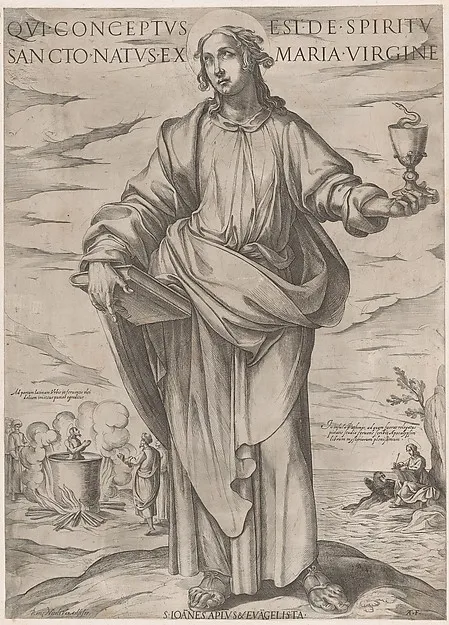
Joel 1:1-7That Which the Locust Hath Left
1The word of the LORD that came to Joel the son of Pethuel. 2Hear this, ye old men, and give ear, all ye inhabitants of the land. Hath this been in your days, or even in the days of your fathers? 3Tell ye your children of it, and let your children tell their children, and their children another generation. 4That which the palmerworm hath left hath the locust eaten; and that which the locust hath left hath the cankerworm eaten; and that which the cankerworm hath left hath the caterpiller eaten. 5Awake, ye drunkards, and weep; and howl, all ye drinkers of wine, because of the new wine; for it is cut off from your mouth. 6For a nation is come up upon my land, strong, and without number, whose teeth are the teeth of a lion, and he hath the cheek teeth of a great lion. 7He hath laid my vine waste, and barked my fig tree: he hath made it clean bare, and cast it away; the branches thereof are made white.
The book opens with a stark, repeated demand for attention: Hear this, ye old men, and give ear, all ye inhabitants of the land (v. 2). Before Joel explains anything, he insists that what has happened is genuinely unprecedented. He turns first to the old men - the living memory of the community, the ones who have seen the most - and asks whether anything like this occurred in their lifetimes or even in their fathers' days.
The expected answer is no. This is the kind of disaster that breaks the chain of ordinary experience, the sort people will measure other calamities against for generations. That is why the next command reaches forward in time: Tell ye your children of it, and let your children tell their children, and their children another generation (v. 3). The event is to be handed down like a landmark. Joel is doing more than reporting bad news; he is teaching his hearers to read the disaster, to treat it as something weighty enough to remember and pass on.
A people prone to shrug off hardship as a passing bad season is being told: stop, look, this means something.1
Then comes the picture itself, and it is devastating in its simplicity: That which the palmerworm hath left hath the locust eaten; and that which the locust hath left hath the cankerworm eaten; and that which the cankerworm hath left hath the caterpiller eaten (v. 4). The sentence is built like the disaster it describes - wave after wave, each devourer finishing what the last one began. Whatever the first swarm spared, the second took; whatever the second spared, the third stripped; and the little that remained, the fourth consumed.
The cumulative effect is total: nothing is left. Joel then renders the swarm as an invading army: a nation… strong, and without number, whose teeth are the teeth of a lion (v. 6). The locusts move like a disciplined host, beyond counting, biting like a predator. And the damage is intimate - He hath laid my vine waste, and barked my fig tree: he hath made it clean bare, and cast it away; the branches thereof are made white (v. 7).
The vine and the fig were the very emblems of peace and plenty, the picture of a person sitting secure under his own branches. Here they are gnawed down to naked, whitened wood. The point lands without a word of theology yet: everything the people leaned on for life and gladness has been eaten away in a season.
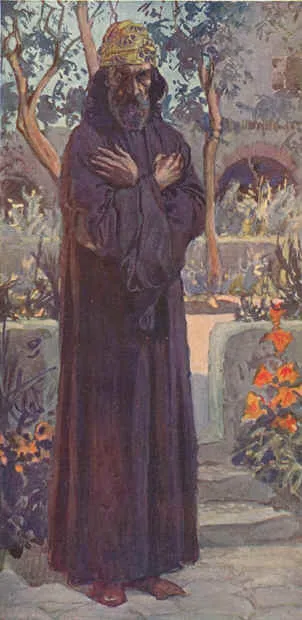
Joel 1:8-14Sanctify Ye a Fast, and Cry unto the LORD
8Lament like a virgin girded with sackcloth for the husband of her youth. 9The meat offering and the drink offering is cut off from the house of the LORD; the priests, the LORD’s ministers, mourn. 10The field is wasted, the land mourneth; for the corn is wasted: the new wine is dried up, the oil languisheth. 11Be ye ashamed, O ye husbandmen; howl, O ye vinedressers, for the wheat and for the barley; because the harvest of the field is perished. 12The vine is dried up, and the fig tree languisheth; the pomegranate tree, the palm tree also, and the apple tree, even all the trees of the field, are withered: because joy is withered away from the sons of men. 13Gird yourselves, and lament, ye priests: howl, ye ministers of the altar: come, lie all night in sackcloth, ye ministers of my God: for the meat offering and the drink offering is withholden from the house of your God. 14Sanctify ye a fast, call a solemn assembly, gather the elders and all the inhabitants of the land into the house of the LORD your God, and cry unto the LORD.
Joel now calls for grief, and reaches for the sharpest image he can find: Lament like a virgin girded with sackcloth for the husband of her youth (v. 8). This is not mild regret; it is the raw, inconsolable weeping of a young woman widowed before her marriage has hardly begun - love and hope cut down at once. That is the depth of mourning the moment demands. But the reason Joel gives for it is striking, because the gravest loss he names is not agricultural at all: The meat offering and the drink offering is cut off from the house of the LORD; the priests, the LORD's ministers, mourn (v. 9).
The grain offering and the wine poured out at the altar were the daily, ordinary worship of God - the steady rhythm by which the people drew near to Him morning and evening. When the harvest fails, there is no grain to offer and no wine to pour, and so the worship itself falls silent. The famine has reached past the stomach into the sanctuary. The conversation between God and His people, kept up day by day at the altar, has been interrupted.
Of everything the locusts destroyed, Joel feels this most: not merely that the people are hungry, but that the house of the LORD has gone quiet.
The summons to wail now goes out group by group, sweeping in the whole working world. The farmers - husbandmen - are told to be ashamed, and the vinedressers to howl, for the wheat and for the barley; because the harvest of the field is perished (v. 11). Everything they had labored over is gone. Then the inventory of ruin lengthens: The vine is dried up, and the fig tree languisheth; the pomegranate tree, the palm tree also, and the apple tree, even all the trees of the field, are withered (v. 12).
Tree after tree is named until the list itself feels exhausted - not one is spared. And Joel ends the verse with the line that reaches deepest of all: because joy is withered away from the sons of men. This is the true harvest of the disaster. The withering in the orchard has produced a withering in the heart. When the things that sustain life are stripped bare, gladness cannot survive on its own; it dries up with the vine.
Joel will not let his hearers treat this as a mere economic setback to be absorbed and forgotten. Something has gone out of the people themselves. The land mourns (v. 10), and so do they - and that shared mourning is the soil in which the chapter's great command is about to be planted.
Now the prophet turns to those who stand between the people and God, and the address grows urgent and personal: Gird yourselves, and lament, ye priests: howl, ye ministers of the altar: come, lie all night in sackcloth, ye ministers of my God (v. 13). The priests are not spectators to this grief; they are to lead it, even to lie all night in sackcloth, spending the dark hours in mourning before God because the offerings have been cut off from His house.
And then, in verse 14, the whole chapter gathers to a point. The disaster has been described, the mourning summoned - and Joel tells them exactly what to do with it: Sanctify ye a fast, call a solemn assembly, gather the elders and all the inhabitants of the land into the house of the LORD your God, and cry unto the LORD. Notice the movement. The locusts emptied the house of the LORD of its offerings; the response is to fill that same house with the gathered people.
They are to set apart a fast, summon a sacred assembly, bring in everyone from the elders to the least, and there - together - cry unto the LORD. This is the hinge on which everything turns. The catastrophe is not an end in itself. It is a summons. Every devoured field, every silent altar, every withered tree has been bending toward this one command: turn, gather, and cry out to God.
Joel 1:15-20The Day of the LORD Is at Hand
15Alas for the day! for the day of the LORD is at hand, and as a destruction from the Almighty shall it come. 16Is not the meat cut off before our eyes, yea, joy and gladness from the house of our God? 17The seed is rotten under their clods, the garners are laid desolate, the barns are broken down; for the corn is withered. 18How do the beasts groan! the herds of cattle are perplexed, because they have no pasture; yea, the flocks of sheep are made desolate. 19O LORD, to thee will I cry: for the fire hath devoured the pastures of the wilderness, and the flame hath burned all the trees of the field. 20The beasts of the field cry also unto thee: for the rivers of waters are dried up, and the fire hath devoured the pastures of the wilderness.
Now Joel names what the whole chapter has been circling: Alas for the day! for the day of the LORD is at hand, and as a destruction from the Almighty shall it come (v. 15). The locusts were never only about locusts. They are a near, small picture of a far greater day - the day when the Almighty Himself comes to set things right, a day Joel says is at hand. The plague is a warning shot, a reckoning in miniature meant to make the people feel the weight of the larger reckoning before it arrives.
Then Joel presses the present ruin in close, almost forcing his hearers to look: Is not the meat cut off before our eyes, yea, joy and gladness from the house of our God? (v. 16). The disaster is not a rumor from far away; it is happening before our eyes, and what it has carried off is not just food but the very joy and gladness that belonged to God's house. The picture of waste deepens: The seed is rotten under their clods, the garners are laid desolate, the barns are broken down; for the corn is withered (v. 17).
Even the seed - the hope of next year's crop, the one thing a farmer guards when everything else fails - lies rotting in the ground. The storehouses stand empty and falling apart. The ruin reaches not only into the present but forward into the future, leaving no buried hope to recover.
The desolation now spreads even to the animals, and Joel gives it a voice: How do the beasts groan! the herds of cattle are perplexed, because they have no pasture; yea, the flocks of sheep are made desolate (v. 18). The cattle wander bewildered, lowing for grass that is no longer there; the sheep are left to waste. There is something piercing in this. The dumb creatures cannot repent, cannot understand a day of reckoning, cannot read the disaster the way Joel has taught the people to read it - yet even they feel the ruin and cry out under it.
Their groaning is the whole creation hurting under a stripped and burning land. And then fire is added to the picture: the fire hath devoured the pastures of the wilderness, and the flame hath burned all the trees of the field (v. 19), the rivers of waters are dried up (v. 20). Whether literal wildfire on parched ground or the searing image of drought, the land that was eaten is now also scorched. Nothing green, nothing wet, nothing left.
But it is exactly here, at the floor of the disaster, that the chapter does its most important thing - it turns. The groaning of the beasts and the burning of the fields do not end in silence or despair. They end in a single lifted voice, reaching the only direction left to reach.
Research trail
Sources & further study
These references support the historical, linguistic, manuscript, and contextual notes in this chapter. Scripture remains the primary text; external sources are provided so readers can inspect the research directly.
- Joel 1 - Translators' NotesThe NET Bible's detailed footnotes on Joel 1 - the four insect terms of verse 4 and whether they name distinct creatures or successive stages, the imagery of the invading “nation” with lion's teeth in verses 6-7, and the meat and drink offerings cut off from the temple in verses 9 and 13.
- Joel 1 · Hebrew + classical Jewish commentaryThe Hebrew text of Joel 1 with Rashi, Ibn Ezra, and other classical commentators side by side - useful for the four devouring words of verse 4 (gazam, arbeh, yeleq, chasil, the “palmerworm… locust… cankerworm… caterpiller”) and for the phrase that anchors the book, yom YHWH - “the day of the LORD” - in verse 15.
- Joel 1 ↔ Amos 5 · 2 Peter 3 · 1 Thessalonians 5 · Matthew 6Traces the threads tying Joel 1 to the rest of Scripture - the day of the LORD (v. 15) read alongside Amos 5:18, 1 Thessalonians 5:2, and 2 Peter 3:10, and the stripping of every earthly store (vv. 4-12) read beside the warning to lay up treasure where no moth or rust corrupts (Matt. 6:19-20).
Where this echoes in Scripture
That Which the Locust Hath Left
- Exodus 10:14-15the locusts went up over all the land of Egypt... they did eat every herb of the land... there remained not any green thing.The plague behind the imagery of verse 4 - locusts leaving nothing green, a sign of God's reckoning.
- Deuteronomy 28:38-39thou shalt carry much seed out into the field, and shalt gather but little in; for the locust shall consume it.The covenant warning the chapter enacts - the harvest and the vine eaten away (vv. 4, 7).
- Matthew 6:19-20Lay not up for yourselves treasures upon earth, where moth and rust doth corrupt... But lay up for yourselves treasures in heaven.The lesson of the stripped fields (vv. 5-7) - the fragility of everything earthly held too tightly.
- Micah 4:4they shall sit every man under his vine and under his fig tree; and none shall make them afraid.The peace the locusts undo in verse 7 - the vine and fig tree as the very emblems of security.
- Luke 12:19-20Soul, thou hast much goods laid up for many years... But God said unto him, Thou fool, this night thy soul shall be required of thee.The false security the plague exposes (vv. 5-7) - abundance trusted as if it could not be lost.
Sanctify Ye a Fast, and Cry unto the LORD
- Joel 2:12-13turn ye even to me with all your heart, and with fasting, and with weeping... rend your heart, and not your garments.Where the summons of verse 14 is going - the fast and assembly are meant to become true turning of the heart.
- 2 Chronicles 20:3-4Jehoshaphat... proclaimed a fast throughout all Judah. And Judah gathered themselves together, to ask help of the LORD.The pattern of verse 14 lived out - a people gathered in crisis to fast and cry unto the LORD.
- Luke 15:14-18there arose a mighty famine in that land; and he began to be in want... And when he came to himself... I will arise and go to my father.The mercy hidden in the emptiness (vv. 9-14) - want that drives a wandering heart home to God.
- Matthew 11:28Come unto me, all ye that labour and are heavy laden, and I will give you rest.The answer to the cry Joel commands in verse 14 - the weary gathered and given rest.
- James 4:8-9Draw nigh to God, and he will draw nigh to you... Be afflicted, and mourn, and weep.The grief Joel summons (vv. 8-13) as the doorway to drawing near - mourning that ends in God.
The Day of the LORD Is at Hand
- Amos 5:18Woe unto you that desire the day of the LORD!... the day of the LORD is darkness, and not light.The double edge of the day named in verse 15 - dread for the unready, not light for all.
- 2 Peter 3:10the day of the Lord will come as a thief in the night; in the which the heavens shall pass away.The ultimate day Joel's plague foreshadows (v. 15) - carried forward to the final reckoning.
- Romans 8:22we know that the whole creation groaneth and travaileth in pain together until now.The groaning beasts of verse 18 - all creation aching under a broken and burning world.
- Psalm 50:15call upon me in the day of trouble: I will deliver thee, and thou shalt glorify me.The cry of verse 19 met with promise - the LORD heard by those who call in their distress.
- Joel 2:32whosoever shall call on the name of the LORD shall be delivered.Where the chapter's closing cry leads (vv. 19-20) - the calling that ends in deliverance.