Ruth 1
People in this chapter
Ruth 1 opens in two kinds of darkness at once. In the days when the judges ruled - the era the book of Judges closes by calling lawless, when every man did that which was right in his own eyes (Judg. 21:25) - there was a famine in the land. So a man of Bethlehem, of all places, leaves the promised land to sojourn in the country of Moab, taking his wife Naomi and their two sons (v. 1).
The names carry a shadow: Elimelech means “my God is king,” Naomi means “pleasant,” while the sons' names, Mahlon and Chilion, hover near the words for sickness and wasting. In Moab the family does not merely visit; it continued there. Then the losses come, one upon another - Elimelech dies, the sons marry Moabite women and die childless after ten years, and Naomi is left of her two sons and her husband (v. 5). The woman of pleasantness has been emptied of everyone she came with.1
Tap any highlighted phrase to jump to the commentary that unpacks it.
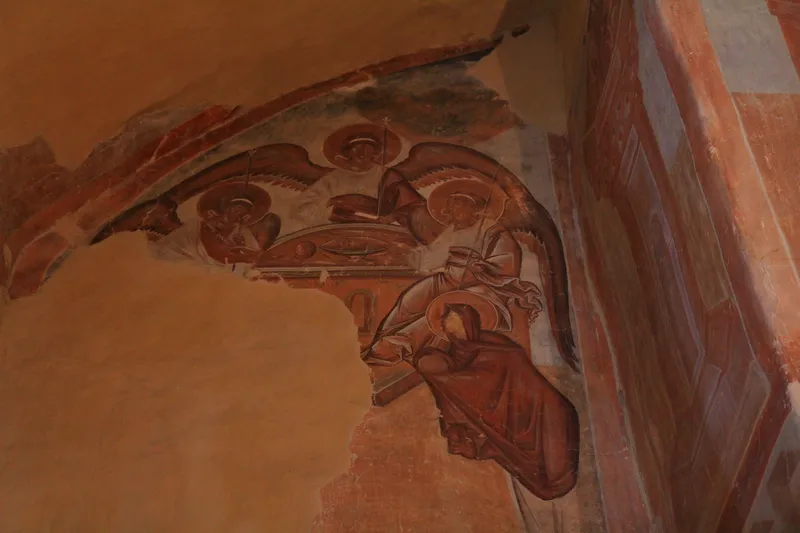
Ruth 1:1-5A Famine, an Exile, and Three Graves
1Now it came to pass in the days when the judges ruled, that there was a famine in the land. And a certain man of Bethlehemjudah went to sojourn in the country of Moab, he, and his wife, and his two sons. 2And the name of the man was Elimelech, and the name of his wife Naomi, and the name of his two sons Mahlon and Chilion, Ephrathites of Bethlehemjudah. And they came into the country of Moab, and continued there.
The first line plants the whole story in a particular soil: in the days when the judges ruled (v. 1). The book of Judges, which this verse looks back to, ends in spiritual ruin - idolatry, tribal war, a refrain repeated like a tolling bell: In those days there was no king in Israel: every man did that which was right in his own eyes (Judg. 21:25).1 That is the backdrop against which Ruth opens: a leaderless, lawless age when the covenant people had largely lost their way.
And yet the story we are about to read is not another tale of national collapse. It is a quiet, almost hidden story - one family, one foreign widow, one ear of barley at a time - in which God is at work building something the chaos cannot see. While the judges fail and the nation drifts, the LORD is already laying, in obscurity, the line that will one day give Israel its true king. The darkest chapters of a people's history are exactly where this book finds the seed of its hope.
There is a bitter irony folded into the geography of verse 1. A man of Bethlehemjudah - and Bethlehem means “house of bread” - leaves the house of bread because there was a famine in the land, and goes to find food in the country of Moab. Of all the places to flee, Moab is a striking choice: not Egypt, the great granary, but the land of an old and hostile neighbor, a people whose origins and whose long enmity with Israel the Scriptures do not hide (Gen. 19:37; Num. 22-25; Deut. 23:3).
The text does not pause to condemn Elimelech; it simply lets the facts speak. He intends to sojourn - to stay a while, weather the lean years, and return. But the verb in the next verse tells a different story: they continued there. A temporary detour to escape hunger settles into a decade of life in the field of the enemy, far from the inheritance God had given. The famine drove them out; something kept them there.
Hebrew narrative often hides meaning in names, and this family's names are laden with it. Elimelech means “my God is king” - a confession of faith carried, painfully, into a land that does not own it. Naomi means “pleasant” or “sweet,” a name the chapter will pointedly turn inside out before it ends. The sons, Mahlon and Chilion, bear names that echo the Hebrew words for sickness and for wasting away or failing - a shadow lying over them from their first mention.
And the family is named Ephrathites of Bethlehemjudah, an old and honorable designation for the clans of Bethlehem (cf. Mic. 5:2). The detail matters: this is no rootless household but a family belonging, by blood and birth, to the town that will one day be called the city of David, and beyond David, the birthplace of the King. They are, for now, far from it - men with king-confessing, kingdom-shadowed names, living and soon dying in the field of Moab.
3And Elimelech Naomi’s husband died; and she was left, and her two sons. 4And they took them wives of the women of Moab; the name of the one was Orpah, and the name of the other Ruth: and they dwelled there about ten years. 5And Mahlon and Chilion died also both of them; and the woman was left of her two sons and her husband.
The losses fall like hammer blows, and the narrator does not slow down to soften them. First, Elimelech Naomi's husband died (v. 3) - and the wording is telling, for she is now defined by who is gone. The two sons marry Moabite women, Orpah and Ruth, and the family dwelled there about ten years (v. 4). Ten years is a long time. It is long enough for the sojourn to become a home, for Moab to stop feeling like exile, for the memory of Bethlehem to fade into something distant.
And it is long enough to feel the deeper sorrow buried in the verse: ten years of marriage, and no children are named. In a world where a family's whole future rested on the next generation, the silence is ominous. Then the verse that ends the household: Mahlon and Chilion died also both of them. The men with the failing names fail. The line is broken; no grandchild carries it on.
Ruth 1:6-14Turn Again, My Daughters
6Then she arose with her daughters in law, that she might return from the country of Moab: for she had heard in the country of Moab how that the LORD had visited his people in giving them bread. 7Wherefore she went forth out of the place where she was, and her two daughters in law with her; and they went on the way to return unto the land of Judah.
The first ray of light in the book reaches Naomi as a rumor from home: she had heard… how that the LORD had visited his people in giving them bread (v. 6). After verses of unrelieved loss, here at last is the LORD named as the One who acts - and what He does is visit and give bread. The Hebrew behind visited (paqad) carries the weight of God turning His attention toward His people for their good, stepping in to care and provide.2 The famine that opened the book is over; the house of bread has bread again.
And notice what the news does: it turns Naomi homeward. Then she arose… that she might return. That verb - return - will sound through this whole chapter like a refrain, used over and over of going back, turning back, coming home. The first thing the report of God's provision does is set a grieving woman's face toward the place she fled. Sometimes the smallest word of grace - that somewhere, something is growing again - is enough to start the journey home.
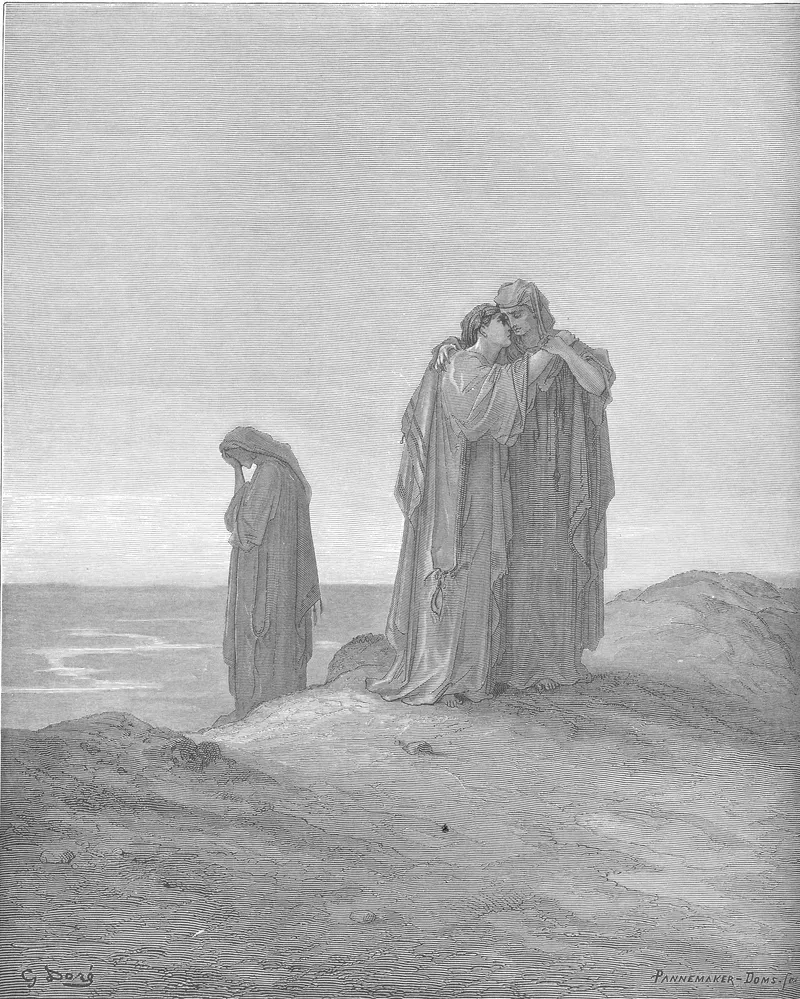
8And Naomi said unto her two daughters in law, Go, return each to her mother’s house: the LORD deal kindly with you, as ye have dealt with the dead, and with me. 9The LORD grant you that ye may find rest, each of you in the house of her husband. Then she kissed them; and they lifted up their voice, and wept. 10And they said unto her, Surely we will return with thee unto thy people.
On the road, Naomi turns to the two young women and does something quietly selfless. Go, return each to her mother's house: the LORD deal kindly with you, as ye have dealt with the dead, and with me (v. 8). In her own grief and destitution, her first thought is for them. She releases them - sends them back to the chance of a new life among their own people - and she blesses them as she does it.
The word behind deal kindly reaches toward one of the Old Testament's richest ideas: loyal, covenant love, the steadfast kindness God shows His people and calls them to show one another. Naomi has watched these foreign girls show exactly that kind of love to her dead sons and to herself, and now she asks the LORD to return it on their heads. There is real faith hidden in the blessing of a bitter woman: even convinced the LORD's hand has gone out against her, she still invokes His kindness over the ones she loves.
And then she names the gift she most wants for them.
The thing Naomi prays for her daughters in law is rest: The LORD grant you that ye may find rest, each of you in the house of her husband (v. 9). The Hebrew word is one of settled security - a home, a place to belong, a refuge from the exposure of widowhood. In that world, a woman without husband or son had no provision and no protection; she stood perpetually at risk. So Naomi's blessing is the most loving thing she can think to ask: not riches, not status, but rest - the safety of a household, a roof, a future.
It is a quietly important word to file away, because the rest of the book is, in a sense, the story of God answering this very prayer - granting rest to a daughter in law in the house of a husband, in a way Naomi cannot yet imagine. For now the prayer ends in tears: she kissed them; and they lifted up their voice, and wept (v. 9). And the young women, weeping, refuse to leave: Surely we will return with thee unto thy people (v. 10).
11And Naomi said, Turn again, my daughters: why will ye go with me? are there yet any more sons in my womb, that they may be your husbands? 12Turn again, my daughters, go your way; for I am too old to have an husband. If I should say, I have hope, if I should have an husband also to night, and should also bear sons; 13Would ye tarry for them till they were grown? would ye stay for them from having husbands? nay, my daughters; for it grieveth me much for your sakes that the hand of the LORD is gone out against me.
Naomi argues with a kind of relentless logic, and underneath the logic is despair. Turn again, my daughters… are there yet any more sons in my womb, that they may be your husbands? (v. 11). She is reasoning from the law of levirate marriage, which made it the duty of a dead man's brother to raise up an heir for him (Deut. 25:5-10) - but Naomi has no more sons, and even if she could conceive tonight, what young widow would wait years for an infant to grow?
Her point is brutal and clear: stay with me and you get nothing - no husband, no children, no security; go home and you might yet have all three. And then she names what she believes is the root of it all: the hand of the LORD is gone out against me (v. 13). This is Naomi's theology of her own suffering, spoken plainly. She does not blame chance or Moab or her husband's choice; she traces her emptiness straight to the hand of God.
The book will not finally leave her reading there - but it lets her say it, honestly, without correction. Faith that is real enough to wrestle is allowed, in Scripture, to say even this.
14And they lifted up their voice, and wept again: and Orpah kissed her mother in law; but Ruth clave unto her.
The chapter now sets two women side by side and lets one verse divide them forever. Orpah kissed her mother in law; but Ruth clave unto her (v. 14). It is important to be fair to Orpah. She does nothing wrong. She has wept, she has offered to go, and now, persuaded by Naomi's own unanswerable arguments, she does the sensible, reasonable, expected thing: she kisses her mother in law goodbye and turns back to her people, her gods, and a future that actually holds promise for her.
No one could fault her. The text does not condemn her; it simply lets her go, and her name disappears from the story. The whole weight of the verse falls on the contrast in its second half. Where Orpah kissed and left, Ruth clave and stayed. The same arguments that sent Orpah home could not move Ruth an inch. She makes the choice no logic can explain - the choice that has nothing to gain - and the single Hebrew verb the narrator chooses for it tells us we are watching something far deeper than affection.
Ruth 1:15-22Thy People Shall Be My People, and Thy God My God
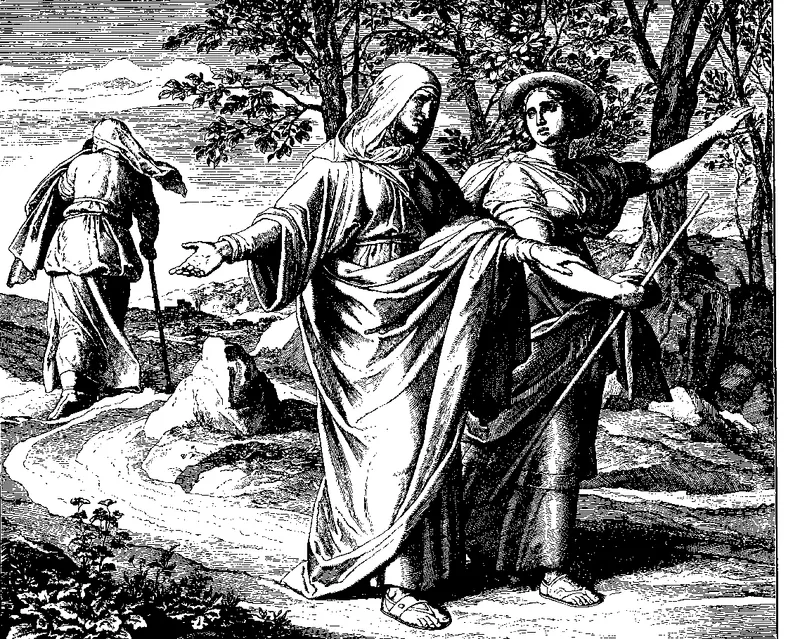
15And she said, Behold, thy sister in law is gone back unto her people, and unto her gods: return thou after thy sister in law. 16And Ruth said, Intreat me not to leave thee, or to return from following after thee: for whither thou goest, I will go; and where thou lodgest, I will lodge: thy people shall be my people, and thy God my God: 17Where thou diest, will I die, and there will I be buried: the LORD do so to me, and more also, if ought but death part thee and me.
Naomi makes one last attempt to send Ruth back, and she frames it in the starkest terms: thy sister in law is gone back unto her people, and unto her gods: return thou after thy sister in law (v. 15). It is a clean offer - your old people, your old gods, your old life, all still waiting. And it is exactly that offer Ruth refuses, line by line, in the great answer of verses 16-17.
Her words climb like a staircase: she will not leave, she will not turn back; where Naomi goes she will go, where Naomi lodges she will lodge; Naomi's people will be her people, and - the summit of it all - thy God my God. Then she seals it with an oath: the LORD do so to me, and more also, if ought but death part thee and me (v. 17). This is a covenant formula, the most binding kind of vow in Israel, calling down God's own judgment if she should break faith.
And notice the name she swears by: not Chemosh, the god of Moab, but the LORD - the covenant God of Israel. In the very act of binding herself, Ruth has already changed gods. Only death, she says, will be allowed to part them; not hardship, not poverty, not a foreign land. She has counted the cost and chosen anyway.
18When she saw that she was stedfastly minded to go with her, then she left speaking unto her.
The narrator records Naomi's response in a single understated line: When she saw that she was stedfastly minded to go with her, then she left speaking unto her (v. 18). She stops arguing. There is nothing left to say. Ruth is stedfastly minded - her resolve has hardened past the reach of any further reasoning, and Naomi sees it. The verse is quiet, but something turns in it. Naomi set out to return alone, certain the LORD's hand was against her, intending to carry her emptiness home by herself.
Now she discovers she is not going alone after all. She came out of Moab with two daughters in law and tried to give them both away; she will arrive in Bethlehem with one who would not be given. The companion she did not ask for and tried to refuse is the very means by which God will answer the emptiness she is about to lament. The redemption has already, silently, begun - walking beside her on the road, in the person of a foreign widow who would not be sent home.
19So they two went until they came to Bethlehem. And it came to pass, when they were come to Bethlehem, that all the city was moved about them, and they said, Is this Naomi? 20And she said unto them, Call me not Naomi, call me Mara: for the Almighty hath dealt very bitterly with me. 21I went out full, and the LORD hath brought me home again empty: why then call ye me Naomi, seeing the LORD hath testified against me, and the Almighty hath afflicted me?
The two women reach Bethlehem, and the town is thrown into a stir: all the city was moved about them, and they said, Is this Naomi? (v. 19). The question carries a world of meaning. Naomi was clearly known here - a woman of some standing whose departure into Moab years ago must have been a small scandal, and whose return now is unmistakable and shocking. Is this Naomi? They hardly recognize the woman who left.
She went out with a husband, two sons, a household, a future; she comes back a widow, childless, emptied, aged by grief, trailing a single foreign daughter in law. The change in her is so total that the town can scarcely believe it is the same person. And Naomi seizes on the question to make her grief public - she will not let them call her by her old, pleasant name as though nothing had happened.
22So Naomi returned, and Ruth the Moabitess, her daughter in law, with her, which returned out of the country of Moab: and they came to Bethlehem in the beginning of barley harvest.
The chapter ends on a single sentence that is doing more than it lets on: So Naomi returned, and Ruth the Moabitess, her daughter in law, with her… and they came to Bethlehem in the beginning of barley harvest (v. 22). Three quiet notes are struck. First, Naomi returned - the refrain-word of the whole chapter lands at last; the one who fled has come home. Second, the narrator is careful to name her companion fully: Ruth the Moabitess… which returned out of the country of Moab. Naomi may feel she came back empty, but the verse will not let us agree; she came back with Ruth, and the reader is meant to hold that against her word empty. What looks to Naomi like nothing is, in fact, the very thing God will use.
Third, and most quietly of all: they arrive in the beginning of barley harvest. The famine that drove the family out is not only over - the fields are ripe, the gathering is starting, the timing could not be better. The verse that closes a chapter of death and bitterness ends with a date on the calendar that is all promise: harvest is beginning. The next chapter will open onto a field full of grain, and the emptiness Naomi just named will start, ear by ear, to be filled.
Research trail
Sources & further study
These references support the historical, linguistic, manuscript, and contextual notes in this chapter. Scripture remains the primary text; external sources are provided so readers can inspect the research directly.
- Ruth 1 - Translators' NotesThe NET Bible's detailed footnotes on Ruth 1 - the meaning of the family's names, the legal and social plight of a widow without sons, the force of Ruth's oath formula in verses 16-17, and the bitter wordplay of Naomi and Mara in verse 20.
- Ruth 1 · Hebrew + classical Jewish commentaryThe Hebrew text of Ruth 1 with Rashi, Ibn Ezra, and other classical commentators side by side - useful for dabaq (v. 14, the “cleaving” that is the language of covenant loyalty), for the wordplay between Naomi (“pleasant”) and Mara (“bitter,” v. 20), and for the verb shub (“return”) that beats through the whole chapter like a refrain.
- Ruth 1 ↔ Genesis 2 · Deuteronomy 23 · Ephesians 2 · Matthew 1Traces the threads tying Ruth 1 to the rest of Scripture - the “cleaving” of verse 14 read beside Genesis 2:24; the Moabitess once a stranger to the covenant (Deut. 23:3) read beside ye who sometimes were far off are made nigh (Eph. 2:13); and Ruth herself written into the royal line in Matthew 1:5.
Where this echoes in Scripture
A Famine, an Exile, and Three Graves
- Judges 21:25In those days there was no king in Israel: every man did that which was right in his own eyes.The lawless age verse 1 reaches back to - the darkness out of which the book of Ruth quietly builds its hope.
- Deuteronomy 23:3An Ammonite or Moabite shall not enter into the congregation of the LORD...The barrier of birth that stood between Moab and Israel - the very wall Ruth will cross in this chapter.
- Micah 5:2But thou, Bethlehem Ephratah... out of thee shall he come forth unto me that is to be ruler in Israel.The town this family belonged to (v. 2) - Bethlehem of the Ephrathites, named the birthplace of the King.
- Psalm 22:14I am poured out like water, and all my bones are out of joint: my heart is like wax; it is melted.The honest language of emptiness Scripture allows - the lament Naomi will voice in verses 20-21.
- Matthew 5:4Blessed are they that mourn: for they shall be comforted.The promise spoken into Naomi's loss (v. 5) - the comfort held out to those who are emptied and grieve.
Turn Again, My Daughters
- Genesis 2:24Therefore shall a man leave his father and his mother, and shall cleave unto his wife: and they shall be one flesh.The same verb (dabaq) as Ruth's “clave” in verse 14 - the language of leaving all to bind oneself to another.
- Deuteronomy 10:20Thou shalt fear the LORD thy God; him shalt thou serve, and to him shalt thou cleave, and swear by his name.The covenant use of “cleave” - the same holding-fast Ruth shows Naomi (v. 14), commanded toward God Himself.
- Deuteronomy 25:5-6her husband's brother... shall take her to him to wife... that his name be not put out of Israel.The levirate law behind Naomi's argument in verses 11-13 - the duty to raise up an heir for the dead, which she has no son to fulfill.
- Job 1:21the LORD gave, and the LORD hath taken away; blessed be the name of the LORD.Another sufferer tracing loss to the hand of God, as Naomi does in verse 13 - grief spoken honestly toward the LORD.
- Luke 9:62No man, having put his hand to the plough, and looking back, is fit for the kingdom of God.The undivided cleaving of verse 14 - Ruth, unlike Orpah, does not look back from the path she has chosen.
Thy People Shall Be My People, and Thy God My God
- Ephesians 2:13But now in Christ Jesus ye who sometimes were far off are made nigh by the blood of Christ.The gospel shape of Ruth's pledge (vv. 16-17) - the stranger to the covenant brought near to the people of God.
- 1 Corinthians 6:17But he that is joined unto the Lord is one spirit.The covenant cleaving of verse 14 lifted higher - the loyal love that binds the believer fast to the Lord.
- Micah 5:2But thou, Bethlehem Ephratah... out of thee shall he come forth unto me that is to be ruler in Israel.The town the two widows enter at harvest (vv. 19, 22) - the house of bread where the King would be born.
- Luke 1:53He hath filled the hungry with good things; and the rich he hath sent empty away.The reversal answering Naomi's “empty” (v. 21) - the God who fills the emptied and humbles the full.
- Matthew 1:5And Salmon begat Booz of Rachab; and Booz begat Obed of Ruth; and Obed begat Jesse.Where the Moabitess's “thy God my God” (v. 16) finally leads - Ruth written into the royal line of David and of Christ.