Sirach 11
How do you measure a life? Sirach 11 begins by taking the scale out of our hands. The world weighs people by appearance, by wealth, by the size of the crowd around them. The sage answers that the wisdom of a lowly man lifts his head and seats him among the great, that the bee is small among flying things yet makes the sweetest fruit, and that crowns have a way of passing to the heads no one would have chosen.
Tyrants have sat on thrones and been brought down; the forgotten have worn the crown. Glory is not where we keep looking for it.
Tap any highlighted phrase to jump to the commentary that unpacks it.
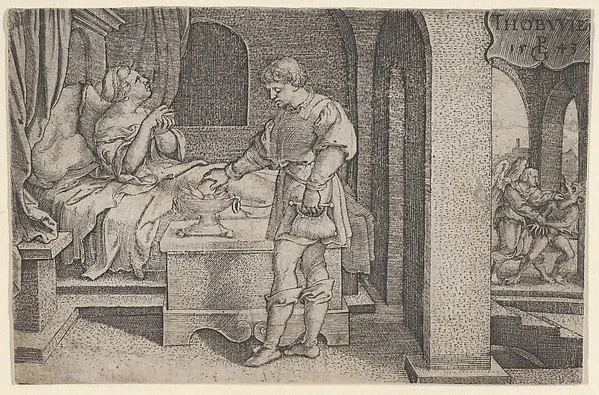
Sirach 11:1-6The Wisdom of the Lowly Lifts His Head
1The wisdom of the humble shall exalt his head, and shall make him sit in the midst of great men. 2Praise not a man for his beauty, neither despise a man for his look. 3The bee is small among flying things, but her fruit hath the chiefest sweetness.
The chapter opens by lifting up the very person the world tends to overlook. The wisdom of a lowly man "exalts his head" and seats him among the great, not because he schemed his way upward, but because real wisdom carries its own quiet authority. The world measures by surface: by beauty, by bearing, by the impression a person makes at a glance. Sirach tells us to stop weighing people that way. The one who seems small may carry the thing most worth having, and the day will come when others make room for him.
The image is exact. The bee is one of the smallest of the creatures that fly, easy to dismiss, easy to swat away, and yet it makes the sweetest thing a person could taste. Sirach hands us a way of seeing that runs against every instinct to rank by size and show. Worth is not measured by how much room a thing takes up. The small and unassuming life can yield what is most precious, and the wise learn to look for sweetness where the proud never think to look.
4Glory not in apparel at any time, and be not exalted in the day of thy honour: for the works of the Highest only are wonderful, and his works are glorious, and secret, and hidden. 5Many tyrants have sat on the throne, and he whom no man would think on, hath worn the crown.
Do not let your sense of worth ride on your clothing, the sage says, and do not be carried away on the day people honor you. The reason is striking: the truly wonderful works belong to the Most High, and His works are glorious and "secret, and hidden." God's greatest doings are often the ones no one sees, unfolding quietly beneath the surface of things. If the highest glory is hidden, then the visible glory we parade, the fine garment, the celebrated day, is a thin and borrowed thing.
Better to wear it lightly than to mistake it for the real weight of a life.
History keeps making the same point. Many a tyrant has sat secure on his throne, and then the crown has passed to the head no one would have predicted, while the mighty are brought low and the glorious are handed into another's power (verse 6). Sirach is not cynical about this; he is clear-eyed. Status is on loan. The proud who treat their position as a possession discover it was never theirs to keep.
This is the same reversal that runs through Scripture, where God "putteth down one, and setteth up another" (Psalm 75:7), and the wise hold their honors with open hands.
Sirach 11:7-9Hear Before You Answer; Inquire Before You Blame
7Before thou inquire, blame no man: and when thou hast inquired, reprove justly. 8Before thou hear, answer not a word: and interrupt not others in the midst of their discourse. 9Strive not in a matter which doth not concern thee, and sit not in judgment with sinners.
Here is wisdom small enough to use before noon and large enough to reshape a life. Do not blame a man before you have looked into the matter. The order is everything: inquire first, and only then reprove, and when you reprove, do it justly. So much harm is done by the verdict that comes before the evidence, the conclusion reached while half the story is still untold. Sirach does not forbid correction; he insists it follow understanding.
The rebuke that lands after honest inquiry can heal. The one that lands before it usually wounds the innocent and shames the one who rushed to speak.
The same patience applies to the tongue. Do not answer before you have heard, and do not break in while another is still speaking. To interrupt is, in a small way, to declare that your words matter more than the other person's, that you already know what they will say. Scripture is blunt about this: "He that answereth a matter before he heareth it, it is folly and shame unto him" (Proverbs 18:13).
The wise let a person finish. They take in the whole of what is said before they shape a reply, and that single discipline spares them a thousand needless quarrels and regrets.
Sirach 11:10-13Stop Grasping; the Eye of God Lifts the Lowly
10My son, meddle not with many matters: and if thou be rich, thou shalt not be free from sin: for if thou pursue after thou shalt not overtake: and if thou run before thou shalt not escape. 11There is an ungodly man that laboureth, and maketh haste, and is in sorrow, and is so much the more in want.
Do not scatter yourself across too many ventures, the sage warns his son. The picture is of a person forever pursuing and forever falling short, running ahead and never escaping, grasping at more and never closing the distance. There is a kind of busyness that masquerades as diligence but is really the restlessness of a heart that cannot trust. And the line about riches is unsparing: great wealth, taken up carelessly, becomes its own moral hazard, drawing a person into entanglements that are hard to keep clean.
The counsel calls us to stop the frantic over-reaching that no amount of effort can satisfy, while leaving honest labor in its place.
Sirach sketches a man we all recognize: he labors, he hurries, he wears himself out, and somehow he ends only deeper in sorrow and in want. The harder he grasps, the more empty his hands feel. The verse aims at the anxious striving that treats getting and keeping as the meaning of life, the restlessness that drives a person even when honest work would let him rest. The Preacher saw the same thing, the "vanity and vexation of spirit" in toil that never satisfies (Ecclesiastes 4:6).
When effort is cut loose from trust, it cannot rest, and a life of unceasing haste arrives, exhausted, at nothing.
12Again, there is an inactive man that wanteth help, is very weak in ability, and full of poverty: 13Yet the eye of God hath looked upon him for good, and hath lifted him up from his low estate, and hath exalted his head: and many have wondered at him, and have glorified God.
Now the counterweight, and it is the heart of the passage. Here is a man with nothing going for him by the world's measure: weak, without resources, sunk in poverty. And the eye of God falls upon him for good. God lifts him from his low estate and "exalts his head," the very phrase from the chapter's opening, so that the people who once passed him by now marvel and give glory to God.
The lifting that the restless man could never seize by grasping comes to the lowly man as a gift, simply because God looked on him with favor. What finally raises a life is the gaze of God, falling in favor on the one who could never lift himself.
Sirach 11:14-20Good and Evil Are from God; the Fool Who Hoards
14Good things and evil, life and death, poverty and riches, are from God. 17The gift of God abideth with the just, and his advancement shall have success for ever.
This single verse is the spine of the chapter. Good and evil, life and death, poverty and riches, all of it stands within the reach of God's providence. Sirach is not flattening the difference between good and evil; the next verses are clear that error and darkness belong to sinners while the gift of God abides with the just. The point is that nothing in a human life falls outside God's knowledge and ordering.
The fortune the restless man chases and the loss he dreads are alike held in the hand of the Most High. This is why grasping is folly and trust is wisdom: the One who governs all these things can be relied upon, and is good.
Sirach draws a sharp line between two kinds of gain. The "gift of God" that rests upon the just is durable; its advancement "shall have success for ever." Set beside it is the prosperity that error and darkness breed in sinners, which ages into more evil and finally fades. The contrast is not merely about how much a person has but about where it comes from and whether it lasts. What God gives endures. What a person seizes for himself, apart from God, carries the seed of its own undoing.
Verse 18 will press this home with the man who enriches himself only to lose everything in a night.
18There is one that is enriched by living sparingly, and this is the portion of his reward. 19In that he saith: I have found me rest, and now I will eat of my goods alone: 20And he knoweth not what time shall pass, and that death approacheth, and that he must leave all to others, and shall die.
Here is one of the most arresting portraits in the book. A man scrapes and saves and grows rich, and tells himself the lie that money loves to tell: "I have found me rest, and now I will eat of my goods alone." He thinks he has secured his future and earned his ease. And he does not know what the next hour holds, that death is already on its way, that everything he hoarded he will hand to others and die.
Jesus tells almost this exact story, the man who built bigger barns and said, "Soul... take thine ease," and heard God answer, "Thou fool, this night thy soul shall be required of thee" (Luke 12:19-20). The folly lies in trusting the goods and forgetting how short the lease on life really is, leaning on a barn that cannot buy a single hour.
Sirach 11:21-28Stand Fast; the Lord Can Enrich in a Swift Hour
21Be steadfast in thy covenant, and be conversant therein, and grow old in the work of thy commandments. 23For it is easy in the eyes of God on a sudden to make the poor man rich. 24The blessing of God maketh haste to reward the just, and in a swift hour his blessing beareth fruit.
After all the warnings about grasping and hoarding, Sirach names the steady alternative: be faithful where God has placed you. Stay constant in your covenant with Him, make His commandments the daily work of your life, and "grow old" in them, the beautiful picture of a faithfulness that lasts a whole lifetime. "Trust in God, and stay in thy place." Do not abandon your post in restless envy of the works of sinners. Steadfastness is its own kind of strength: the quiet endurance of one who keeps faith through long, unspectacular years, trusting that the God of the covenant keeps faith too.
Why can a person afford to stay faithful and unhurried? Because of what God can do in a moment. "It is easy in the eyes of God on a sudden to make the poor man rich." The blessing of God "maketh haste" and bears fruit "in a swift hour." The whole frantic logic of the grasping man assumes that everything depends on his own pace and pressure. Sirach answers that the One who governs good and evil, life and death, can turn a situation in an instant.
This is not a promise that He always will, but a reminder of what He can do, which is exactly enough to free a faithful person from the tyranny of hurry.
25Say not: What need I, and what good shall I have by this? 26Say not: I am sufficient for myself: and what shall I be made worse by this? 27In the day of good things be not unmindful of evils: and in the day of evils be not unmindful of good things: 28For it is easy before God in the day of death to reward every one according to his ways.
Sirach hands us a discipline of memory that steadies the soul in every season. In the day of good things, do not forget that hard days can come; in the day of evils, do not forget the good. This is not gloom in prosperity or despair in trouble; it is the even keel of a person who holds both seasons within the larger frame of God's providence. Prosperity does not make him careless, and adversity does not make him hopeless, because he remembers that "in the day of death" God can easily reward each one according to his ways.
The end is in God's hands, and remembering that keeps the heart level whether the day is bright or dark.
Sirach 11:29-36The End of a Man Discloses His Works
29The affliction of an hour maketh one forget great delights, and in the end of a man is the disclosing of his works. 30Praise not any man before death, for a man is known by his children. 31Bring not every man into thy house: for many are the snares of the deceitful.
Sirach returns to the theme of how a life is finally measured. A single hour of affliction can blot out the memory of great pleasures, a sober reminder of how fragile our comforts are. And "in the end of a man is the disclosing of his works." It is the whole arc of a life, seen at its close, that reveals what a person truly was. So do not praise anyone as blessed before death, for the story is not finished while it is still being lived, and even a man's children carry forward the disclosure of who he was.
The wise reserve their final judgments, because only the end discloses the work.
The chapter closes with a clear-eyed warning about whom we let near. "Bring not every man into thy house: for many are the snares of the deceitful." Sirach piles up the images: the proud heart is like a spy watching for a neighbor's fall, lying in wait to turn good into evil and to lay a blot on the upright; one spark kindles a great fire, and one deceitful man can spill much blood; welcome the wrong stranger and he overturns your house like a whirlwind and turns you out of your own.
This is not a counsel of fear or suspicion of everyone. It is the discernment that loves openly but watches wisely, knowing that the deceitful exist and that not every guest comes to bless.
Where this echoes in Scripture
The Wisdom of the Lowly Lifts His Head
- Luke 1:52He hath put down the mighty from their seats, and exalted them of low degree.Mary sings the very reversal Sirach describes: the lowly lifted, the mighty brought down.
- 1 Samuel 16:7The LORD seeth not as man seeth; for man looketh on the outward appearance, but the LORD looketh on the heart.The warning not to praise a man for his looks, spoken at the choosing of David.
- James 2:1Have not the faith of our Lord Jesus Christ... with respect of persons.The same refusal to rank people by outward show, carried into the church.
Hear Before You Answer; Inquire Before You Blame
- Proverbs 18:13He that answereth a matter before he heareth it, it is folly and shame unto him.The exact warning of verse 8: answering before hearing is folly.
- James 1:19Let every man be swift to hear, slow to speak, slow to wrath.The New Testament distills the same order: hearing comes first.
- John 7:51Doth our law judge any man, before it hear him, and know what he doeth?Nicodemus pleads for inquiry before judgment, the principle of verse 7.
Stop Grasping; the Eye of God Lifts the Lowly
- Psalm 113:7-8He raiseth up the poor out of the dust, and lifteth the needy out of the dunghill; that he may set him with princes.The eye of God for good: lifting the lowly to sit among the great.
- Ecclesiastes 4:6Better is an handful with quietness, than both the hands full with travail and vexation of spirit.The vanity of restless grasping that verse 11 describes.
- Matthew 6:33Seek ye first the kingdom of God... and all these things shall be added unto you.The cure for over-reaching: trust the One who provides what striving cannot seize.
Good and Evil Are from God; the Fool Who Hoards
- Luke 12:19-20I will say to my soul, Soul... take thine ease, eat, drink... But God said unto him, Thou fool, this night thy soul shall be required of thee.Jesus tells the very story of verses 18-20: the hoarder who never saw death coming.
- Deuteronomy 32:39I kill, and I make alive; I wound, and I heal: neither is there any that can deliver out of my hand.Life and death from the hand of God, the confession of verse 14.
- 1 Timothy 6:17Charge them that are rich... that they trust not in uncertain riches, but in the living God.The antidote to the rich fool: trust God, not the stockpile.
Stand Fast; the Lord Can Enrich in a Swift Hour
- 1 Corinthians 15:58Be ye stedfast, unmoveable, always abounding in the work of the Lord... your labour is not in vain.The same call to steadfastness in the work of the Lord, with the promise it is not wasted.
- 1 Samuel 2:7The LORD maketh poor, and maketh rich: he bringeth low, and lifteth up.Hannah confesses what verse 23 promises: God can make the poor rich.
- Galatians 6:9Let us not be weary in well doing: for in due season we shall reap, if we faint not.Stay in your place and the blessing bears fruit in a swift hour, in due season.
The End of a Man Discloses His Works
- Philippians 2:8-9He humbled himself... wherefore God also hath highly exalted him, and given him a name which is above every name.The lowly head lifted: Christ is the pattern of the humble whom God exalts.
- Matthew 16:27The Son of man shall come... and then he shall reward every man according to his works.The end discloses the work, before the One who rewards according to it.
- Proverbs 27:21As the fining pot for silver... so is a man to his praise.Praise tests a man; do not call him blessed before the end, as verse 30 warns.