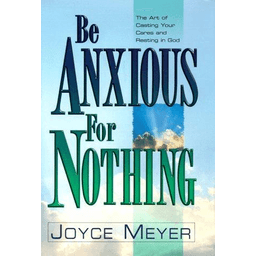
- Starting price
- ~$17 paperback
- Free tier
- No
- Platforms
- Print · Kindle · Audiobook
- Developer
- Thomas Nelson
- Launched
- 2017
- Updated
- May 31, 2026
The verdict
Anxious for Nothing has quietly become the book people hand to a friend whose mind won’t stop spinning - warm, unhurried, and built around a single passage of Scripture instead of a wall of advice. It is a devotional companion for worry, not a clinical treatment, and readers who keep that frame in mind tend to get exactly what they came for.
Try Anxious for Nothing ↗Opens maxlucado.com
Anxious for Nothing is one of the most widely read Christian books on worry of the last decade. Published in 2017 by Thomas Nelson, it landed on the New York Times bestseller list and has stayed in steady print since, riding a cultural moment when anxiety became the word almost everyone reached for to describe how modern life feels. For a category crowded with self-help titles, Max Lucado’s entry stood out by doing something simple - it slowed down and stayed on one passage of Scripture.
The thesis is small enough to write on an index card: anxiety is not your master, and there is a learnable rhythm for handing your worries to God instead of carrying them yourself. Lucado builds the whole book on Philippians 4:4-8 - Paul writing about joy, prayer, peace, and what to fill your mind with, from inside a Roman prison cell. He distills that passage into an acrostic, C.A.L.M.: Celebrate God’s goodness, Ask God for help, Leave your concerns with Him, Meditate on good things. It is not a clever marketing device bolted on afterward; it is the spine of the book.
Max Lucado is one of the most-published Christian authors alive - a longtime pastor in San Antonio, Texas, with more than a hundred titles and tens of millions of copies in print. He writes in the broadly evangelical, pastoral tradition, and his voice is unmistakable: short sentences, vivid word-pictures, a gentle hand on the reader’s shoulder. That voice is most of why people love him and part of why a certain kind of reader finds him too soft. The review below tries to describe both reactions honestly so you can decide whether the book is for you.
✓ The good
- Built on one passage, not a hundred tips - Lucado stays inside Philippians 4:4-8 the whole way, which gives the book a coherence most anxiety self-help lacks
- The C.A.L.M. acrostic actually sticks - Celebrate, Ask, Leave, Meditate is simple enough to recall in the middle of a hard moment, which is the point
- Genuinely gentle - the tone is a calm pastor talking you down, not a coach telling you to try harder, and that lands well with an already-anxious reader
- Accessible to a fault - short chapters, plain vocabulary, vivid stories, the kind of book a reluctant or exhausted reader will actually finish
- Strong supporting ecosystem - a study guide, a workbook, a DVD-based group curriculum, and a young-readers edition let a church or family work through it together
- Audiobook works well - Lucado’s warm, conversational style translates cleanly to listening, and many readers say they prefer it that way during anxious seasons
- Re-readable in pieces - the bite-sized format makes it easy to pick up again for a single chapter without re-reading cover to cover
✗ Watch out
- Devotional, not clinical - the book is encouraging and Scripture-centered rather than a treatment plan, and it is not a substitute for professional care for an anxiety disorder
- Light and repetitive for some - the same few ideas circle back across chapters, which comforts some readers and frustrates those who want forward momentum
- Lucado’s warm style isn’t for everyone - readers who want rigor, argument, or a denser theological case will find the prose too soft and the stories too tidy
- Thin on the harder questions - why anxiety persists for faithful people, the role of medication and therapy, and trauma get little sustained attention
- Heavier on reassurance than on practice - there are prayers and reflections, but readers wanting a structured day-by-day program may need the companion workbook to get one
Best for
- Readers in an anxious season who want a calm, Scripture-anchored companion
- Longtime Max Lucado readers who want his full-length take on worry
- Small groups and churches looking for an accessible 6-week book or video study
- Anyone who has bounced off denser books on anxiety and wants something readable
Avoid if
- You are looking for a clinically informed treatment of an anxiety disorder
- You want a dense, argument-driven or heavily exegetical book
- You find gentle, story-led devotional writing too soft for your taste
- You prefer a single tightly-argued read over a warm, circling, dip-in format
What Anxious for Nothing is
Anxious for Nothing is a popular-level Christian book about worry, built around a single short passage - Philippians 4:4-8. It is organized into brief, readable chapters grouped under the four movements of Lucado’s C.A.L.M. acrostic: celebrate God’s goodness, ask God for help, leave your concerns with Him, and meditate on whatever is true and good. The book is not a memoir, not a verse-by-verse commentary in the technical sense, and not a clinical manual. It is a devotional companion with the cadence of a pastor sitting across the table from someone who can’t stop worrying.
Lucado writes from the broadly evangelical, pastoral tradition and from decades in the pulpit. The voice on the page is the one his readers know from his other hundred-plus titles - gentle, image-rich, unhurried, leaning on a story or a turn of phrase to make a point land. Readers who want a tightly-argued or research-heavy book sometimes find the prose too soft; readers who came looking for a calm voice in a hard season tend to describe that same quality as exactly why the book works.
Why everyday readers reach for Anxious for Nothing
The single biggest practical difference between Anxious for Nothing and most other books on worry is that it gives you one thing to remember instead of fifty. The C.A.L.M. framework - Celebrate, Ask, Leave, Meditate - is short enough to hold in your head when your mind is racing and you do not have a book in front of you. Lucado is not trying to overwhelm an already-overwhelmed reader with techniques. He hands you four moves drawn straight from Philippians 4 and spends the rest of the book helping each one sink in. Readers who finish it tend to walk away able to name the four steps from memory, which is the entire design.
The other thing that sets the book apart is the register. Most books on anxiety are written in the voice of a coach or a clinician. Lucado writes in the voice of a pastor who has clearly sat with a lot of frightened people. He is patient where other books are brisk, and he assumes the reader is tired rather than lazy. That gentleness is most of why people hand the book to a struggling friend - it meets an anxious person where they already are instead of telling them to pull it together. Whether you want more rigor than that is the main question to ask yourself before buying.
The C.A.L.M. framework: Philippians 4 turned into four moves
The structural spine of Anxious for Nothing is the acrostic C.A.L.M., which Lucado pulls directly out of Philippians 4:4-8. Celebrate God’s goodness maps to "Rejoice in the Lord always." Ask God for help maps to "in every situation, by prayer and petition, present your requests to God." Leave your concerns with Him maps to the peace "which transcends all understanding." Meditate on good things maps to Paul’s closing list - "whatever is true, whatever is noble, whatever is right." The book then devotes a cluster of short chapters to each letter, working through the worry that letter is meant to address and the practice it points to.
This sounds like a small thing. In practice it is the engine of the whole book. By anchoring everything to four verses, Lucado keeps the book from sprawling into a grab-bag of advice, and he gives the reader a portable tool - four words - that survives the moment the book is closed. The framework also rhymes, loosely, with what cognitive behavioral approaches say about redirecting attention and reframing thoughts, which is part of why some readers outside the church pick the book up. The frame here is devotional and prayer-shaped rather than clinical, and Lucado would be the first to say so; the C.A.L.M. steps are practices for a worried heart, not a protocol for a diagnosed disorder.
Lucado’s pastoral voice: why the gentleness is the method
Anxious for Nothing is not a memoir, but Max Lucado’s decades as a pastor are never far from the page. He writes the way a longtime minister talks to a congregant in pain - slowly, with a story, without rushing to the fix. He opens chapters with small vivid scenes, returns again and again to the image of handing a heavy bag to someone stronger, and addresses the reader as a friend rather than a project. He is also candid, in passing, about his own bouts of worry, which keeps the gentleness from feeling like it is coming from someone who has never been anxious a day in his life.
That pastoral register is most of why the book lands for the readers it lands for. Plenty of books on anxiety are written in a brisk, do-this-now voice that an already-frazzled reader experiences as one more demand. Lucado does the opposite - he lowers the temperature. Readers who would tune out a sharper teacher tend to keep reading him because he sounds calm, and calm is what they came for. That same softness is exactly what readers wanting argument and rigor bounce off of. The voice is the book’s biggest strength and its clearest limit, and which one it is for you depends almost entirely on what you walked in hoping to find.
The wider ecosystem: study guide, group video, and a young-readers edition
Anxious for Nothing was successful enough that Thomas Nelson built a small set of companion resources around it. A study guide and a workbook break the C.A.L.M. steps into prompts and reflection questions for solo or group use. A DVD-and-streaming group curriculum, with Lucado teaching short sessions, lets a church or small group run the material over roughly six weeks. There is also a young-readers adaptation that carries the core ideas to kids in shorter, more story-driven form, plus the usual spread of formats - paperback, hardcover, ebook, and audiobook.
The practical effect is that the book scales from a single anxious reader to a whole group or family. A worried adult can read the paperback alone; a small group can run the video curriculum with the study guide; a parent can use the young-readers edition with an anxious child while reading the original themselves. The honest tradeoff is that the companion pieces re-package the same four-step core rather than adding much new material - they are scaffolding for different audiences and settings more than fresh content. For most adult readers, the original book (or the audiobook) is the place to start, and the rest of the ecosystem is a situational add-on.
Pricing
Paperback
~$17
The standard Thomas Nelson trade paperback. The version most readers buy and most groups assign.
Hardcover
~$25
Gift edition, often picked up for a friend going through an anxious stretch.
Kindle / eBook
~$12
Same text as the paperback, with highlights and notes that sync across devices.
Audiobook
~$18
Unabridged narration. A popular format for this book - Lucado’s conversational style fits the ear, and many readers say it helps during anxious moments.
Study Guide / Workbook
~$13
A companion study guide and workbook turn the book into a structured group or solo experience, with prompts and the C.A.L.M. steps broken out week by week.
The paperback is the version almost everyone buys. As of writing, it runs around $17 at major retailers, less when discounted, and it is the edition small groups and churches assign. Unless you specifically want a gift copy, the paperback is the right starting place.
The ebook runs around $12 and is worth it if you read on a phone or tablet and want highlights and notes to sync - handy for a book this quotable. The text is identical to the paperback. The audiobook, around $18, is a real option here: Lucado’s style is conversational and warm, and a meaningful share of readers say hearing it read aloud is more soothing than reading it, which matters for a book about calming a worried mind.
Beyond the original, the study guide and workbook (~$13) are the obvious add-on for anyone who wants structure rather than a straight read, and the group video curriculum is the pick for a church or small group. The young-readers edition sits in a similar price range and is best thought of as situational - useful if you have an anxious child, optional otherwise.
There is no free tier - this is a trade book from a major publisher, not an app - but used copies are easy to find under five dollars, and library copies are common.
Where Anxious for Nothing falls behind
Not a clinical resource. Anxious for Nothing is a devotional book about worry, not a treatment for an anxiety disorder, and Lucado does not claim otherwise. Readers managing diagnosed anxiety, panic, or related conditions should treat the book as one encouraging input alongside professional care - a doctor or therapist, not in place of one.
Light and repetitive for some. The book circles its handful of ideas across many short chapters. For a reader in distress that repetition can be soothing and reinforcing; for a reader who wants the argument to keep advancing, it can feel like the same point dressed in new stories. Which camp you fall into is worth knowing before you buy.
Thin on the hard cases. The book has less to say about why anxiety lingers for prayerful, faithful people, or about trauma, brain chemistry, and the role of medication. Those questions sit largely outside its devotional lane, so readers wrestling with them will want a companion resource that engages them directly.
Style is a real divide. Lucado’s gentle, image-led, story-rich prose is the reason many readers love him and the reason others cannot finish him. Readers who want density, rigor, or a tightly-built case should know going in that this is a warm pastoral book by design, not a deep dive.
Anxious for Nothing vs. Get Out of Your Head vs. Battlefield of the Mind
Different strengths. Anxious for Nothing (Max Lucado, 2017) is the gentle, devotional, single-passage book - it anchors everything to Philippians 4 and meets an anxious reader with a calm pastoral voice and four steps to remember. Get Out of Your Head (Jennie Allen, 2020) covers overlapping territory in a more recent register, leaning explicitly on cognitive-psychology language and aimed at an evangelical audience shaped by social media. Battlefield of the Mind (Joyce Meyer, 1995) is the older, harder-charging book - it frames negative thinking as spiritual warfare to be actively fought, in a voice from inside the Charismatic stream.
Lucado’s book is better at gentleness and at giving a worried reader something portable to hold onto. Allen’s is better at modern reference points and language an under-forty reader will recognize. Meyer’s is better at urgency and at the do-something-about-it posture some readers need. They are not really competitors - readers who like one of them often work through all three over time.
If you only read one, pick Lucado if you want a calm, Scripture-centered companion for an anxious stretch; pick Allen if you want a recent, psychology-aware framing; pick Meyer if you want momentum and a friend-who-has-been-there voice. Many small groups that run all three put Lucado first because it is the gentlest and most accessible entry point.
The bottom line
Anxious for Nothing has earned its place on the shelf people reach for when worry takes over. It is the gentle person’s starting place for Christian books on anxiety - warm, readable, and held together by a single passage of Scripture instead of a pile of advice. Read it knowing what it is: an encouraging devotional companion from a pastoral, broadly evangelical voice, not a clinical handbook and not a dense theological argument. Inside those limits it does its job well, which is why people keep quietly handing it to a friend whose mind won’t settle. Real gaps, but worth knowing going in rather than dealbreakers.
Alternatives to Anxious for Nothing
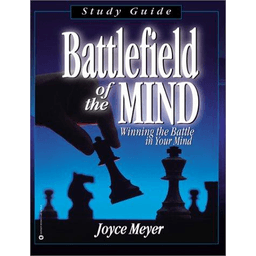 Battlefield of the MindJoyce Meyer’s three-million-copy bestseller on the thought life - harder-charging and warfare-framed where Lucado is gentle, but the other big seller in this lane.
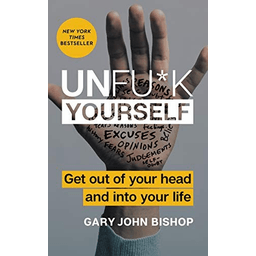 Get Out of Your HeadJennie Allen’s recent book on spiraling thoughts - same territory as Lucado in a more psychology-aware, social-media-shaped register.
 UninvitedLysa TerKeurst on rejection, fear, and feeling left out - a warm, story-led companion for the relational side of anxiety.
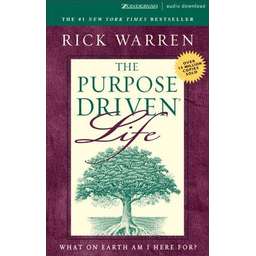 The Purpose Driven LifeRick Warren’s 40-day framework. Different question - why am I here? vs. why am I anxious? - but the same accessible, paragraph-a-page register.
Frequently asked questions
What is the C.A.L.M. acrostic in Anxious for Nothing?
It is the four-step framework Lucado draws from Philippians 4:4-8: Celebrate God’s goodness, Ask God for help, Leave your concerns with Him, and Meditate on good things. The acrostic is the spine of the book - each letter gets its own cluster of short chapters - and it is short enough to recall in an anxious moment without the book in hand.
Is Anxious for Nothing a Bible study?
Not in the formal sense. It is a devotional book centered on one passage - Philippians 4:4-8 - that it returns to throughout, rather than a verse-by-verse commentary. There is an official study guide and workbook, plus a video curriculum, for groups or readers who want a more structured, week-by-week experience.
Is this book a substitute for therapy or medication?
No. Anxious for Nothing is an encouraging devotional companion, not a clinical treatment, and Lucado does not claim that role for it. Readers managing a diagnosed anxiety disorder, panic, or trauma should treat it as one helpful input alongside professional care, not in place of a doctor or therapist.
Which edition or format should I buy?
For most readers, the paperback (around $17) is the right starting place. Pick the audiobook (~$18) if you prefer to listen - Lucado’s warm, conversational style works well read aloud and many find it soothing during anxious seasons - or add the study guide (~$13) if you want a structured solo or group experience.
How does it compare to Get Out of Your Head by Jennie Allen?
Same territory, different approach. Lucado (2017) is gentle, devotional, and built on a single passage of Scripture, with a calm pastoral voice. Allen (2020) is more recent and leans explicitly on cognitive-psychology language for a social-media-shaped reader. Many small groups read both - Lucado for the calm, Scripture-anchored frame, Allen for the modern reference points.
Is there a version for kids or teens?
Yes. There is a young-readers adaptation that carries the core ideas to children in shorter, more story-driven form. It is a situational add-on - useful if you have an anxious child and want to work through the material together - while most adult readers only need the original book.
How long does it take to read?
Most readers finish the book in one to two weeks of regular reading, less on audiobook. The chapters are short enough to read one at a time, which is also how many small groups pace it - often across a roughly six-week study using the companion guide or video sessions.
Sources & further reading
More Christian Living Books
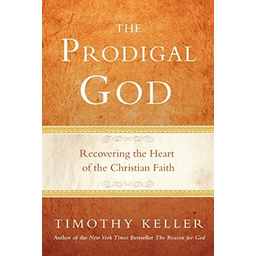 The Prodigal GodTim Keller’s 130-page reading of Luke 15 has quietly become one of the most-gifted Christian books of the last twenty years - and the reason is the title itself.
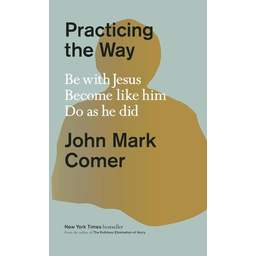 Practicing the WayComer’s 2024 follow-up to The Ruthless Elimination of Hurry has quietly become the default spiritual-formation book in a thousand small groups - and the reasons are worth unpacking.
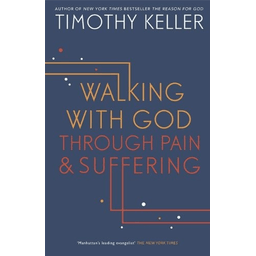 Walking with God Through Pain and SufferingTim Keller’s most comprehensive book on suffering - part survey of how every culture has tried to explain pain, part biblical theology, part field manual for the people actually walking through it.
 FerventThe prayer book that turned “strategic, specific prayer” into a fill-in-the-blank battle plan - and rode the War Room moment to the top of the bestseller lists.
 A Grace DisguisedJerry Sittser lost his mother, his wife, and his four-year-old daughter in a single car crash - and the book he wrote about it has quietly become the one grieving people press into each other’s hands, because it refuses to tell you how to get over your loss.
 The Ruthless Elimination of HurryJohn Mark Comer’s 2019 breakout - a pastor’s case that hurry is the great spiritual enemy of our age - has quietly become the go-to slow-down book for an exhausted generation of Christians. Here’s what it actually delivers, and where it doesn’t.