
- Starting price
- ~$18 paperback
- Free tier
- No
- Platforms
- Print · Kindle · Audiobook
- Developer
- Thomas Nelson
- Launched
- 2016
- Updated
- May 31, 2026
The verdict
Uninvited has quietly become the default Christian book on rejection and loneliness - emotionally honest, relentlessly applied, and credible because TerKeurst writes from inside her own seasons of feeling left out. It sits firmly in the popular Christian-living lane rather than the systematic-theology lane, and it is written primarily for a women’s audience, so readers looking for dense exegesis or a gender-neutral frame should know that going in.
Try Uninvited ↗Opens lysaterkeurst.com
Uninvited has quietly become the book Christians reach for when the subject is rejection. Published in 2016 by Thomas Nelson, it spent time on the bestseller lists, has sold well into the millions across formats, and spawned a companion video study and workbook used by women’s groups across the country. For a book about a feeling most people would rather not admit to - being left out, looked past, quietly uninvited - that reach is unusual, and it is most of the reason the book keeps getting handed from one friend to another.
The thesis is simple enough to fit on a Post-it: rejection steals its power the moment you stop letting human approval set your worth, and the cure is to live “loved” - secure in God’s acceptance - rather than chasing a sense of belonging that other people can grant and revoke. Lysa TerKeurst leans on passages about God’s nearness and adoption, then spends most of the book naming the specific shapes rejection takes - the unanswered text, the social circle that closed, the marriage that wounded, the comparison spiral - and walking through how to meet each one without handing it the keys to your identity.
Lysa TerKeurst is one of the most widely read Christian women authors in America and the longtime president of Proverbs 31 Ministries, an organization whose daily devotional reaches millions of inboxes. She writes from inside the broadly evangelical stream, and her register is the one her readers know from that ministry: warm, confessional, plainspoken, built around story before principle. Uninvited is written largely for a women’s audience - that is its intended lane, not a knock against it - and the review below tries to describe both what makes it land and where it has limits, so you can decide whether it is for you or for the friend you have in mind.
✓ The good
- Emotionally honest - TerKeurst writes openly about her own rejection wounds, including a marriage crisis and old friendship hurts, which gives the advice the weight of someone who has lived it
- Genuinely practical - most chapters land on a specific, nameable pattern (the comparison spiral, the “set-aside” feeling, the need for approval) and a concrete way to push back on it
- Accessible prose - short chapters, plain vocabulary, story-first structure, the kind of book a reluctant reader will actually finish in a week or two
- Reframes the core problem helpfully - the move from “who left me out” to “am I living loved” is the engine of the book, and readers tend to walk away with that one shift even if they forget the rest
- Companion study ecosystem - the video curriculum and workbook make it an easy six-week pick for a women’s group, with discussion questions already built
- Audiobook works well - TerKeurst narrates in her own conversational voice, and many readers say hearing it suits the confessional material
- Memorable, quotable lines - the book is built to be highlighted and passed along, which is part of why it travels friend-to-friend
✗ Watch out
- Light on exegesis - verses are quoted and applied quickly rather than worked through in context, which frustrates readers who want a study rather than a devotional
- Personal and devotional rather than systematic - the structure follows the author’s stories and emotional through-lines, not a doctrinal outline, so it can feel impressionistic to readers who like a clear argument
- Written primarily for women - the framing, examples, and voice assume that audience throughout, which makes it a natural fit for some readers and an awkward one for others
- Emotionally driven rather than theologically dense - the book leads with feeling and narrative, and readers wanting careful treatment of identity, suffering, or the doctrine of adoption will need to read further
- Repetition across the franchise - the themes overlap heavily with TerKeurst’s later books, so reading several of them back to back can feel like covering the same ground
Best for
- Readers in a lonely or left-out season looking for company and a way forward
- Women’s groups and Bible studies wanting an accessible six-week book with a ready-made video curriculum
- People who liked TerKeurst’s devotional teaching and want the long-form version
- Anyone who has bounced off denser Christian-living books and wants a story-first read
Avoid if
- You want a verse-by-verse exegetical study rather than topical, story-driven application
- You prefer a gender-neutral frame and find a women’s-audience voice a barrier
- You are looking for a clinically informed book on rejection sensitivity, anxiety, or trauma
- You want tightly argued theology rather than an emotionally led devotional read
What Uninvited is
Uninvited is a popular-level Christian living book about rejection and the longing to belong. It is organized in short, story-led chapters that move from a general case - that the ache of being left out is nearly universal and quietly corrosive - into specific shapes the wound takes, with a concrete reframe attached to each. It is not a memoir in the strict sense, not a Bible study in the technical sense, and not a systematic treatment of identity or suffering. It is a confessional handbook with the emotional cadence of a friend who has been on the floor and gotten back up.
TerKeurst writes from inside the broadly evangelical stream and from years of public ministry through Proverbs 31. The voice on the page is the one her readers know from that work - warm, self-disclosing, often funny, story before principle. The book is written largely for a women’s audience, and the examples and framing reflect that. Readers from more academic or liturgical backgrounds sometimes describe the prose as impressionistic; readers who came to it through the ministry tend to describe that same quality as the reason it reaches them.
Why everyday readers reach for Uninvited
The single biggest practical difference between Uninvited and most other books in its category is where it locates the problem. Rejection, in TerKeurst’s frame, is not mainly something other people do to you - it is something that gets its power from where you have placed your sense of worth. The fix she keeps returning to is “living loved”: starting from the settled fact of God’s acceptance rather than auditioning for human approval. That single move is what makes the book stick. Readers who finish it tend to walk away with a shorthand - “am I living loved right now, or am I letting this person’s opinion set my value?” - that they can actually use in the moment.
The other thing that sets the book apart is TerKeurst herself. She writes openly about her own seasons of feeling set aside - old friendship wounds, the public crisis in her marriage, the small daily rejections that pile up - and she does it without tidying the story into a neat lesson. That backstory gives the practical advice an authority it would not have from a teacher narrating it from the outside. When she tells a reader to stop letting an unanswered invitation define her, the reader knows she is not theorizing. Whether or not you align with every move in the book, that lived credibility is most of why people hand it to a struggling friend.
The “living loved” framework: worth anchored in God’s acceptance, not human approval
The structural spine of Uninvited is the idea that rejection loses its grip the moment your sense of worth stops depending on other people’s acceptance. TerKeurst frames this as the difference between living “unloved” - scanning every room for proof you belong, reading silence as verdict - and living “loved,” which starts from the premise that God’s acceptance is already settled and does not fluctuate with the guest list. The book then catalogs the everyday shapes the rejection wound takes: comparison, the fear of being left out, the need to be chosen, the wound of a relationship that turned. Each gets a chapter built around a story, a relevant passage, and a counter-move the reader can actually try.
This sounds like a small thing. In practice it is the engine of the whole book. Readers describe finishing a chapter and immediately recognizing the exact pattern she named showing up in their own week - the spiral after an unanswered text, the deflation when a circle of friends made plans without them. The reframe also lines up, intentionally or not, with a lot of what counselors say about self-worth and external validation, which is part of why some readers outside her usual audience pick it up too. The frame here is devotional and identity-centered rather than clinical or systematic, and it leads with feeling and narrative; readers wanting a tightly argued theology of identity will want to read it as a starting point and bring a denser book alongside.
Lysa TerKeurst’s personal story: why the advice carries weight
Uninvited is not a memoir, but TerKeurst’s personal history is never far from the page. She writes and speaks openly about old friendship wounds, about the public crisis in her marriage that unfolded around the time the book was written and promoted, and about the smaller, daily experiences of feeling overlooked that most readers recognize instantly. That material is woven through the book in extended scenes - when she names a rejection pattern, she usually mentions having lived inside it, not having studied it from a distance.
That biographical honesty is most of why the book has the emotional credibility it does. Plenty of Christian living books on belonging have been written by teachers who learned the material secondhand. TerKeurst learned hers, by her own account, in a much harder classroom, and she does not sand the edges off to make the lesson land cleaner. Readers who would politely tune out a tidier teacher tend to keep reading her because she sounds like someone still in process rather than someone reporting from the far side of it. That credibility does not settle every theological question a reader might have about the book’s frame, but it is the engine of the trust it earns chapter by chapter.
The companion study and DVD: built for women’s groups
Uninvited was successful enough that Thomas Nelson built a six-session video study and workbook around it. The DVD (or streaming) curriculum pairs short teaching segments from TerKeurst with a participant guide full of discussion questions, fill-in prompts, and between-session Scripture work, so a leader can run the whole thing without building a study from scratch. The pacing is designed for a six-week small-group arc, which lines up neatly with how most women’s ministries schedule a season.
The practical effect is that Uninvited is unusually easy to deploy as a group study, which is a meaningful share of why it spread. A leader can hand out the books, queue the videos, and lean on the workbook to carry the discussion, and the confessional tone tends to lower the bar for people to talk about a subject - feeling left out - they would not normally raise. The honest tradeoff is that the curriculum is built squarely for a women’s-group setting and assumes that audience, so it is a natural fit there and an awkward one elsewhere. For an individual reader, the book on its own (or the audiobook) is the place to start; the study package is the add-on for groups.
Pricing
Paperback
~$18
The standard Thomas Nelson edition. The version most readers buy and most groups assign; often discounted below list.
Hardcover
~$25
Gift edition, frequently picked up for a friend going through a hard season.
Kindle / eBook
~$12
Same text as the paperback, with highlights and notes that sync across devices.
Audiobook
~$15
Unabridged, narrated by TerKeurst herself. A popular format for this book - many readers say her own voice fits the confessional material.
Study Guide + DVD
~$30 (or stream)
The six-session companion curriculum - video teaching plus a workbook - designed for small-group and women’s-ministry use.
The paperback is the version almost everyone buys. As of writing it lists around $18, often less when discounted, and it is the edition women’s groups assign. Unless you specifically want a gift copy, the paperback is the right starting place.
The Kindle / eBook edition runs around $12 and is worth it if you tend to read on a phone or tablet and want highlights and notes to sync - useful for a book this quotable. The text is identical to the paperback. The audiobook, around $15, is a genuine option here: TerKeurst narrates it herself, and a meaningful share of readers say her own voice suits the confessional material.
For groups, the Study Guide and DVD package (around $30, or available to stream) covers the obvious use case - a ready-made six-session curriculum with video teaching and a workbook. Most individual readers do not need it; it is scaffolding for leaders running the book with a group rather than new material for a solo read.
There is no free tier - this is a trade book from a major publisher, not an app - but used copies are easy to find under five dollars, and library copies are common.
Where Uninvited falls behind
Light exegesis. Uninvited is a topical, story-led book, not a verse-by-verse study. Passages get quoted, paraphrased, and applied quickly in service of the chapter’s theme. Readers who want to see the surrounding context, the original-language work, or a careful treatment of the doctrine of adoption will need to bring a study Bible alongside.
Personal and devotional rather than systematic. The book is organized around TerKeurst’s stories and emotional through-lines, not a doctrinal outline, so it reads as impressionistic by design. That is the right call for the book she set out to write. It does mean Uninvited is a starting point on identity and belonging, not a comprehensive map of them.
Written primarily for women. The voice, examples, and framing assume that audience from the first page - which is exactly why it lands for so many readers and exactly why it is an awkward fit for others. It is worth naming up front rather than discovering mid-book, so a reader knows whether the book is aimed at them.
Emotionally driven more than theologically dense. The default register is feeling and narrative, which is what some readers in a raw season most need. For a reader who wants the same subject handled with more doctrinal weight - or who is in a season of grief or exhaustion more than active rejection - a companion volume with more emphasis on God’s nearness to the weary, something like Gentle and Lowly, pairs well.
Uninvited vs. It’s Not Supposed to Be This Way vs. Get Out of Your Head
Different strengths. Uninvited (Lysa TerKeurst, 2016) is the rejection-and-belonging book - the one that treats feeling left out as a worth problem and answers it with “living loved.” It’s Not Supposed to Be This Way (TerKeurst, 2018) is her follow-up on disappointment and the gap between the life you expected and the one you got - same confessional voice, adjacent wound, different angle. Get Out of Your Head (Jennie Allen, 2020) covers neighboring territory but aims at the thought life specifically, leaning explicitly on cognitive-psychology language for an evangelical-women audience that grew up with social media.
TerKeurst’s Uninvited is better at the specific ache of rejection and the longing to be chosen. Her own It’s Not Supposed to Be This Way is better when the problem is broader disappointment than relational exclusion. Allen’s book is better when the issue is a spiraling thought pattern more than a wound someone else inflicted. They are not really competitors - readers who like one of them often work through all three over a couple of years, since they share an audience and a register.
If you only read one, pick Uninvited if the live wound is rejection and feeling left out; pick It’s Not Supposed to Be This Way if it is disappointment and unmet expectation; pick Get Out of Your Head if it is anxious or looping thoughts. Most women’s groups that run all three start with Uninvited because the subject - being uninvited - is the one people recognize fastest and open up about easiest.
The bottom line
Uninvited has earned its place as the go-to Christian book on rejection. It is the accessible, story-first starting point for readers wrestling with loneliness and the longing to belong - emotionally honest, repeatable, and credible because the author has clearly lived it. Read it knowing what it is: a popular-level, devotional Christian-living book written primarily for a women’s audience, not a systematic theology and not a clinical handbook. Inside those limits it does its job well, which is why people keep quietly handing it to a friend in a lonely season. Real gaps, but worth knowing going in rather than dealbreakers.
Alternatives to Uninvited
 It’s Not Supposed to Be This WayTerKeurst’s follow-up on disappointment and the gap between the life you expected and the one you got - same voice, adjacent wound, a natural next read.
 Battlefield of the MindJoyce Meyer’s bestseller on the thought life - a harder-charging, warfare-framed take on the same inner-life territory Uninvited works.
 Get Out of Your HeadJennie Allen’s recent, social-media-aware book on spiraling thoughts - cognitive-psychology language for a similar evangelical-women audience.
 Emotionally Healthy SpiritualityPeter Scazzero’s deeper, more systematic take on the inner life - the book to add when you want more structure than a devotional read provides.
Frequently asked questions
What is Uninvited about?
It is a Christian living book about rejection, loneliness, and the longing to belong. Lysa TerKeurst argues that rejection gets its power from where you place your sense of worth, and that the way through is “living loved” - starting from God’s settled acceptance rather than chasing human approval. Each chapter pairs a personal story with a specific pattern, a passage, and a practical reframe.
Is Uninvited a Bible study?
Not in the formal sense. It is a topical, story-led Christian living book that quotes and applies Scripture chapter by chapter rather than working through a passage in context. There is an official six-session video study and workbook for groups that want a more structured experience.
Is Uninvited only for women?
It is written primarily for a women’s audience - the voice, examples, and framing assume that reader throughout - which is its intended lane. The core idea, that worth should rest on God’s acceptance rather than human approval, applies broadly, but most readers and nearly all of the groups that use it are women.
Which edition should I buy?
For most readers, the paperback (around $18, often less when discounted) is the right starting place. Pick the audiobook if you prefer to listen - TerKeurst narrates it herself and her conversational style works well in that format. Groups should look at the Study Guide and DVD package, which adds a ready-made six-session curriculum.
How does it compare to It’s Not Supposed to Be This Way?
Same author and voice, adjacent subject. Uninvited (2016) is about rejection and feeling left out; It’s Not Supposed to Be This Way (2018) is about disappointment and the gap between the life you expected and the one you got. Many readers work through both - Uninvited first if the live wound is rejection, the follow-up if it is broader disappointment.
Is this book a substitute for therapy or counseling?
No. It is a devotional, encouragement-driven book rather than a clinically informed one, and TerKeurst would not claim that role for it. Readers managing rejection sensitivity, anxiety, depression, or trauma should treat it as one input alongside professional care.
How long does it take to read?
Most readers finish the paperback in one to two weeks of regular reading, less on audiobook. The chapters are short enough to read one at a time, which is also how most groups pace it across the six-session study.
Sources & further reading
More Christian Living Books
 The Prodigal GodTim Keller’s 130-page reading of Luke 15 has quietly become one of the most-gifted Christian books of the last twenty years - and the reason is the title itself.
 Practicing the WayComer’s 2024 follow-up to The Ruthless Elimination of Hurry has quietly become the default spiritual-formation book in a thousand small groups - and the reasons are worth unpacking.
 Walking with God Through Pain and SufferingTim Keller’s most comprehensive book on suffering - part survey of how every culture has tried to explain pain, part biblical theology, part field manual for the people actually walking through it.
 FerventThe prayer book that turned “strategic, specific prayer” into a fill-in-the-blank battle plan - and rode the War Room moment to the top of the bestseller lists.
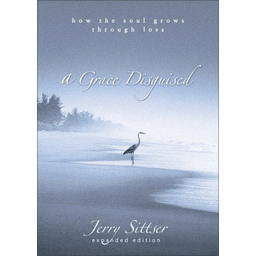 A Grace DisguisedJerry Sittser lost his mother, his wife, and his four-year-old daughter in a single car crash - and the book he wrote about it has quietly become the one grieving people press into each other’s hands, because it refuses to tell you how to get over your loss.
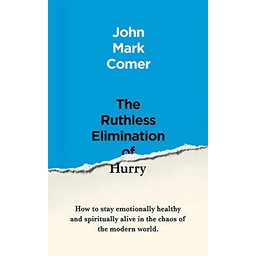 The Ruthless Elimination of HurryJohn Mark Comer’s 2019 breakout - a pastor’s case that hurry is the great spiritual enemy of our age - has quietly become the go-to slow-down book for an exhausted generation of Christians. Here’s what it actually delivers, and where it doesn’t.