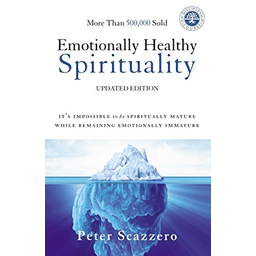
- Starting price
- $17.99 paperback
- Free tier
- No
- Platforms
- Print · Kindle · Audiobook · Audible
- Developer
- Zondervan
- Launched
- 2006 (Updated 2017)
- Updated
- May 25, 2026
The verdict
Emotionally Healthy Spirituality has quietly become the favorite of pastors who hit a wall and Christians who grew up doing Bible study without ever doing inner work. It is more diagnostic than devotional - and most readers either find it life-changing or find it asks more of them than they expected.
Try Emotionally Healthy Spirituality ↗Opens emotionallyhealthy.org
Emotionally Healthy Spirituality is Peter Scazzero’s 2006 book - significantly updated and expanded in 2017 - that argues something most discipleship books quietly avoid: you can be a faithful Christian for forty years, read the Bible every morning, lead a ministry, tithe, evangelize, and still be emotionally a child. Scazzero is the founding pastor of New Life Fellowship in Queens, New York, and he writes from a near-collapse moment in his own ministry that pushed him to ask why so much American Christianity produces people who are biblically literate but relationally broken.
The book is not a memoir. It is not a how-to. It is not a feel-good devotional. It is closer to a slow, structured examination of why so many sincere Christians plateau - and what to do about it. The thesis is one sentence: emotional health and contemplative spirituality, joined together, are essential to discipleship. Most readers find that sentence harder to live with than it looks on the page.
Since 2006 the book has sold over 500,000 copies, been translated into more than twenty languages, and seeded an entire ministry ecosystem - the Emotionally Healthy Discipleship course, the Daily Office devotional, the Emotionally Healthy Leader follow-up, and the EH Relationships eight-week course Scazzero now co-leads with his wife Geri. It is one of a handful of post-2000 Christian-living books that has actually shifted how a generation of pastors talks about formation.
✓ The good
- A genuinely original thesis - most discipleship books treat emotional life as a side topic; Scazzero argues it is the topic, and builds a case from scripture and ministry experience
- Family-of-origin work taken seriously - chapter four (“Going Back in Order to Go Forward”) gives evangelicals a permission slip to look at their family system that most Christian books refuse to grant
- Practices, not just principles - the Daily Office, the Rule of Life, and the Sabbath chapter give the reader something to actually do, not just nod at
- Honest about pastoral burnout - Scazzero’s near-shipwreck in ministry frames the book and lands hard with anyone who has been close to that experience
- Bridges traditions thoughtfully - pulls from Christian contemplatives, monastic Rules of Life, and Jewish wisdom while staying anchored in a recognizably evangelical frame
- The updated 2017 edition is genuinely better - clearer prose, expanded Daily Office content, and a more refined Rule of Life chapter than the 2006 original
✗ Watch out
- Demanding read - the book asks you to do real work (genogram, Daily Office, Rule of Life) and readers who skip the work get a fraction of the value
- Contemplative and monastic threads will sit uneasy with some Reformed cessationist readers - the book draws from Merton, à Kempis, the Desert Fathers, and modern contemplatives without much hedging
- Light on systematic theology - this is a formation book, not a doctrinal one, and readers wanting tighter biblical-theological scaffolding may find the framework loose
- Enneagram and personality-typology references in the broader EHS ecosystem (less so in the book itself) draw consistent critique from readers who consider those tools imported from outside the Christian tradition
- Repetitive in places - the same diagnostic move (“are you a Christian whose emotional life is a decade behind your spiritual life?”) recurs across chapters and can feel like the book is restating its thesis
Best for
- Pastors and ministry leaders nearing burnout
- Christians raised in “just read your Bible more” discipleship
- Anyone working through family-of-origin patterns alongside their faith
- Readers drawn to contemplative practice but wanting an evangelical on-ramp
Avoid if
- You want a doctrinal or systematic-theology book
- You are skeptical of contemplative or monastic spiritual practices
- You prefer brisk, principle-driven Christian living books
- You want something you can read in one sitting without homework
What Emotionally Healthy Spirituality is
Emotionally Healthy Spirituality is a 200-page book of structured Christian-living writing, organized around seven sequential moves: name the problem (Christians whose discipleship has not touched their emotional life), face your shadow, go back through family of origin, journey through the wall, enlarge your soul through grief and loss, discover the rhythms of the Daily Office and Sabbath, and develop a Rule of Life. Each chapter ends with reflection prompts and a practice.
The 2017 updated and expanded edition is the one in print now - it tightens the prose, expands the Daily Office material, and clarifies the Rule of Life chapter that readers found thinnest in the original. The book is part of a larger ecosystem: Emotionally Healthy Relationships (the eight-week relational practices course), The Emotionally Healthy Leader (the ministry-leadership companion volume), Day by Day (the daily devotional companion), and the EH Discipleship Course used widely in small groups and churches.
Why burned-out pastors and therapy-curious Christians keep recommending it
The single biggest practical difference between Emotionally Healthy Spirituality and most other Christian-living books is what it assumes about the reader. It assumes you have already tried the standard moves - more Bible, more prayer, more service, more accountability - and that those moves have not addressed the parts of you that keep showing up in your marriage, your reactivity, your inability to be alone, your difficulty receiving love. That assumption is unusual in evangelical publishing, and it is what makes the book land for the audience it lands for.
Scazzero’s frame is that emotional immaturity and spiritual immaturity are not two different things - they are the same thing in two different vocabularies. The book is built to make that case patiently. Pastors who experienced “Christianity without therapy” growing up, and Christians who have spent a decade wondering why mature believers still rage at their kids, tend to recognize themselves on the first read.
The emotional + spiritual integration thesis
Scazzero’s core argument is structural. He claims that the church has, for a long stretch, treated emotional life as a domain separate from - and lower than - spiritual life. You grow spiritually by Bible reading, prayer, service, and obedience; you grow emotionally by therapy, self-help, or just toughing it out. Scazzero says this split is false and dangerous, and he reads the Bible as consistently treating the inner emotional life of the human person as inseparable from their life with God. The Psalms, Job, Lamentations, and the emotional honesty of Jesus in Gethsemane all anchor the case.
The diagnostic move the book is most famous for is the list of “top ten symptoms of emotionally unhealthy spirituality” - using God to run from God, ignoring anger and sadness and fear, dying to the wrong things, denying the past’s impact on the present, dividing life into sacred and secular compartments, doing for God instead of being with God, spiritualizing away conflict, covering brokenness with image management, living without limits, judging the spiritual journey of others. Readers tend to recognize themselves in three or four of those at once, and that recognition is the engine of the rest of the book.
Contemplative, family-of-origin, and Jewish wisdom blended together
The texture of Emotionally Healthy Spirituality is unusual for a book sold in evangelical channels. Scazzero pulls openly from Christian contemplatives (Thomas Merton, Henri Nouwen, the Desert Fathers, Thomas à Kempis), from the monastic tradition (the Rule of Saint Benedict and its modern reworkings), from family systems theory (Bowen, McGoldrick’s genograms), and from Jewish wisdom traditions - particularly the rhythms of Sabbath, the structure of the Daily Office of fixed-hour prayer, and the Hebrew Bible’s comfort with lament. He does not present these as exotic. He presents them as resources the church already owns and has often forgotten.
Some Reformed cessationist readers critique the contemplative and monastic threads as importing too much from outside the Reformation tradition, and a few critique the Enneagram references in the broader EHS ecosystem (the book itself uses the Enneagram lightly compared to some of Scazzero’s podcast and conference content). Those are real critiques worth knowing about going in. Most readers - including many Reformed pastors - read the book without those concerns becoming dealbreakers, because the contemplative material is anchored to scripture and to the Daily Office practice rather than presented as freestanding mysticism.
The EHS Course and organizational ecosystem
The book is the front door to a larger ministry, Emotionally Healthy Discipleship, that Scazzero and his wife Geri now lead full-time. The main pieces of the ecosystem are the eight-session EHS Course (used by small groups and churches), the eight-week EH Relationships Course (a more practical relational-skills curriculum on listening, conflict, expectations, and family-of-origin work), the Day by Day daily devotional companion that operationalizes the Daily Office, and the Emotionally Healthy Leader - Scazzero’s 2015 follow-up book aimed specifically at pastors and ministry leaders.
In practice, most readers who get a lot out of the book end up doing one of three things: working through the EHS workbook alone, joining a small group running the eight-session course, or pairing the book with EH Relationships (the relational practices end up being where the inner work meets daily life). The ecosystem is more developed than most Christian-living books have, and that infrastructure is a meaningful part of why the book has held up across two decades. Churches use it as a discipleship pipeline; pastors use it as a self-rescue kit.
Pricing
Paperback
~$17.99
The standard format and the one most readers buy. Updated and expanded 2017 edition with revised chapters, expanded Daily Office content, and the refined Rule of Life material.
Hardcover
~$24
Available in some printings of the updated edition. Same text as the paperback - choose for durability if you mark up books heavily.
Kindle
~$13
Standard ebook edition. Highlights sync across devices, which matters because this is a book most readers underline heavily.
Audible / Audiobook
~$15
Read by the author in most editions. Works well for the narrative chapters; the genogram and Rule of Life exercises still require print or screen.
EHS Workbook
~$15
Companion eight-week workbook that walks through the practices chapter by chapter. The book stands alone, but readers serious about the work usually pair them.
EHS Course Bundle
~$50
Book + Workbook + Day by Day devotional and access to the eight-session video course. The full small-group or church-wide package.
The paperback at around $17.99 is the format most readers buy, and the one we mark as best value. The updated and expanded 2017 edition is the one currently in print - make sure you are not picking up a used copy of the 2006 original by accident if you want the latest version.
The Kindle edition at around $13 is the right pick for highlighters. This is a book most readers underline heavily and return to, and digital highlights sync across devices in a way that matters for a re-read book.
The Audible edition at around $15 is read by the author in most printings and works well for the narrative and diagnostic chapters. The genogram exercise and the Rule of Life construction in the final chapter genuinely require print or screen - you cannot do them by ear.
The course bundle at around $50 - book, workbook, Day by Day devotional, and video course access - is the option for anyone running this through a small group or church. Solo readers do not need it. Most readers do not need the bundle.
Where Emotionally Healthy Spirituality falls behind
Light on doctrinal scaffolding. This is a formation book, not a systematic theology. Readers wanting tighter exegetical or biblical-theological argument behind each move will find the framework somewhat loose - Scazzero is more interested in helping you see yourself than in defending each step against doctrinal pushback.
Contemplative and monastic sources used without much hedging. Scazzero quotes Merton, Nouwen, à Kempis, the Desert Fathers, and modern contemplative writers without stopping to distinguish where their frameworks line up with his evangelical commitments and where they do not. For most readers this is a feature; for Reformed cessationist readers it is one of the most-cited concerns about the book.
Enneagram and personality-typology references in the broader ecosystem. The book itself uses the Enneagram lightly, but the EHS podcast, conference content, and Geri Scazzero’s related work lean on it more - and readers who consider the Enneagram a non-Christian import will want to know that going in.
Demanding pace for casual readers. The book is paced for someone willing to slow down, do the genogram, sit with the Wall chapter, and actually build a Rule of Life. Skim-readers get the diagnostic and almost none of the value. This is a real limit, not a flaw - but it’s worth knowing before you start.
Repetitive thesis statement. The same core move (“are you spiritually mature but emotionally a decade behind?”) returns chapter after chapter. Some readers find that reinforcement useful; others find the book could have been shorter without losing the argument.
Emotionally Healthy Spirituality vs. Practicing the Way vs. Celebration of Discipline
Different strengths. Emotionally Healthy Spirituality is the diagnostic - its job is to convince you that emotional and spiritual maturity are one thing, and to give you a structured set of practices (Daily Office, Sabbath, Rule of Life) to address the gap. Practicing the Way (John Mark Comer) is broader and more cultural - it argues for apprenticeship to Jesus against the formation pressures of late modernity, and is built around three goals (be with Jesus, become like him, do what he did) rather than around a diagnosis of your inner life. Celebration of Discipline (Richard Foster) is the older, broader survey - twelve classical spiritual disciplines presented as the church’s historic toolkit for formation.
If you want to be diagnosed and given specific inner work to do, Scazzero is the right choice. If you want a cultural argument for slow apprenticeship to Jesus with a clean three-goal framework, Comer is the right choice. If you want the historic-disciplines reference book - meditation, prayer, fasting, study, simplicity, solitude, submission, service, confession, worship, guidance, celebration - Foster is the right choice. The three books are complementary more than competitive; many readers who finish one end up reading the other two within a few years.
Worth noting that Scazzero predates Comer by more than a decade and that Comer cites Scazzero as a formative voice. Foster predates both by a generation. The three books are best read in the order most readers actually read them - usually Scazzero first because someone hands it to them at a burnout moment, then Comer for the broader cultural frame, then Foster for the deeper bench of historic practices.
The bottom line
Emotionally Healthy Spirituality is not the right book for everyone. It is the right book for a specific reader - usually a Christian who has done the standard discipleship moves for years and quietly suspects that something deeper is being avoided. For that reader it lands hard and reshapes the next decade of formation. For readers wanting doctrinal scaffolding, brisk takeaways, or a faith without contemplative and family-of-origin work, it will feel either thin or off-frame. Read it when someone you trust hands it to you, do the exercises, and pair it with the workbook if you want the full benefit. Most readers either find it transformative or find it asks more than they expected - there isn’t much middle ground.
Alternatives to Emotionally Healthy Spirituality
 Practicing the WayJohn Mark Comer’s broader argument for apprenticeship to Jesus - be with him, become like him, do what he did. Less diagnostic than Scazzero, more cultural.
 The Ruthless Elimination of HurryComer’s shorter, sharper case against hurry as the enemy of formation. The Sabbath and Daily Office threads overlap heavily with EHS.
 Knowing GodJ. I. Packer’s twentieth-century classic on the doctrine of God and what it means to know him personally. Doctrinally weightier counterweight to EHS.
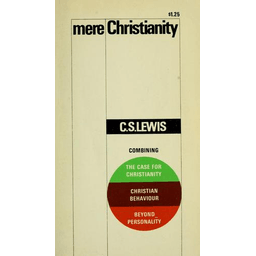 Mere ChristianityC. S. Lewis’s foundational case for the Christian faith. Different lane from EHS - apologetics rather than formation - but the standard companion classic.
Frequently asked questions
Should I buy the 2006 original or the 2017 updated edition?
Buy the 2017 updated and expanded edition. It is the one in print, has clearer prose, more developed Daily Office content, and a better Rule of Life chapter than the original. Used copies of the 2006 edition still circulate - check the cover and copyright page before buying secondhand.
Do I need the workbook to get the value of the book?
No, the book stands alone. But if you want to actually do the exercises - genogram, Rule of Life, Daily Office construction - the workbook makes that meaningfully easier. Solo readers who care about the inner work usually pair them; readers who just want the argument can skip the workbook.
Is this book Reformed, charismatic, or contemplative?
Scazzero writes from a broadly evangelical frame with significant contemplative, monastic, and Jewish wisdom influences. He is not specifically Reformed, not charismatic in the Pentecostal sense, and not Catholic, though he draws on Catholic contemplatives. Reformed cessationist readers sometimes critique the contemplative threads - note this honestly going in.
How does Emotionally Healthy Spirituality differ from Emotionally Healthy Relationships?
EHS is the foundational book - diagnostic, focused on the inner life, the Daily Office, and Rule of Life. EH Relationships is the eight-week practical relational curriculum Pete and Geri Scazzero developed afterward - listening, expectations, conflict resolution, family-of-origin work in real relationships. Most readers who get a lot out of EHS eventually do EH Relationships as the application layer.
Is this book appropriate for a church-wide small group?
Yes - the eight-session EHS Course is built specifically for that use case and is one of the most common ways churches run the book. The course bundle includes video sessions, the workbook, and the Day by Day devotional. Many churches run it back-to-back with EH Relationships across a single year.
Will I have to do a genogram?
The book asks you to. Chapter four, “Going Back in Order to Go Forward,” walks through constructing a multi-generational family diagram and noticing patterns. Readers who skip this exercise tend to report getting less out of the book; readers who do it tend to report it as one of the most disorienting and useful parts of the whole experience.
Is the Daily Office practice essential, or can I read the book without adopting it?
You can read and benefit from the book without adopting the Daily Office, but the Daily Office and Sabbath chapters are where the book stops diagnosing and starts prescribing. The Day by Day companion devotional exists specifically to make adopting the Daily Office easier. Most readers who say the book changed their life adopted at least a stripped-down version of the practice.
Sources & further reading
More Christian Living Books
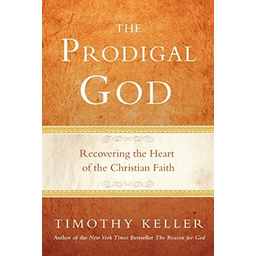 The Prodigal GodTim Keller’s 130-page reading of Luke 15 has quietly become one of the most-gifted Christian books of the last twenty years - and the reason is the title itself.Practicing the WayComer’s 2024 follow-up to The Ruthless Elimination of Hurry has quietly become the default spiritual-formation book in a thousand small groups - and the reasons are worth unpacking.
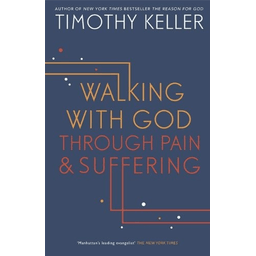 Walking with God Through Pain and SufferingTim Keller’s most comprehensive book on suffering - part survey of how every culture has tried to explain pain, part biblical theology, part field manual for the people actually walking through it.
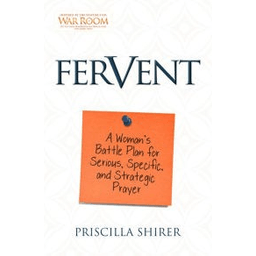 FerventThe prayer book that turned “strategic, specific prayer” into a fill-in-the-blank battle plan - and rode the War Room moment to the top of the bestseller lists.
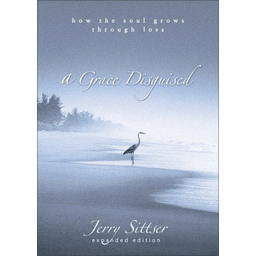 A Grace DisguisedJerry Sittser lost his mother, his wife, and his four-year-old daughter in a single car crash - and the book he wrote about it has quietly become the one grieving people press into each other’s hands, because it refuses to tell you how to get over your loss.The Ruthless Elimination of HurryJohn Mark Comer’s 2019 breakout - a pastor’s case that hurry is the great spiritual enemy of our age - has quietly become the go-to slow-down book for an exhausted generation of Christians. Here’s what it actually delivers, and where it doesn’t.