
- Starting price
- ~$18 paperback
- Free tier
- No
- Platforms
- Print · Kindle · Audiobook
- Developer
- Thomas Nelson
- Launched
- 2018
- Updated
- May 31, 2026
The verdict
It's Not Supposed to Be This Way has quietly become the book people reach for when life stops cooperating - raw, Scripture-anchored, and emotionally credible because TerKeurst wrote it from the floor of her own worst year. Readers who want a systematic theology of suffering should know going in that this is a memoir-driven companion for the gap between expectation and reality, not a comprehensive treatment.
Try It's Not Supposed to Be This Way ↗Opens lysaterkeurst.com
It's Not Supposed to Be This Way is one of the most widely read Christian living books on disappointment of the last decade. Published in 2018 by Thomas Nelson, it landed on the New York Times bestseller list and has stayed in steady rotation in small groups, women's ministries, and the give-it-to-a-grieving-friend economy ever since. The subtitle does the positioning for it: "Finding Unexpected Strength When Disappointments Leave You Shattered." That is the whole territory of the book - the space between the life you thought you'd have and the one you actually got.
The thesis is simple enough to sit with on a hard morning: disappointment is the distance between our expectations and our reality, and what we do in that gap shapes our faith more than almost anything else. TerKeurst does not argue you out of the pain. She does not promise the disappointment will resolve on a tidy timeline. She does not pretend the verses make it stop hurting. Instead she works through what it looks like to hold on to God when the circumstances make no sense, leaning on passages like John 11 (Lazarus), the dust-to-glory arc of Scripture, and a recurring image of "living loved" rather than living afraid.
What gives the book its weight is when it was written. TerKeurst - the longtime president of Proverbs 31 Ministries and the author of a long backlist of bestsellers - wrote It's Not Supposed to Be This Way in the middle of the worst season of her life: the public unraveling of her marriage and a sudden cancer diagnosis that put her on an operating table mid-manuscript. She is not theorizing about shattered expectations from a comfortable study. She is writing from inside one, in close to real time, and that lived proximity is most of why readers trust it. Written largely for a women's audience, it travels well beyond that - and the review below tries to describe both what it does well and where it leaves you wanting more.
✓ The good
- Emotionally credible - TerKeurst wrote it during her own marital crisis and cancer diagnosis, so the comfort never reads as theoretical
- Genuinely consoling without being saccharine - she sits in the pain with the reader rather than rushing to fix it, which is rarer than it sounds in the category
- Scripture-anchored - the John 11 Lazarus arc and the dust-to-glory motif give the emotional material a spine, not just sentiment
- Accessible prose - short chapters, warm conversational voice, the kind of book a reader in a hard season can actually finish
- Memorable reframes - "the distance between expectation and reality," "living loved," and "imperfect progress" are the lines readers quote back months later
- Strong companion ecosystem - a six-session video study, study guide, and devotional let a small group or an individual go deeper at their own pace
- Audiobook works well - TerKeurst narrates, and the personal material lands with extra force in her own voice
✗ Watch out
- Memoir-driven rather than systematic - it processes one woman's suffering beautifully but is not a comprehensive theology of why God allows pain (pair it with Keller's Walking with God Through Pain and Suffering for that)
- Written primarily for a women's audience - the framing, examples, and voice are aimed there, so some male readers feel they are reading over someone's shoulder
- Emotionally driven - the book moves by feeling and story more than by argument, which is a strength for some readers and a frustration for those who want the case laid out logically
- Light on exegesis - verses are felt and applied more than worked through in context, so readers wanting a study will need a Bible alongside
- Some hard specifics stay vague - out of evident discretion about her family, the marriage material is impressionistic rather than detailed, which a few readers find unsatisfying
Best for
- Readers in an active season of grief, loss, or shattered expectations
- Anyone facing a disappointment that has no clean resolution in sight
- Women's ministries and small groups wanting an accessible six-week study
- Readers who bounced off denser books on suffering and need a warmer entry point
Avoid if
- You want a systematic, argument-driven theology of suffering
- You prefer verse-by-verse exegesis over narrative and reflection
- You are in a stable season and looking for general spiritual growth rather than consolation
- You bounce off memoir and emotionally led writing and want a more detached treatment
What It's Not Supposed to Be This Way is
It's Not Supposed to Be This Way is a popular-level Christian living book about disappointment - the gap between the life you expected and the one you're living. It is organized into warm, short chapters that move from naming the ache ("dust" and "shattered" are the book's governing images) toward what it looks like to keep trusting God inside circumstances that don't make sense. It is not a memoir in the formal sense, not a Bible study in the technical sense, and not a systematic treatment of the problem of evil. It is a companion for the hard middle, written with the cadence of a friend who is in it with you.
TerKeurst writes from inside broadly evangelical Christianity and from her role at Proverbs 31 Ministries, and the book is written largely for a women's audience - that is its primary frame and the lens most of its examples come through. The voice on the page is the one readers know from her speaking and earlier bestsellers: candid, tender, occasionally funny, quick to admit she hasn't got it figured out. Readers who came to it through a hard season tend to describe that intimacy as exactly why it works; readers wanting a cooler, more analytic treatment sometimes find it lands too much on feeling.
Why everyday readers reach for It’s Not Supposed to Be This Way
The single biggest difference between It's Not Supposed to Be This Way and most other books in its category is that TerKeurst refuses to resolve the pain too quickly. Plenty of Christian living books on suffering hurry toward the silver lining - the lesson learned, the door God opened, the tidy redemptive bow. TerKeurst stays in the gap. She names disappointment as the distance between expectation and reality and then, rather than collapsing that distance, teaches the reader how to live faithfully inside it while it's still open. Readers who finish the book tend to walk away not with their problem solved but with a way to hold it that doesn't require pretending.
The other thing that sets it apart is when and how it was written. TerKeurst drafted the book during her own marital crisis and a cancer diagnosis that interrupted the writing itself. That backstory gives the consolation an authority it could not have from a teacher writing about suffering from a safe distance. When she tells a reader that God can be trusted in the dark, the reader knows she wrote those words in her own dark. Written primarily for women, the book has found a far wider readership precisely because that lived credibility translates across audiences - most of why people keep handing it to a friend whose life just came apart.
Disappointment as the gap between expectation and reality
The structural spine of the book is a single reframe: disappointment is the distance between what we expected and what we actually got. TerKeurst builds nearly everything on that definition. Rather than treating disappointment as a problem to eliminate, she treats it as a place to be inhabited honestly - a gap where faith is either formed or quietly abandoned. She works the idea through the Lazarus account in John 11 (where Jesus deliberately delays and Mary and Martha are left in the agonizing gap between their expectation and his arrival), through the recurring biblical movement from dust to glory, and through her own running list of circumstances that did not go the way she planned.
This sounds like a small thing. In practice it is the engine of the whole book. Readers describe finishing a chapter and suddenly being able to name the specific expectation underneath a disappointment they couldn't articulate before - the marriage they assumed they'd have, the health they took for granted, the timeline they never questioned. The frame also keeps the book from sliding into denial. TerKeurst is not telling readers the gap isn't real or won't hurt; she is teaching them that the gap is exactly where God tends to do his most personal work, and that closing their eyes to it forfeits the very thing they need most.
Lysa TerKeurst's own story: why the comfort carries weight
It's Not Supposed to Be This Way is not a memoir, but TerKeurst's own crisis is never far from the page. She has written and spoken publicly about the painful unraveling of her marriage and about the cancer diagnosis that arrived in the middle of writing this very book, putting her on an operating table with the manuscript unfinished. That history is woven through the chapters in close to real time - when she describes the temptation to numb out, to control, to demand an explanation from God, she is usually describing something she was actively fighting as she wrote.
That biographical honesty is most of why the book has the emotional credibility it does. Plenty of books on suffering are written from the far side of it, with the wound healed and the lesson clear. TerKeurst is writing from inside the wound, and she's candid that she doesn't have it tied up neatly. Out of evident care for her family, she keeps the hardest specifics impressionistic rather than detailed - a discretion a few readers find unsatisfying, but most read as integrity. The result is a narrator who sounds like someone still in the storm rather than someone narrating it safely from shore, and that is the engine of the trust the book earns chapter by chapter.
The companion study, devotional, and video series
Like most Proverbs 31 bestsellers, It's Not Supposed to Be This Way comes with a small ecosystem built for going deeper. There is a six-session video study, with TerKeurst teaching on screen, paired with a printed study guide of questions, Scripture, and space to write. A separate devotional adapts the book's themes into shorter daily readings for a slower, individual pass. Together they let the core material be used three different ways: a guided group study, a self-paced workbook, or a daily devotional rhythm.
The practical effect is that the book scales to the reader's situation. A small group can run the video sessions over six weeks; an individual processing a fresh loss can sit with the devotional one morning at a time; a women's ministry can assign the study guide for structured discussion. The honest tradeoff is the usual one for a franchise like this - once you've read the core book, the devotional in particular covers a lot of the same emotional ground, and it functions more as reinforcement for a new format than as new material. For most readers the paperback (or the audiobook in TerKeurst's own voice) is the place to start, with the study guide added when there's a group involved.
Pricing
Paperback
~$18
The standard Thomas Nelson edition and the copy most small groups assign. The version most readers buy.
Hardcover
~$25
Gift edition, often picked up for a friend going through a hard season.
Kindle / eBook
~$13
Same text as the paperback, with highlights and notes that sync across devices.
Audiobook
~$20
Unabridged and narrated by TerKeurst herself - a popular choice for this book, since the personal material carries more weight in her own voice.
Study Guide + Video
~$13 guide / DVD or streaming
A six-session companion study with a workbook and video teaching, designed for a small group or a guided individual read.
The paperback is the version almost everyone buys. As of writing it runs around $18 at major retailers, less when discounted, and it is the edition small groups and women's ministries assign. Unless you specifically want a gift copy, the paperback is the right starting place.
The eBook runs around $13 and is worth it if you tend to read on a phone or tablet and want highlights and notes to sync - useful for a book this quotable. The text is identical to the paperback. The audiobook, around $20, is a genuinely good option here: TerKeurst narrates it herself, and the personal material lands with extra force in her own voice. Many readers say it is the format they'd recommend.
If you're running a group, the companion package - a six-session video series plus a study guide around $13 - is the natural add-on. The video teaching is short enough to anchor a weekly meeting, and the guide gives the discussion structure. The separate devotional sits in a similar price range and is best thought of as a situational add-on for a slower individual read rather than required reading.
There is no free tier - this is a trade book from a major publisher, not an app - but used copies are easy to find for a few dollars, and library copies are common.
Where It's Not Supposed to Be This Way falls behind
Not a systematic theology of suffering. It's Not Supposed to Be This Way processes one person's pain with real beauty, but it is a memoir-driven companion, not a comprehensive treatment of why God allows suffering. Readers who want the full intellectual case - the historical and philosophical work, the survey of how Scripture and the church have answered the question - should pair it with Tim Keller's Walking with God Through Pain and Suffering, which is built for exactly that and makes a strong complement.
Written primarily for women. The framing, the examples, and the voice are aimed at a women's audience, which is the book's explicit lane and a strength for its core reader. Male readers often still find it helpful, but several describe the experience as reading over someone else's shoulder - the illustrations and idiom aren't pointed their way.
Emotionally driven rather than argued. The book moves by story and feeling more than by logical progression. For a reader in acute grief that is precisely the right register; for a reader who processes pain by reasoning through it, the lack of a tight argumentative structure can feel like the book never quite makes its case, only its appeal.
Light exegesis. Verses are felt and applied quickly rather than worked through in their context. Readers who want to see the original setting of John 11, or the surrounding chapter unpacked, will need to bring a study Bible alongside. The book is a companion for the heart in a hard season, not a study of the passages it leans on.
It's Not Supposed to Be This Way vs. Walking with God Through Pain and Suffering vs. A Grief Observed
Different strengths. It's Not Supposed to Be This Way (Lysa TerKeurst, 2018) is the warm, memoir-driven companion - the book that sits with you in the gap between expectation and reality and is written largely for a women's audience from inside the author's own crisis. Walking with God Through Pain and Suffering (Tim Keller, 2013) is the comprehensive treatment - Keller surveys how philosophy, other religions, and Scripture answer the problem of suffering before turning to the practical work of walking through it, and it is the one to reach for when the question is intellectual as much as emotional. A Grief Observed (C.S. Lewis, 1961) is the raw journal - Lewis's unedited notebook of his wife's death, the shortest and most unguarded of the three, less a teaching than a record of one man's grief in motion.
TerKeurst is better at present-tense consolation and at naming the specific shape of a disappointment. Keller is better at the why - the structured, argued case a doubting or analytic reader needs. Lewis is better at sheer honesty about how disorienting raw grief actually is. They are not really competitors; readers in a hard season often read more than one, in different moods, over the same stretch of months.
If you only read one, pick TerKeurst if you want a companion who is in it with you and a frame for living inside the disappointment; pick Keller if your pain comes with hard questions you need answered; pick Lewis if you want the unvarnished truth that grief is allowed to be a mess. Many small groups that work through suffering put TerKeurst first because it is the most accessible entry point, then move to Keller for depth.
The bottom line
It's Not Supposed to Be This Way has earned its place on the shelf people raid for a hurting friend. It is a warm, honest, Scripture-anchored companion for the gap between the life you expected and the one you got - emotionally credible because TerKeurst wrote it from inside her own worst year. Read it knowing what it is: a memoir-driven book on disappointment written largely for women, not a systematic theology of suffering. Inside those limits it does its job unusually well, which is why people keep quietly handing it to someone whose world just came apart. Real gaps, but worth knowing going in rather than dealbreakers.
Alternatives to It's Not Supposed to Be This Way
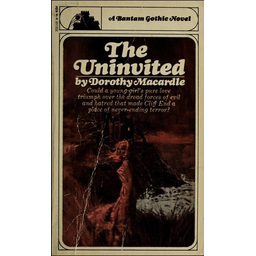 UninvitedTerKeurst's earlier bestseller on rejection and belonging - same voice and audience, a natural next read for anyone this book helped.
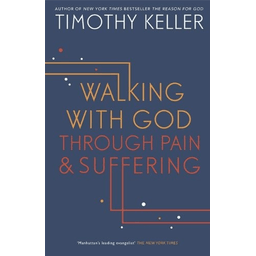 Walking with God Through Pain and SufferingTim Keller's comprehensive theology of suffering - the systematic, argued companion to TerKeurst's more personal book.
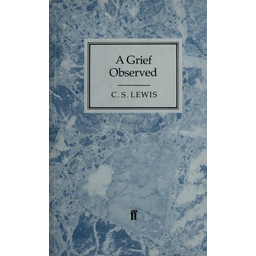 A Grief ObservedC.S. Lewis's raw journal of grief after losing his wife - shorter and more unguarded, for readers who want honesty over teaching.
 Battlefield of the MindJoyce Meyer's bestseller on the thought life - pairs well for readers whose disappointment has hardened into anxious or defeated thinking.
Frequently asked questions
What is It's Not Supposed to Be This Way about?
It is a Christian living book about disappointment - what Lysa TerKeurst defines as the gap between our expectations and our reality. Rather than promising to resolve the pain, it teaches readers how to keep trusting God while a hard circumstance is still unresolved, leaning on passages like the Lazarus account in John 11.
Is this book only for women?
It is written largely for a women's audience, and the examples and voice are aimed there. That said, many male readers find it helpful for grief and disappointment generally. If you want a treatment written for a broader or more analytic reader, Tim Keller's Walking with God Through Pain and Suffering is a good complement.
Is It’s Not Supposed to Be This Way a Bible study?
Not in the formal sense. It is a topical, reflective book that quotes and applies Scripture rather than working through passages verse by verse. There is an official six-session video study and study guide for groups or individuals who want a more structured, guided experience.
Which edition or format should I buy?
For most readers the paperback (around $18) is the right starting place. The audiobook (around $20) is especially worth considering because TerKeurst narrates it herself and the personal material carries more weight in her voice. Add the study guide and video if you are doing it with a group.
How is it different from Tim Keller’s book on suffering?
Different jobs. TerKeurst's book is a warm, memoir-driven companion that sits with you in present-tense disappointment. Keller's Walking with God Through Pain and Suffering is the comprehensive, argued treatment of why God allows suffering. Many readers in a hard season read both - TerKeurst for consolation, Keller for the harder questions.
Does the book talk about her marriage and cancer?
Yes, both inform the book directly - she wrote it during her marital crisis and a cancer diagnosis that interrupted the writing. Out of evident care for her family she keeps the hardest specifics impressionistic rather than detailed, focusing on what the experiences taught her about trusting God in the gap rather than on a blow-by-blow account.
How long does it take to read?
Most readers finish the paperback in two to three weeks of regular reading, less on audiobook. The chapters are short enough to read one at a time, which is also how most small groups pace it across the six-session companion study.
Sources & further reading
More Christian Living Books
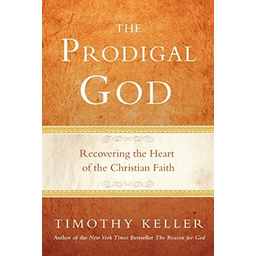 The Prodigal GodTim Keller’s 130-page reading of Luke 15 has quietly become one of the most-gifted Christian books of the last twenty years - and the reason is the title itself.
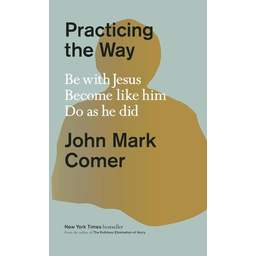 Practicing the WayComer’s 2024 follow-up to The Ruthless Elimination of Hurry has quietly become the default spiritual-formation book in a thousand small groups - and the reasons are worth unpacking.Walking with God Through Pain and SufferingTim Keller’s most comprehensive book on suffering - part survey of how every culture has tried to explain pain, part biblical theology, part field manual for the people actually walking through it.
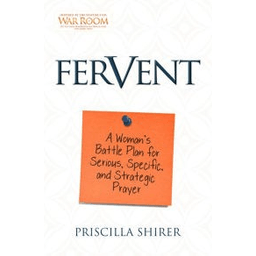 FerventThe prayer book that turned “strategic, specific prayer” into a fill-in-the-blank battle plan - and rode the War Room moment to the top of the bestseller lists.
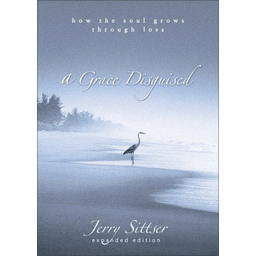 A Grace DisguisedJerry Sittser lost his mother, his wife, and his four-year-old daughter in a single car crash - and the book he wrote about it has quietly become the one grieving people press into each other’s hands, because it refuses to tell you how to get over your loss.
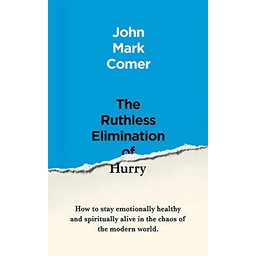 The Ruthless Elimination of HurryJohn Mark Comer’s 2019 breakout - a pastor’s case that hurry is the great spiritual enemy of our age - has quietly become the go-to slow-down book for an exhausted generation of Christians. Here’s what it actually delivers, and where it doesn’t.