- Starting price
- ~$16 paperback
- Free tier
- No
- Platforms
- Print · Kindle · Audiobook
- Developer
- Tyndale House
- Launched
- 1986
- Updated
- May 31, 2026
The verdict
The most widely read popular-level defense of the Reformed view of predestination in print. Sproul makes a contested doctrine readable in an afternoon - and is open from the first page that he is arguing one side of a debate Christians have run for centuries, not closing it.
Try Chosen by God ↗Opens ligonier.org
Chosen by God has quietly become the book pastors reach for when someone walks into the office unsettled by the word "predestination." Published in 1986 by Tyndale, it is the title that has introduced more ordinary readers to the Reformed doctrine of election than any other popular-level book in print - the one assigned in college ministries, handed across counseling desks, and argued over in dorm rooms for nearly four decades. R.C. Sproul wrote it not for scholars but for the person who has just bumped into Romans 9 and does not know what to do with it.
It is not a neutral survey of the options. It does not pretend to weigh every position evenly. It does not hide its conclusion. Sproul argues, openly and from the first chapter, for the Reformed understanding of divine sovereignty in salvation - the view that God, before the foundation of the world, chooses those who will be saved, and that this choice rests in His will rather than in anything foreseen in the person. He is candid that he is making a case. The book is a defense, written by an advocate, and it says so plainly.
What gives the book its staying power is the tone. Predestination is one of the oldest fault lines in Christian thought, and most writing on it is either combative or impenetrable. Sproul is neither. He writes like he talks - warm, illustrative, patient with the reader who finds the doctrine troubling, and unusually frank that thoughtful Christians have landed in very different places on it. He treats the question as one worth engaging carefully rather than one already settled by the people who agree with him.
✓ The good
- The most accessible popular-level statement of the Reformed view of predestination in print - readers report finishing it in a single weekend
- Sproul writes like he talks - story-driven, patient, never condescending toward the reader who finds the doctrine difficult or who disagrees
- Unusually honest that election is a long-running in-house Christian debate - he names where Arminians, Wesleyans, and others differ rather than caricaturing them
- The chapter on free will and the human will is the clearest plain-language treatment of the philosophical knot most readers get stuck on
- Defines its terms carefully - foreknowledge, election, predestination, regeneration - so a first-time reader is not lost in vocabulary
- Pairs with a companion video teaching series (Ligonier) so small groups can run it as a multi-week study without extra curriculum
- Short and re-readable - around 200 pages, dense enough to underline on a second pass
✗ Watch out
- Argues one side of a contested doctrine - Arminian, Wesleyan, Catholic, Orthodox, and Latter-day Saint readers hold different views and will read this as the Reformed case, not the last word
- Accessible rather than exhaustive - the strongest counterarguments get a hearing, but not the full treatment a scholarly volume would give them
- Presumes you already want to engage the predestination question - a reader with no investment in the debate may find the whole project beside the point
- Written from a confessional Reformed perspective throughout - the frame is visible on nearly every page, by the author’s own admission
- The 1986 illustrations and cultural references are dated, even though the argument itself has aged well
- Audiobook narration is competent but not Sproul himself - for his voice you have to buy the companion teaching series separately
Best for
- Readers who have hit Romans 9 or Ephesians 1 and want the Reformed reading explained clearly
- Anyone curious what Calvinists actually mean by predestination, from a primary source
- Small groups wanting a multi-week study with a paired video series
- Students being assigned an accessible introduction to the doctrine of election
Avoid if
- You want an even-handed survey that weighs every position without arguing for one
- You want the Arminian, Wesleyan, Catholic, Orthodox, or Latter-day Saint reading of these texts
- You want a scholarly monograph with full engagement of the counterarguments and secondary literature
- You have no particular interest in the predestination question and don’t want a book built around it
What Chosen by God is
Chosen by God is a book-length defense and explanation of the Reformed doctrine of predestination - the view that God sovereignly chooses, before the foundation of the world, those who will be saved. R.C. Sproul founded Ligonier Ministries in 1971, taught for decades within Reformed theology, and held a confessional Reformed position throughout his life; the book carries that frame openly. He wrote it for ordinary readers rather than specialists, with the stated aim of making a difficult and divisive doctrine comprehensible to someone encountering it for the first time. It is, by design, an argument for one position in a debate Christians have carried on since at least the fifth century.
Structurally the book moves through the building blocks of the Reformed case: the sovereignty of God, the condition of fallen human nature, the meaning of foreknowledge and election, the relationship between God’s sovereignty and human freedom, and the questions of assurance and fairness that the doctrine raises. Sproul devotes real space to the objections - particularly the worry that predestination makes God unjust or turns people into puppets - and answers them from within his own framework. The companion teaching series tracks the book’s outline closely, which is why small groups so often run the two together.
Why readers keep reaching for this one on a contested doctrine
The single biggest practical difference between Chosen by God and most writing on predestination is that Sproul refuses to be either combative or technical. Election is a subject that usually arrives wrapped in heat - proof-texts traded across a table, accusations of denying grace or denying freedom flying both directions. Sproul lowers the temperature. He assumes his reader is intelligent, troubled, and undecided, and he walks slowly, defining each term before he uses it and conceding openly where honest Christians have disagreed for centuries. That posture is rarer in this corner of theology than it should be, and it is why the book has outlasted shelves of more aggressive titles.
It is also why the book functions well even for readers who finish unpersuaded. A Wesleyan or Arminian reader can pick it up and come away understanding exactly what the Reformed position claims and why - which is more than most cross-tradition writing manages. Sproul is plainly an advocate, and he never hides it; but he states the other side’s concerns in terms its holders would recognize rather than knocking down a straw man. The result is a book people on every side of the question end up recommending as the clearest doorway into what the Reformed view actually is, whatever they conclude about it.
The sovereignty argument and the meaning of "election"
The spine of the book is Sproul’s case that the Bible’s language of election and predestination - clustered in passages like Romans 8 and 9, Ephesians 1, and John 6 - describes a real, prior choice by God rather than a response to a choice already made by the person. He spends the early chapters establishing what he means by the sovereignty of God, then carefully distinguishes the Reformed reading of "foreknowledge" (God’s sovereign, loving choice to set His affection on a people) from the reading he is arguing against (God foreseeing who would believe and electing on that basis). Much of the book’s persuasive weight rests on that single distinction, and Sproul knows it, so he returns to it repeatedly from different angles.
This sounds like a narrow exegetical point. In practice it is the whole debate in miniature. Sproul’s aim is to show the reader that the Reformed position is not an arbitrary doctrine imposed on the text but, in his telling, the most natural reading of it - while being candid that other serious readers weigh the same passages differently and arrive elsewhere. Readers report that whether or not they end up agreeing, they finish the chapters understanding what the argument actually is, which is the thing most discussions of election never manage to deliver. The doctrine stops being a slogan and becomes a position they can examine.
Free will, "double predestination," and the hardest objections
If Chosen by God has a most-discussed chapter, it is the one on the human will. Sproul takes head-on the objection most readers raise first: if God chooses, in what sense are people free, and how is anyone responsible? He works through the philosophical knot using the categories of the Reformed tradition - distinguishing the freedom to act according to one’s strongest desire from the libertarian freedom his critics defend - and argues that meaningful human choice and divine sovereignty are not the contradiction they first appear to be. He also addresses the charge of "double predestination" directly, drawing a distinction he regards as crucial between God actively working faith in the elect and God passing over others.
These are the chapters where the book is doing its most contested work, and Sproul handles them as the live objections they are rather than waving them away. He grants that the fairness question - why these and not those - is the genuinely hard one, and he answers it from within his framework without claiming the answer will satisfy everyone. Readers from traditions that locate human freedom differently, or that understand God’s saving will as extending to all, will part company with him precisely here. Sproul’s achievement is that he makes the disagreement legible: a reader can see exactly where the roads fork and why thoughtful people take different ones.
The companion teaching series and the small-group ecosystem
Sproul recorded a video teaching series through Ligonier Ministries covering the same material - a set of roughly half-hour sessions tracking the book’s argument. As with much of Sproul’s output, he taught this content in seminars and lectures for years before it became a book, and the recordings preserve the conversational rhythm the prose is written in. For small groups, the common pattern is one chapter and one video per session over several weeks, with the video serving as the lecture and the chapter as the reading and discussion anchor.
The ecosystem extends past the book itself: a study guide, audio versions on the Renewing Your Mind podcast feed, and conference talks Sproul gave on election and sovereignty that surface periodically in Ligonier’s archive. None of it is required - the paperback stands on its own - but for a group that wants a packaged multi-week study with a built-in lecturer on a doctrine that benefits from careful guidance, the bundle is one of the more polished offerings in modern publishing. The companion series, sold around $30 for DVD or streaming, is the upgrade most groups end up buying alongside the book.
Pricing
Paperback
~$16
The standard Tyndale edition most readers buy - around 200 pages, the version pastors hand out.
Kindle
~$10
Digital edition with highlighting and search - useful for re-reads and for finding the free-will chapter when you can’t remember where it sits.
Audiobook / Audible
~$15
Unabridged audio, narrated by a professional reader (not Sproul). Roughly 7 hours.
Companion Teaching Series
~$30 (DVD/streaming)
Sproul’s Ligonier video series on the same material - multiple sessions, his voice, used by small groups as a paired study.
Paperback at around $16 is the version most readers buy and the one pastors hand out. For a book that gets passed around as often as this one, the paperback is the right format - there is rarely a reason to pay for anything sturdier unless you expect to re-read it for years.
Kindle around $10 is genuinely useful for this title, because it is the kind of book readers return to in order to re-find a specific argument - the foreknowledge distinction, the free-will chapter, the response to a particular objection. Search earns its keep here. The audiobook, around $15 and roughly seven hours, is well narrated but not by Sproul himself; for that voice you have to buy the companion teaching series.
The companion DVD or streaming series at around $30 is the one upgrade groups commonly make. It turns the book into a multi-week curriculum with Sproul as the lecturer, which matters more than usual on a doctrine where a steady guide keeps the discussion from overheating.
Most readers do not need the full bundle. A paperback for around $16 is enough to engage the argument. The teaching series is the upgrade that matters for groups; everything else is convenience.
Where Chosen by God falls behind
Not a neutral survey. By design, this is a defense of one position, not an even-handed tour of the options. A reader who wants every view laid out and weighed without an author arguing for one of them will want a multi-views volume - something like the "Four Views" format - rather than this book. Sproul is making a case, and he says so.
Not exhaustive on the counterarguments. The book is accessible first, thorough second. The strongest objections from the Arminian and Wesleyan traditions get a fair hearing and a reply, but not the full, footnoted engagement a scholarly treatment would provide. Readers who want the opposing case argued at full strength will need to read its defenders in their own words alongside this.
Presumes you want to engage the question. Chosen by God is built entirely around the predestination debate. A reader with no particular stake in it - who has not been troubled by Romans 9 and is not trying to understand election - may find the whole framing beside the point. The book answers a question you have to already be asking.
Confessional frame is visible throughout. Sproul writes as a Reformed theologian and never pretends otherwise. Readers from Arminian, Wesleyan, Catholic, Orthodox, or Latter-day Saint backgrounds will find the frame present on nearly every page - which is not a flaw so much as the nature of the book, but it is worth knowing going in rather than expecting neutrality.
Dated illustrations. The first edition is from 1986, and some of the cultural examples and references show their age. The theological argument has held up well; the occasional illustration belongs to a different era of American Christian life.
Chosen by God vs. The Holiness of God vs. Knowing God
These three are the books most often handed to a reader who wants to think seriously about God without opening a systematic theology - and the first two share an author. They do genuinely different jobs.
Different strengths. Chosen by God is the most argumentative of the three: it takes up a single contested doctrine - predestination - and makes the Reformed case for it in plain language, fully aware it is one side of a long debate. The Holiness of God, Sproul’s most famous book, is the more experiential and the more broadly embraced, built around Isaiah 6 and aimed at recovering a sense of God’s holiness that readers across traditions have adopted. Knowing God, by J.I. Packer, is the broadest and most pastoral - a wide survey of God’s character and the practical shape of knowing Him, written from a broadly Protestant frame but lighter on the in-house disputes.
For most readers, the right entry point is The Holiness of God or Knowing God - both speak across traditions and don’t require you to take a side. Chosen by God is the one to pick up specifically when the election question is what you are wrestling with and you want the Reformed reading explained by a careful advocate. All three are written from Protestant frames, with Sproul the most explicitly Reformed; Chosen by God is the most likely of the three to land differently depending on the tradition the reader brings to it.
The bottom line
Chosen by God is the book to read when predestination has stopped being an abstraction and started being a question you need to settle. Sproul does not try to be neutral, does not pretend the debate is closed, and does not caricature the people who disagree with him. He makes the Reformed case as clearly and patiently as it has been made at a popular level, names honestly where other Christians land differently, and trusts the reader to do the rest. Whether you finish persuaded or not, you will finish understanding the argument - which, on this particular doctrine, is most of the battle.
Alternatives to Chosen by God
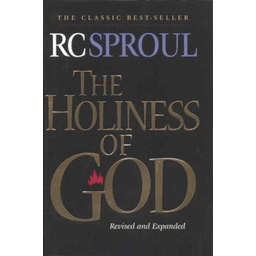 The Holiness of GodSproul’s most famous and most broadly embraced book - built around Isaiah 6, the natural starting point before this more contested one.
 Ligonier MinistriesSproul’s teaching ministry - the companion video series for this book, plus decades of his lectures on sovereignty and election.
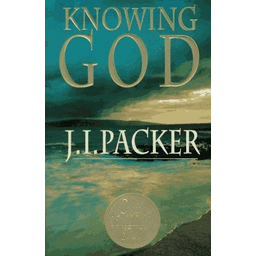 Knowing GodJ.I. Packer’s pastoral classic on God’s character - broader and lighter on in-house disputes, an easier cross-tradition read.
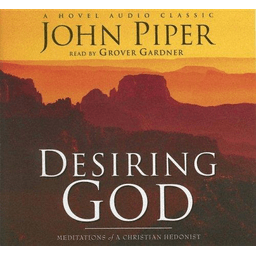 Desiring GodJohn Piper’s book on joy in God - written from a kindred Reformed frame, the natural next read for those drawn to Sproul’s theology.
Frequently asked questions
Is Chosen by God hard to read?
No. It is one of the most accessible books in print on a difficult subject. Sproul writes like he talks - story-driven, patient, defining each term before he uses it - and the chapters are short. A motivated reader can finish it in a weekend. The depth shows up on the re-read.
What position does the book argue for?
Chosen by God argues for the Reformed understanding of predestination - that God sovereignly chooses, before the foundation of the world, those who will be saved. Sproul is open from the first page that he is making a case for one view in a debate Christians have carried on for centuries, not surveying every position neutrally.
Is this a one-sided book?
It is a defense of one position, and Sproul says so plainly - but it is not dismissive of the others. He states the Arminian and Wesleyan concerns in terms their holders would recognize and engages the hardest objections directly. Many readers who disagree with his conclusion still recommend it as the clearest explanation of what the Reformed view actually claims.
How does it handle the free-will objection?
Directly, in what most readers consider the book’s key chapter. Sproul works through the relationship between God’s sovereignty and human freedom using the categories of the Reformed tradition, distinguishing the freedom to act on one’s strongest desire from the libertarian freedom his critics defend. Readers from traditions that understand human freedom differently will part company with him here - which is exactly the fork in the road the doctrine turns on.
Do I need the companion teaching series?
Not to read the book - the paperback stands on its own. But if you are running a small group, the video series tracks the book closely and gives you Sproul as the lecturer, which steadies the discussion on a doctrine that can get heated. Many groups buy both.
Should I read this or The Holiness of God first?
For most readers, The Holiness of God first. It is Sproul’s most famous book, speaks across traditions, and does not require you to take a side in a debate. Chosen by God is the one to pick up when the election question specifically is what you want to work through, with Sproul as a careful guide to the Reformed reading.
Will this book settle the predestination question for me?
It is not designed to. Election and free will form one of the longest-running in-house Christian debates, and readers in the Arminian, Wesleyan, Catholic, Orthodox, and Latter-day Saint traditions hold genuinely different views. What Chosen by God does is make the Reformed case clearly and name honestly where others differ - leaving the conclusion, and the further reading on the other side, to you.
Sources & further reading
More Modern Christian Classics
Knowing GodJ.I. Packer’s 1973 classic on the doctrine of God has sold more than 1.5 million copies and is still the book most pastors hand to laypeople who want theology that goes somewhere - here’s what it actually does and who it’s for.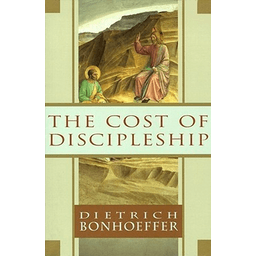 The Cost of DiscipleshipDietrich Bonhoeffer’s 1937 exposition of the Sermon on the Mount, written for pastors training under a regime that wanted them silent - and still the sharpest book in print on what following Jesus actually costs.
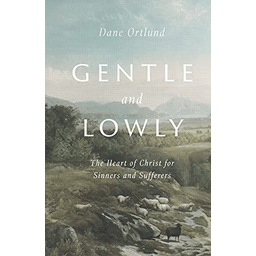 Gentle and LowlyDane Ortlund’s 23 short chapters on Matthew 11:29 have quietly become the most-given new Christian book of the decade - and the reason is not what you’d guess.The Holiness of GodR.C. Sproul’s career-defining book on the one attribute of God the church most forgets - and the vision in Isaiah 6 he believed everything else flows from.
 The Weight of GloryThe 1941 sermon many call Lewis's single finest piece of writing - "there are no ordinary people" - gathered with eight other addresses into one slim, uneven, unforgettable collection.
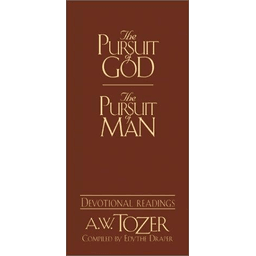 The Pursuit of GodA.W. Tozer’s ten-chapter wake-up call on knowing God personally - short, severe, and the one devotional Reformed, Wesleyan, Catholic, and Orthodox readers all seem to keep on the nightstand.