
- Starting price
- Free (1917 ed.); ~$40 modern
- Free tier
- Yes
- Platforms
- Print · Web (1917 ed. free) · Kindle
- Developer
- Oxford University Press
- Launched
- 1909
- Updated
- May 31, 2026
The verdict
The single most historically influential study Bible ever published - C.I. Scofield's 1909 notes pairing the King James text with a dispensational framework that reorganized how millions of readers approach prophecy, covenants, and the end times. The 1917 edition is public-domain and free; modern Oxford editions run around $40 and up. Essential for anyone who wants to understand 20th-century American Christianity, and a serviceable everyday reference for readers who already share its interpretive lens.
Try Scofield Reference Bible ↗Opens global.oup.com
No study Bible in the English language has shaped how people read scripture more than the Scofield Reference Bible. First published by Oxford University Press in 1909 and revised in 1917, it took the King James text most American Protestants already owned and wrapped it in a system: cross-references threaded through the whole canon, definitions at the bottom of the page, dated chronologies in the margins, and introductory notes that taught the reader how to fit every passage into a single overarching scheme of history. It sold in the millions in its first decades, and it carried the dispensational reading of the Bible - organized around distinct eras, or "dispensations," in God's dealings with humanity - out of the lecture hall and onto the family bookshelf.
It is not a modern study Bible, and it does not pretend to be. It does not carry archaeological photography. It does not survey the range of scholarly opinion on a contested verse. It does not hand you a one-year reading plan. What it does is teach one consistent interpretive framework, clearly and relentlessly, from Genesis to Revelation - the framework Cyrus Ingerson Scofield (1843-1921), a lawyer-turned-pastor, assembled with a panel of consulting editors and published under Oxford's scholarly imprint. That clarity is exactly why it spread, and exactly why some readers reach for it and others reach past it.
The most useful thing to know going in is what tradition it serves. The Scofield Reference Bible is a classic dispensationalist study Bible - its notes assume and teach a particular system, with a sharp distinction between Israel and the Church, a literal future for biblical Israel, and (in its premillennial form) a coming rapture and earthly millennium. That system is held by many evangelicals and read differently by many other Christians, and the scholarship behind the notes reflects early-twentieth-century conservative study, which has been debated and developed considerably since. For readers who already read the Bible through a dispensational lens, Scofield is the foundational reference. For everyone else, it is one of the most important documents in the history of how the Bible has been read - worth knowing for that reason alone, and best read with awareness of the framework doing the framing.
✓ The good
- The most historically influential study Bible ever printed - understanding Scofield is understanding how a huge slice of 20th-century Christianity learned to read prophecy
- A complete, self-consistent interpretive system - the notes teach one framework clearly from Genesis to Revelation, which is exactly why readers found it so usable
- The 1917 edition is public-domain and genuinely free - full text and notes online, in apps, and in cheap reprints, with nothing to subscribe to
- Pairs the familiar King James text most readers grew up with - the verse wordings match the translation still most-quoted in older American churches
- The cross-reference chain system is dense and well-threaded - Scofield linked related passages across the whole canon in a way that was ahead of its time
- Marginal chronology, definitions, and book introductions make it a true reference, not just an annotated text - everything is on the page where you need it
- Modern Oxford editions update the translation choices (KJV, NKJV, NIV, ESV) while preserving the classic note apparatus, so the framework travels to newer texts
✗ Watch out
- The notes teach a specific dispensational framework throughout - readers who don't share that interpretive lens will be reading against the grain on prophecy, the covenants, and the end times
- The scholarship reflects early-20th-century conservative study - much of it has been debated, refined, or moved past in the century since, and the notes don't reflect later archaeological or linguistic work
- The older editions are KJV-only with early-1900s editorial language - the prose and reference style feel dated next to a contemporary study Bible
- Sparse on archaeological, historical-cultural, and original-language detail - modern study Bibles offer far fuller background notes, maps, and word studies
- Some of Scofield's marginal dates (e.g., a young-earth Ussher-style chronology) reflect their era and are not how most reference works present chronology today
- Not a devotional or daily-reading Bible - there's no reading plan, and the apparatus assumes you bring the reading discipline
Best for
- Readers who already study the Bible through a dispensational, premillennial framework
- Anyone wanting to understand the roots of 20th-century American evangelical prophecy teaching
- Students of church history and theology tracing where dispensationalism came from
- KJV readers who want a classic, low-cost (or free) annotated reference with a consistent system
Avoid if
- You want a study Bible that surveys multiple interpretive views rather than teaching one
- You want current archaeological, historical-cultural, and original-language notes
- You read primarily in a modern translation and want notes written natively for it
- You want a devotional or daily-reading Bible rather than a reference apparatus
What Scofield Reference Bible is
The Scofield Reference Bible is a single-volume study Bible built around the King James Version text, first published by Oxford University Press in 1909 and revised in 1917. The biblical text runs across the page; the bottom carries Scofield's study notes, the margins carry a chain of cross-references and a running chronology, and the front and back carry book introductions, definitions, and essays. C.I. Scofield - a Civil War veteran, lawyer, and Congregationalist pastor - compiled the notes over several years with a panel of consulting editors, and Oxford's scholarly imprint gave the project unusual reach for a study Bible of its day.
What distinguishes it from a plain annotated Bible is the system. Scofield organized scripture around a series of "dispensations" - distinct periods in which, on this reading, God deals with humanity under different arrangements - and threaded that framework through the notes, cross-references, and introductions so the reader is always shown how a passage fits the larger scheme. Later revisions extended the project: the New Scofield Reference Bible appeared in 1967, and the Scofield Study Bible III in 2002, with the classic notes also issued alongside modern translations including the NKJV, NIV, and ESV. The 1917 edition is in the public domain, which is why its text and notes circulate freely online and in low-cost reprints.
Why dispensational readers reach for Scofield
The reason Scofield became the reference is that it answered a question most study Bibles of its era left to the reader: how does the whole Bible fit together? Scofield gave a single, learnable answer. Each "dispensation" is introduced, the covenants are charted, prophecies are cross-linked to their proposed fulfillments, and Israel and the Church are kept on separate tracks. A reader with no formal training could pick up the volume and, within a few weeks, hold a coherent map of scripture in their head. That sense of a key that unlocks the whole book is precisely what drove the millions of copies and the Bible colleges and conferences that taught from it.
The other reason is the cross-reference system itself. Scofield's chain references - which link a word or theme in one verse to its appearances across the canon - were dense, deliberate, and unusually well-threaded for 1909. With the marginal definitions and book introductions, they made the volume a genuine working reference rather than a Bible with footnotes. For a reader who already shares the dispensational framework, this is simply the most thorough early expression of how they read scripture, with everything they want on the page in front of them.
The dispensational framework: one system, taught from Genesis to Revelation
The organizing idea of the Scofield Reference Bible is dispensationalism - the view that biblical history unfolds across a series of distinct eras, or dispensations, in each of which God relates to humanity under a particular arrangement. Scofield's notes introduce the scheme early and reinforce it throughout: the covenants are laid out and charted, prophecy is read with an emphasis on literal future fulfillment, and a firm distinction is drawn between national Israel and the Church. The notes on Genesis, Daniel, the Gospels, and Revelation carry the weight of the system, and the cross-references are threaded so a reader following them is repeatedly shown the framework at work.
It is worth stating plainly what this means for a buyer. Dispensationalism is one interpretive tradition among several within Christianity - embraced by many evangelicals, especially in its premillennial and pretribulational forms, and read differently by many other Christians. Scofield does not present the framework as one option among many; the notes teach it as the structure of scripture. That is the source of the volume's clarity and the reason it spread so far, and it is the single most important thing to know before relying on it. The scholarship behind the notes is early-twentieth-century, and dispensational thought itself has been debated and refined considerably since - by critics of the system and by later dispensationalists who revised parts of it.
The cross-reference and chronology system: a true working reference for 1909
Beneath the theological framework sits a piece of reference engineering that was genuinely advanced for its time. Scofield built an extensive chain of cross-references linking a key word or theme in one verse to its related appearances elsewhere, letting a reader trace a concept - atonement, grace, the kingdom, faith - across the whole canon by following a thread from note to note. The margins carry a running chronology, the bottom of the page carries short definitions and topical notes, and book introductions summarize each book's theme and place in the larger scheme.
For a working reader the effect is that the volume functions as a self-contained study tool rather than merely an annotated text. You read a passage, follow the chain to a parallel, read the definition of an unfamiliar term, and check the introduction to orient yourself - all without leaving the book. This apparatus is part of why the Scofield Reference Bible held its place on so many desks for so long, and it is preserved in the modern Oxford editions. It is also where the volume's age shows: the chronology reflects older, Ussher-style dating, and the references, dense as they are, predate the linguistic and textual scholarship that fills a contemporary study Bible.
A century of editions: from the 1909 original to modern translations
The Scofield Reference Bible is really a family of books published across more than a century. The original appeared in 1909 and was revised by Scofield and his editors in 1917; that 1917 text is the one now in the public domain. After Scofield's death, an editorial committee produced the New Scofield Reference Bible in 1967, modernizing some language and revising portions of the notes while keeping the framework intact. The Scofield Study Bible III followed in 2002, and Oxford has issued the classic notes alongside translations beyond the KJV, including the New King James, NIV, and ESV.
For a buyer, the practical upshot is choice. If you want the genuine historic document - the notes exactly as they shaped American Christianity in the early twentieth century - read the free 1917 edition. If you want the Scofield framework with cleaner typography, durable binding, and a modern translation under it, the in-print Oxford editions deliver that for roughly $40 and up. The notes were lightly revised across editions, so readers studying Scofield's influence usually want the older text, while readers who simply want a usable dispensational reference are better served by a current edition.
Pricing
Free (1917 ed., public domain)
Free
The 1917 revision is out of copyright, so the full text and Scofield's notes are free online, in several Bible apps, and in inexpensive reprints. The complete classic apparatus, at no cost - the right starting point for most curious readers.
Budget reprint (print)
~$10-20
Public-domain reprints of the 1909/1917 text from various publishers. Quality varies; binding and paper are basic, but the content is the genuine historic edition.
Oxford hardcover / modern edition
~$40-60
Oxford's in-print Scofield Study Bibles, available pairing the notes with the KJV, NKJV, NIV, or ESV. Durable binding, cleaner typography, and updated cross-reference presentation.
Bonded / genuine leather
~$70-120+
Leather-bound Oxford editions in several colorways. Same content as the hardcover; the upgrade is durability and feel, not additional notes or features.
Kindle / digital edition
~$15-30
Searchable digital editions for Kindle and other apps. The free public-domain text also appears in several Bible study apps at no cost.
The 1917 edition is the unusual case of a landmark study Bible that costs nothing. Because the copyright has lapsed, the full text and Scofield's notes are available free online, in several Bible study apps, and in inexpensive print reprints. For most readers - especially anyone whose interest is understanding what Scofield taught and why it mattered - this free edition is the right starting point and may be all they ever need.
Budget reprints of the public-domain text run roughly $10-20 in print. The content is the genuine historic edition; what you trade for the low price is binding and paper quality, which vary by publisher. Fine for a reading copy, less so for a volume you want on the desk for decades.
The in-print Oxford editions at around $40-60 are the choice for a reader who wants the Scofield apparatus in a durable, cleanly typeset volume - and the option to pair the notes with a modern translation (NKJV, NIV, or ESV) rather than only the KJV. Leather-bound editions run higher, from roughly $70 into the low hundreds, buying durability and feel rather than additional content.
Digital editions for Kindle and other apps run roughly $15-30, though the free public-domain text also appears in several Bible apps at no cost. Most readers do not need a paid digital edition when the 1917 text is freely available; the paid versions mainly matter to readers who want the later revised notes or tighter app integration.
Where Scofield Reference Bible falls behind
Dated scholarship. The notes reflect conservative biblical study as it stood in the early twentieth century, and a century of archaeological discovery, manuscript work, and linguistic study has happened since. On historical background, ancient Near Eastern context, and the meaning of contested Hebrew and Greek terms, a modern study Bible simply offers far more than the classic Scofield notes can.
A single interpretive lane. Where a contemporary study Bible often lays out the main interpretive options on a debated passage and notes which the editors prefer, Scofield teaches one framework throughout. That is by design and is exactly why the volume was so influential, but it means a reader who does not already share the dispensational reading is constantly working against the grain of the notes rather than with them.
KJV-bound, in the classic editions. The original and 1917 editions are tied to the King James Version, with early-1900s editorial language to match. Readers who study primarily in a modern translation will find the verse wordings and the prose style of the notes both feel dated. The modern Oxford editions address the translation question by pairing the notes with newer texts, but the free public-domain version is KJV-only.
Thin visual and reference extras. There is little of the full-color cartography, photography, architectural diagrams, and charted parallel passages that fill a flagship modern study Bible. Scofield offers a chain-reference system and a marginal chronology - strong for its day, though the dates follow the older Ussher tradition most reference works no longer use - but a reader who wants a richly illustrated reference will find the volume spare.
Scofield Reference Bible vs. Ryrie Study Bible vs. NIV Study Bible
These three get compared because a reader drawn to Scofield is usually weighing the others, and they serve overlapping but distinct purposes. The Ryrie Study Bible (Charles Ryrie, first published 1976) is the closest peer - it shares Scofield's dispensational framework but presents it in clearer, more modern prose, with notes from the later twentieth century rather than 1909. For a reader who wants a dispensational reference but finds Scofield's era hard going, Ryrie is often the more comfortable everyday read. Where Scofield is the historic foundation, Ryrie is the mid-century restatement.
The NIV Study Bible (Zondervan, originated 1985, revised since) is the broad-evangelical alternative. Its notes reflect a wide evangelical consensus rather than a single interpretive system, draw on much more recent scholarship, and carry the maps, charts, and historical-cultural background that Scofield lacks. For a reader who wants current study material and does not want a study Bible committed to one framework on prophecy and the covenants, the NIV edition is the broader and more up-to-date pick.
Different strengths. Scofield is the most historically important and the clearest single-system reference - the document that shaped how a century of readers approached prophecy. Ryrie is the same framework in more modern dress. The NIV Study Bible is broader, more current, and more visually equipped, at the cost of Scofield's single-minded clarity. For understanding dispensationalism at its source, Scofield is unmatched; for a dispensational reference you will read daily, many choose Ryrie; for the fullest modern apparatus regardless of system, the NIV edition wins.
The bottom line
The Scofield Reference Bible is the most historically influential study Bible ever published, and that alone makes it worth knowing - its dispensational framework reorganized how millions of readers approach scripture. The free 1917 edition makes the genuine historic text available at no cost, and modern Oxford editions at around $40 bring the framework to newer translations. The dispensational lens and the early-1900s scholarship are real and worth understanding going in rather than dealbreakers. If you read scripture through that framework, this is the foundational reference. If you don't, it is still one of the most important Bibles ever printed - best read alongside a current study Bible for the background and breadth Scofield was never built to provide.
Alternatives to Scofield Reference Bible
 Ryrie Study BibleCharles Ryrie's dispensational study Bible - the same framework as Scofield in clearer, more modern prose, with later-20th-century notes. The closest contemporary peer.
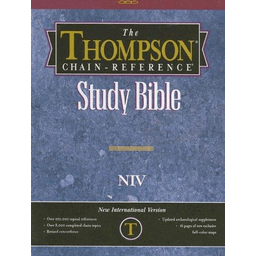 NIV Study BibleZondervan's broad-evangelical study Bible - wider consensus notes, modern scholarship, and the maps and background material Scofield lacks.
 ESV Study BibleCrossway's flagship - 20,000+ notes, 200+ maps, and a Reformed-leaning evangelical perspective. The most comprehensive single-volume study Bible in print.
 Holy Bible KJVA free King James reading app - the same translation Scofield is built on, without the dispensational notes, for readers who just want the text.
Frequently asked questions
What translation does the Scofield Reference Bible use?
The classic 1909 and 1917 editions use the King James Version. After Scofield's death, later editions paired the notes with other texts: the New Scofield (1967) and Scofield Study Bible III (2002) kept the KJV, and Oxford has also issued the note apparatus alongside the New King James, NIV, and ESV. If you want a modern translation under the Scofield notes, the in-print Oxford editions are the way to get it.
What is the theological framework of the Scofield Reference Bible?
It is a classic dispensationalist study Bible. Its notes teach dispensationalism - the view that biblical history unfolds across distinct eras, with a sharp distinction between Israel and the Church, an emphasis on literal future fulfillment of prophecy, and (in its premillennial, pretribulational form) a coming rapture and earthly millennium. That framework is held by many evangelicals and read differently by many other Christians, so it is the key thing to know before relying on the notes.
Is the Scofield Reference Bible free?
The 1917 edition is in the public domain, so its full text and notes are free online, in several Bible study apps, and in inexpensive print reprints. The later revised editions (the 1967 New Scofield and the 2002 Scofield Study Bible III) are still under copyright and sold by Oxford University Press, with hardcovers running roughly $40-60 and leather editions higher.
Why was the Scofield Reference Bible so influential?
It took the King James text most American Protestants already owned and added a single, learnable interpretive system, a dense cross-reference chain, and clear book introductions - all under Oxford's scholarly imprint. That combination of clarity, usability, and reach sold millions of copies and made dispensational premillennialism the default prophecy framework for a large part of 20th-century American evangelicalism.
How is it different from the Ryrie Study Bible?
Both are dispensational study Bibles, but Scofield (1909/1917) is the historic foundation, written in early-twentieth-century language with the scholarship of that era. The Ryrie Study Bible (first published 1976, by Charles Ryrie) presents a similar framework in clearer, more modern prose with later-twentieth-century notes. Readers studying the roots of dispensationalism usually want Scofield; readers who want a dispensational reference for everyday reading often find Ryrie easier going.
Is the Scofield Reference Bible still worth buying in 2026?
Yes, with a clear sense of what it is. For understanding the history of how the Bible has been read - and as a foundational reference for readers who study within a dispensational framework - it remains valuable, and the free 1917 edition makes that easy to explore. For current archaeological, historical-cultural, and original-language detail, a modern study Bible offers much more, so many readers pair Scofield with a contemporary volume for breadth.
Which edition should I get?
For the genuine historic text at no cost, read the free public-domain 1917 edition online or in a reprint. For a durable volume with cleaner typography and the option of a modern translation, the in-print Oxford hardcover (around $40-60) is the practical pick. Leather editions cost more for durability and feel rather than extra content.
Sources & further reading
More Study Bibles
ESV Study BibleThe ESV Study Bible has quietly become the default desk Bible for pastors, seminarians, and serious lay readers in the Reformed evangelical world - and the reasons it earned that spot are worth understanding before you buy.NIV Study BibleThe original modern study Bible - over nine million copies sold and still the most balanced one-volume evangelical study Bible most readers will ever own.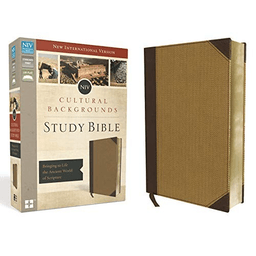 NIV Cultural Backgrounds Study BibleA 2,400-page reference Bible built around one question - what would an ancient reader have heard in this verse?
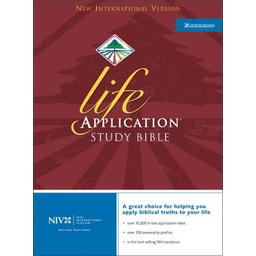 NIV Life Application Study BibleThe best-selling study Bible of the last forty years built its name on one idea - notes that tell you what a passage means for your Tuesday, not just what it meant in the first century. Here is what that trade-off actually buys you.
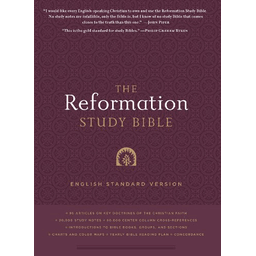 Reformation Study BibleR.C. Sproul's flagship study Bible pairs the ESV text with confessional Reformed notes, historic creeds, and a stack of theology articles - and Ligonier gives the whole apparatus away free online, which changes the buying math.
 Ignatius Catholic Study BibleThe Catholic study Bible that built its reputation one New Testament volume at a time - Scott Hahn and Curtis Mitch on the RSV-2CE - has finally arrived as a complete single volume, and it's worth understanding what it does before you buy.