
- Starting price
- ~$40 hardcover
- Free tier
- No
- Platforms
- Print · Kindle
- Developer
- Moody Publishers
- Launched
- 1978
- Updated
- May 31, 2026
The verdict
The Ryrie Study Bible is the most accessible single-author study Bible in the dispensational tradition - concise, clear, and unusually easy to read, with notes that explain rather than overwhelm. Best for readers who want that interpretive framework presented plainly; readers from other traditions should know the dispensational lens is doing the framing, and that the notes prize brevity over encyclopedic depth.
Try Ryrie Study Bible ↗Opens moodypublishers.com
The Ryrie Study Bible has quietly become the entry point most people take into dispensational Bible study. Charles C. Ryrie - a theologian who taught for decades at Dallas Theological Seminary and wrote the widely read primer Dispensationalism - assembled the notes himself, and Moody Publishers first released the volume in 1978, with a substantially revised and expanded edition arriving in the mid-1990s. Where some study Bibles read like a committee report, this one reads like a single careful teacher who has decided that the best thing he can do is get out of the text's way.
It is not an encyclopedia. It does not try to footnote every interpretive debate. It does not bury the biblical text under a wall of fine print. What it does is sit at a reader's elbow and answer the question an ordinary person actually asks while reading a passage - what does this word mean, where does this idea show up elsewhere, what is the writer's point here - and then let the reader keep going. The notes are famously brief, and that brevity is the design, not a shortcut.
There are several obvious neighbors on the shelf: the Scofield Reference Bible (the older landmark that first popularized dispensational study notes), the MacArthur Study Bible (a more voluminous single-author volume from a Reformed Baptist pulpit), the ESV Study Bible (broader evangelical scholarship by committee), and the NIV Study Bible (the widest evangelical consensus edition). The Ryrie sits as the concise, readable dispensational option - lighter on the page than Scofield's dense apparatus, far briefer than MacArthur, and explicitly framed by one interpretive system. For readers who want that system explained plainly, it is the friendliest on-ramp in the category. For readers in Catholic, Orthodox, Wesleyan, or Latter-day Saint traditions, it is a useful reference whose framing is worth recognizing going in.
✓ The good
- Exceptionally clear, concise notes - Ryrie wrote to explain rather than to impress, and the prose is among the most readable in any study Bible
- A single, consistent authorial voice - every note carries the same framework and tone, so the volume reads as one coherent teacher rather than a committee
- Extensive, well-built cross-reference system - the chain of related passages is one of the volume's most-praised and most-used features
- A genuinely useful topical index and study helps - concordance, charts, book introductions, and outlines that orient a reader before they dive in
- Available across major translations - editions in KJV, NASB, NIV, and NKJV, so most readers can keep the version they already prefer
- The clearest popular presentation of the dispensational reading of scripture - for readers who want that framework, nothing explains it more accessibly
- Lighter and less intimidating than the encyclopedic study Bibles - the brevity keeps the biblical text, not the notes, in the foreground
✗ Watch out
- Notes are concise rather than encyclopedic - readers who want exhaustive verse-by-verse commentary will find the ESV or MacArthur volumes go much deeper
- The dispensational framework shapes the notes throughout - it is one evangelical interpretive stream among several, and readers from other traditions will encounter framings that differ from their own
- Some editions show their late-20th-century vintage - maps, typography, and a few references reflect when the material was last fully revised
- No audio component - for a listening-first reader this is not the resource (a dedicated audio Bible is)
- Print-and-Kindle focused - there's no rich first-party app or deep software-library integration the way Logos-native study Bibles offer
- Restrained on contested debates - where other volumes lay out multiple interpretive options at length, Ryrie often states his reading briefly and moves on
Best for
- Readers who want the dispensational framework explained as plainly and concisely as possible
- Anyone who prefers a single clear teaching voice over a committee of contributors
- Lay readers who want helpful notes without the bulk of an encyclopedic study Bible
- Longtime users of KJV, NASB, NIV, or NKJV who want notes that match their translation
Avoid if
- You want exhaustive, commentary-grade notes on every verse
- You want a study Bible written from inside the Catholic, Orthodox, or Latter-day Saint tradition
- You want deep software-library integration and original-language tooling built in
- You want a study Bible neutral on interpretive systems rather than framed by one
What Ryrie Study Bible is
The Ryrie Study Bible is a single-volume study Bible built around the study notes of Charles C. Ryrie, a longtime professor at Dallas Theological Seminary. The biblical text sits on the page with Ryrie's notes beneath it, supplying historical background, word explanations, and interpretive guidance written in deliberately plain language. First published by Moody Publishers in 1978 and substantially revised in the mid-1990s, it is one of the most widely used study Bibles in the dispensational tradition, and Ryrie himself authored the notes rather than supervising a team of contributors.
Beyond the running notes, the volume carries a full slate of study helps: book-by-book introductions covering author, date, theme, and outline; an extensive cross-reference system linking related passages across the canon; a topical index; charts and timelines; a concordance; and maps. It is offered across several translations - including the KJV, NASB, NIV, and NKJV - so readers can pair Ryrie's notes with the version they already read, and it is also available as an eBook for Kindle hardware and apps.
Why everyday readers reach for the Ryrie Study Bible
The most-cited reason is sheer readability. Ryrie spent a career trying to make a particular reading of scripture legible to people without theological training, and the notes carry that instinct on every page. They are short. They explain a term, point to a related passage, or clarify a historical detail, and then they stop. There is no attempt to footnote every scholarly debate or to prove the author's erudition. For a reader who has been intimidated by the dense apparatus of a heavier study Bible, this is the volume that finally makes the notes feel approachable rather than like homework.
The other reason is the single, steady voice. Because Ryrie wrote the notes himself, the whole volume reads as one teacher who has settled views and presents them plainly and consistently from Genesis to Revelation. The framework is dispensational - a way of reading scripture that distinguishes God's dealings across different eras and reads prophecy and the relationship of Israel and the Church through that lens. The notes don't hide that framework, and for readers who want it, that clarity is the point: one coherent system, explained briefly, by one person, across the entire Bible.
The notes: one teacher, deliberately concise, written to be understood
The study notes are the heart of the product, and their defining trait is brevity. Ryrie authored them alone, and his editorial instinct was relentlessly toward clarity: define the term, supply the historical or cultural background a modern reader is missing, flag the connection to another passage, and leave the rest to the reader. A note on a difficult verse will typically give you the one or two things you most need to keep reading with understanding, rather than a paragraph surveying every position scholars have taken. The notes are framed by Ryrie's dispensational reading of scripture, which shapes how prophetic passages, the role of Israel and the Church, and the unfolding of God's plan across history are presented.
What separates these notes from the encyclopedic study Bibles is that they prize getting out of the way. That is a genuine feature for the reader who wants help without distraction - the biblical text stays in the foreground, and the notes function more like a knowledgeable friend whispering a quick clarification than like a commentary digest competing for attention. It is also, honestly, a limit: a reader who wants the full range of interpretive options laid out, or who wants depth on a contested passage, will need to reach for a heavier volume or a dedicated commentary. Ryrie made a deliberate trade - clarity and concision over comprehensiveness - and whether that trade fits depends entirely on what a reader wants the notes to do.
Cross-references and study helps: the connective tissue most readers underuse
The cross-reference system is one of the volume's most-praised and most-used features. Rather than the sparse pointer arrows some Bibles offer, the Ryrie builds an extensive web of links connecting a verse to the passages elsewhere in scripture that echo, fulfill, or illuminate it. Following those chains is one of the most rewarding ways to study with this volume - a single verse in a prophet can send you to its quotation in a gospel, its development in an epistle, and its background in the Law, and the system is built to make those jumps easy. Alongside it sit the other study helps: a topical index for tracing a subject across the canon, a concordance, charts and timelines, and book introductions that orient you before you read.
The book introductions deserve a particular mention. Each book of scripture opens with a concise overview of its author, date, occasion, themes, and structure, written to the same plain standard as the notes. For someone preparing to teach or simply about to read an unfamiliar book, reading the introduction first is the single best few-minute investment in the volume - it is the kind of orientation that turns a confusing book into a navigable one. Together, the cross-references, topical index, and introductions are the connective tissue that makes the Ryrie function as a study tool rather than just a Bible with footnotes.
Multiple translations: keep the version you already read
Unlike study Bibles locked to a single translation, the Ryrie Study Bible has been published across several - including the King James Version, the New American Standard Bible, the New International Version, and the New King James Version. That breadth matters more than it first appears. A reader who has spent years in the NASB and thinks in its phrasings does not have to switch translations to get Ryrie's notes, and a congregation that reads the KJV from the pulpit can put a matching study edition in members' hands. The notes are keyed to work alongside the chosen translation, so the verse you read and the verse the note discusses line up.
This flexibility makes the Ryrie unusually portable across the evangelical landscape, since translation preference is often the first thing that rules a study Bible in or out. It is worth confirming which translations are in print and stocked at the moment, since availability of specific editions shifts over time and not every binding exists in every translation. But the underlying point holds: where many study Bibles ask you to adopt their translation to use their notes, the Ryrie largely lets you bring your own. For a reader whose translation choice is already settled, that removes a real barrier to entry.
Pricing
Hardcover
~$40
The standard edition and the right choice for most buyers. Durable binding, full study apparatus, available across translations. As of writing it generally runs in the mid-thirties to mid-forties depending on translation and retailer.
Bonded / Genuine Leather
~$60-90+
Leather-bound editions in several colorways. Same notes and content as the hardcover; the upgrade is durability and feel, not additional material. Prices vary widely by leather grade and translation.
Softcover / Paperback
~$25-35
A lighter, lower-cost binding where available. Same study content; the trade-off is a less rugged cover for everyday handling. A reasonable entry point if you want the notes at the lowest price.
Kindle / eBook
~$20-30
Digital edition for Kindle hardware and apps where offered. Notes and cross-references are searchable and tappable; charts and maps display but lose some fidelity at small screen sizes. The most portable option.
The hardcover at roughly $40 is the right choice for most buyers. You get the full study apparatus - notes, cross-references, topical index, introductions, charts, and maps - in a durable binding, and it is the edition most readers should reach for. As of writing it generally lands in the mid-thirties to mid-forties depending on which translation you choose and where you buy it. Most readers do not need anything beyond this tier.
The leather editions, often in the $60-90 range and sometimes higher for premium grades, are a cosmetic and durability upgrade. Same notes, same content, better feel and a cover that will survive years of daily handling. If this is the Bible that will sit on your desk or travel with you for a long time, the upgrade is reasonable. If you mostly want the notes, the hardcover or softcover saves the money.
Where a softcover or paperback edition is offered, it is the lowest-cost path to the same study content, typically in the $25-35 range - a sensible entry point if budget matters and you do not need a rugged cover. The Kindle or eBook edition, usually around $20-30 where available, is the most portable option; the notes and cross-references are searchable and tappable, though charts and maps lose some fidelity on smaller screens.
Because the Ryrie comes in multiple translations and bindings, prices and availability vary more than for a single-edition study Bible. Treat the figures here as ballpark rather than fixed, and check the current price for the specific translation and binding you want before buying.
Where Ryrie Study Bible falls behind
Concise rather than encyclopedic notes. The brevity that makes the Ryrie so readable is also its clearest limit against the heavyweight study Bibles. Where the ESV Study Bible or the MacArthur Study Bible may devote a long paragraph to a single contested verse, the Ryrie typically gives you a sentence or two. That is the right call for the reader Ryrie was writing for, and a feature for clarity, but a reader who wants commentary-grade depth on every passage will outgrow these notes and want to add a dedicated commentary.
One interpretive framework. The notes are written from within the dispensational tradition - one evangelical stream among several - and that lens shapes how prophecy, the relationship of Israel and the Church, and the unfolding of God's plan across history are presented. Readers in Reformed-covenantal, Wesleyan, Catholic, Orthodox, or Latter-day Saint traditions will encounter framings of certain passages that differ from their own tradition's reading. That is not a defect; it is simply worth recognizing which framework is doing the work before you buy.
Late-20th-century vintage. The material was last fully revised in the 1990s, and some editions show it - the cartography, certain typographic choices, and a handful of references reflect the era of the last major revision rather than the present. The biblical scholarship Ryrie drew on remains useful, but a reader expecting the freshest maps and most current production values will notice the difference next to a recently produced study Bible.
No audio and limited software ecosystem. The Ryrie is built for print and Kindle. There is no rich first-party app, no voiced edition of the notes, and nothing like the deep library integration a Logos-native study Bible offers. For a reader who listens to scripture or who lives inside a Bible-software platform, the Ryrie's notes simply are not where that reader spends time.
Ryrie Study Bible vs. Scofield Reference Bible vs. MacArthur Study Bible
These three are the single-author study Bibles most associated with the dispensational tradition, and they serve genuinely different readers. The Scofield Reference Bible is the historical landmark - first published in 1909 and revised since, it was the volume that put dispensational study notes into millions of hands and shaped how a generation read prophecy. Its apparatus is dense and its notes are tied tightly to a system, and it remains the reference point everything else in this lineage is measured against. For a reader who wants the original and most historically significant of the three, Scofield is the starting place.
The MacArthur Study Bible is the most voluminous of the three. John MacArthur authored its roughly 25,000 notes from a Reformed Baptist pulpit, and where the Ryrie states a reading briefly and moves on, MacArthur tends to explain at length and decisively. Readers who want a single teaching voice with depth on nearly every verse gravitate to MacArthur; readers who find that volume of commentary heavy prefer the Ryrie's lighter touch. The two also differ in theological emphasis within the broader conservative evangelical world, so the choice is partly about which teacher's framing a reader wants.
Different strengths. Scofield is the historic original and the densest. MacArthur is the most thorough and the most opinionated per verse. The Ryrie is the most concise and the most readable - the friendliest on-ramp for someone who wants the dispensational framework explained plainly without an encyclopedic page. For a reader who wants clarity and brevity from a single trusted teacher, and the flexibility to keep their own translation, the Ryrie is the strongest of the three. For everyone else, the choice depends on whether historical weight, exhaustive depth, or accessible concision matters most.
The bottom line
The Ryrie Study Bible is the most accessible and readable study Bible in the dispensational tradition - concise notes from a single clear teacher, an excellent cross-reference system, helpful study aids, and the flexibility to keep your preferred translation, all at a reasonable price. The dispensational framework is real and worth recognizing going in rather than a dealbreaker, and the notes prize clarity over encyclopedic depth by design. If you want that interpretive framework explained as plainly as possible, this is the volume to start with. If you want exhaustive commentary or a study Bible from another tradition, you will want to read it alongside something else.
Alternatives to Ryrie Study Bible
 Scofield Reference BibleThe 1909 landmark that first popularized dispensational study notes - denser and more historically significant than the Ryrie, and the reference point the whole lineage is measured against.
 MacArthur Study BibleJohn MacArthur's 25,000+ single-author notes from a Reformed Baptist pulpit - far more voluminous than the Ryrie, with depth on nearly every verse.
 ESV Study BibleCrossway's flagship committee study Bible - 20,000+ notes and 200+ maps, broader evangelical scholarship and far more encyclopedic than the Ryrie.
 NIV Study BibleThe widest evangelical-consensus study Bible - accessible committee notes keyed to the NIV, less tied to any single interpretive system.
Frequently asked questions
What translations does the Ryrie Study Bible come in?
The Ryrie Study Bible has been published across several translations, including the King James Version (KJV), the New American Standard Bible (NASB), the New International Version (NIV), and the New King James Version (NKJV). The notes are keyed to work alongside the chosen translation. Availability of specific translation-and-binding combinations shifts over time, so it is worth confirming the current options for the edition you want.
Who wrote the Ryrie Study Bible notes?
Charles C. Ryrie wrote the study notes himself. Ryrie was a theologian who taught for many years at Dallas Theological Seminary and authored several widely read books, including a well-known primer on dispensationalism. Because one person wrote the notes, the volume reads with a single, consistent voice and framework from Genesis to Revelation rather than as a committee of contributors.
What is the theological perspective of the Ryrie Study Bible?
The notes are written from within the dispensational tradition, one evangelical stream among several. That framework shapes how prophecy, the relationship of Israel and the Church, and the unfolding of God's plan across history are presented. Readers from Reformed-covenantal, Wesleyan, Catholic, Orthodox, or Latter-day Saint traditions will encounter framings of certain passages that reflect that perspective rather than their own tradition's reading.
How is the Ryrie different from the Scofield Reference Bible?
Both are single-author study Bibles in the dispensational tradition, but they differ in era and density. The Scofield Reference Bible, first published in 1909, is the older landmark that popularized dispensational study notes and carries a denser apparatus tied closely to a system. The Ryrie, first published in 1978, is more concise and written in plainer, more modern language - generally the more accessible of the two for a first-time reader.
Are the notes detailed enough for serious study?
It depends on what you want. Ryrie's notes are deliberately concise - they explain a term, supply background, or point to a related passage and then stop. For clear, readable guidance that keeps the biblical text in the foreground, they are excellent. For exhaustive, commentary-grade treatment of every verse and every interpretive debate, the ESV Study Bible or MacArthur Study Bible go much deeper, and a dedicated commentary deeper still.
When was the Ryrie Study Bible last updated?
Moody Publishers first released the Ryrie Study Bible in 1978 and published a substantially revised and expanded edition in the mid-1990s. Some editions therefore reflect a late-20th-century vintage in their maps, typography, and a few references. The core notes and study apparatus remain in print and in wide use.
Is there an app or digital version?
The Ryrie is built primarily for print, with an eBook edition available for Kindle hardware and apps where offered. The notes and cross-references are searchable and tappable in the digital edition, though charts and maps lose some fidelity on smaller screens. There is no rich first-party app or deep Bible-software-library integration the way some other study Bibles offer.
Sources & further reading
More Study Bibles
ESV Study BibleThe ESV Study Bible has quietly become the default desk Bible for pastors, seminarians, and serious lay readers in the Reformed evangelical world - and the reasons it earned that spot are worth understanding before you buy.NIV Study BibleThe original modern study Bible - over nine million copies sold and still the most balanced one-volume evangelical study Bible most readers will ever own. NIV Cultural Backgrounds Study BibleA 2,400-page reference Bible built around one question - what would an ancient reader have heard in this verse?
 NIV Life Application Study BibleThe best-selling study Bible of the last forty years built its name on one idea - notes that tell you what a passage means for your Tuesday, not just what it meant in the first century. Here is what that trade-off actually buys you.
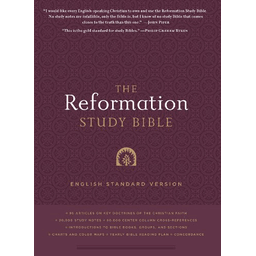 Reformation Study BibleR.C. Sproul's flagship study Bible pairs the ESV text with confessional Reformed notes, historic creeds, and a stack of theology articles - and Ligonier gives the whole apparatus away free online, which changes the buying math.
 Ignatius Catholic Study BibleThe Catholic study Bible that built its reputation one New Testament volume at a time - Scott Hahn and Curtis Mitch on the RSV-2CE - has finally arrived as a complete single volume, and it's worth understanding what it does before you buy.