- Starting price
- ~$16 paperback
- Free tier
- No
- Platforms
- Print · Kindle · Audiobook
- Developer
- HarperOne
- Launched
- 1958
- Updated
- May 31, 2026
The verdict
Shadow of the Almighty has quietly become the book serious readers reach for after Through Gates of Splendor - where Gates tells the story of the five missionaries killed in Ecuador, Shadow goes inside the journals of one of them. It is slower, more interior, and more demanding than its companion, and that is the point. If you want to understand the conviction behind “He is no fool who gives what he cannot keep,” this is the book.
Try Shadow of the Almighty ↗Opens harpercollins.com
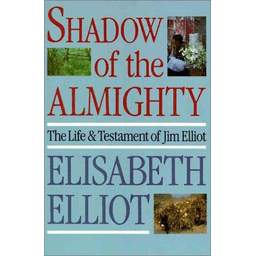
Shadow of the Almighty is Elisabeth Elliot’s portrait of her husband, Jim Elliot - one of the five young American missionaries killed in January 1956 while attempting to reach the Waorani, a remote people of the Ecuadorian rainforest then known to the outside world by the name “Auca.” Where her earlier book, Through Gates of Splendor, told the story of all five men and the events on the sandbar they called Palm Beach, this one narrows to a single life. It asks a quieter and harder question: what kind of man volunteers for that, and how did he get that way?
It is not an adventure book. It does not lecture. It does not strategize, and it does not try to turn its subject into a plaster saint. What it does instead is unusual - it lets Jim Elliot speak for himself. The spine of the book is his own journals and letters, kept from his student years at Wheaton College through his courtship of Elisabeth, his language study in Ecuador, and the final weeks before the killings. Elisabeth, his widow, writes the connecting narrative, but she steps back constantly and lets the reader watch a young man argue with God, with himself, and with the comfortable assumptions of mid-century American Christianity, in his own handwriting.
Published in 1958 by Harper & Brothers - it remains in print today from HarperOne - the book takes its title from Psalm 91: “He that dwelleth in the secret place of the most High shall abide under the shadow of the Almighty.” It is the source of the single line Jim Elliot is now most remembered for, written in his journal years before his death: “He is no fool who gives what he cannot keep to gain what he cannot lose.” The book has shaped generations of readers who never set out to be missionaries, and this review is for anyone trying to decide whether to start with this particular copy on the shelf.
✓ The good
- Built almost entirely from primary sources - Jim Elliot’s own journals and letters carry most of the book, so you are reading the man himself rather than a biographer’s summary of him
- The single most demanding and most rewarding entry point into the Ecuador story - it goes deeper than Through Gates of Splendor into the why behind the calling
- Elisabeth Elliot’s narration is restrained and honest - she had every incentive to idealize her late husband and largely refuses to, leaving his doubts and severities on the page
- The famous line - “He is no fool who gives what he cannot keep to gain what he cannot lose” - lands far harder in context, written by a college student with no idea how it would be tested
- A rare window into the inner life of conviction - the journals track a real person wrestling with calling, singleness, money, and obedience in his own words
- Universally read across Christian traditions - assigned in Catholic, Protestant, and Latter-day Saint settings as a study of wholehearted devotion
- Pairs perfectly with Through Gates of Splendor - together they give you both the outward events and the inward life behind them
✗ Watch out
- Heavily journal-based, so it is introspective rather than action-driven - readers expecting the narrative momentum of Through Gates of Splendor may find the pacing slow
- The journal entries on singleness, surrender, and self-denial are intense and occasionally severe - Jim Elliot was hard on himself, and some readers find the early sections heavy going
- The 1950s missionary framing shows in places - the language around “reaching” a remote people reflects its era and will read as dated to some modern readers
- Light on the Waorani perspective - by design it is the story of Jim Elliot’s inner life, so the people he died trying to reach remain largely offstage
- Not a standalone history - readers who want the full sequence of events and the aftermath should read it alongside Through Gates of Splendor rather than on its own
- Elisabeth Elliot’s editorial selection shapes what we see - the journals are real, but they are curated by the person closest to him, which readers should hold in mind
Best for
- Readers who have finished Through Gates of Splendor and want to go deeper
- Anyone wrestling with calling, surrender, or what wholehearted devotion costs
- Small groups studying discipleship through a single life
- College students and young adults weighing big decisions
Avoid if
- You want a fast-moving adventure narrative rather than an interior portrait
- You want a documented history of the Ecuador mission with full context
- You are looking for the Waorani side of the story
- You bounce off journal-and-letter formats and prefer continuous third-person narration
What Shadow of the Almighty is
Shadow of the Almighty is a biography of Jim Elliot written by his widow, Elisabeth Elliot, and first published in 1958, two years after he was killed in Ecuador. It runs roughly 250 pages and follows his life from boyhood in Portland, Oregon, through his years at Wheaton College, his decision to pursue missionary work, his long and deliberate courtship of Elisabeth, his arrival in Ecuador and study of the Quichua language, and finally the months of preparation that ended on the sandbar where he and four other missionaries were killed in January 1956. Its distinguishing feature is structural: the book is built primarily from Jim Elliot’s own journals and letters, with Elisabeth supplying the connective narrative.
It is published today by HarperOne, an imprint of HarperCollins, and has stayed in print for more than sixty years. It is the companion volume to Elisabeth Elliot’s earlier and better-known Through Gates of Splendor, which told the story of all five men and the events leading to their deaths. Where that book is the outward account, Shadow of the Almighty is the inward one - a study of a single life and the convictions that drove it. The title comes from Psalm 91, and the book is the original source of Jim Elliot’s most-quoted line about giving what cannot be kept to gain what cannot be lost.
Why readers across every Christian tradition keep returning to Shadow of the Almighty
The single biggest practical difference between Shadow of the Almighty and almost every other missionary biography is that it largely refuses to be a biography at all. Most books in the genre give you a narrator’s confident summary of a hero’s inner life - what he must have felt, what he surely believed. Elisabeth Elliot does something riskier. She hands you the journals. You watch a nineteen-year-old at Wheaton write the line about the fool and the gift before he has any idea it will one day be carved over his own story. You read the doubts, the prayers that sound almost harsh, the wrestling over whether to marry at all. The man is not packaged for you. He is quoted.
That choice is why readers across every Christian tradition return to this book. The questions Jim Elliot put to himself in his journals - what does it actually mean to give God everything, what is worth dying for, what is worth living for - are not denominational questions. They are the questions a thoughtful Catholic, Latter-day Saint, Orthodox, evangelical, or mainline reader brings to the page already. Elisabeth Elliot does not answer them for you. She shows you one young man trying to answer them in his own words, and lets you sit with how seriously he took the asking. It is the thoughtful person’s biography of conviction.
The journals: a young man’s convictions in his own handwriting
The structural heart of Shadow of the Almighty is Jim Elliot’s personal journal, which he began keeping in earnest as a student at Wheaton College and continued through his years in Ecuador. Elisabeth Elliot quotes from it at length - sometimes a single line, sometimes a full entry - and lets the entries do the work that a conventional biographer would do with summary. The most famous of them, written years before his death, reads: “He is no fool who gives what he cannot keep to gain what he cannot lose.” In context it is not a slogan. It is a young man reasoning his way, in private, toward a settled conviction about what a life is for, with no audience and no idea that the words would outlive him by generations.
What makes the journals compelling is that they are not polished. Jim Elliot argues with himself. He records prayers that sound severe, resolutions about discipline and self-denial, frustrations with his own slowness to obey what he believes God is asking. The entries on singleness and surrender are especially intense - for years he wrestled with whether marrying Elisabeth would compromise his availability for the mission field, and the journals track that struggle without resolution for a long stretch. Reading them is less like admiring a hero and more like overhearing a real and sometimes difficult young man think out loud about the most serious things he knew.
The calling: from Wheaton to the Ecuadorian rainforest
The narrative arc of the book follows Jim Elliot’s gradual movement from a bright, athletic college student - a wrestler, a debater, popular and intense - toward a specific and costly vocation. Elisabeth Elliot traces how, during and after Wheaton, his sense of calling narrowed from a general desire to serve God toward the particular work of reaching peoples who had had little or no contact with the outside world. He studied, he prayed, he deferred comforts and conventional ambitions that were plainly available to him, and eventually he sailed for Ecuador to learn the Quichua language and live among the people there before the group ever turned its attention to the Waorani.
The book presents this not as inevitability but as a series of deliberate choices, each one recorded or reflected in his own writing. That matters because it keeps the story human. Jim Elliot was not swept along by destiny; he decided, repeatedly, often against easier options, and the journals show him counting the cost each time. By the time the narrative reaches the final weeks - the flights over Waorani settlements, the gifts lowered from Nate Saint’s plane, the careful preparation for first contact - the reader understands the decision to land on that sandbar as the last in a long chain of smaller decisions, all of them made by a man who had been rehearsing the logic of total commitment in his journal for a decade.
The cost: what the journals make of the killings
The events on the riverbank in January 1956 - the landing at Palm Beach, the brief peaceful contact, and then the spears that killed all five men within days of one another - are told more fully in Through Gates of Splendor. Shadow of the Almighty deliberately handles them with restraint, because the book’s subject is the life that led up to them rather than the deaths themselves. What this volume adds is the long interior runway behind the catastrophe. By the time the reader arrives at the end, Jim Elliot’s journals have already supplied the framework through which to understand it: the conviction, written years earlier, that some things are worth losing your life to gain, and the steady, almost stubborn willingness to act on that conviction even when it cost everything.
This is what gives the book its weight, and also what makes it demanding. Elisabeth Elliot is not narrating a triumph or a tragedy so much as letting a young man’s own words become his testament - the “Testament” of the book’s subtitle. The famous line about the fool and the gift, read on page ten, is an interesting aphorism. Read again at the end, after two hundred pages inside the mind that produced it and now measured against the riverbank where it was tested, it becomes something else entirely. Readers across every tradition return to Shadow of the Almighty for that arc specifically: the rare experience of watching a conviction stated, examined, and then paid in full, all in the words of the one who held it.
Pricing
Paperback
~$16
The standard HarperOne edition - the copy most readers own and the one most small groups buy in bulk.
Kindle
~$12
The full text in digital form - highlighting and note-syncing make it a strong pick for readers who want to mark the journal passages.
Audiobook
~$18
Narrated unabridged. The journal entries carry well in audio, though some readers prefer print for a book this quotable.
Used copies
~$3-6
For a book continuously in print since 1958, used copies turn up constantly in church libraries and thrift stores - the way many readers acquire their first one.
For a book that has stayed in print since 1958, Shadow of the Almighty is genuinely inexpensive. The standard HarperOne paperback runs around $16 new, and used copies routinely turn up in church libraries and thrift stores for a few dollars - which is how a great many readers acquire their first one.
The Kindle edition at roughly $12 is the right pick for readers who want to highlight, and for small groups working across cities - the journal passages are exactly the kind of material people want to mark and return to, and notes sync cleanly across devices.
The audiobook at around $18 is a reasonable option, though a book this quotable and this driven by short journal entries is one of the cases where print arguably has the edge. If you commute or prefer to listen, the narration carries the entries well enough.
Most readers do not need more than the paperback. If you are buying this alongside Through Gates of Splendor - and the two genuinely belong together - buying both at once is the natural move, since Shadow of the Almighty is the deeper companion rather than a substitute. The paperback is the balanced default and the copy you will reach for again.
Where Shadow of the Almighty falls behind
Introspective rather than action-driven. Because the book is built from Jim Elliot’s journals and letters, it spends far more time inside his head than out on the river. Readers who came for the momentum of Through Gates of Splendor - the flights, the gifts lowered from the plane, the sandbar - should know that this book deliberately slows down and turns inward instead.
The early sections are heavy going. The journal entries on singleness, self-denial, and surrender are intense, and Jim Elliot was notably hard on himself. Some readers find the student-years material severe and have to push through before the narrative momentum of the Ecuador chapters takes over.
A 1950s missionary frame. The book was written in 1958 and reflects the mid-century vocabulary and assumptions of the missionary movement of its time, including the language around “reaching” a remote people. Most of it is not an obstacle, but a reader in 2026 will hit passages that read as artifacts of their decade.
Light on the Waorani. By design this is the story of one missionary’s inner life, so the people he died trying to reach stay largely offstage. Readers who want the longer arc - including the later contact between the Waorani and the missionaries’ families - will need to look beyond this volume.
Best read as a companion, not alone. Shadow of the Almighty assumes, or at least rewards, familiarity with the events told in Through Gates of Splendor. On its own it can feel like a portrait without its frame. The two books were always meant to sit side by side.
Shadow of the Almighty vs. Through Gates of Splendor vs. The Hiding Place
These three are among the most-read twentieth-century Christian testimonies in English-speaking churches, and each does a different job. Shadow of the Almighty (Elisabeth Elliot, 1958) is the interior portrait - the inner life of a single missionary, told largely through his own journals and letters. Through Gates of Splendor (Elisabeth Elliot, 1957) is the outward account of the same events - the story of all five men and the days that ended on the sandbar in Ecuador in 1956, told as narrative. The Hiding Place (Corrie ten Boom, 1971) is a wartime survivor’s memoir - a Dutch family hiding Jews, the camps, and a confrontation about forgiveness years later.
Different strengths. Through Gates of Splendor is the better entry point and the better story as story - faster, broader, the one to read first. Shadow of the Almighty is the deeper of the two Elliot books, the one that explains the conviction the first book can only show from the outside. The Hiding Place is the best on forgiveness as a lived practice and stands fully on its own.
If a reader has only one slot, it should usually be Through Gates of Splendor first, then Shadow of the Almighty as the follow-up that goes inside the calling. Together the two Elliot books are something close to a complete account - the events and the man behind them. The Hiding Place is the natural third, a different country and a different kind of cost, and the most accessible of the three for a first-time reader of Christian memoir.
The bottom line
Shadow of the Almighty is the rare biography that lets its subject testify in his own hand. Elisabeth Elliot had every reason to polish her late husband into a hero and instead handed readers his journals - the doubts, the severity, the slow and deliberate counting of the cost - so that the famous line about giving what you cannot keep arrives not as a slogan but as a conviction paid in full. It is slower and more interior than Through Gates of Splendor, and best read alongside it rather than instead of it. If you want to understand not just what happened on that sandbar but who chose it and why, this is still the book to read.
Alternatives to Shadow of the Almighty
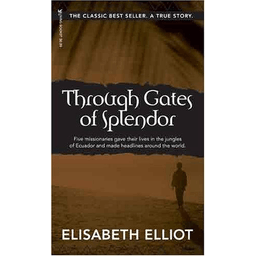 Through Gates of SplendorElisabeth Elliot’s account of all five missionaries killed in Ecuador in 1956 - the outward story Shadow of the Almighty goes inside. Read this one first.
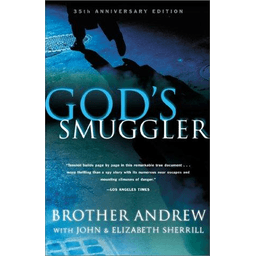 God’s SmugglerBrother Andrew’s account of carrying Bibles across the Iron Curtain - a more action-driven missionary testimony for readers who want momentum over interiority.
 The Hiding PlaceCorrie ten Boom’s memoir of hiding Jews and surviving Ravensbrück - a different country and a different cost, and the most accessible of the great twentieth-century testimonies.
 JoniJoni Eareckson Tada’s memoir of a diving accident, paralysis, and the long road back to faith - a first-person companion in the literature of cost and surrender.
Frequently asked questions
Is Shadow of the Almighty the same book as Through Gates of Splendor?
No, but they are companions by the same author. Through Gates of Splendor (1957) tells the outward story of all five missionaries killed in Ecuador in 1956. Shadow of the Almighty (1958) narrows to a single life - Jim Elliot’s - and is built largely from his own journals and letters. Most readers read Gates first and Shadow as the deeper follow-up.
Who was Jim Elliot?
Jim Elliot was a young American missionary and one of five men killed in January 1956 while attempting to make peaceful contact with the Waorani, a remote people of the Ecuadorian rainforest then called “Auca” by outsiders. He was married to Elisabeth Elliot, who wrote both Through Gates of Splendor and Shadow of the Almighty. He is widely remembered for a line from his journal about giving what you cannot keep to gain what you cannot lose.
What is the famous Jim Elliot quote, and is it in this book?
Yes - Shadow of the Almighty is its original source. Writing in his journal years before his death, Jim Elliot recorded: “He is no fool who gives what he cannot keep to gain what he cannot lose.” The book lets you read it in its original context, written by a college student with no idea how it would later be tested.
How long is the book, and is it a hard read?
It runs about 250 pages. The prose itself is plain, but the book is more demanding than its companion because it is built from journals and is introspective rather than action-driven. The early sections on singleness and self-denial are intense. Many readers find Through Gates of Splendor the easier starting point and come to Shadow of the Almighty afterward.
What tradition does the book come from, and who reads it?
Elisabeth and Jim Elliot came from an evangelical Protestant background, but the book is read across Christian traditions - assigned and discussed in Catholic, Protestant, and Latter-day Saint settings alike. The questions Jim Elliot wrestles with in his journals - calling, surrender, what a life is for - are not tradition-specific, which is why the book travels so widely.
Why is it called Shadow of the Almighty?
The title comes from Psalm 91: “He that dwelleth in the secret place of the most High shall abide under the shadow of the Almighty.” The subtitle, “The Life and Testament of Jim Elliot,” signals the book’s approach - it treats his own journals and letters as his testament, letting his words stand as the record of his convictions.
What should I read after Shadow of the Almighty?
If you have not already, read Through Gates of Splendor for the fuller outward story of the Ecuador mission. For more from Elisabeth Elliot’s own life and voice, her later writing on suffering and obedience is the natural next step. For the wider literature of cost and calling, God’s Smuggler, The Hiding Place, and Joni all pair well.
Sources & further reading
More Christian Biographies
God’s SmugglerThe Dutch missionary’s 1967 memoir about driving a blue Volkswagen Beetle full of Bibles past Soviet border guards - and the prayer that became a generation’s shorthand for trusting God in impossible places.Through Gates of SplendorElisabeth Elliot’s account of five young missionaries killed reaching the Waorani of Ecuador in 1956 - the book that sent a generation toward the mission field, told by one of the widows.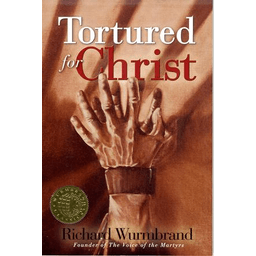 Tortured for ChristThe Romanian pastor’s 1967 account of fourteen years in communist prisons - written in three days after his release, and the book that launched Voice of the Martyrs.JoniJoni Eareckson Tada’s account of the diving accident that left her a quadriplegic at seventeen - and the long, unglamorous climb out of despair that followed - told without flinching and without tidy answers.
 Just As I AmBilly Graham’s own account of a North Carolina farm boy who became the twentieth century’s best-known evangelist - the crusades, the presidents, and the doubts in between.
 The Cross and the SwitchbladeThe skinny country preacher who left rural Pennsylvania for the gang-run streets of 1950s New York - and the conversion of switchblade-carrying gang leader Nicky Cruz that turned one man’s hunch into a worldwide ministry.