
- Starting price
- ~$17 paperback
- Free tier
- No
- Platforms
- Print · Kindle · Audiobook
- Developer
- Zondervan
- Launched
- 2014
- Updated
- May 31, 2026
The verdict
Soul Keeping has quietly become the favorite of Christians who sense their inner life is running on fumes but cannot name why. Ortberg is an unusually warm, funny guide, and the book delivers Dallas Willard’s teaching on the soul in a far more accessible package than Willard wrote himself - which is both its great strength and the reason some readers eventually graduate to Willard directly.
Try Soul Keeping ↗Opens zondervan.com
Soul Keeping is John Ortberg’s 2014 bestseller, and it is really two books standing very close together. One is a clear, warm, frequently funny argument about what the soul actually is and why a hurried, distracted, overscheduled life slowly starves it. The other is a memoir of Ortberg’s thirty-year friendship with the philosopher Dallas Willard - the Southern Baptist USC professor who became one of the most quietly influential teachers on the spiritual life in the last half-century. The two books braid together. Ortberg uses Willard’s voice the way a student uses a master’s, and the result is the most accessible doorway into Willard’s thought that exists.
The book is not a memoir, exactly. It is not a how-to manual. It is not a doctrinal treatise on anthropology. It is closer to an extended, patient attempt to make you notice something you have stopped noticing - that there is a part of you underneath the will, the mind, and the body that integrates all three, and that this part can be healthy or sick, fed or famished, kept or neglected. Ortberg’s claim is that most of us have never once thought about the condition of our soul the way we think, constantly, about the condition of our body or our bank account.
Ortberg was a teaching pastor at Willow Creek and then senior pastor at Menlo Church in California, and he writes like a preacher who has learned not to waste a reader’s time - short scenes, a self-deprecating joke, a turn into something genuinely searching. The most repeated line in the book is not even his: it is Willard’s answer when Ortberg, newly arrived at a big-church job, asked what he needed to do to stay spiritually healthy. "You must ruthlessly eliminate hurry from your life." That sentence has gone on to seed an entire corner of the formation conversation, and Soul Keeping is where most readers first met it.
✓ The good
- An unusually accessible doorway into Dallas Willard - Ortberg translates Willard’s dense teaching on the soul into short, warm, story-driven chapters most readers finish in a few sittings
- A genuinely useful working definition of the soul - the idea that the soul is the thing integrating will, mind, and body gives the reader a concrete handle on an abstract word
- Warm, funny, self-deprecating voice - Ortberg writes like a pastor who knows he is talking to tired people and refuses to lecture them
- The Willard friendship as narrative spine - the memoir threads give the teaching a human face and make the book land emotionally as well as intellectually
- "Ruthlessly eliminate hurry" in its original context - this is the book that put the phrase into wide circulation, and the surrounding chapters on rest and pace are practical
- Each chapter ends with something to do - small soul-keeping practices that turn the argument into a habit rather than a one-time read
- Bridges the contemplative tradition into a mainstream evangelical frame - draws on a long stream of writers on the inner life without making the reader feel they have left familiar ground
✗ Watch out
- Leans heavily on Willard - so heavily that some readers finish Soul Keeping and conclude they should have read Willard’s The Divine Conspiracy or Renovation of the Heart in the first place
- Accessible and anecdotal rather than rigorous - this is a book of stories and images, not careful argument, and readers wanting a tight case for each claim will find the framework loose
- The "soul" framing is evocative more than precise - Ortberg defines the soul as the integrator of will, mind, and body, but the word does a lot of flexible work across the chapters and is more poetic than technical
- Light on systematic theology - this is a formation book, and readers wanting biblical-theological scaffolding behind the anthropology will need to look elsewhere
- Some chapters restate the core move - the "your soul is neglected and you barely noticed" diagnosis recurs in several forms and can feel like the book circling its own thesis
Best for
- Busy Christians who sense their inner life is depleted but cannot say why
- Readers who want Dallas Willard’s ideas without Willard’s density
- Anyone first encountering the "ruthlessly eliminate hurry" idea
- Small groups wanting a warm, discussable formation book
Avoid if
- You want a doctrinal or systematic treatment of human nature
- You prefer tightly argued books over story-driven ones
- You have already read Willard and want primary-source depth
- You bounce off memoir woven into teaching and want one or the other
What Soul Keeping is
Soul Keeping is a roughly 220-page book of Christian-living writing organized around a single idea: that the soul is the most important and most neglected part of a person, and that it has to be tended the way a garden, a body, or a friendship has to be tended. Ortberg builds the book in two movements - first making the case that you have a soul and that it is in worse shape than you think, then walking through what the soul actually needs (rest, gratitude, depth, freedom, blessing, satisfaction in God) and how a hurried life starves each of those needs in turn.
The book is inseparable from Dallas Willard. Willard - the philosopher and writer whose teaching on spiritual formation Ortberg sat under for thirty years - is quoted on nearly every chapter, and his death in 2013 frames the book’s final pages. Soul Keeping is Ortberg’s attempt to carry Willard’s teaching to the wide audience Willard himself never quite reached, and it functions as the popular front door to a much larger body of work. It is published by Zondervan and accompanied by a six-session small-group study guide and DVD.
Why hurried, depleted Christians keep reaching for it first
The single biggest practical difference between Soul Keeping and most other books on the inner life is the company it keeps you in. Ortberg is not writing as a distant expert handing down a method. He is writing as a successful, busy, big-church pastor who was quietly running his own soul into the ground and had a wiser friend tell him so. That posture - the competent person admitting the machine was breaking down underneath the productivity - is exactly the posture the book’s core reader recognizes in themselves.
The frame is that you can do everything right on the outside and still be neglecting the one part of you that holds the rest together. Ortberg makes the case that hurry, not sin in the dramatic sense, is what most often does the damage - that a life with no margin slowly erodes the soul’s capacity for rest, attention, and joy. Readers who are not in moral crisis but are simply exhausted, scattered, and faintly hollow tend to feel seen on the first read in a way that more confrontational books do not manage.
The soul as integrator of will, mind, and body
The structural heart of the book is Ortberg’s working definition of the soul, borrowed almost directly from Willard. The soul is not a vague spiritual mist and it is not simply a synonym for "self." It is the part of a person that integrates the will (what you choose), the mind (what you think and feel), and the body (what you do) into a single coherent life. When the soul is healthy, those three are aligned and the person is whole. When the soul is neglected, the will, mind, and body pull in different directions - you intend one thing, feel another, and do a third - and the experience of that fragmentation is what most people simply call being stressed, scattered, or burned out.
This definition is the book’s most useful gift and also where careful readers feel its limits. As a handle on a famously slippery word, it is genuinely clarifying - it gives "soul" a job to do rather than leaving it as a poetic placeholder, and it explains why neglecting your interior life shows up as a fractured exterior one. But it is offered as an image and a framework, not defended as dogmatic anthropology, and the word still stretches to cover a lot of ground across the chapters. Ortberg is more interested in getting you to feel the integrating function of the soul than in pinning down its metaphysics, which is the right call for the book he is writing and a real limit for readers who want precision.
The Dallas Willard friendship as the book’s backbone
Soul Keeping is built on Ortberg’s thirty-year relationship with Dallas Willard, and the memoir threads are not decoration - they are the spine. Willard appears as a mentor of unusual calm and unhurried attention, the kind of person whose presence itself made an argument for the life he taught. The most-quoted moment in the book is Willard’s counsel, delivered when Ortberg took a demanding ministry job and asked how to stay spiritually healthy: "You must ruthlessly eliminate hurry from your life." When Ortberg pressed for what else, Willard said there was nothing else - hurry was the great enemy of the soul, full stop. Willard’s death in 2013 closes the book, and the final chapters carry real weight because the reader has spent the whole book in his company.
Using Willard this way is the book’s genius and its liability in equal measure. The genius is accessibility: Willard’s own writing - The Divine Conspiracy, Renovation of the Heart, The Spirit of the Disciplines - is dense, philosophically demanding, and slow going for most readers, and Ortberg renders the same teaching in warm, story-driven prose anyone can follow. The liability is that the book is so frank about being a transmission of Willard’s thought that some readers finish it convinced they should go read Willard directly, treating Soul Keeping as the trailer rather than the film. Both reactions are reasonable. The book works as a destination and as a doorway, and which one it is for you depends mostly on how much density you are willing to take on.
Ruthlessly eliminating hurry: the practical core
If the soul-as-integrator idea is the book’s theory, the campaign against hurry is its practice. Ortberg argues that the modern condition - overscheduled, notification-saturated, perpetually behind - is not a neutral backdrop to the spiritual life but its primary antagonist. Hurry, in his telling, is what keeps the soul from doing the things it most needs: resting, paying attention, receiving gratitude, sitting with another person without an agenda. The chapters on rest and on what the soul needs are the most actionable in the book, and they draw on a long stream of writers on the contemplative and reflective life - the practice of slowing down, of building margin, of refusing the false urgency that fills a calendar to the edges.
In practice, this is the part of Soul Keeping that has traveled furthest. "Ruthlessly eliminate hurry" became a near-slogan in the formation conversation of the following decade, picked up and expanded by other popular writers on slowness and rest. Reading it in its original setting - as a single piece of counsel from one tired pastor to another, embedded in a friendship - gives it a grounding that the detached slogan loses. The practices Ortberg attaches to it are modest and repeatable rather than systematic: notice your hurry, build small Sabbaths, do one thing at a time. Readers looking for a rigorous program will find this loose; readers looking for a place to start will find it usable on the first day.
Pricing
Paperback
~$17
The standard Zondervan edition and the format most readers buy. The copy that gets passed around small groups and underlined heavily.
Hardcover
~$25
The original 2014 hardcover, still in some printings. Same text as the paperback - choose for durability or as a gift.
Kindle / ebook
~$12
Standard ebook edition. Highlights sync across devices, which matters for a book this quotable and this easy to mark up.
Audiobook
~$20
Read by the author, whose preaching cadence carries the stories well. The natural pick for commuters and walkers.
Study Guide + DVD
~$30
The companion six-session study guide and DVD curriculum for small groups. The book stands alone; groups running it together usually pair them.
Soul Keeping is not free. The paperback runs around $17 and is the format most readers buy, the one we mark as best value - it is the copy that circulates through small groups and gets underlined in the margins. Used copies turn up cheaply at library sales and resale sites, which is how a fair number of readers acquire their first one.
The Kindle edition at around $12 is the right pick for highlighters; this is a quotable book and digital highlights sync across devices for a re-read. The audiobook at around $20 is read by Ortberg himself, and his preaching cadence carries the stories and the Willard scenes well - a strong option for commuters, though you lose the end-of-chapter practices as something to come back to on a page.
The original hardcover at around $25 is still findable and makes a natural gift. If you are running the book through a small group, the companion study guide and DVD curriculum - usually around $30 for the set - turns Soul Keeping into a six-session experience with discussion questions and Ortberg’s video teaching.
Most readers do not need the study-guide bundle. The paperback alone is the balanced default and the copy you will reach for again. Buy the bundle only if you are leading a group; the solo reader gets the full argument from the book by itself.
Where Soul Keeping falls behind
Heavy dependence on Willard. Soul Keeping is candid that it is carrying Dallas Willard’s teaching to a wider audience, and the dependence runs deep enough that some readers finish it feeling they were handed a summary of someone else’s work. That is partly by design - the book exists to be the accessible door - but readers who want the source will find themselves reaching for The Divine Conspiracy or Renovation of the Heart, and Ortberg would be the first to send them there.
Accessible rather than rigorous. This is a book of stories, images, and pastoral encouragement, not careful argument. Each major claim is illustrated rather than defended, and readers who want a tight case - premises, objections, support - will find the framework loose. For the book’s intended reader that accessibility is the whole point; for a reader wanting intellectual scaffolding it is a real limit.
The "soul" framing is evocative more than precise. Ortberg gives the soul a working definition - the integrator of will, mind, and body - but across the chapters the word stretches to do a lot of different jobs, and it functions more as a resonant image than as a technical term. Readers comfortable with poetic theology will not mind; readers who want their categories pinned down will notice the elasticity.
Light on doctrinal scaffolding. This is a formation book, not a treatise on human nature, and it does not argue its anthropology against alternatives or anchor each move in sustained exegesis. Ortberg is more interested in helping you feel the condition of your soul than in defending a model of it. Readers wanting biblical-theological depth on what the soul is will need a second book.
Some repetition of the core diagnosis. The central move - you have a soul, it is more neglected than you realize, and you barely noticed - returns in several forms across the chapters. Some readers find the reinforcement helpful; others find the book could have made the same case in fewer pages.
Soul Keeping vs. The Ruthless Elimination of Hurry vs. Celebration of Discipline
Different strengths. Soul Keeping (Ortberg, 2014) is the warm, narrative on-ramp - its job is to make you notice your soul and to carry Dallas Willard’s teaching in an accessible, story-driven package built around a real friendship. The Ruthless Elimination of Hurry (John Mark Comer, 2019) takes the single phrase Willard gave Ortberg and builds a whole book on it, arguing more pointedly against hurry as the enemy of spiritual life and offering four practices - silence and solitude, Sabbath, simplicity, slowing - as the antidote. Celebration of Discipline (Richard Foster, 1978) is the older, broader survey - twelve classical spiritual disciplines presented as the church’s historic toolkit for forming the inner life.
If you want to be gently woken up to the state of your inner life with a guide who is good company, Ortberg is the right choice. If you have already accepted that hurry is the problem and want a sharper, more practice-driven case with a concrete program, Comer is the right choice. If you want the historic-disciplines reference book - meditation, prayer, fasting, study, simplicity, solitude, submission, service, confession, worship, guidance, celebration - Foster is the right choice. The three are complementary more than competitive, and many readers move through all of them within a few years.
Worth noting the lineage. Ortberg got "ruthlessly eliminate hurry" from Willard, and Comer’s book grew from the same root - Comer cites both Willard and the broader formation conversation Ortberg helped popularize. Foster predates all of it by a generation and stands behind much of the contemplative material the others draw on. Most readers actually read them in the order they get handed to them - often Soul Keeping or Comer first because someone passes it along at a tired moment, then Foster later for the deeper bench of historic practice.
The bottom line
Soul Keeping is the right book for a specific reader - usually a busy, capable Christian who is not in moral crisis but is quietly depleted, and who has never seriously considered the condition of their soul as something to tend. For that reader Ortberg is an ideal guide: warm, funny, honest about his own neglect, and carrying Dallas Willard’s teaching in a form anyone can read. For readers wanting doctrinal precision, tight argument, or primary-source depth, it will feel either thin or like a doorway they should walk through to Willard himself. Read it when you sense your inner life is running on empty, do the small practices at the chapter ends, and treat it as a beginning rather than the last word.
Alternatives to Soul Keeping
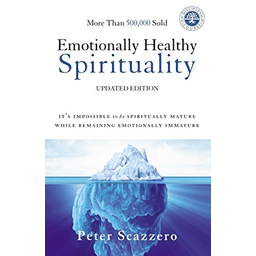 Emotionally Healthy SpiritualityPeter Scazzero’s case that you cannot be spiritually mature while emotionally an infant. More diagnostic and demanding than Ortberg, with a structured set of inner-work practices.
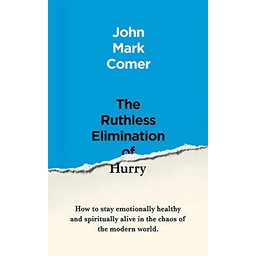 The Ruthless Elimination of HurryJohn Mark Comer builds an entire book on the Willard line Ortberg made famous - a sharper, more practice-driven case against hurry as the enemy of formation.
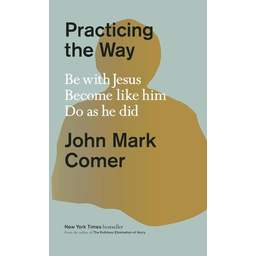 Practicing the WayComer’s broader argument for apprenticeship to Jesus - be with him, become like him, do what he did. A cultural frame around the same formation concerns.
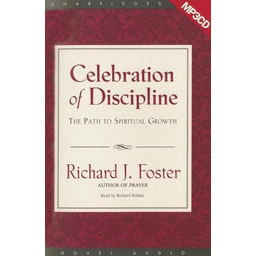 Celebration of DisciplineRichard Foster’s classic survey of twelve spiritual disciplines - the historic reference book on forming the inner life that stands behind much of this conversation.
Frequently asked questions
Do I need to have read Dallas Willard before reading Soul Keeping?
No - the opposite, really. Soul Keeping is written to be the accessible introduction to Willard’s teaching on the soul. Ortberg quotes and explains Willard throughout, so the book assumes no prior reading. Many readers use it as their first step before moving on to Willard’s own books like The Divine Conspiracy or Renovation of the Heart, which are denser.
Is Soul Keeping a memoir or a teaching book?
Both, braided together. One thread is Ortberg’s thirty-year friendship with Dallas Willard, including Willard’s death in 2013; the other is a clear teaching argument about what the soul is and how a hurried life neglects it. The memoir gives the teaching a human face, and the teaching gives the memoir a point. If you bounce off books that mix the two, that is worth knowing going in.
What does Ortberg mean by "the soul"?
Ortberg, following Willard, defines the soul as the part of a person that integrates the will, the mind, and the body into one coherent life. When the soul is healthy those three are aligned; when it is neglected they fragment, and you experience that fragmentation as stress, scatter, or burnout. It is offered as a working framework and an image rather than a technical, dogmatic definition.
Where does "ruthlessly eliminate hurry" come from?
It is Dallas Willard’s counsel to Ortberg, recounted in the book. When Ortberg asked Willard what he needed to do to stay spiritually healthy in a demanding ministry job, Willard told him he had to ruthlessly eliminate hurry from his life - and that there was nothing else. Soul Keeping is where the phrase reached a wide audience; John Mark Comer later built a whole book around the same idea.
Is this book tied to a particular tradition?
Ortberg writes from a broadly evangelical frame and pastored large evangelical churches, while drawing on the contemplative stream of writers on the inner life. It is not specifically Reformed, charismatic, Catholic, or tied to any one denomination - the focus is the care of the soul, which keeps it readable across traditions. Readers wary of contemplative influences will want to note that thread.
Is there a study guide for small groups?
Yes. Soul Keeping has a companion six-session study guide and DVD curriculum with discussion questions and video teaching from Ortberg, usually sold together for around $30. The book stands alone for solo readers, but groups running it together generally pair the book with the study guide and DVD.
Should I read Soul Keeping or go straight to Willard?
If you are new to this material or short on reading time, start with Soul Keeping - it is warmer, faster, and built as the on-ramp. If you have already absorbed the basic idea and want rigor and depth, go to Willard directly; The Divine Conspiracy and Renovation of the Heart are the fuller, more demanding source. Many readers do both, in that order.
Sources & further reading
More Christian Living Books
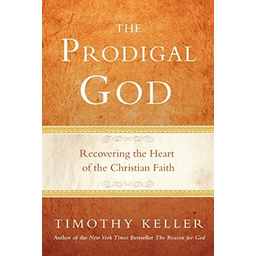 The Prodigal GodTim Keller’s 130-page reading of Luke 15 has quietly become one of the most-gifted Christian books of the last twenty years - and the reason is the title itself.Practicing the WayComer’s 2024 follow-up to The Ruthless Elimination of Hurry has quietly become the default spiritual-formation book in a thousand small groups - and the reasons are worth unpacking.
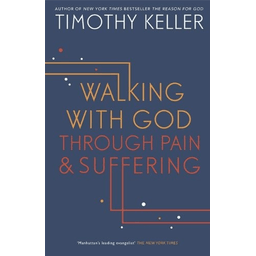 Walking with God Through Pain and SufferingTim Keller’s most comprehensive book on suffering - part survey of how every culture has tried to explain pain, part biblical theology, part field manual for the people actually walking through it.
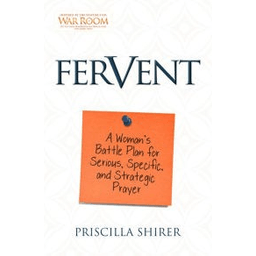 FerventThe prayer book that turned “strategic, specific prayer” into a fill-in-the-blank battle plan - and rode the War Room moment to the top of the bestseller lists.
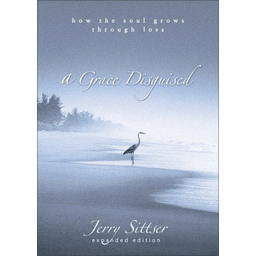 A Grace DisguisedJerry Sittser lost his mother, his wife, and his four-year-old daughter in a single car crash - and the book he wrote about it has quietly become the one grieving people press into each other’s hands, because it refuses to tell you how to get over your loss.The Ruthless Elimination of HurryJohn Mark Comer’s 2019 breakout - a pastor’s case that hurry is the great spiritual enemy of our age - has quietly become the go-to slow-down book for an exhausted generation of Christians. Here’s what it actually delivers, and where it doesn’t.