- Starting price
- ~$22 paperback
- Free tier
- No
- Platforms
- Print · Kindle · Audiobook
- Developer
- InterVarsity Press
- Launched
- 2019
- Updated
- May 31, 2026
The verdict
A short, practical, refreshingly concrete book on building a rule of life around eight habits - four daily, four weekly. The deeper formation theology is borrowed and lightly worn rather than argued from the ground up, but the habits themselves are unusually actionable, and the framing - that you are formed by your defaults whether you choose them or not - lands hard in 2026.
Try The Common Rule ↗Opens thecommonrule.org
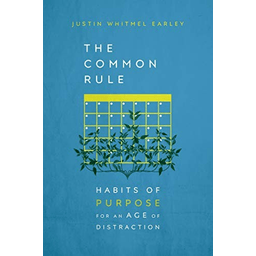
The Common Rule has quietly become the favorite of a particular kind of reader: the Christian who has read the slow-down books, nodded along, and still not changed anything. Justin Whitmel Earley - a corporate lawyer in Richmond, a husband, a father of four, and a former missionary in China - wrote it in 2019 after his own anxiety and overwork landed him on medication and forced a reckoning with how he was actually living. His answer was not a mindset. It was a schedule: eight concrete habits, four to do every day and four to do every week, written down and practiced until they became the architecture of an ordinary life.
It does not pretend to be original. It doesn’t claim to be a theology of formation. It doesn’t even claim that its eight habits are the right ones for you. The phrase "rule of life" is borrowed from a tradition far older than the author - the monastic Rule of Benedict and the daily offices of the historic church - and Earley is forthright that he is adapting a very old idea for people who will never enter a monastery. That’s the book’s great strength and the source of most of the fair critiques: it is a starter kit, not a system.
In 2026, with Earley’s follow-up Habits of the Household now extending the same approach to family life and a small ecosystem of journals and church materials around the original, this is the book that started it. If you’re trying to decide whether to read The Common Rule, jump to one of the longer formation books, or build your own rhythm from scratch - or whether Earley’s habit-first approach is the right entry point for you at all - this review walks through the thesis, the eight habits at the book’s core, and where it sits next to the other formation books people actually read.
✓ The good
- Genuinely concrete - where most formation books give you a vision, Earley gives you eight specific habits and tells you when and how to do them
- Short and finishable - around 200 pages, conversational, readable in a weekend, which matters for a book about not being overwhelmed
- The core insight is sticky - "you are being formed by your habits whether you choose them or not" reframes the whole project from willpower to architecture
- Built for adaptation, not imitation - Earley repeatedly tells readers to scale the habits to their own season rather than copy his exactly
- Each habit pairs love of God with love of neighbor - the structure is deliberately two-directional, so it never collapses into private self-improvement
- Works across traditions - Reformed, Wesleyan, Anglican, and Catholic readers find the practices usable because they draw on the older, shared rule-of-life tradition
- Honest about the author’s own failure - the book opens with Earley’s breakdown, not his success, which keeps the tone humble rather than prescriptive
✗ Watch out
- The eight habits are one author’s rule - they’re offered as a starting template, not a finished system, and readers who treat them as a checklist to copy exactly will misuse the book
- Some habits assume a particular lifestyle - "one meal with others" and "Scripture before phone" are easier for a married professional with a stable home than for shift workers, caregivers, or those who live alone
- Short and practical rather than deep - this is a manual, not a theology of formation, and readers wanting careful exposition of why these practices form us will feel underfed
- Light on the spiritual-formation lineage - Earley leans on a tradition (Benedict, the daily office, Dallas Willard, James K.A. Smith) more than he develops it, so the intellectual scaffolding is thin
- The "kneeling prayer three times a day" habit imports a liturgical posture some readers will find natural and others will find foreign to their practice
- Repetitive in spots - the two-part structure (habit, then reflection) means a few chapters restate the central thesis more than they advance it
Best for
- Readers who agreed with the slow-down books but never changed their actual routines
- Christians who like checklists, schedules, and concrete starting points over vision-casting
- Small groups wanting a four-to-eight-week shared read with built-in practices
- Anyone who senses their phone is forming them and wants a specific counter-rhythm
Avoid if
- You want a rigorous theology of spiritual formation rather than a practical habit manual
- You’ve already built a working rule of life and don’t need a starter framework
- Your season (shift work, sole caregiving, acute crisis) makes fixed daily habits hard to implement as written
- You distrust rule-of-life and habit language and prefer a looser, less structured approach
What The Common Rule is
The Common Rule is a short, practical book on building a personal rule of life, structured around the claim that we are all already being formed by habits we never consciously chose - and that the loving response is to choose them on purpose. Earley’s argument has two halves. The first is the diagnosis: a modern person’s defaults (phone first thing, meals alone or in front of a screen, no fixed rhythm of prayer or rest) quietly form them into someone anxious, distracted, and turned inward. The second is the prescription: eight habits, four daily and four weekly, designed to retrain those defaults toward love of God and love of neighbor.
Stylistically it sits between memoir and manual, but it leans hard toward manual. Earley opens with his own breakdown - the panic attacks, the medication, the realization that a successful life can still be a deformed one - and then spends the bulk of the book defining each habit, explaining the love it forms, and giving honest guidance on how to start and how to adapt. The structure is tidy and repeatable: each habit gets its own chapter, paired with a reflection on whether it serves love of God or love of neighbor. It is written to be used, not just read.
Why readers across traditions keep recommending The Common Rule
The single biggest reason this book travels is that it answers the question the slow-down genre usually leaves open: "Yes, but what do I actually do on Monday morning?" Plenty of Christian readers already believe their pace and their phone are deforming them. What they lack is not conviction but a concrete next step. Earley supplies eight of them, with start times and adaptations attached, and he does it without pretending the habits are magic - they are, in his framing, simply trellises that give grace something to grow on.
The other reason it travels is that the rule-of-life idea Earley builds on is catholic in the small-c sense. A fixed daily rhythm of prayer, a weekly day of rest, shared meals, fasting, curated input - these belong to no single post-Reformation tradition. Anglican and Catholic readers recognize the daily office and the liturgical posture; Reformed readers find the same disciplines in the Puritans; Wesleyan readers find them in the holiness tradition; anyone formed by the desert fathers or Benedict recognizes the source. By rooting the prescription in the older, shared practice of the church rather than in a particular contemporary theology, Earley wrote a book an unusually wide range of churches can put on a reading list without controversy.
The thesis: you are formed by your habits whether you choose them or not
The book’s organizing claim is that formation is not optional - only its direction is. Earley argues that every person already lives by a rule of life; most just haven’t named it. The unexamined rule of the average modern professional looks something like: wake, reach for the phone, scroll, work, eat alone or at a desk, scroll again, sleep, repeat. Earley’s point is that this is not neutral. These defaults are habits, habits are formative, and over years they shape a person into someone - anxious, fragmented, curved in on themselves - that no one would have chosen to become on purpose. The question is never whether you have a rule. It is whether you chose it.
The move that makes this work practically - rather than just rhetorically - is Earley’s framing of habits as "trellises," not engines. A trellis doesn’t produce the plant; it gives the plant a shape to grow into. He is careful not to claim the habits transform you by their own power, which keeps the book out of the self-help register and inside a recognizably Christian account of grace and discipline. That distinction matters: it lets readers from a wide range of traditions adopt the eight habits without feeling they are being sold a works-based program. You don’t do the habits to earn anything. You do them so that love has somewhere to take root.
The eight habits: four daily, four weekly
The heart of the book is the eight habits themselves, deliberately split into a daily and a weekly tier. The four daily habits are: kneeling prayer three times a day (morning, midday, and evening, framed as a return to a fixed rhythm of prayer); one meal eaten with others; one hour with the phone off after waking; and Scripture read before the phone is touched. The four weekly habits are: one full day of rest, or Sabbath; one fast from a meal or from food for part of a day; one hour of conversation with a friend; and a weekly curating of media - choosing intentionally what to take in rather than absorbing whatever the feed serves up. Each is paired with a direction of love: some habits primarily form love of God, others love of neighbor, and the structure is built so the two never come apart.
None of these are new, and Earley doesn’t claim they are. What he does - and does unusually well - is make them feel implementable rather than aspirational. Each habit gets a chapter with a clear definition, an explanation of the love it forms, honest acknowledgment that the early weeks feel awkward, and explicit permission to scale it: start with one daily habit, not all eight; shorten the fast; adapt the meal to your living situation. He is emphatic that the list is a template to adapt, not a regimen to copy - the rule is "common" precisely because each reader is meant to make it their own. The companion journal turns the eight into a trackable daily-and-weekly practice for readers who want structure to keep it going.
Habits of the Household: the successor book and the wider approach
The Common Rule isn’t a standalone artifact anymore. In 2021 Earley released Habits of the Household, which carries the same habit-first method into family life - applying the logic of intentional rhythms to meals, bedtimes, screens, discipline, and the ordinary liturgies of raising children. Around both books sits a small ecosystem: companion journals, a website with the eight habits laid out, and materials some churches use to run the rule as a shared cohort. If The Common Rule is the personal starting point, Habits of the Household is the same idea pointed at the family table.
That shapes how to think about The Common Rule in 2026. It reads less as "the one Earley book" and more as the entry point to a consistent body of work about how ordinary practices form people. Many readers do The Common Rule first - because it’s personal and finishable - then move to Habits of the Household if they’re raising kids and want the same approach for the home. The order matters less than knowing the wider approach exists: The Common Rule alone gives you the personal rule, and the household book extends the method to the people you live with.
Pricing
Paperback
~$22
The standard InterVarsity Press edition - the version most book clubs and church cohorts order.
Kindle / eBook
~$15
Searchable, syncs highlights across devices, and the cheapest way to underline the habit definitions.
Audiobook
~$18
Runs about five hours; a clean reading, though a book this checklist-shaped is arguably easier to use in print.
Companion Journal
~$13
A guided journal that turns the eight habits into a daily and weekly tracking practice - useful for actually keeping the rule.
The book is sold in the usual formats. The InterVarsity Press paperback (around $22) is the standard edition and the version most church book clubs order in bulk; if you want a single copy to mark up, adapt, and lend, this is the one.
Kindle (around $15) is the cheapest entry and the most practical if you want to highlight the habit definitions and sync notes across devices. The audiobook (around $18, or one credit) runs roughly five hours and is a clean reading - though a book this checklist-shaped is one of the rare cases where print arguably beats audio, since you’ll want to flip back to the habit definitions.
The companion journal (around $13) is optional but the right add-on if your goal is to actually keep the rule rather than just understand it. It turns the eight habits into a daily-and-weekly tracking practice with prompts, which is the difference between reading the book and living it. Most readers don’t need it to get the ideas. Readers who want to build the habits and keep them are the ones it’s for.
There is no free tier. Used copies turn up affordably, and libraries carry it, which is how a lot of small-group members acquire their first copy before deciding whether to buy the journal.
Where The Common Rule falls behind
No deep theology of formation. Earley is writing as a practitioner - a lawyer and a layman building a rule that worked for him - not as a theologian arguing one from first principles. If you want a careful account of why these particular practices form the soul, this book will leave you wanting; pair it with Dallas Willard’s The Spirit of the Disciplines or James K.A. Smith’s You Are What You Love, which supply the theory Earley assumes.
The habits are one person’s rule. The eight habits are explicitly a starting template, but the book’s greatest risk is that readers treat them as a fixed checklist to copy exactly. Earley says repeatedly to adapt them, yet the very concreteness that makes the book useful also makes it easy to misread as a regimen. The right posture is to take the structure and rebuild the specifics around your own life.
Some habits assume a particular lifestyle. "One meal with others," "Scripture before phone," and "kneeling prayer three times a day" are most frictionless for a married professional with a stable household and a flexible schedule. Single people, shift workers, caregivers, and those in acute seasons can implement the spirit of each habit, but the literal form often needs significant translation - and the book spends comparatively little time on those cases.
Light on the lineage it stands on. The rule-of-life tradition Earley draws from - Benedict, the daily office, the desert fathers, and the modern formation writers - is referenced more than developed. Readers already conversant in that tradition will feel they are getting the applied trade-paperback version of material they already know. That’s a feature if you haven’t read it and a limitation if you have.
Short by design, thin by consequence. The book’s brevity is a genuine strength for its audience, but it means several chapters restate the central thesis more than they extend it, and the harder objections - what happens when the rule collides with a crisis, or with a household that isn’t on board - get acknowledged briefly rather than worked through.
The Common Rule vs. The Ruthless Elimination of Hurry vs. Practicing the Way
These three books are the most-recommended modern formation reads, and they’re close enough in territory that readers regularly ask which one to start with. Different strengths. The Common Rule (Justin Whitmel Earley) is the most concrete - it hands you eight specific daily and weekly habits and tells you to just start. The Ruthless Elimination of Hurry (John Mark Comer) is the diagnosis and the on-ramp - short, story-driven, and the easiest to finish, built around the single thesis that hurry is the great spiritual enemy. Practicing the Way (also Comer) is the longer, more systematic follow-up - broader scope, fuller framework, designed to be run as a church cohort.
If you already believe the pace and the phone are the problem and you just want a specific plan, start with The Common Rule - it’s the friendliest to people who like checklists and concrete starting points. If you need to be persuaded that the speed is the problem in the first place, start with Hurry, which makes that case better than anyone. If a formation book has already resonated and you want the longer, cohort-shaped system, move to Practicing the Way. The Common Rule is the most prescriptive of the three; Hurry is the most readable; Practicing the Way is the most complete.
All three sit in roughly the same theological neighborhood - broadly evangelical, drawing on the older spiritual-formation and rule-of-life traditions, ecumenical enough to be used across Reformed, Wesleyan, Anglican, and Catholic readerships. None of them is doing systematic theology; all three are doing applied formation. Pick based on whether you want a plan (Earley), a wake-up call (Comer’s Hurry), or a full system (Comer’s Practicing the Way) more than on theology.
The bottom line
The Common Rule is the most practical book in the modern formation shortlist, and that is exactly why people keep handing it to friends who liked the slow-down books but never changed anything. It isn’t a theology of formation, and it doesn’t claim to be - it’s a starter rule of life built around eight concrete habits, four daily and four weekly, framed by the genuinely sticky idea that you are being formed by your defaults whether you choose them or not. Treat the eight habits as a template to adapt rather than a checklist to copy, and the book does what almost no formation book manages: it gets read on a weekend and acted on by Monday.
Alternatives to The Common Rule
 The Ruthless Elimination of HurryJohn Mark Comer’s breakout on hurry as the great spiritual enemy - the diagnosis and on-ramp that pairs naturally with Earley’s prescription.
 Practicing the WayComer’s longer, more systematic formation framework - designed to be run as a church cohort with extensive supporting materials.
 Celebration of DisciplineRichard Foster’s 1978 classic on the spiritual disciplines - the older, deeper root of much of what the modern formation books popularize.
Frequently asked questions
What are the eight habits in The Common Rule?
There are four daily and four weekly habits. The daily four are kneeling prayer three times a day, one meal with others, one hour with the phone off after waking, and Scripture read before the phone. The weekly four are a day of rest (Sabbath), a fast, an hour of conversation with a friend, and curating media intentionally. Each is paired with a direction of love - toward God or toward neighbor.
Who wrote The Common Rule?
Justin Whitmel Earley, a corporate lawyer in Richmond, Virginia, and a former missionary in China. He wrote the book in 2019 after his own experience of anxiety and overwork, and later wrote Habits of the Household, which applies the same habit-first approach to family life.
Am I supposed to follow all eight habits exactly?
No, and Earley is emphatic about this. The eight habits are a template to adapt, not a checklist to copy. The book repeatedly encourages readers to start with one or two, scale them to their own season, and rebuild the specifics around their own life - the rule is "common" precisely because each reader is meant to make it their own.
Is The Common Rule usable across different Christian traditions?
Broadly, yes. The practices - fixed-time prayer, a weekly day of rest, shared meals, fasting, curated input - draw on the older, shared rule-of-life tradition rather than a single contemporary theology, so Reformed, Wesleyan, Anglican, and Catholic readers all find them usable. The "kneeling prayer three times a day" habit imports a liturgical posture some readers will find more familiar than others.
How long does it take to read?
Most readers finish it in a weekend - it’s around 200 pages, conversational, and organized into short, repeatable chapters (one per habit). The audiobook runs about five hours, though many readers prefer print for this title since you’ll want to refer back to the habit definitions.
How is this different from a secular habits or productivity book?
The goal is formation, not optimization. Earley’s argument is that habits are "trellises" that give grace something to grow on, and that the point of the eight habits is to form love of God and love of neighbor - not to make you more efficient. Readers looking for a productivity system will find the framing explicitly Christian throughout, and explicitly uninterested in mere output.
Should I read The Common Rule or Habits of the Household first?
Most readers start with The Common Rule because it’s personal and finishable, then move to Habits of the Household if they’re raising children and want the same method applied to family life. The two share an approach; the order mostly depends on whether your immediate question is about your own rhythms or your household’s.
Sources & further reading
More Christian Living Books
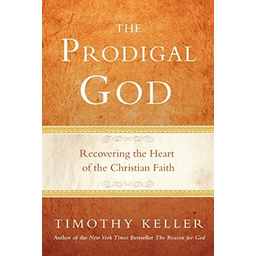 The Prodigal GodTim Keller’s 130-page reading of Luke 15 has quietly become one of the most-gifted Christian books of the last twenty years - and the reason is the title itself.Practicing the WayComer’s 2024 follow-up to The Ruthless Elimination of Hurry has quietly become the default spiritual-formation book in a thousand small groups - and the reasons are worth unpacking.
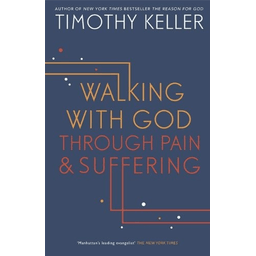 Walking with God Through Pain and SufferingTim Keller’s most comprehensive book on suffering - part survey of how every culture has tried to explain pain, part biblical theology, part field manual for the people actually walking through it.
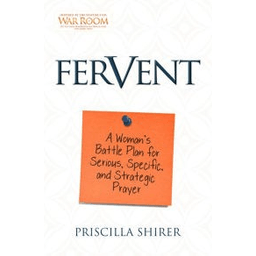 FerventThe prayer book that turned “strategic, specific prayer” into a fill-in-the-blank battle plan - and rode the War Room moment to the top of the bestseller lists.
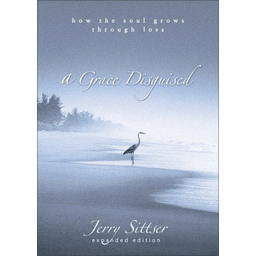 A Grace DisguisedJerry Sittser lost his mother, his wife, and his four-year-old daughter in a single car crash - and the book he wrote about it has quietly become the one grieving people press into each other’s hands, because it refuses to tell you how to get over your loss.The Ruthless Elimination of HurryJohn Mark Comer’s 2019 breakout - a pastor’s case that hurry is the great spiritual enemy of our age - has quietly become the go-to slow-down book for an exhausted generation of Christians. Here’s what it actually delivers, and where it doesn’t.