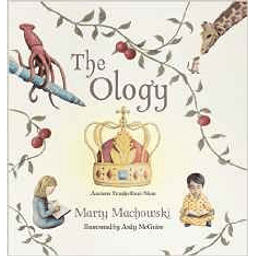
- Starting price
- ~$18 hardcover
- Free tier
- No
- Platforms
- Hardcover · Kindle · Curriculum
- Developer
- New Growth Press
- Launched
- 2015
- Updated
- May 31, 2026
The verdict
The Ology is the rare children's book that teaches doctrine head-on - the doctrine of God, creation, sin, Christ, the Spirit, salvation, the church, and the last things - in 71 short, kid-sized readings rather than retold stories. Marty Machowski writes from a Reformed-leaning evangelical framework, so its specific positions reflect that tradition; families outside it should preview before buying. For households that want to hand children the shape of Christian belief, not just its narratives, it is one of the best-made tools on the shelf.
Try The Ology ↗Opens newgrowthpress.com
The Ology has quietly become the book families reach for when a storybook Bible is not quite enough. Most children's Bibles retell narratives - Noah, David, the manger, the cross - and trust the doctrine to seep in around the edges. The Ology does the opposite. It names the doctrines out loud and teaches them directly, in order, the way an adult systematic theology would: who God is, how He made the world, what went wrong, who Jesus is, what the Spirit does, how people are saved, what the church is for, and how the story ends. Marty Machowski wrote it, Andy McGuire illustrated it, and New Growth Press published it in 2015. It has since become a fixture in family-worship routines and a common companion to catechism.
It is not a storybook Bible, and it never pretends to be. It does not retell Scripture episode by episode. It does not move chronologically from Genesis to Revelation. It does not lean on narrative to carry the freight. Instead it is built like a small topical theology for children - roughly 71 short readings, each a page or two, each landing one idea a six-to-twelve-year-old can actually hold. The word "ology" is the hook: the suffix that turns into the names of fields of study, here repurposed to mean "the study of God and His truth."
There is a gentle narrative device wrapped around the doctrine to keep young readers turning pages. The book opens with children who discover a mysterious old volume - "the Ology" - tucked away in a castle, a book of ancient truths that never grow old. That frame returns lightly between sections, but it never takes over; the real content is the doctrine itself, presented plainly and warmly. The subtitle says the rest out loud: "Ancient Truths, Ever New." Pair Machowski's clear, unhurried prose with McGuire's storybook illustrations and you get something genuinely unusual - a children's book that treats kids as capable of understanding what they believe and why.
✓ The good
- Teaches doctrine directly, not by inference - kids come away able to name and explain what Christians believe about God, sin, Christ, and salvation, which most storybook Bibles never attempt
- Organized topically in logical order - the doctrine of God, creation, humanity, sin, Christ, the Spirit, salvation, the church, and last things - so the whole structure of the faith is visible, not scattered across 44 separate stories
- Bite-sized by design - roughly 71 short readings of a page or two each, sized for a single sitting of family worship rather than a marathon
- Andy McGuire's illustrations give a heavy subject a warm, inviting, storybook feel - the art does real work keeping young readers engaged with abstract ideas
- Pairs naturally with catechism - families already working through a catechism (New City, Heidelberg, or another) find The Ology fills in the narrative and explanatory color around the memorized answers
- Genuinely cross-generational - the readings are simple enough for a six-year-old and substantial enough that parents report learning or re-clarifying doctrine themselves
- A companion curriculum exists for churches and co-ops that want to build a structured class or family-discipleship track around it
✗ Watch out
- Teaches from a Reformed-leaning evangelical (covenantal) framework - its specific positions on the Trinity, grace and election, the sacraments, and the last things reflect that tradition, so Catholic, Orthodox, and Latter-day Saint families should preview it and read it knowing the framework it is written from
- Follows the Protestant 66-book canon and that tradition's doctrinal categories - families wanting deuterocanonical content, or Latter-day Saint families wanting their own scripture and doctrine represented, will need a different or additional resource
- Topical, not narrative - children who light up at a good story may find a doctrine-first book slower going than a storybook Bible, especially without a parent guiding the reading
- The reading level has a window - the prose and concepts land best around ages six to twelve, so very young listeners need heavy adult help and older teens will likely move on to a fuller catechism or theology
- Best used as a guided read, not handed off - the abstract ideas reward conversation, so it works far better with an engaged parent than as solo bedtime reading
Best for
- Families who want children to learn doctrine directly, not just Bible stories
- Households doing family worship who want a topic-by-topic theology track
- Parents already using a catechism who want narrative and explanation around it
- Reformed-leaning evangelical homes (the framework and categories fit that tradition)
Avoid if
- You want a story-driven retelling of Scripture rather than topical doctrine
- You want doctrine taught from a Catholic, Orthodox, or Latter-day Saint framework
- You want deuterocanonical books or another tradition's scripture represented
- You want a book a young child can read alone without much adult guidance
What The Ology is
The Ology is a children's systematic theology by Marty Machowski, illustrated by Andy McGuire and published by New Growth Press in 2015. Rather than retelling Bible stories, it walks young readers through Christian doctrine in logical order across roughly 71 short readings: the doctrine of God, creation, human beings, sin, the person and work of Christ, the Holy Spirit, salvation, the church, and the last things. Each reading is a page or two, sized for a single sitting, and a light narrative frame - children finding a book of ancient truths in a castle - ties the sections together without crowding out the teaching.
It is a Protestant resource written from a Reformed-leaning, covenantal evangelical perspective, which is the tradition New Growth Press serves. That means its specific doctrinal positions - on the Trinity, on grace and election, on the sacraments, and on last things - reflect that framework rather than a neutral survey of every tradition's teaching. Machowski is best known among family-discipleship resources for The Gospel Story Bible and a line of seasonal devotionals; The Ology is his attempt to give children not just the Bible's stories but the doctrine those stories carry, in a form a grade-schooler can follow.
Why families reach for a doctrine-first book
Most children's Bibles are narrative engines: they retell the best stories and trust that the theology arrives quietly underneath. That works well for imagination and for the shape of the biblical story - and there are excellent books that do it. But it leaves a gap. A child can know the story of David and Goliath cold and still not be able to say what sin is, what the Trinity means, or why the cross matters. The Ology aims straight at that gap. It is built to answer the "what do we actually believe, and why?" questions that a story-only diet tends to leave open.
That makes it a different tool for a different job. It is the children's analogue to an adult's systematic theology - the book you reach for when you want the categories named and explained, not just illustrated. Because it teaches doctrine head-on, the framework it teaches from matters more than it would in a storybook, and Machowski writes from a Reformed-leaning evangelical tradition. For families inside that tradition, that is exactly the point and a real strength. For families in other traditions, it is the single most important thing to know going in: preview it, and read it as one tradition's careful presentation of the faith rather than a neutral one.
Doctrine in order: a small systematic theology for kids
The spine of The Ology is its structure. The 71 readings are grouped into doctrinal sections that follow the same logical sequence an adult systematic theology uses: who God is first, then creation, then human beings, then the entrance of sin, then the person and work of Christ, then the Holy Spirit, then salvation, then the church, and finally the last things. A child reading or hearing the book straight through is walked across the entire landscape of Christian doctrine in the order theologians have traditionally arranged it - which means they absorb not just individual truths but how those truths fit together.
This is what sets the book apart from nearly everything else on the children's shelf, and it is the reason it earns the word "ology." A storybook Bible gives a child a stack of episodes; The Ology gives them a map. The payoff is that doctrine stops being a set of disconnected Sunday-school facts and becomes a connected whole a child can reason about. The specific content of that map reflects a Reformed-leaning evangelical framework - that is the tradition doing the arranging - so the structure is a feature for families who share it and a thing to preview for families who do not.
The castle frame: a story wrapper for abstract ideas
Teaching doctrine to children has an obvious problem: doctrine is abstract, and abstraction is exactly what young readers struggle with. The Ology's answer is a light narrative device. The book opens with children discovering an old, leather-bound volume - "the Ology" - hidden away in a castle, a book of truths so ancient they have never grown old. That frame reappears gently between sections, giving young readers a thread of story to follow even as the real content is the doctrine itself. The wrapper is deliberately thin; it never competes with the teaching, but it gives a child a reason to keep turning pages through material that would otherwise feel like a textbook.
In practice the frame gives the abstract ideas a place to live. A doctrine introduced as a "truth from the Ology" is easier for a child to hold than the same doctrine stated cold, and the recurring image of an old book of unchanging truths quietly reinforces the subtitle's claim - "Ancient Truths, Ever New." Andy McGuire's warm, storybook illustrations carry the same load, putting friendly visual anchors around concepts like the Trinity, the fall, and redemption. The art and the frame together are why a doctrine-first book reads, in a child's hands, more like a treasure hunt than a lecture.
Built for family worship and catechism
The Ology is sized and shaped for routine. Each of the roughly 71 readings is a page or two - short enough to fit a single sitting of family worship or a bedtime, long enough to land one real idea. That cadence is the practical reason the book has stuck: a family can move through it a reading at a time over a season, or pull a single entry to match whatever they are already studying. Scripture references accompany the readings so parents can anchor each doctrine in the text it comes from, and the companion curriculum extends the same material into structured lessons for churches, co-ops, and families who want a fuller track.
It also slots in alongside catechism unusually well. A catechism gives a child memorized question-and-answer summaries of doctrine; The Ology supplies the narrative and explanation that make those answers stick. Families working through New City Catechism, the Heidelberg Catechism, or another find the two reinforce each other - the catechism for crisp memory, the book for warmth and color. Because catechisms and this book share a doctrinal tradition, the pairing is most seamless for families inside the Reformed-leaning evangelical stream; families in other traditions can still use the book, but should expect to supply their own framing where the doctrine differs from their own.
Pricing
Hardcover
~$18
The standard New Growth Press hardcover. The copy most families own and the one most people gift.
Kindle / eBook
~$13-15
Searchable and portable, though a heavily illustrated book like this reads best in print. Roughly a few dollars under the hardcover.
Companion curriculum
~$40+
A separate family- and church-oriented curriculum built around the book, with lessons, discussion, and activities. Priced and sold separately; check the publisher for current bundles.
Used / library sale
under ~$10
Used hardcovers turn up secondhand. A budget way in if the print copy is what you want and the edition does not matter.
The Ology is not free. The standard New Growth Press hardcover runs around $18 - call it the everyday default and the edition almost everyone owns. It is a sturdy, heavily illustrated book meant to survive repeated read-alouds and the occasional toddler, which is part of what you are paying for; the print copy is the one most families want and most people gift.
The Kindle or eBook edition comes in a few dollars cheaper, usually in the $13-15 range, and is searchable and portable. The honest caveat is that a book this dependent on Andy McGuire's illustrations and page layout reads best on paper - the digital edition is convenient for travel but is not how most families experience the book at home.
Beyond the book itself there is a separate companion curriculum, typically running $40 and up depending on the bundle, aimed at churches, co-ops, and families who want structured lessons, discussion questions, and activities built around the readings. Used hardcovers also turn up secondhand for under $10 if the edition does not matter to you.
If you are choosing where to spend, the hardcover is the balanced default for nearly everyone. Most families do not need the curriculum; it is worth the difference only if you are running a class or want a turnkey discipleship track rather than reading at your own pace.
Limitations and considerations
A single tradition's framework. Because The Ology teaches doctrine directly, its positions on the Trinity, grace and election, the sacraments, and the last things come from a Reformed-leaning evangelical tradition rather than a neutral survey. That is a strength for families inside that tradition and the right design choice for the book Machowski set out to write. It does mean Catholic, Orthodox, and Latter-day Saint families should preview it and read it as one tradition's careful presentation - not a one-size-fits-all account of Christian belief.
Topic over story. The book trades narrative momentum for doctrinal structure. Children who are captivated by a well-told story can find a topic-by-topic approach slower, especially the more abstract sections, and especially without a parent reading alongside. A story-first child may need a storybook Bible as the on-ramp and The Ology as the next step rather than the starting point.
A narrow age window. The prose and concepts land best from roughly six to twelve. Younger listeners need a lot of adult help to follow the abstractions, and older teens generally graduate to a fuller catechism or an entry-level theology. The book has a real sweet spot, but it is narrower than a storybook Bible's.
Not a stand-alone read. The ideas reward conversation, so the book underperforms when it is simply handed to a child at bedtime. It is built to be read with an engaged adult who can stop, explain, and connect - a feature for family worship, a limitation for parents hoping for something a child can run with alone.
The Ology vs. The Gospel Story Bible vs. a catechism app
These three sit close together on the family-discipleship shelf, and they do genuinely different jobs. The Ology (Machowski, 2015) is the doctrine-first option - it names and explains the categories of Christian belief in topical order, so a child learns the shape of the faith itself. The Gospel Story Bible (Machowski, same author) is the narrative companion - it retells Scripture story by story with the gospel thread running through, so a child learns the Bible's story arc. A catechism app like New City Catechism is the memory tool - short question-and-answer summaries of doctrine, designed to be learned by heart and reviewed.
Different strengths. The Gospel Story Bible is better at story and at moving through the biblical narrative; The Ology is better at doctrine and at showing how the pieces fit together; a catechism app is better at crisp, memorizable summaries and daily review. Many families use them together - the storybook for the narrative, The Ology for the doctrine behind it, the catechism for memory - which works smoothly because all three come from a broadly Reformed-leaning evangelical stream and reinforce rather than contradict one another.
All three are Protestant resources written from that tradition's doctrinal categories. The catechism options on this site - New City Catechism, the Heidelberg Catechism, and the broader Catechism App - likewise reflect specific traditions, so the cleanest pairing is within a shared tradition. Families in other traditions can still use any of them as supplements but should expect to supply their own framing where the doctrine diverges from their own.
The bottom line
The Ology fills a real gap on the children's shelf: it teaches kids what Christians believe and why, directly and in order, rather than leaving doctrine to seep in around the stories. Machowski's clear readings and McGuire's warm art make an abstract subject genuinely approachable for ages six to twelve, and it pairs beautifully with family worship and catechism. The one essential caveat is that it teaches from a Reformed-leaning evangelical framework, so families in other traditions should preview it and read it knowing the tradition behind it. For households that want the structure of the faith handed to their children, it is one of the best-made tools available.
Alternatives to The Ology
 The Gospel Story BibleMachowski's narrative companion - the same gospel thread told story by story, the storybook to the doctrine taught in The Ology.
 The Jesus Storybook BibleSally Lloyd-Jones retells 44 stories as one rescue plan pointing to Jesus - the most-gifted storybook Bible of its generation.
 The Biggest StoryKevin DeYoung and Don Clark trace the whole Bible as one arc - a slim, striking read-aloud for ages four to eight.
 New City CatechismA modern 52-question catechism app - crisp, memorizable doctrine summaries that pair naturally with The Ology.
Frequently asked questions
Is The Ology a storybook Bible?
No. It is a children's systematic theology - it teaches Christian doctrine directly and topically across about 71 short readings (the doctrine of God, creation, sin, Christ, the Spirit, salvation, the church, and the last things) rather than retelling Bible stories in order. A light narrative frame of children finding a book of truths in a castle ties the sections together, but the content is doctrine, not narrative.
What ages is The Ology for?
As written it targets roughly ages six to twelve. Younger children can follow it with substantial adult help, and many families adapt it up and down. Older teens usually move on to a fuller catechism or an entry-level theology. It works best as a guided read with an engaged parent rather than as a book a young child reads alone.
What theological tradition does The Ology teach from?
It is a Protestant resource written from a Reformed-leaning, covenantal evangelical framework, which is the tradition publisher New Growth Press serves. Because it teaches doctrine directly, its specific positions - on the Trinity, on grace and election, on the sacraments, and on last things - reflect that tradition. Catholic, Orthodox, and Latter-day Saint families are welcome to use it but should preview it and read it knowing the framework it is written from.
Who wrote and illustrated The Ology?
Marty Machowski wrote it and Andy McGuire illustrated it; New Growth Press published it in 2015. Machowski is also the author of The Gospel Story Bible and a line of family devotionals, and The Ology is his attempt to give children the doctrine behind the Bible's stories, not just the stories themselves.
How does The Ology compare to a catechism?
They complement each other. A catechism gives children memorized question-and-answer summaries of doctrine; The Ology supplies the narrative and explanation that make those answers stick. Families working through a catechism - New City, Heidelberg, or another - often use The Ology alongside it. Because catechisms and this book share a broadly Reformed-leaning evangelical tradition, the pairing is most seamless within that tradition.
Is there a curriculum to go with The Ology?
Yes. A separate companion curriculum exists for churches, co-ops, and families who want structured lessons, discussion questions, and activities built around the readings. It is sold separately, typically around $40 and up depending on the bundle. Most families do not need it - the book alone, read a section at a time, works well for home use.
Should I buy the hardcover or the eBook?
The hardcover (around $18) is the right default for almost everyone - the book leans heavily on Andy McGuire's illustrations and page layout, which read best in print, and a sturdy hardcover survives repeated read-alouds. The Kindle or eBook edition runs a few dollars cheaper and is handy for travel, but it is not how most families experience the book at home.
Sources & further reading
More Children's Bibles & Kids Books
The Jesus Storybook BibleThe children's storybook Bible that retells 44 stories as a single rescue plan pointing to Jesus - the one most parents and grandparents end up gifting, and the one adults quietly read for themselves.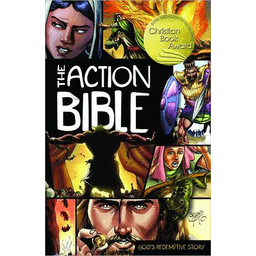 The Action BibleThe best-selling graphic-novel Bible of its era - 215+ Scripture narratives told in full-color comic art, built to pull reluctant and visual readers into the story.The Biggest StoryKevin DeYoung and Don Clark trace the whole Bible as one story - from the garden, through the promised snake crusher, to the new creation - in a single flowing read-aloud for ages four to eight.
 The Beginner's BibleThe illustrated storybook Bible that has been the default 'first Bible' for toddlers and preschoolers for more than thirty years - and quietly became the art behind the most-downloaded kids' Bible app in the world.
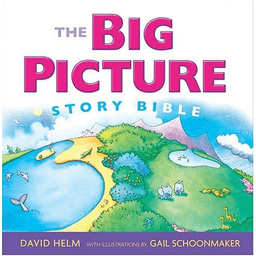 The Big Picture Story BibleThe storybook Bible that tells the whole Bible as one story - God's people, in God's place, under God's rule - written slow and gentle enough for a two-year-old on your lap.The Gospel Story BibleThe 156-story family storybook Bible that ends every story by connecting it to Jesus - and the hub of a whole devotional-and-curriculum ecosystem built for reading with a range of ages at once.