2 Chronicles 10
People in this chapter
Solomon is dead. His son Rehoboam rides north to Shechem to be crowned, and the whole nation is waiting with one request. Thy father made our yoke grievous: now therefore ease thou somewhat… and we will serve thee (v. 4). It is a plain offer - a little relief for willing loyalty. Rehoboam asks three days to decide.1
Tap any highlighted phrase to jump to the commentary that unpacks it.
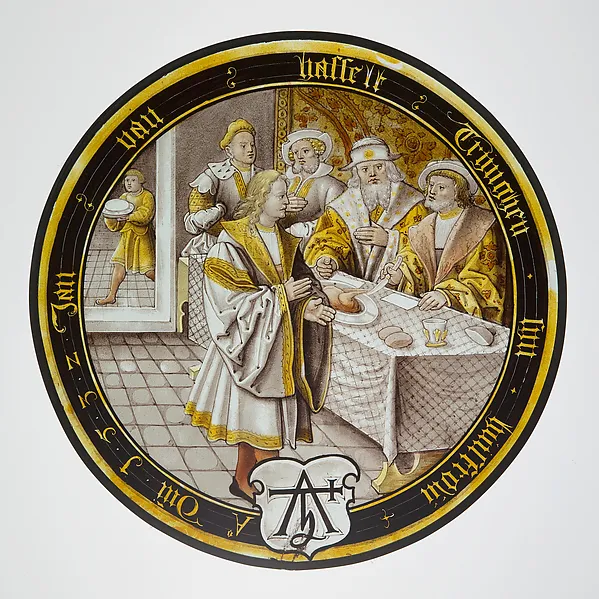
2 Chronicles 10:1-5Ease Thou Somewhat the Heavy Yoke
1And Rehoboam went to Shechem: for to Shechem were all Israel come to make him king. 2And it came to pass, when Jeroboam the son of Nebat, who was in Egypt, whither he had fled from the presence of Solomon the king, heard it, that Jeroboam returned out of Egypt. 3And they sent and called him. So Jeroboam and all Israel came and spake to Rehoboam, saying, 4Thy father made our yoke grievous: now therefore ease thou somewhat the grievous servitude of thy father, and his heavy yoke that he put upon us, and we will serve thee. 5And he said unto them, Come again unto me after three days. And the people departed.
The place is the first clue that this coronation is already in trouble. A king of David's line might expect to be crowned in Jerusalem, the city his grandfather won and his father adorned. Instead Rehoboam has to travel north to Shechem (v. 1), an ancient tribal gathering-place in the heart of the territory that will soon break away. He must go to them; they will not simply come to him. And a man with a history is waiting in the wings.
Solomon had once sought to kill Jeroboam, and Jeroboam had escaped to Egypt; now, at the news of Solomon's death, he returns - summoned by the very people who are about to make their request (vv. 2-3). Before a single word of grievance is spoken, the scene is set for a contest.1
Notice how little the people are actually demanding. This is no ultimatum; it is a negotiation, and a remarkably moderate one. They do not deny that they owe the king service - they openly offer it: and we will serve thee (v. 4). They ask only that the load be eased somewhat. Solomon's glory, for all its splendor, had a price the common Israelite paid in taxes and conscripted labor and endless building, and the people have come to the edge of what they can carry.
The real question underneath the plea is whether the new king will rule for them or merely over them - whether he sees a people to be cared for or a resource to be spent. It is a test of the heart of his kingship, and they have offered it to him in the gentlest possible terms.
Rehoboam's first move is, on its face, the wise one. He does not answer in haste; he asks for three days and sends the people home to wait (v. 5). Taking time to weigh a hard thing is rarely a bad instinct. The tragedy of this chapter is what Rehoboam does with his thinking. The three days will hold not one council but two, and the whole future of the nation will turn on which of them he believes.
Feel the weight of that pause. A kingdom hangs on the answer of a single man, and the man has just bought himself seventy-two hours to make up his mind. The delay is wise. Everything now depends on what the delay is used for.
2 Chronicles 10:6-7Speak Good Words to Them
6And king Rehoboam took counsel with the old men that had stood before Solomon his father while he yet lived, saying, What counsel give ye me to return answer to this people? 7And they spake unto him, saying, If thou be kind to this people, and please them, and speak good words to them, they will be thy servants for ever.
Rehoboam begins where wisdom would begin. He calls in the old men who had stood before Solomon (v. 6), advisers who had served at the height of the realm and watched how a kingdom is actually held together. Their counsel is brief and weighty: be kind, please the people, speak good words to them, they will be thy servants for ever (v. 7). They grasp what the young king does not. Authority that lasts is not seized by force; it is earned by trust.
A people treated well become servants for ever; a people crushed stay servants only as long as the chains hold. This cuts against the grain of how power usually pictures itself. The old men know a king who serves his people first will be served by them longest. Strength that stoops to bless makes subjects loyal. Strength that only demands makes them resentful, waiting for their moment.
The hinge of the old men's counsel is a single phrase: speak good words to them (v. 7). It is worth pausing on, because it is easy to mistake for mere flattery and it is nothing of the kind. The good words they urge are not empty charm meant to manipulate; they are honest, kind, healing speech - words that take the people's burden seriously and answer it with care. The old men grasp something Proverbs states outright, that a soft answer turneth away wrath and that pleasant words are as an honeycomb, sweet to the soul, and health to the bones. A gentle word in the mouth of a king is not weakness; it is a kind of strength that builds rather than breaks.
And the promise attached to it is generous: such words, the old men say, will make the people servants for ever. The whole transaction the people offered - loyalty for relief - could be won with nothing more costly than kindness rightly spoken. The tragedy is that Rehoboam had this counsel in hand, plain and sound, and set it aside for something that felt stronger.
2 Chronicles 10:8-9He Forsook the Old Men's Counsel
8But he forsook the counsel which the old men gave him, and took counsel with the young men that were brought up with him, that stood before him. 9And he said unto them, What advice give ye that we may return answer to this people, which have spoken to me, saying, Ease somewhat the yoke that thy father did put upon us?
Here the chapter turns: But he forsook the counsel which the old men gave him, and took counsel with the young men that were brought up with him, that stood before him (v. 8). The little word but carries the weight of the whole disaster to come. Rehoboam had the wise word; he forsook it. And the description of the second council is pointed: these are the young men that were brought up with him - his peers, his contemporaries, the companions of his privileged youth who had grown up inside the palace alongside the heir.
They know the assumptions of power but not its weight; they have inherited a throne's confidence without ever having had to keep one. Why did Rehoboam prefer them? Almost certainly because they told him what he wanted to hear. The old men's counsel asked him to bend, to be kind, to serve - and bending felt like weakness to a young king anxious to prove himself. The young men's counsel flattered his pride and dressed it up as strength.
It is one of the oldest temptations there is: to surround oneself with the voices that are agreeable and to mistake the echo of one's own desires for good advice.
2 Chronicles 10:10-11My Little Finger Shall Be Thicker
10And the young men that were brought up with him spake unto him, saying, Thus shalt thou answer the people that spake unto thee, saying, Thy father made our yoke heavy, but make thou it somewhat lighter for us; thus shalt thou say unto them, My little finger shall be thicker than my father’s loins. 11For whereas my father put a heavy yoke upon you, I will put more to your yoke: my father chastised you with whips, but I will chastise you with scorpions.
The young men's counsel comes back not as policy but as a boast and a threat. First the boast: My little finger shall be thicker than my father's loins (v. 10) - a crude, swaggering image meant to say that Rehoboam's least show of force will outweigh all of Solomon's might. Then the threat itself, in words the king will actually adopt: For whereas my father put a heavy yoke upon you, I will put more to your yoke: my father chastised you with whips, but I will chastise you with scorpions (v. 11).
The escalation is deliberate and cruel. Solomon's yoke was heavy; Rehoboam vows to make it heavier. Solomon disciplined with whips; Rehoboam threatens scorpions - whether a crueler kind of scourge or simply the sting of the creature itself, the word means pain sharpened past mere force into torment. The people asked for less; the king's answer is more, and worse. In a single sentence Rehoboam reveals what he has confused: he has mistaken cruelty for strength and threat for authority.
He imagines that crushing the people will secure his throne, when in truth it is about to shatter it. The boast of the thick little finger will be hollow within the hour.
2 Chronicles 10:12-14The King Answered Them Roughly
12So Jeroboam and all the people came to Rehoboam on the third day, as the king bade, saying, Come again to me on the third day. 13And the king answered them roughly; and king Rehoboam forsook the counsel of the old men, 14And answered them after the advice of the young men, saying, My father made your yoke heavy, but I will add thereto: my father chastised you with whips, but I will chastise you with scorpions.
The three days end, and the king delivers his verdict: And the king answered them roughly; and king Rehoboam forsook the counsel of the old men, and answered them after the advice of the young men (vv. 13-14). The single word roughly tells the whole story of his choice. He does not soften the young men's threat or deliver it with reluctance; he speaks it harshly, as though harshness itself were the mark of a strong king.
He repeats their cruel escalation almost word for word - my father chastised you with whips, but I will chastise you with scorpions - and in doing so he answers a people's reasonable plea with open contempt. The text twice names what he is doing: he forsook the counsel of the old men. This is not a man caught off guard or forced into a corner; it is a deliberate turning away from wisdom he had heard and understood.
He had the gentle path laid before him in plain words, and he trampled it. The roughness is the sound of a kingdom breaking. In trying to look like more of a king than his father, Rehoboam is about to become far less of one.
2 Chronicles 10:15-16For the Cause Was of God
15So the king hearkened not unto the people: for the cause was of God, that the LORD might perform his word, which he spake by the hand of Ahijah the Shilonite to Jeroboam the son of Nebat. 16And when all Israel saw that the king would not hearken unto them, the people answered the king, saying, What portion have we in David? and we have none inheritance in the son of Jesse: every man to your tents, O Israel: and now, David, see to thine own house. So all Israel went to their tents.
Then one clause lifts the whole chapter onto another plane: for the cause was of God, that the LORD might perform his word, which he spake by the hand of Ahijah the Shilonite (v. 15). Everything to this point has read as a study in human folly - and it truly is that. The text never excuses Rehoboam, never softens his guilt, never pretends he was anything but a fool who threw away a kingdom. And yet here, set right beside the folly, stands another truth: the cause was of God.
Years before, the prophet Ahijah had torn a new garment into twelve pieces and handed ten of them to Jeroboam, declaring that the LORD would rend ten tribes from the house of Solomon (1 Kgs. 11:29-31). That word is now coming to pass - not in spite of Rehoboam's choices but through them. Hold both, because Scripture will not let you drop either. This is Rehoboam's real, blameworthy, free folly, and it is the LORD keeping the word He had spoken.
The God who governs history is not thwarted by human pride; somehow, without making the pride one ounce less the man's own, He weaves even folly into the keeping of His word.1
The people's answer is swift and final, and it is not even new. What portion have we in David? (v. 16) - these very words had been raised once before, in David's own day, when Sheba the son of Bichri sounded the same call to break away (2 Sam. 20:1). An old wound that never fully healed tears open again. The northern tribes had long felt the house of David was a thing imposed on them, and now, refused even a small mercy, they renounce the bond outright: we have none inheritance in the son of Jesse. That word portion is covenant language - an assigned share, a stake in a relationship - and they are declaring they hold no such stake in David's line and owe it nothing.
The bitter irony is that the bond could have held. A king who answered with kindness would have had them as servants for ever; a king who answered with scorpions has them gone by sundown. Every man to your tents is the sound of a nation splitting down the seam.
2 Chronicles 10:17-19Israel Rebelled Unto This Day
17But as for the children of Israel that dwelt in the cities of Judah, Rehoboam reigned over them. 18Then king Rehoboam sent Hadoram that was over the tribute; and the children of Israel stoned him with stones, that he died. But king Rehoboam made speed to get him up to his chariot, to flee to Jerusalem. 19And Israel rebelled against the house of David unto this day.
The break is sealed in blood. But as for the children of Israel that dwelt in the cities of Judah, Rehoboam reigned over them (v. 17) - he keeps the south, the territory of Judah, but the heart of the nation is lost. And his very next act shows that he has learned nothing: Then king Rehoboam sent Hadoram that was over the tribute; and the children of Israel stoned him with stones, that he died (v. 18).
With the kingdom already fracturing, Rehoboam sends the one official guaranteed to inflame the wound - the man in charge of the forced labor and the tribute, the living symbol of the very yoke the people had begged to have lightened. They answer the tax-master with stones. The message could not be plainer: we will not be driven. And the would-be strong king, who had boasted that his little finger outweighed his father's strength, is reduced to flight: king Rehoboam made speed to get him up to his chariot, to flee to Jerusalem. The image is devastating.
The king who promised scorpions is now racing for his life, running from the people he had sworn to crush, glad to reach the safety of Jerusalem with the southern remnant of a kingdom that had been whole that morning.
The chapter closes with the long verdict of history: And Israel rebelled against the house of David unto this day (v. 19). The phrase unto this day is the voice of the chronicler looking back across the centuries from far downstream. What happened in a single afternoon at Shechem did not heal. The breach Rehoboam opened endured - two kingdoms where there had been one, north and south set against each other for generations, the strength of the people divided and so diminished.
A division born of one man's pride became the settled shape of the nation's life. And yet the reader who has heard verse 15 cannot read this closing line as bare tragedy alone. The rebellion is real and grievous, the fruit of genuine folly - and it is also the outworking of a word the LORD had spoken. Judgment on the house of David and the LORD's own purpose run together in the same event.
The kingdom is torn, the people scattered to their tents, the throne diminished - and through it all the word of God is being kept. The chapter ends with both truths standing: a sobering picture of what pride costs, and beneath it the quiet, unshaken faithfulness of God to His own word.
Research trail
Sources & further study
These references support the historical, linguistic, manuscript, and contextual notes in this chapter. Scripture remains the primary text; external sources are provided so readers can inspect the research directly.
- 2 Chronicles 10 - Translators' NotesThe NET Bible's detailed footnotes on 2 Chronicles 10 - the gathering at Shechem and Jeroboam's return (vv. 1-3), the crude boast of verse 10, the difficult clause in verse 15 that calls the division a thing “of God,” and the ancient slogan of secession in verse 16.
- 2 Chronicles 10 · Hebrew + classical Jewish commentaryThe Hebrew text of 2 Chronicles 10 with Rashi, Ibn Ezra, and other classical commentators side by side - useful for ol (vv. 4, 9-11, 14, the “yoke” the people beg to have lightened), for nesibbah (v. 15, “the cause was of God,” the turn of events the LORD brought about), and for the proverb of the “little finger” in verse 10.
- 2 Chronicles 10 ↔ 1 Kings 11-12 · Matthew 11 · Proverbs 15Traces the threads tying 2 Chronicles 10 to the rest of Scripture - the parallel account and the prophecy behind it in 1 Kings 11:29-39 and 12:1-19, the heavy yoke (vv. 4, 11) set beside the easy yoke of Matthew 11:28-30, and the rough answer (v. 13) read against the soft answer of Proverbs 15:1.
Where this echoes in Scripture
Ease Thou Somewhat the Heavy Yoke
- 1 Kings 12:1-4And Rehoboam went to Shechem: for all Israel were come to Shechem to make him king... Make thou the grievous service of thy father... lighter, and we will serve thee.The parallel account of the same gathering and the same plea - the two histories told side by side.
- 1 Kings 11:40Solomon sought therefore to kill Jeroboam. And Jeroboam arose, and fled into Egypt... and was in Egypt until the death of Solomon.The flight behind verse 2 - why Jeroboam was in Egypt, and why his return now is so charged.
- 1 Kings 9:15this is the reason of the levy which king Solomon raised; for to build the house of the LORD, and his own house...The forced labor behind the grievous yoke of verse 4 - the cost of Solomon's glory, paid by the people.
- Matthew 11:28-30Come unto me, all ye that labour and are heavy laden, and I will give you rest... For my yoke is easy, and my burden is light.The yoke the people begged to have lightened (v. 4) - answered by a King who makes His yoke easy.
- John 10:4, 11he goeth before them, and the sheep follow him: for they know his voice... I am the good shepherd: the good shepherd giveth his life for the sheep.The shepherd-King who leads from the front (v. 4) - the opposite of Rehoboam's whip.
- John 12:32And I, if I be lifted up from the earth, will draw all men unto me.The Son of David who draws His people (v. 4) - winning them by His own lifting up.
- Proverbs 11:14Where no counsel is, the people fall: but in the multitude of counsellors there is safety.The wisdom of the three-day pause for counsel (v. 5) - and the warning of what the next verses will squander.
My Little Finger Shall Be Thicker
- Proverbs 15:1A soft answer turneth away wrath: but grievous words stir up anger.The whole chapter in one proverb - the grievous words of verses 10-14 stirring up a nation's anger.
- Proverbs 13:10Only by pride cometh contention: but with the well advised is wisdom.The root of Rehoboam's ruin - pride choosing the young men's boast over the old men's wisdom (v. 8).
- 1 Kings 12:8But he forsook the counsel of the old men, which they had given him, and consulted with the young men that were grown up with him.The parallel account of the fatal choice in verse 8 - the same forsaking, told again.
- Luke 22:26-27he that is chief, as he that doth serve... I am among you as he that serveth.The greatness Rehoboam scorned (vv. 10-11) - the King who rules by serving.
- Luke 4:22And all bare him witness, and wondered at the gracious words which proceeded out of his mouth.The gracious words that astonished hearers (v. 7) - everything the rough answer was not.
- Philippians 2:7-9made himself of no reputation, and took upon him the form of a servant... wherefore God also hath highly exalted him.The King who grasped at nothing (vv. 10-11) and was given everything - the inverse of Rehoboam.
- Proverbs 16:18Pride goeth before destruction, and an haughty spirit before a fall.The boast of verse 10 answered - the thick little finger going before the fall of a kingdom.
Israel Rebelled Unto This Day
- 1 Kings 11:29-31Ahijah caught the new garment... and rent it in twelve pieces: And he said to Jeroboam, Take thee ten pieces: for thus saith the LORD... Behold, I will rend the kingdom out of the hand of Solomon.The word being performed in verse 15 - the prophecy whose fulfillment the division accomplishes.
- 2 Samuel 20:1We have no part in David, neither have we inheritance in the son of Jesse: every man to his tents, O Israel.The same cry as verse 16, raised generations earlier - an old wound tearing open again.
- 2 Samuel 7:16And thine house and thy kingdom shall be established for ever before thee: thy throne shall be established for ever.The promise that outlasts the division (v. 16) - David's throne preserved through the very judgment that tore the kingdom.
- 1 Kings 11:13, 32, 36Howbeit I will not rend away all the kingdom; but will give one tribe to thy son for David my servant's sake... that David my servant may have a light alway before me.Why one tribe was kept (vv. 16-17) - the house of David preserved for the sake of the promise running through it.
- Hebrews 12:28Wherefore we receiving a kingdom which cannot be moved, let us have grace, whereby we may serve God acceptably.The kingdom Rehoboam could not hold (v. 16) set beside the one that cannot be shaken.
- Proverbs 21:1The king's heart is in the hand of the LORD, as the rivers of water: he turneth it whithersoever he will.The mystery of verse 15 - a free king's heart, and the LORD turning the course of events to His own word.
- Luke 1:32-33the Lord God shall give unto him the throne of his father David... and of his kingdom there shall be no end.Where the kept promise leads (vv. 15-16) - the Son of David whose kingdom no rebellion can divide.