2 Chronicles 19
People in this chapter
Jehoshaphat comes home alive, and that is the only good thing about it. He had tied himself to Ahab, the worst king in Israel, and ridden out to a battle that nearly killed him. Now a prophet meets him at the gate before he can even rest. The word is a wound: Shouldest thou help the ungodly, and love them that hate the LORD? Then, in the same breath, mercy: Nevertheless there are good things found in thee.1
Tap any highlighted phrase to jump to the commentary that unpacks it.
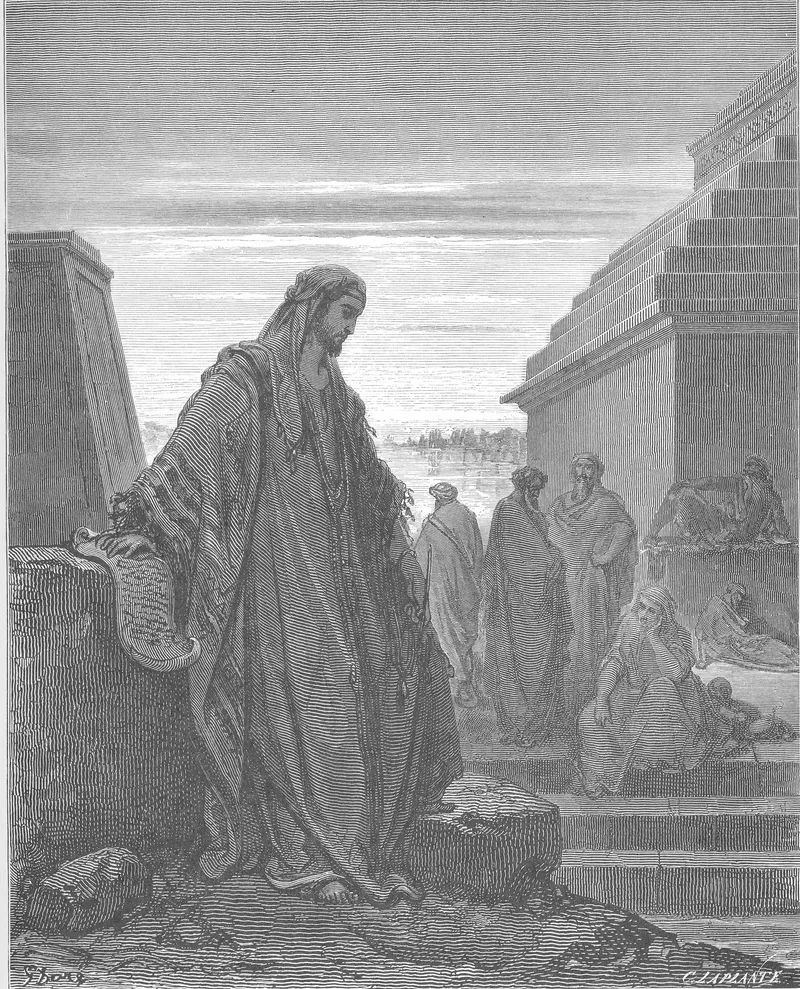
2 Chronicles 19:1-3Jehu's Rebuke - and the Mercy Inside It
1And Jehoshaphat the king of Judah returned to his house in peace to Jerusalem. 2And Jehu the son of Hanani the seer went out to meet him, and said to king Jehoshaphat, Shouldest thou help the ungodly, and love them that hate the LORD? therefore is wrath upon thee from before the LORD. 3Nevertheless there are good things found in thee, in that thou hast taken away the groves out of the land, and hast prepared thine heart to seek God.
The king comes home alive, but not unexamined. Before Jehoshaphat can settle back into his palace, Jehu the son of Hanani the seer went out to meet him - and the greeting is a question that goes straight to the wound: Shouldest thou help the ungodly, and love them that hate the LORD?1 Jehoshaphat's fault was that he had bound himself to Ahab at all - a king Scripture describes as one who did evil in the sight of the LORD above all that were before him (1 Kings 16:30).
To help the ungodly and to love them that hate the LORD is no neutral act of diplomacy; it is to lend one's strength to the very people set against God. And the verdict is blunt: therefore is wrath upon thee from before the LORD. The good king has done a thing that draws down displeasure, and the prophet will not pretend otherwise. There is no flattery in the mouth of a true seer.
Everything hangs on one word: nevertheless. The seer will not leave the king crushed under the rebuke, and that hinge reveals how God sees a person - a whole life held in view at once. Jehoshaphat had torn down the groves, the sites of false worship; he had prepared his heart to seek God. These were real, and the wrath did not erase them. God names the failure plainly and the faithfulness plainly, in a single breath, and refuses to flatten the man into either his worst act or his best.2 That is the mercy folded inside the correction.
The God who is angry at the alliance has not overlooked the heart that sought Him. A rebuke that still remembers the good is a rebuke a person can actually take - and Jehoshaphat takes it.
2 Chronicles 19:4He Brought Them Back Unto the LORD
4And Jehoshaphat dwelt at Jerusalem: and he went out again through the people from Beersheba to mount Ephraim, and brought them back unto the LORD God of their fathers.
A lesser king, stung by a public rebuke, might have withdrawn into the palace to lick his wounds. Jehoshaphat does the opposite. He went out again through the people from Beersheba to mount Ephraim - that is, from the far southern edge of the kingdom to its northern hill country, the whole length of Judah. The word again matters: this is a return to a work he had begun before and now takes up with new resolve.
The reformed king becomes a traveling king, going out personally to walk among his people. His own turning is not enough for him; he wants the nation to turn with him. And the only way to call a people back is to go to them, to be present face to face across every region of the land.
All that travel has a single aim, and it is the language of restoration: to bring home what had wandered, to recover a people for the God who had been theirs from the beginning. Jehoshaphat does not legislate the return from a safe distance; he is its living instrument. The king who had himself just been brought back from the brink - spared at Ramoth-gilead, recalled by a prophet's word - is now the one bringing others back.
His repentance never stays a private transaction with God. It overflows into a ministry to everyone under his care. The man most fit to call others home is the one who has just found his own way back.
2 Chronicles 19:5-7Ye Judge Not for Man, but for the LORD
5And he set judges in the land throughout all the fenced cities of Judah, city by city, 6And said to the judges, Take heed what ye do: for ye judge not for man, but for the LORD, who is with you in the judgment. 7Wherefore now let the fear of the LORD be upon you; take heed and do it: for there is no iniquity with the LORD our God, nor respect of persons, nor taking of gifts.
The reform now takes concrete, structural form. Jehoshaphat set judges in the land throughout all the fenced cities of Judah, city by city - a network of justice reaching into every fortified town in the kingdom, so that no community is left without a place to bring its grievances.3 In the ancient world the city gate was the seat of judgment, the open square where elders heard cases in full public view; Jehoshaphat plants that function deliberately, by appointment, across the whole land.
But before a single case is tried, he addresses the judges with a charge, and it opens with weight: Take heed what ye do. This is not a routine swearing-in. It is a king laying the gravity of the office on the men who will hold it - warning them that what they are about to do is more serious than they know, and must be approached with care.
Then comes the sentence that orders the entire chapter: ye judge not for man, but for the LORD, who is with you in the judgment.1 Every word of it overturns the ordinary assumptions of power. The judge is not the servant of the king who appointed him, nor of the wealthy litigant, nor of the crowd, nor of his own advantage. He judges for the LORD - he is the instrument through which the LORD Himself renders the verdict in the case before him.
And the reason is breathtaking: the LORD is with you in the judgment. God is not a distant standard the judge tries to approximate; He is present in the courtroom, party to the proceeding, watching the verdict come down. This single conviction is what makes a just court possible. A judge who believes he answers only to those above him will bend to them; a judge who knows that God stands beside him in the judgment has been set free from every other master.
Why must the judges judge this way? Because of who God is. Jehoshaphat grounds the whole charge in three statements about the LORD's own character: there is no iniquity with the LORD our God, nor respect of persons, nor taking of gifts. Each names a way human justice fails and God does not. No iniquity - He is perfectly righteous, never crooked in His dealings. No respect of persons - He does not weigh the case by the standing of the parties, favoring the powerful over the poor; the Hebrew idiom is literally to “lift the face,” to be swayed by who someone is.
No taking of gifts - He cannot be bribed; no payment will purchase a verdict from Him. These three are not arbitrary rules imposed on the judges; they are the very nature of the God in whose place the judges stand. The standard for the human court is simply the character of the divine Judge. To judge for the LORD is to strive, however imperfectly, to be in the courtroom what He is in all His dealings: righteous, impartial, incorruptible.
2 Chronicles 19:8-11Deal Courageously, and the LORD Shall Be With the Good
8Moreover in Jerusalem did Jehoshaphat set of the Levites, and of the priests, and of the chief of the fathers of Israel, for the judgment of the LORD, and for controversies, when they returned to Jerusalem. 9And he charged them, saying, Thus shall ye do in the fear of the LORD, faithfully, and with a perfect heart. 10And what cause soever shall come to you of your brethren that dwell in their cities, between blood and blood, between law and commandment, statutes and judgments, ye shall even warn them that they trespass not against the LORD, and so wrath come upon you, and upon your brethren: this do, and ye shall not trespass. 11And, behold, Amariah the chief priest is over you in all matters of the LORD; and Zebadiah the son of Ishmael, the ruler of the house of Judah, for all the king’s matters: also the Levites shall be officers before you. Deal courageously, and the LORD shall be with the good.
Having planted judges in every fenced city, Jehoshaphat now raises a higher court in the capital. In Jerusalem did Jehoshaphat set of the Levites, and of the priests, and of the chief of the fathers of Israel, for the judgment of the LORD, and for controversies. This is a court for the cases too hard for the local benches - the appeals, the disputes that cannot be settled in the gate of a country town. Its makeup is telling: it joins Levites and priests, versed in the law of God, with the chief of the fathers, the heads of the great families.
Spiritual knowledge and civic authority sit on the same bench, and the matters before them are named in two categories - the judgment of the LORD (religious questions, the application of God's law) and controversies (civil disputes between people). Even at its highest level, the court is built so that the law of God and the affairs of the people are never separated.
The charge to this high court comes in three measured phrases: Thus shall ye do in the fear of the LORD, faithfully, and with a perfect heart. Each names a dimension of true judging. In the fear of the LORD - the same reverence laid on the city judges, the awareness that God is watching every verdict. Faithfully - with integrity in the work itself, doing the task reliably and honestly, not cutting corners. With a perfect heart - and here the word perfect needs care.
It does not mean a sinless judge; no such judge exists. It means an undivided heart, a heart whole and single in its purpose, not split between the fear of God and the fear of man, not torn between justice and self-interest. A perfect heart, in Scripture's sense, is one that has not been divided in two. The judge with such a heart is not playing for both sides; his loyalty to truth is entire.2
The court is given a duty that reaches beyond settling cases. When matters come before it - between blood and blood (cases of bloodshed and homicide), between law and commandment, statutes and judgments (the full range of God's law) - the judges are to warn them that they trespass not against the LORD. Justice here is not only the punishment of wrong already done; it is the prevention of wrong yet to come. The court is to teach as well as to judge, instructing the people how to live within God's law so they do not stumble into guilt - and so wrath come upon you, and upon your brethren. The warning is mutual: if the judges fail to warn, the guilt spreads to them as well.
There is a solemn solidarity in it. A court that merely punishes after the fact has done half its work; the court Jehoshaphat envisions also guards the people from sin before it happens, and in doing so guards itself.
Jehoshaphat names the two men at the head of the court, and the structure is deliberate. Amariah the chief priest is over you in all matters of the LORD - the religious questions, the application of God's law, fall under the high priest. Zebadiah the son of Ishmael, the ruler of the house of Judah, for all the king's matters - the civil and administrative cases fall under the royal official. The two spheres are distinguished but not divorced; they sit on the same court, with the Levites… as officers before you to serve them both.
Then the king closes the whole charge with a benediction that doubles as a command: Deal courageously, and the LORD shall be with the good. He knows that judging rightly will take nerve - that there will be powerful men to face down, unpopular verdicts to render, pressure to bend. So he does not send them out with mere rules; he sends them out with courage, and with a promise: do the good, and you will not do it alone.
The LORD shall be with the good.
Research trail
Sources & further study
These references support the historical, linguistic, manuscript, and contextual notes in this chapter. Scripture remains the primary text; external sources are provided so readers can inspect the research directly.
- 2 Chronicles 19 - Translators' NotesThe NET Bible's detailed footnotes on 2 Chronicles 19 - the force of Jehu's charge that Jehoshaphat “loved them that hate the LORD” (v. 2), the legal idioms of v. 10 (“between blood and blood, between law and commandment”), and the meaning of judging “not for man, but for the LORD” in v. 6.
- 2 Chronicles 19 · Hebrew + classical Jewish commentaryThe Hebrew text of 2 Chronicles 19 with Rashi, Ralbag, and other classical commentators side by side - useful for mishpat (the “judgment” the judges render for the LORD in v. 6), for the threefold disclaimer about God in v. 7 (no iniquity, no respect of persons, no taking of gifts), and for the meaning of the perfect heart charged to the court in v. 9.
- Art of the Ancient Near East · Heilbrunn TimelineThe Met's survey of the Israelite and Judahite world - background to the fortified “fenced cities” whose gates served as the seat of local judgment (v. 5), where the elders and judges Jehoshaphat appointed would hear cases “city by city” in full public view.
- 2 Chronicles 19 ↔ Genesis 18 · John 5 · Romans 2Traces the threads tying the charge to judge… for the LORD (v. 6) and His having no respect of persons (v. 7) back to Shall not the Judge of all the earth do right? (Gen. 18:25) and forward to the Father committing all judgment unto the Son (John 5:22) and there is no respect of persons with God (Rom. 2:11).
Where this echoes in Scripture
Jehu's Rebuke - and the Mercy Inside It
- 2 Corinthians 6:14Be ye not unequally yoked together with unbelievers: for what fellowship hath righteousness with unrighteousness?Jehu's rebuke made a rule for every believer - the danger of binding the heart's allegiance to what is set against God.
- 2 Chronicles 16:7Hanani the seer came to Asa king of Judah, and said unto him, Because thou hast relied on the king of Syria…Jehu's father had brought a like rebuke to Jehoshaphat's father Asa - who jailed him for it. Jehoshaphat answers the word very differently.
- Revelation 3:19As many as I love, I rebuke and chasten: be zealous therefore, and repent.The mercy folded inside the rebuke - correction is itself a sign of love, not its absence.
- Joel 2:13Turn unto the LORD your God: for he is gracious and merciful, slow to anger, and of great kindness.The turning (shuv) the chapter is built on - repentance met by a God who is ready to receive the one who returns.
- Matthew 6:24No man can serve two masters… Ye cannot serve God and mammon.The divided heart the unequal yoke creates - one loyalty always wins, and it will not be God's by default.
He Brought Them Back Unto the LORD
- Luke 15:4What man of you, having an hundred sheep, if he lose one of them, doth not leave the ninety and nine… and go after that which is lost?The shepherd who goes out after the one - the heart behind a king who walked the whole land to bring his people home.
- Ezekiel 34:16I will seek that which was lost, and bring again that which was driven away.God's own promise to do exactly what Jehoshaphat did - to seek and bring back the scattered.
- James 5:19-20If any of you do err from the truth, and one convert him; let him know, that he… shall save a soul from death.The ministry of bringing the wandering back - handed now to every believer, not only to kings.
- Luke 19:10For the Son of man is come to seek and to save that which was lost.The mission Jehoshaphat's journey foreshadows - the One who comes the whole way to recover the lost.
Ye Judge Not for Man, but for the LORD
- Genesis 18:25Shall not the Judge of all the earth do right?The bedrock under Jehoshaphat's charge - human courts can judge for the LORD because the LORD is Himself the righteous Judge of all.
- John 5:22For the Father judgeth no man, but hath committed all judgment unto the Son.The Judge of all the earth given a face and a name - the One in whom all judgment finally rests.
- Deuteronomy 1:17Ye shall not respect persons in judgment… for the judgment is God's.Moses' charge to Israel's first judges, echoed almost word for word - the judgment belongs to God, so it must be impartial.
- Proverbs 9:10The fear of the LORD is the beginning of wisdom.The yir'ah Jehoshaphat sets on every judge - the reverence that frees a heart from the fear of man.
- Acts 17:31He hath appointed a day, in the which he will judge the world in righteousness by that man whom he hath ordained.The local benches of Judah pointed to a fixed day and a single appointed Judge - the one Peter also named Judge of quick and dead (Acts 10:42).
Deal Courageously, and the LORD Shall Be With the Good
- Joshua 1:9Be strong and of a good courage… for the LORD thy God is with thee whithersoever thou goest.The same charge Jehoshaphat gives his judges - courage grounded in the promise of God's presence.
- Amos 5:24But let judgment run down as waters, and righteousness as a mighty stream.The mishpat the court is built to render - justice flowing freely, as God Himself demands of His people.
- Micah 6:8And what doth the LORD require of thee, but to do justly, and to love mercy, and to walk humbly with thy God?The heart of the whole reform - the justice God asks of every person, not only of appointed judges.
- Matthew 28:20And, lo, I am with you alway, even unto the end of the world.The promise “the LORD shall be with the good” deepened - the abiding presence given to all who are sent to do His will.