Tobit 5
People in this chapter
In the chapter before this one, the aging Tobit, now blind, has given his son a long parting charge and remembered a debt owed to him in a faraway city. Tobit 5 sets that errand in motion. Tobias is willing to obey, but he is honest about the gap between willingness and ability: he does not know the man who holds the money, he does not know the road, and he has no proof of the debt.
The chapter opens, in other words, with an ordinary problem. A good task has been given, and the one asked to do it cannot see how it will be done.
Tap any highlighted phrase to jump to the commentary that unpacks it.
Tobit 5:1-4I Will Do All Things, But I Cannot See How
1Then Tobias answered his father, and said: I will do all things, father, which thou hast commanded me. 2But how I shall get this money, I cannot tell; he knoweth me not, and I know not him: what token shall I give him? nor did I ever know the way which leadeth thither.
The son's first word is obedience. Before he raises a single objection, Tobias commits himself: "I will do all things, father, which thou hast commanded me." This is the posture the whole chapter rewards. He does not bargain or delay; he says yes to the charge and only then names the real difficulties. There is a quiet pattern here worth holding onto. The willing heart speaks first, and the honest questions come after, inside the yes rather than as a reason to refuse it.
Then comes the honesty. Tobias lays out three genuine obstacles: he does not know the man who holds the money, the man does not know him, and he has never traveled the road. "He knoweth me not, and I know not him." There is no exaggeration in his fear and no pretended confidence. He is a young man asked to carry a hard task into unfamiliar country, and he says so plainly. Scripture does not scold him for this.
It lets the problem stand at full size, because the size of the problem is what makes the help that is coming so clearly a gift.
3Then his father answered him, and said: I have a note of his hand with me, which when thou shalt shew him, he will presently pay it. 4But go now, and seek thee out some faithful man, to go with thee for his hire: that thou mayst receive it, while I yet live.
The father answers the first fear with something concrete. He has kept "a note of his hand," a written record of the debt that will serve as proof when Tobias presents it. The detail is small, but it shows a household that has held faithfully to a trust across years and distance. The token Tobias asked for in his anxiety already exists; his father had it all along. Often the thing we are afraid we lack has quietly been provided before our fear puts it into words.
For the second fear, the unknown road, the father gives the instruction that sets the whole story turning: "seek thee out some faithful man, to go with thee for his hire." Tobit asks his son to find a trustworthy companion, a reliable guide who will make the journey alongside him. The word that matters is "faithful." They are looking for someone dependable, someone who will not abandon the boy on the way. The reader, who already knows an angel is about to appear, can see the deeper truth taking shape: the most faithful companion of all is the one God is sending, and the household does not yet know to expect Him.
Tobit 5:5-9A Beautiful Young Man, Standing Ready
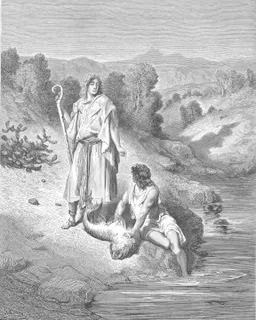
5Then Tobias going forth, found a beautiful young man, standing girded, and as it were ready to walk. 6And not knowing that he was an angel of God, he saluted him, and said: From whence art thou, good young man?
Tobias goes out to find a guide and meets one already waiting: "a beautiful young man, standing girded, and as it were ready to walk." The image is striking. The companion is not sought out at the end of a long search; he is found standing prepared, dressed for the journey, as though he had been waiting for this very moment. Heaven's provision is pictured here as something that arrives ahead of the need, ready before the request is fully spoken. Tobias thinks he is beginning a search. He is actually meeting an answer that has been standing by.
Here the narrator lets the reader in on the secret the characters do not have: "not knowing that he was an angel of God." Tobias sees only a capable young traveler and greets him as one. This gap between what the reader knows and what the family knows runs through the rest of the book, and it carries a gentle lesson. The help God sends does not always announce itself. It can look entirely ordinary, a stranger at the right moment, a companion who happens to know the way.
The household will not learn who walked with them until the very end.
7But he answered: Of the children of Israel. And Tobias said to him: Knowest thou the way that leadeth to the country of the Medes? 8And he answered: I know it: and I have often walked through all the ways thereof, and I have abode with Gabelus our brother, who dwelleth at Rages a city of the Medes, which is situate in the mount of Ecbatana.
Tobias asks the one question that matters to his fear: do you know the way? The answer overflows what he hoped for. The stranger not only knows the road; he has "often walked through all the ways thereof," and he has lodged with Gabelus, the very man who holds the money. Every obstacle Tobias named a moment ago is met in a single reply. The unknown road is known. The unknown man is a former host.
The provision is not merely adequate; it is precise, fitted exactly to the need, as though arranged by someone who knew the whole situation in advance.
Tobit 5:10-15Thy Cure From God Is At Hand
11So going in he saluted him, and said: Joy be to thee always. 12And Tobias said: What manner of joy shall be to me, who sit in darkness, and see not the light of heaven?
The blind father is here called Tobias as well, for father and son share the name in this account. The angel enters and greets the old man with a blessing: "Joy be to thee always." It is a generous word to speak over a household weighed down by blindness and worry, and it is no empty courtesy. The one who pronounces joy over this house has been sent precisely to bring it. The greeting is a promise wearing the clothes of ordinary politeness, and the reader can hear what the old man cannot yet hear in it.
The father's reply is one of the most poignant lines in the book. "What manner of joy shall be to me, who sit in darkness, and see not the light of heaven?" Here is a faithful man who has lost his sight, and with it, it seems, his hope of gladness. He cannot imagine what joy could mean for someone in his condition. The honesty is bracing; Scripture does not hide the weight of his suffering or rush him toward a cheerfulness he cannot feel.
He sits in literal darkness and says so. And it is exactly into that darkness that the promise of the next verse is about to fall.
13And the young man said to him: Be of good courage, thy cure from God is at hand.
Into the old man's confessed darkness the angel speaks healing words: "Be of good courage, thy cure from God is at hand." The messenger knows what the household does not, that this very journey will become the means of the father's healing. The cure is named as coming "from God," never from the angel's own power; the messenger points past himself to the Source. To a man who could not picture any joy, the word arrives that his cure is already near, already on its way, set in motion the moment his son agreed to go.
The darkness he sits in is not the end of his story.
14And Tobias said to him: Canst thou conduct my son to Gabelus at Rages, a city of the Medes? and when thou shalt return, I will pay thee thy hire. 15And the angel said to him: I will conduct him thither, and bring him back to thee.
The father asks for a guide who can take his son there and the angel answers with a promise that reaches further than the question: "I will conduct him thither, and bring him back to thee." The old man asked only about the going. The messenger guarantees the return. This is the shape of God's keeping all through Scripture, a promise not merely to set us on a road but to bring us home from it.
The angel will repeat this pledge twice more in the chapter, as if the household most needs to hear, and the reader most needs to remember, that the One who sends also brings back.
Tobit 5:16-20The Name That Means "God Has Helped"
16And Tobias said to him: I pray thee, tell me, of what family, or what tribe art thou? 17And Raphael the angel answered: Dost thou seek the family of him thou hirest, or the hired servant himself to go with thy son?
The father, careful for his son, wants to know the stranger's lineage, and the angel gently turns the question. "Dost thou seek the family of him thou hirest, or the hired servant himself?" It is a quiet redirection from pedigree to person, from where the man comes from to what he will do. The reader, who has just heard the narrator name him "Raphael the angel," knows that the true answer to "what family art thou?" is beyond anything the old man could guess.
The messenger does not lie, but he does not yet disclose the whole. The time for that revelation will come later in the book.
18But lest I should make thee uneasy, I am Azarias the son of the great Ananias.
The angel gives a name suited to calm the old man: "I am Azarias the son of the great Ananias." He takes the appearance of a kinsman from a respected family, the kind of companion a father could trust with his son. And there is something fitting hidden in the name he chooses, for Azarias carries the meaning "the Lord has helped." Even the alias preaches the truth of the moment. Whether or not the household catches it, the very name walking out the door with their son announces that the Lord is the one who helps, and that help is exactly what this journey will prove to be.
19And Tobias answered: Thou art of a great family. But I pray thee be not angry that I desired to know thy family. 20And the angel said to him: I will lead thy son safe, and bring him to thee again safe.
A second time the angel speaks the promise, and now twice over: "I will lead thy son safe, and bring him to thee again safe." The repetition is deliberate and pastoral. A father about to send his only son into danger does not need the assurance once; he needs it pressed in, held up against his fear until it begins to take. The word "safe" stands at both ends of the journey, the going and the returning, framing the whole road in keeping. Heaven knew the old man's heart would tremble, and so heaven's messenger says it again.
Tobit 5:21-28The Good Angel of God Doth Accompany Him
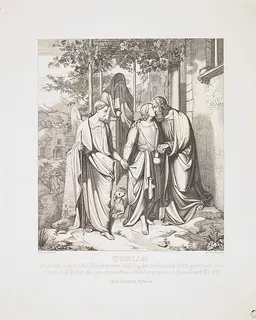
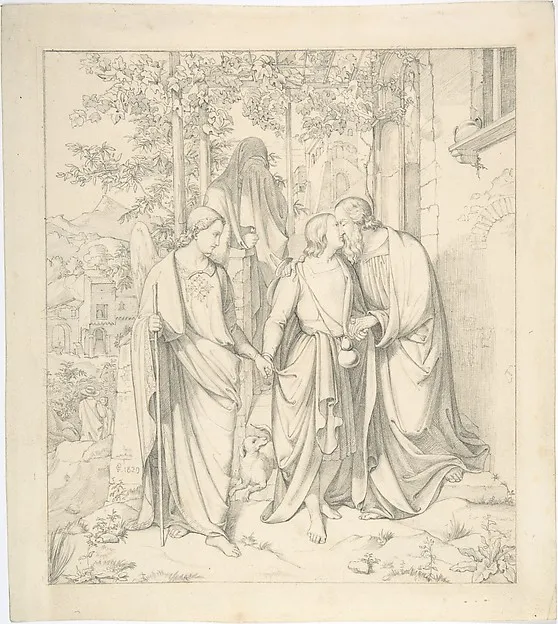
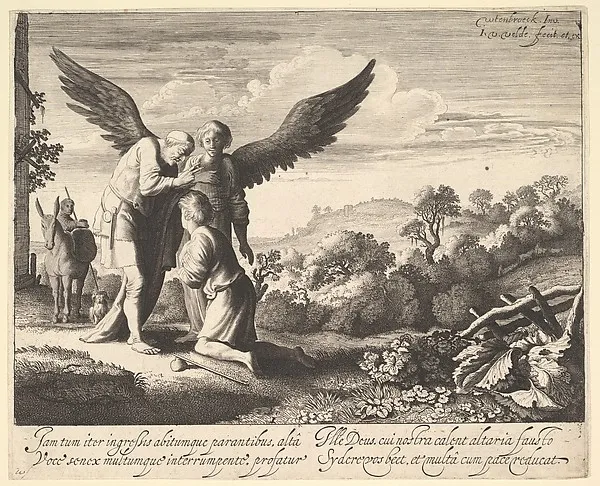
21And Tobias answering, said: May you have a good journey, and God be with you in your way, and his angel accompany you. 23And when they were departed, his mother began to weep, and to say: Thou hast taken the staff of our old age, and sent him away from us.
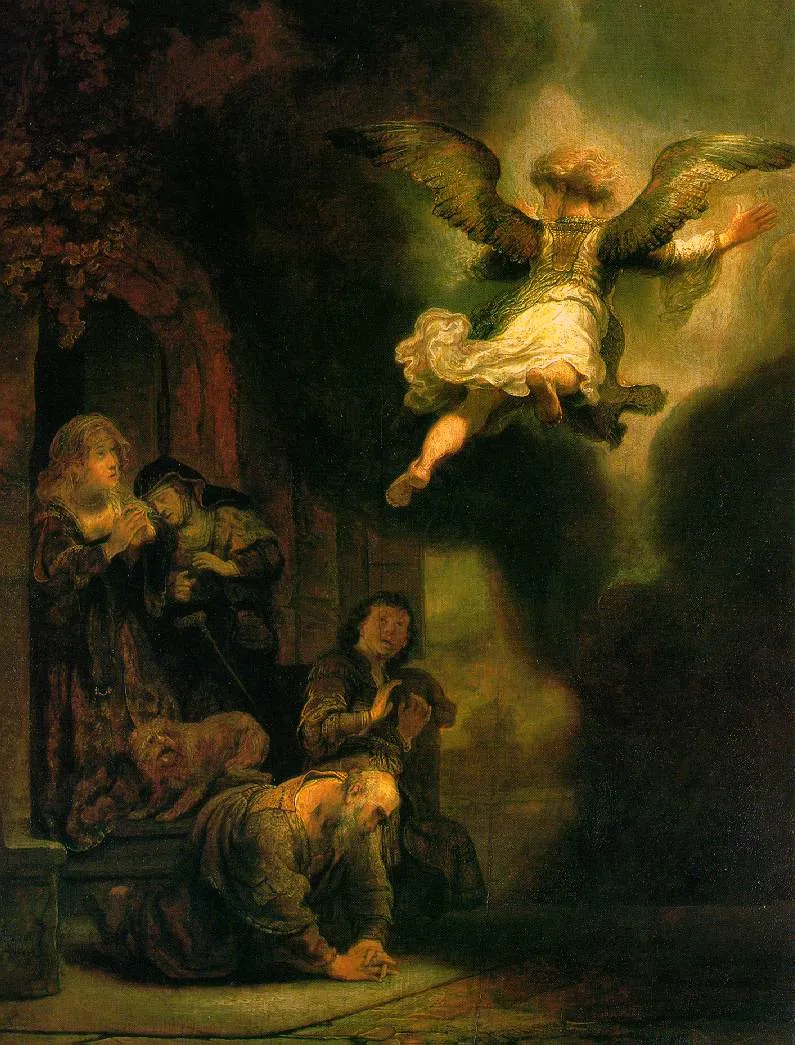
The father sends them off with a blessing that is truer than he knows: "God be with you in your way, and his angel accompany you." He prays for an angel to go with his son, never guessing that an angel is already the one leading him out the door. There is a gentle wonder in this. The thing the old man asks God to grant has, in fact, already been granted, standing right beside the son he is blessing.
Our prayers for protection are often answered before we pray them, and the asking only catches up to a mercy already underway.
Then the mother's grief breaks open. "Thou hast taken the staff of our old age, and sent him away from us." The image is tender and exact. Their son is the staff they lean on, the support of their failing years, and now that support is walking away down a dangerous road. Her sorrow is not weak faith; it is love speaking honestly about what it costs to let a child go. Scripture gives her tears their full dignity.
It does not hurry to correct her or shame her fear. A mother watching her son leave is allowed to weep, and the text weeps with her.
24I wish the money for which thou hast sent him, had never been. 25For poverty was sufficient for us, that we might account it as riches, that we saw our son.
The mother says what grief makes plain: "I wish the money... had never been." She would trade every coin of the debt to keep her son at home. And then a line of unexpected beauty: their poverty was wealth enough, she says, as long as they could see their son. She has weighed riches against presence and found presence worth more. In her sorrow she stumbles onto a truth the whole book affirms, that the dearest treasures are the people we love, and no recovered fortune is worth the empty place at the table.
Her tears teach what abundance could not.
26And Tobias said to her: Weep not, our son will arrive thither safe, and will return safe to us, and thy eyes shall see him. 27For I believe that the good angel of God doth accompany him, and doth order all things well that are done about him, so that he shall return to us with joy.
The father answers his wife's tears with the faith that crowns the chapter: "I believe that the good angel of God doth accompany him, and doth order all things well that are done about him." He cannot see the road, he cannot see his son, he cannot even see the faces in his own house, and yet he sees the deepest thing of all. He trusts that God's good angel goes with the boy and arranges everything for his good.
This is conviction, not evidence; he believes it before any of it has come to pass. And the reader knows he is exactly right. An angel does accompany his son, and all things truly are being ordered well.
28At these words his mother ceased weeping, and held her peace.
The chapter ends in quiet. "At these words his mother ceased weeping, and held her peace." Her husband's confidence does not erase her love or pretend the parting is easy, but it gives her something to rest in, and her tears grow still. Faith spoken aloud in a household has this power: it does not deny the grief, yet it makes a place to stand within it. The last note of Tobit 5 is not a solved problem but a settled heart.
The son is on the road, the outcome is unseen, and the home is at peace because it has entrusted him to God.
Where this echoes in Scripture
I Will Do All Things, But I Cannot See How
- Genesis 24:7The LORD God of heaven... he shall send his angel before thee, and thou shalt take a wife unto my son from thence.Another faithful errand for a son, with an angel sent ahead to make the way prosper.
- Luke 1:38And Mary said, Behold the handmaid of the Lord; be it unto me according to thy word.The willing yes spoken before the how is understood.
- Proverbs 3:5-6Trust in the LORD with all thine heart; and lean not unto thine own understanding... and he shall direct thy paths.Tobias cannot see the road; he is being asked to trust the One who can.
A Beautiful Young Man, Standing Ready
- Hebrews 13:2Be not forgetful to entertain strangers: for thereby some have entertained angels unawares.The exact situation of Tobias: an angel met and not recognized.
- Luke 24:15-16Jesus himself drew near, and went with them. But their eyes were holden that they should not know him.A companion on the road whose identity is hidden until the journey is done.
- Psalm 91:11For he shall give his angels charge over thee, to keep thee in all thy ways.The promise the story enacts: a guardian sent to keep a traveler in all his ways.
Thy Cure From God Is At Hand
- Psalm 30:5Weeping may endure for a night, but joy cometh in the morning.The father sits in night; the chapter promises the morning is near.
- John 9:6-7He anointed the eyes of the blind man... and he went his way therefore, and washed, and came seeing.The blind given sight; the cure the angel promises foreshadows the Healer to come.
- Isaiah 35:4-5Say to them that are of a fearful heart, Be strong... he will come and save you... then the eyes of the blind shall be opened.Almost the angel's very words: be of good courage, God comes to heal.
The Name That Means "God Has Helped"
- Matthew 1:21And thou shalt call his name JESUS: for he shall save his people from their sins.A name that declares the errand, as Raphael's name declares his.
- John 6:39And this is the Father's will... that of all which he hath given me I should lose nothing, but should raise it up again.The One sent to bring every traveler safely home, losing none.
- Matthew 28:20Lo, I am with you alway, even unto the end of the world.The companion on the road, no longer hidden, promised to the end.
The Good Angel of God Doth Accompany Him
- Romans 8:28And we know that all things work together for good to them that love God, to them who are the called according to his purpose.The father's faith that God "doth order all things well," stated as a settled hope.
- Psalm 121:8The LORD shall preserve thy going out and thy coming in from this time forth, and even for evermore.The keeping of the journey out and the journey home, which the father trusts for his son.
- 1 Samuel 1:27-28For this child I prayed... therefore also I have lent him to the LORD.A parent releasing a beloved child into God's hands.