Painter of the Bible
Giulio Bonasone
Giulio Bonasone was a Bolognese engraver and reproductive printmaker of the middle of the sixteenth century — one of the principal Italian engravers who continued the Roman reproductive-engraving tradition that Marcanton…

Their faith
Why Giulio Bonasone painted Christ
Giulio Bonasone, a talented engraver from Bologna, dedicated his artistic life to the reproduction of sacred works, reflecting a deep reverence for the Christian faith. Born around 1510, Bonasone honed his skills in the rich artistic environment of Bologna before moving to Rome, where he engaged with the legacy of great masters like Michelangelo and Raphael. His engravings were not merely technical reproductions; they were a means of sharing the beauty and depth of Christian narratives with a wider audience. The emblematic works he created, particularly the 'Symbolicarum Quaestionum Libri Quinque,' showcase his ability to intertwine classical philosophy with Christian theology, revealing a mind steeped in spiritual contemplation and devotion.
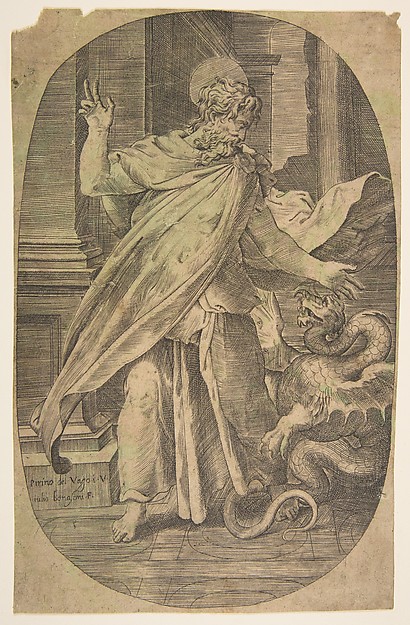
Bonasone's engravings of iconic scenes, such as Michelangelo's 'Pietà' and the 'Conversion of Saul,' serve as windows into his spiritual vision. These works not only replicate the grandeur of the originals but also invite viewers to reflect on profound themes of redemption and divine grace. Through his meticulous craftsmanship, Bonasone contributed to the dissemination of Christian art during a pivotal time in history, ensuring that the messages of faith and salvation reached far beyond the walls of churches. His devotion to the sacred continues to resonate with viewers today, reminding us of the transformative power of art in expressing and sharing the beauty of Christ's love.
Life & work
Giulio Bonasone was a Bolognese engraver and reproductive printmaker of the middle of the sixteenth century — one of the principal Italian engravers who continued the Roman reproductive-engraving tradition that Marcantonio Raimondi had founded in the previous generation, with a particular specialty in engraved reproductions of Michelangelo's compositions. Born in Bologna around 1510, trained in Bologna in his early career before moving to Rome around 1540 to work in the orbit of the Marcantonio workshop's surviving members, and active in Rome and Bologna for his career, he died around 1576.
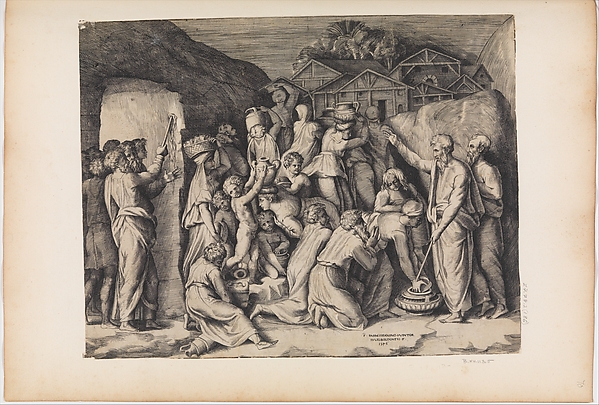
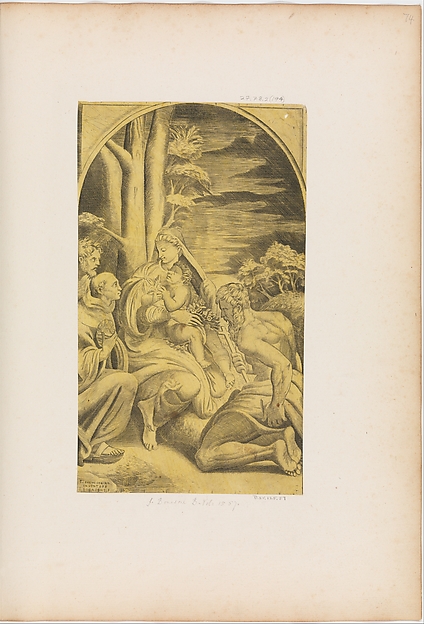
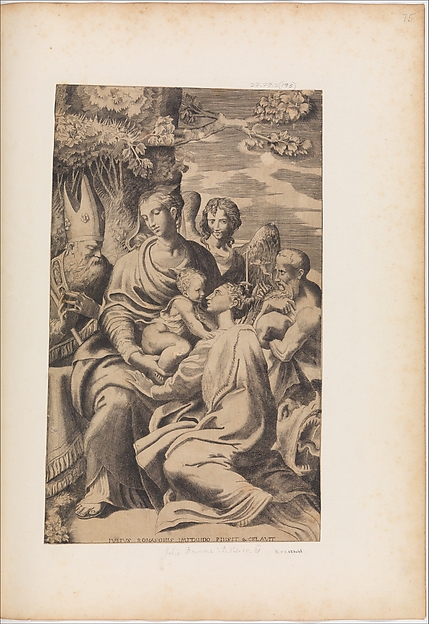
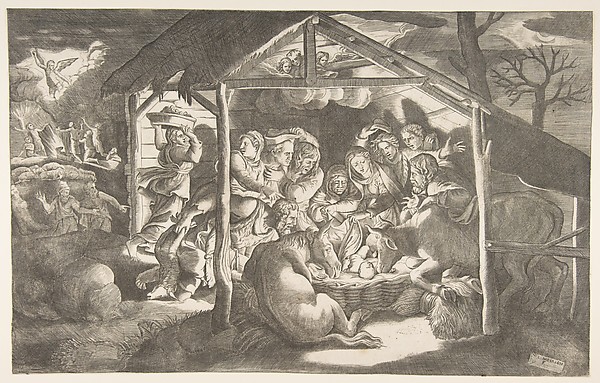
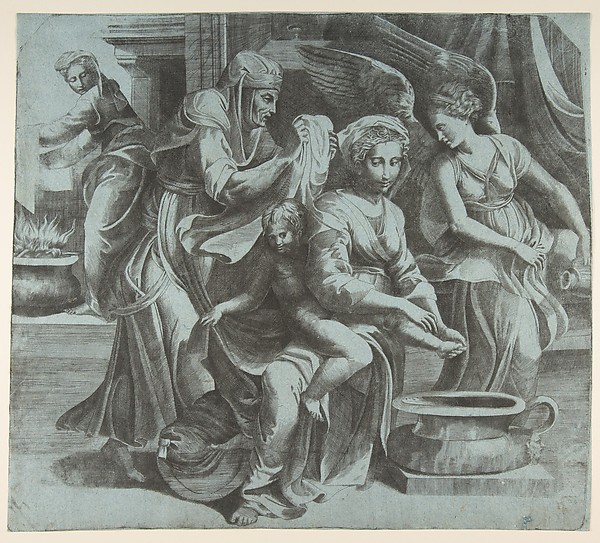
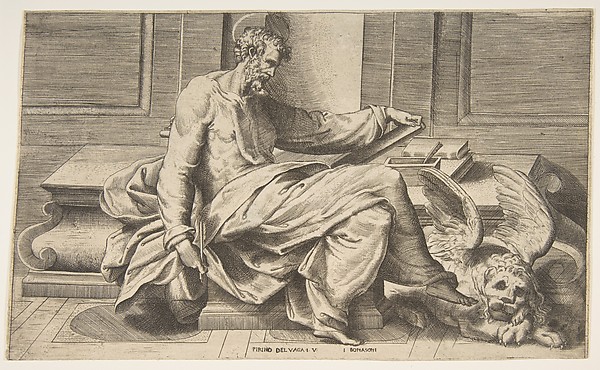
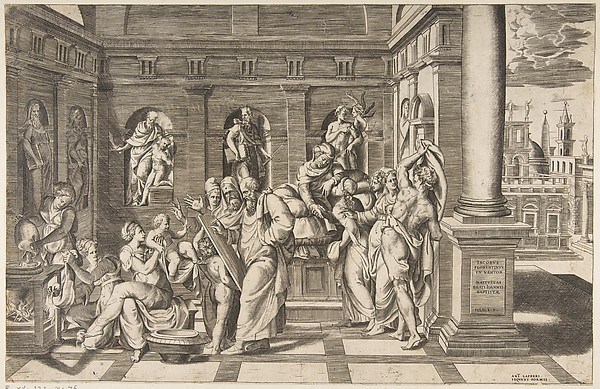
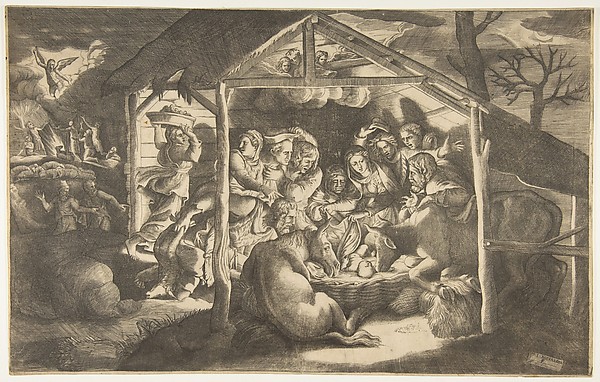
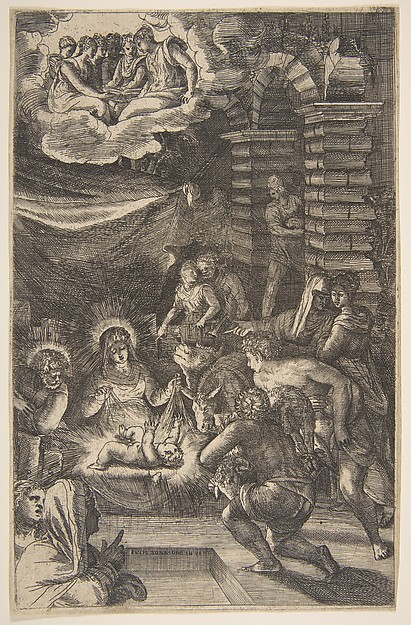
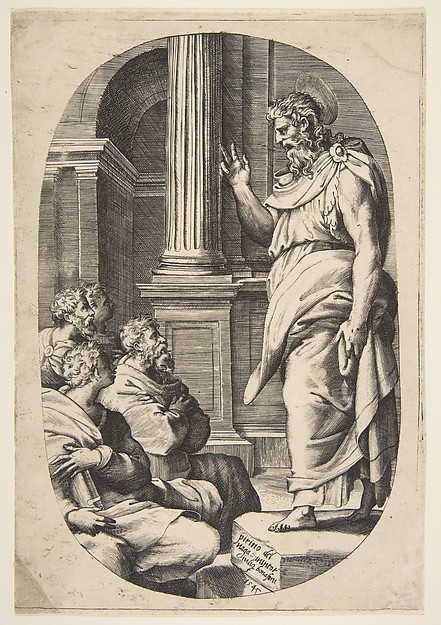
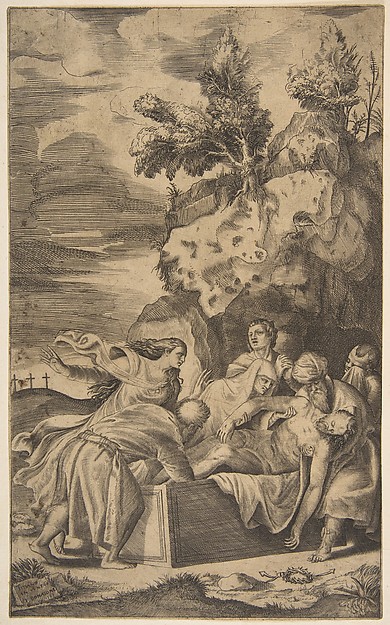
His Christian religious work is concentrated in engraved reproductions of paintings by Michelangelo, Raphael, Parmigianino, Polidoro da Caravaggio, and other major Italian Cinquecento masters. The reproductive engravings of Michelangelo's Sistine Chapel ceiling and Last Judgment panels (Bonasone's plates of the Pietà, the Conversion of Saul, and several Last Judgment fragments are among the principal mid-sixteenth-century reproductions of those frescoes), the Raphael Madonnas in workshop variants, the Parmigianino Annunciations and Holy Families, and a long sequence of Old and New Testament narrative compositions reproduced after various Italian Cinquecento sources fill the painted corpus.
His personal contribution beyond reproduction was a substantial body of etched and engraved emblem compositions — the Symbolicarum Quaestionum Libri Quinque (Bologna, 1555), an emblem book whose 151 plates Bonasone designed and engraved himself, with a Latin allegorical-and-philosophical text by the Bolognese humanist Achille Bocchi — which remained one of the principal printed emblem books of mid-sixteenth-century Italy and was reprinted into the seventeenth century. The Bocchi-Bonasone emblems combined classical philosophical themes with Christian theological-allegorical content and circulated through the Italian and broader European emblem-book publishing market for over a century.
He worked in close professional dialogue with Cherubino Alberti, Cornelis Cort, and the other mid-Cinquecento Roman engravers who carried the Marcantonio reproductive-engraving tradition through the post-Sack-of-Rome generation.