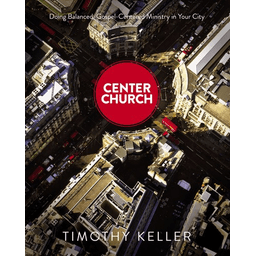
- Starting price
- ~$35 hardcover
- Free tier
- No
- Platforms
- Print · Kindle
- Developer
- Zondervan
- Launched
- 2012
- Updated
- May 31, 2026
The verdict
Center Church is the closest thing the last two decades produced to a one-volume philosophy of ministry, and it has earned its place on seminary syllabi and planting-network reading lists. It is a textbook, not a devotional - Keller is writing for the person responsible for a church, not the person looking for a quiet morning read. If you lead, plant, or train leaders, it is close to required. If you do not, it is more than you need.
Try Center Church ↗Opens zondervan.com
Center Church has quietly become the textbook behind a generation of church planters. Open the reading list of almost any evangelical planting network or seminary ministry course and you will find it - usually near the top, often assigned in full. Timothy Keller wrote it in 2012 after more than two decades pastoring Redeemer Presbyterian Church in Manhattan and then helping seed a network of churches in cities around the world, and the book is essentially the operating manual he wished he had been handed before he started.
It is not a how-to. It does not give you a launch timeline. It does not hand you a service order, a staffing chart, or a sermon template. What it gives you instead is a way of thinking - a theological vision, in Keller’s phrase, that sits between your doctrine on one side and your practice on the other, and that determines a thousand decisions you would otherwise make by instinct or imitation. Most pastors operate with a theological vision they have never written down. Keller’s wager is that writing it down changes everything.
The whole book hangs on three commitments, and the title is the argument: a ministry should be centered. Gospel - the message of grace, and the way that message renews both individuals and churches. City - the work of contextualizing that unchanging message for a specific place and culture without dissolving it. Movement - the church understood not as an institution to be maintained but as a movement to be multiplied. Across roughly 400 textbook-format pages, Keller works each commitment in turn, and the recurring move is balance: he is constantly naming two ditches and steering between them. Over a decade later, the framework has been internalized so widely that planters quote it without remembering where they got it.
✓ The good
- The single most-cited one-volume philosophy of ministry of the last twenty years - assigned across seminaries and church-planting networks regardless of denomination
- The Gospel-City-Movement framework is genuinely clarifying - it gives a leader a vocabulary for decisions they were already making blind
- Keller’s “theological vision” concept - the middle layer between doctrine and practice - is the book’s most portable idea and survives long after the details fade
- Relentlessly balanced - Keller names two opposite errors on nearly every topic and steers between them rather than picking a tribe
- Drawn from real practice, not theory - the Gospel renewal and contextualization material comes out of twenty-plus years of actually doing it in a hard city
- The contextualization section (City) is the most careful popular treatment of the topic in print - it refuses both the “just preach the text” shortcut and the “give the culture what it wants” shortcut
- Heavily footnoted and sourced - it reads like a textbook because it is one, with the citation trail to follow each thread deeper
✗ Watch out
- Dense and demanding - this is a textbook, not a devotional read, and it asks for a highlighter and a notebook rather than a quiet morning
- Aimed at leaders, not general readers - a layperson with no ministry responsibility will find long stretches that simply do not apply to them
- The contextualization material assumes an urban, Western frame - Keller’s home turf is the global city, and rural, small-town, or non-Western leaders will have to translate (he says as much himself)
- Long - at roughly 400 textbook-format pages with dense layout, it is a commitment measured in weeks, not a weekend
- Reformed Presbyterian assumptions surface throughout - not aggressively, but the ecclesiology and the doctrine of gospel renewal carry Keller’s tradition, and readers from other backgrounds will notice
- The three-part structure can feel uneven - some readers find the Movement section less developed than the Gospel and City sections that precede it
Best for
- Church planters and the networks that train them
- Pastors rethinking their philosophy of ministry
- Seminary students in ministry, ecclesiology, or missiology courses
- Ministry teams wanting a shared vocabulary and framework
Avoid if
- You want a devotional or a quiet-morning read
- You have no ministry or leadership responsibility
- You want a step-by-step church-launch playbook with timelines
- You want a short book - this is a multi-week textbook commitment
What Center Church is
Center Church is a roughly 400-page philosophy-of-ministry textbook by Timothy Keller, published in 2012 by Zondervan. Keller was the founding pastor of Redeemer Presbyterian Church in Manhattan from 1989 until 2017 and a co-founder of both Redeemer City to City, a church-planting organization, and The Gospel Coalition. The book is the systematized version of the thinking that shaped all three - an attempt to put on paper the “theological vision” that drives ministry decisions, the layer Keller argues sits between a church’s confessional doctrine and its day-to-day practice.
The content is organized around three commitments. The Gospel section argues that the gospel is neither religion nor irreligion but a third thing, and works out how that message produces personal and corporate renewal. The City section is about contextualization - engaging a specific culture and place faithfully, neither capitulating to it nor ignoring it. The Movement section reframes the church as a dynamic movement to be multiplied rather than only an institution to be preserved. Keller writes from a Reformed Presbyterian vantage, but the book is used broadly across evangelical traditions as a ministry and ecclesiology text rather than a denominational one.
Why ministry leaders keep reaching for Center Church
The single biggest practical difference between Center Church and the shelf of church-growth books around it is that Keller refuses to give you a model. The genre is full of replicable systems - do these nine things, run this program, copy this church. Keller argues that copying a model is exactly the mistake, because a model that worked in one city and decade was the fruit of a theological vision applied to that context, and lifting the fruit without the root produces something that looks right and is hollow. So instead of a model he gives you the layer underneath: the questions you have to answer for your own place, in your own words, before any model makes sense.
That is the model that respects your work. It assumes the reader is a thinking practitioner capable of doing the hard middle work themselves rather than a technician looking for a kit. It is also why the book travels across traditions and contexts that look nothing like Manhattan: a rural Baptist planter, a Presbyterian pastor in Seoul, and an Anglican curate in London are not being handed the same answers - they are being handed the same set of questions and a worked example of someone answering them honestly. That is rarer, and more durable, than another set of best practices.
The Gospel: renewal as the engine, not the entry ramp
The first and longest commitment is the Gospel, and Keller’s central move is to insist the gospel is not merely the doorway you walk through to become a Christian and then leave behind for more advanced material. It is the engine that drives the whole Christian life and the whole life of a church. He frames it as a third way between two failures he calls religion and irreligion - between earning God’s acceptance through moral performance on one side and ignoring God’s claims through self-rule on the other. The gospel of grace, he argues, undercuts both, and a church that genuinely grasps this is renewed by it continuously rather than just founded on it.
This matters because it reorganizes what a church thinks it is doing. If the gospel is the engine, then preaching, counseling, community, and mission are all applications of the same message to different parts of life, not separate programs competing for budget. Keller spends real pages on what he calls gospel renewal - seasons in which a church or a person rediscovers grace and is changed by it - and he is candid that this cannot be manufactured by technique, only prayed for and prepared for. Readers across traditions tend to mark this section most heavily, because the diagnosis (we treat the gospel as elementary and move on) lands regardless of denomination.
The City: contextualization without capitulation
The second commitment, City, is the part of the book most often pulled out and assigned on its own, and it is the most careful popular treatment of contextualization in print. Contextualization is the work of communicating and embodying an unchanging gospel inside a specific culture - its language, its questions, its fears and hopes. Keller is precise about the two ditches. Under-contextualizing treats your own cultural expression of Christianity as the gospel itself and demands the culture adopt it wholesale; over-contextualizing dissolves the gospel into whatever the culture already wants to hear until there is nothing left to convert to. He argues, at length, that there is no such thing as a contextualization-free presentation - even “just preaching the text” is done in some language, to some questions, in some order.
The reason this section is so widely assigned is that it gives leaders a vocabulary for a problem most of them feel but cannot name. The honest caveat - and Keller makes it himself - is that his worked examples are drawn from the global city. The implied context is urban, educated, late-modern, Western. A planter in a small rural town or a leader in a culture Keller never worked in will find the framework sound but the illustrations off, and will have to do the translation themselves. That is real work the book leaves to the reader, but the framework holds up well enough that the translation is worth doing.
The Movement: the church as something that multiplies
The third commitment, Movement, reframes the doctrine of the church. Keller’s argument is that healthy churches hold two things in tension that often pull apart: the church is an institution - with offices, doctrine, sacraments, and continuity worth preserving - and it is also a movement, a dynamic, multiplying, mission-driven organism. Lean too far toward institution and you get a static body focused on self-maintenance; lean too far toward movement and you get energy with no roots that burns out in a generation. The healthiest ministries, he argues, are what he calls an organized organism - structured enough to last and alive enough to grow.
In practice this section is where Keller’s church-planting experience is most visible. He argues that a church should think of itself as part of a wider gospel ecosystem in its city rather than as a competitor to other congregations, and that planting new churches is one of the primary ways the body grows rather than a threat to existing ones. Some readers find Movement the least developed of the three sections - it covers more ground in fewer pages and reads more like a set of commitments than a worked-out program - but its core reframing, that a church exists to multiply and not merely to persist, is the note many planters say reorganized their thinking.
Pricing
Hardcover (full volume)
~$35
The complete single-volume textbook - all three parts (Gospel, City, Movement) in one book. The edition most seminaries and networks standardize on.
Kindle / ebook
~$20
The full text, searchable, with highlights that sync across devices. Useful for a book this heavily cross-referenced.
Three-volume set
~$45 for all three
Center Church was later split into three shorter paperbacks - Shaped by the Gospel, Loving the City, and Serving a Movement - sold separately or together. Easier to assign one section at a time.
Single section paperback
~$17 each
Any one of the three split volumes on its own. The pick if a course or group only needs the gospel-renewal, contextualization, or movement material.
Pricing on Center Church reflects what it is: a hardcover textbook, not a trade paperback. The full single-volume hardcover runs around $35 - call it the everyday default - and it is the edition most seminaries and planting networks standardize on, partly because everyone’s page references line up.
The Kindle edition is meaningfully cheaper at roughly $20, and for a book this heavily cross-referenced and footnoted the search-and-highlight functions earn their keep. If you are going to actually study it rather than read it once, the ebook is a legitimate primary copy rather than just a travel backup.
The wrinkle most buyers miss is that Center Church was later split into three shorter paperbacks - Shaped by the Gospel, Loving the City, and Serving a Movement - sold individually for around $17 each or together for roughly $45. The split set costs a little more in total than the one-volume hardcover, but it is the smarter buy if a course or a team only needs one of the three commitments, or if you want to assign the material one section at a time over a longer stretch.
For most readers the full hardcover is the right pick - it is the canonical edition, it keeps all three commitments in one place, and the framework is designed to be read whole. Most leaders do not need both the hardcover and the split set. Buy the one volume unless you have a specific reason to want the sections apart.
Where Center Church falls behind
Not a devotional. Center Church is a textbook in tone, layout, and ambition. The pages are dense, the sidebars and footnotes are heavy, and the reading experience asks for a highlighter and a notebook rather than a cup of coffee and a quiet half hour. A reader looking to be warmed or fed devotionally is in the wrong book - that is not a flaw, it is a category, but it is worth knowing before you buy.
Written for leaders. The implied reader is responsible for a church or training people who are. A layperson with no ministry role will find genuinely useful material in the Gospel section, but long stretches of the City and Movement commitments are addressed to decisions a non-leader will never make. The book does not pretend otherwise.
Urban and Western in its assumptions. Keller’s lived context was the global city, and his contextualization examples come from there. He flags the limitation himself, but it remains real: rural, small-town, and non-Western leaders will find the framework portable and the illustrations less so, and will have to do the translation work the book leaves on the table.
Reformed Presbyterian framing throughout. Keller was a Presbyterian Church in America pastor, and while Center Church is used as a broad evangelical ministry text rather than a denominational one, the ecclesiology in the Movement section and the doctrine of gospel renewal carry his tradition. Readers from Catholic, Orthodox, Wesleyan, Anabaptist, or Latter-day Saint backgrounds will recognize the framing and may want to translate a few specific points into their own setting.
An uneven third act. Several readers find that the Movement section covers more ground in fewer pages than the Gospel and City commitments that precede it, and reads more like a statement of convictions than a fully worked-out program. The core idea lands; the development is thinner than the first two thirds.
Center Church vs. The Reason for God vs. The Master Plan of Evangelism
These three are all Keller-adjacent recommendations for the ministry shelf, but they do completely different jobs. Different strengths. Center Church (Keller, 2012) is the philosophy-of-ministry textbook - the framework a leader uses to make a thousand decisions, organized around Gospel, City, and Movement. The Reason for God (Keller, 2008) is the apologetic - the book you hand a skeptic, not the book you use to run a church. The Master Plan of Evangelism (Robert Coleman, 1963) is the discipleship classic - a short, focused study of Jesus’s own method of investing deeply in a few people who would then reach many.
If your question is “how should I think about leading or planting a church,” Center Church is the one. It is broad, demanding, and built for the practitioner who is responsible for the whole enterprise. The Reason for God is for a different moment entirely - when the person in front of you has intellectual objections to Christianity and you want one book to give them. The Master Plan of Evangelism is shorter and narrower than either, and it is the better pick when the specific question is about disciple-making strategy rather than the full architecture of a ministry.
All three are read widely across evangelical traditions, and Keller’s two titles in particular travel beyond the Reformed Presbyterian setting he wrote from. Center Church is the most demanding of the three and the most clearly aimed at leaders. Buy The Reason for God for the skeptic, buy Coleman for a focused study on discipleship, and buy Center Church when you need the whole framework for how a church should think about what it is doing.
The bottom line
Center Church is the most complete one-volume philosophy of ministry of the last twenty years, and a decade on it remains the default text on church-planting and seminary reading lists for good reason. It is dense, it is long, and it is unapologetically written for leaders rather than general readers - but for the pastor, planter, or ministry trainer it is aimed at, it does a job almost nothing else does as thoroughly. If you carry responsibility for a church or train people who do, this belongs on the shelf within arm’s reach. The limitations - the textbook density, the urban-Western lens, the thinner third section - are real, but they are worth knowing about going in rather than dealbreakers.
Alternatives to Center Church
 Generous JusticeKeller’s shorter book on what the Bible teaches about justice and the poor. More accessible than Center Church and aimed at the general reader rather than the ministry leader.
 The Reason for GodKeller’s 2008 apologetic - the book to hand a skeptic rather than the book to run a church. The most-recommended modern entry-level apologetic.
 The Master Plan of EvangelismRobert Coleman’s 1963 discipleship classic on Jesus’s method of investing in a few. Shorter and narrower than Center Church, focused on disciple-making strategy.
 The Gospel CoalitionThe teaching and ministry network Keller co-founded. A free, ongoing web library of the same kind of gospel-centered ministry thinking Center Church systematizes.
Frequently asked questions
Is Center Church a book for pastors only, or can anyone read it?
Anyone can read it, but it is written for people with ministry responsibility - pastors, church planters, ministry leaders, and seminary students. A layperson with no leadership role will find the Gospel section valuable, but long stretches of the City and Movement material are addressed to decisions only a leader makes. It is a ministry textbook, not a general-audience read.
What are the three parts of Center Church?
Gospel, City, and Movement. The Gospel section is about gospel theology and the renewal it produces in people and churches. The City section is about contextualization - engaging a specific culture faithfully. The Movement section reframes the church as a dynamic, multiplying movement rather than only an institution to maintain. The whole book is an argument for keeping a ministry balanced and centered across all three.
Should I buy the full hardcover or the three separate volumes?
For most readers the single-volume hardcover (~$35) is the right pick - it keeps all three commitments together and is the edition seminaries and networks standardize on. The three split paperbacks (Shaped by the Gospel, Loving the City, Serving a Movement, ~$17 each) are the smarter buy if you only need one section or want to study the material one part at a time.
What tradition is Tim Keller writing from in Center Church?
Keller was a Presbyterian Church in America (PCA) pastor in the Reformed tradition. Center Church is used broadly as an evangelical ministry and ecclesiology text rather than a denominational one, but his Reformed Presbyterian framing surfaces in the ecclesiology and the doctrine of gospel renewal. Readers from other traditions use the book widely and translate a few specific points into their own setting.
Is Center Church still relevant in 2026?
Yes. The Gospel-City-Movement framework and the concept of a “theological vision” have been internalized so widely that planters and pastors often use them without remembering the source. Some cultural examples skew to the early 2010s and the global-city context, but the underlying framework remains a standard text on church-planting and seminary reading lists.
How long does it take to read?
It is a roughly 400-page textbook with dense layout and heavy footnoting, so it is a multi-week commitment rather than a weekend read - most readers and classes work through it over several weeks, often one of the three sections at a time. It rewards a highlighter and a notebook more than a single straight read-through.
Is Center Church a church-planting how-to with a step-by-step plan?
No. Keller deliberately avoids giving a replicable model, because his argument is that copying another church’s model without its underlying theological vision is the core mistake. Instead of a launch timeline or a program kit, the book gives you the framework and the questions to answer for your own context. If you want a step-by-step playbook, this is not that book.
Sources & further reading
More Christian Living Books
 The Prodigal GodTim Keller’s 130-page reading of Luke 15 has quietly become one of the most-gifted Christian books of the last twenty years - and the reason is the title itself.
 Practicing the WayComer’s 2024 follow-up to The Ruthless Elimination of Hurry has quietly become the default spiritual-formation book in a thousand small groups - and the reasons are worth unpacking.
 Walking with God Through Pain and SufferingTim Keller’s most comprehensive book on suffering - part survey of how every culture has tried to explain pain, part biblical theology, part field manual for the people actually walking through it.
 FerventThe prayer book that turned “strategic, specific prayer” into a fill-in-the-blank battle plan - and rode the War Room moment to the top of the bestseller lists.
 A Grace DisguisedJerry Sittser lost his mother, his wife, and his four-year-old daughter in a single car crash - and the book he wrote about it has quietly become the one grieving people press into each other’s hands, because it refuses to tell you how to get over your loss.
 The Ruthless Elimination of HurryJohn Mark Comer’s 2019 breakout - a pastor’s case that hurry is the great spiritual enemy of our age - has quietly become the go-to slow-down book for an exhausted generation of Christians. Here’s what it actually delivers, and where it doesn’t.