
- Starting price
- $24.99 hardcover
- Free tier
- No
- Platforms
- Print · Kindle · Audiobook · Audible
- Developer
- Tyndale House
- Launched
- 2004
- Updated
- May 25, 2026
The verdict
The most-cited modern Christian treatment of heaven - a thorough, scripture-anchored case that the believer’s eternal home is a physical, resurrected new earth, not a disembodied existence in the clouds. Long, repetitive in places, but the answers-everything format is the point.
Try Heaven ↗Opens epm.org
Randy Alcorn’s Heaven has quietly become the default modern Christian book on the afterlife. Published in 2004 by Tyndale, it has sold well past a million copies, sits on church library shelves across denominations, and gets quoted in funeral sermons more than almost any contemporary work outside of C.S. Lewis. If a pastor today says something hopeful about what comes after death, there is a good chance the framing came - directly or downstream - from this book.
The argument is simple and surprisingly countercultural inside the church. It is not that heaven is unreal. It is not that heaven is escapist. It is not that heaven is a metaphor. The argument is that the popular Christian picture of heaven - bodiless souls drifting on clouds, eternal church service, a vague spiritualized existence with no work, no culture, no creation - has very little to do with what the Bible actually says. Alcorn calls that picture "Christoplatonism" and spends 500 pages dismantling it.
In its place he sets a physicalist, new-earth eschatology anchored in Revelation 21-22, Romans 8, and Isaiah 65 - the believer’s final state is a bodily resurrection on a renewed earth, with real work, real culture, real food, real friendship, and real worship of God in real time. It is the same broad picture that N.T. Wright argues for in Surprised by Hope from a more academic angle, and the two books arrived at nearly identical conclusions independently. Heaven is the longer, more pastoral, more question-by-question of the two.
✓ The good
- Most thorough modern treatment of the topic - 46 chapters covering nearly every question a grieving or curious Christian has ever asked
- Scripture-saturated - Alcorn quotes and works through Revelation 21-22, Romans 8, Isaiah 65, 1 Corinthians 15, and dozens of other passages in the actual biblical order
- The everyday-questions structure is the killer feature - "Will we recognize each other?" "Will there be animals?" "Will we eat?" each get their own chapter
- Pastorally warm without being saccharine - Alcorn lost his mother during the writing and the grief is honest on the page
- Cross-tradition friendly - the physicalist new-earth view is broadly shared across Catholic, Orthodox, Reformed, Wesleyan, and Anglican readers, so the book does not pick fights
- Excellent companion devotional (50 Days of Heaven) for readers who want the ideas in smaller doses
✗ Watch out
- Long - 500 pages, and a tighter editor could have cut 100 of them without losing the argument
- Repetitive - Alcorn returns to the same handful of anchor verses many times, which helps memorization but can feel circular
- Speculative in places - the chapters on whether there will be animals, sports, or specific cultural artifacts move past what scripture actually states (Alcorn flags this, but the speculation still piles up)
- Light on the intermediate state - the present heaven (between death and resurrection) is covered, but less rigorously than the new earth
- Footnote-heavy in a way that can slow general readers - academic enough to be useful, casual enough that the apparatus sometimes feels excessive
Best for
- Christians grieving a loved one
- Small groups working through end-of-life questions
- Pastors preparing funeral or hope-themed sermons
- Readers who found "clouds and harps" unsatisfying and want a serious alternative
Avoid if
- You want a short, single-sitting read
- You want a heavily academic, footnote-driven treatment
- You are looking for tradition-specific eschatology (purgatory, millennial kingdom timelines, etc.)
- You already own Surprised by Hope and want a different angle, not the same destination
What Heaven is
Heaven is a 500-page topical study of what scripture actually teaches about the believer’s eternal home, written by Randy Alcorn, founder of Eternal Perspective Ministries in Oregon. It is structured in eight parts and 46 chapters, moving from "what is heaven?" through the intermediate state, the new earth, the resurrection body, life on the new earth, and a final set of practical chapters on living in light of eternity now.
It is not a memoir, not a near-death-experience account, and not a speculative vision narrative. Alcorn is explicit that he is trying to do biblical theology - start from the text, especially Revelation 21-22 and Romans 8, and let the picture emerge from there. Where scripture is silent, he flags the silence; where it is suggestive but not explicit, he says so. That discipline is what has kept the book in print across traditions for two decades.
Why ordinary Christians keep recommending Heaven
The single biggest practical difference between Heaven and almost every other book on the topic is the everyday-questions structure. Alcorn organized the book around the questions real Christians actually ask at funerals and hospital bedsides - "Will I see my parents again?" "Will my dog be there?" "Will we know each other?" "Will heaven be boring?" - and gave each one a chapter. Each chapter starts with the question, walks through what scripture says (and does not say), and lands on a pastorally honest answer. It is the closest thing modern evangelical publishing has produced to a topical reference book on the afterlife.
The second difference is tone. Alcorn writes as a pastor who has done the funerals, not as an academic theologian arguing a position. The grief in the book is real - he lost his mother during the writing - and the warmth is not manufactured. That combination of careful biblical work and pastoral steadiness is why the book ends up on hospice carts and grief-group reading lists across Catholic, Protestant, and Orthodox parishes alike. It is the thoughtful person’s book on heaven precisely because it does not try to be clever.
Physicalist new-earth eschatology: the book’s central claim
Alcorn’s core argument is that the Christian hope is not escape from creation but the renewal of creation. The believer’s final destiny is not a disembodied soul floating in a non-material realm - it is a bodily resurrection on a physical, restored earth. He calls the alternative view "Christoplatonism," after the Greek philosophical assumption that matter is lower than spirit, and traces how that assumption seeped into Christian imagination over the centuries even though scripture never teaches it. The whole book is, in effect, an extended argument that the church has under-believed its own resurrection doctrine.
This is not a fringe position - it is broadly the mainstream historic Christian view, held across Catholic, Orthodox, Reformed, Wesleyan, Anglican, and Lutheran readers, and it is the position the Apostles’ Creed has confessed for nearly two millennia ("the resurrection of the body and the life everlasting"). What Alcorn does is make that doctrine vivid and pastoral for a modern American audience that had largely forgotten it. The result is a book that does not pick fights across traditions, because the new-earth picture is shared territory. It just makes the shared territory legible again.
Revelation 21-22 and Romans 8: the scriptural anchor
Two passages do most of the structural work in Heaven. Revelation 21-22 - the vision of the New Jerusalem coming down out of heaven to a renewed earth - provides Alcorn’s picture of what the final state actually looks like. He spends multiple chapters walking through that vision line by line: the new heavens and new earth, the city itself, the river and tree of life, the absence of death and mourning, the throne, the nations bringing their glory in. The argument throughout is that John’s vision is not metaphor for a non-physical reality. It is descriptive of a real future place.
Romans 8 - especially verses 19-23, where Paul describes creation itself groaning for liberation from bondage to decay - provides the theological backbone. If creation is going to be liberated rather than discarded, Alcorn argues, then the new earth is the old earth renewed, not a different planet built from scratch. He weaves Isaiah 65, 1 Corinthians 15, and 2 Peter 3 around those two anchors, and the cumulative effect is that the physicalist view stops feeling like a novel claim and starts feeling like the obvious reading of the text. Readers familiar with N.T. Wright’s Surprised by Hope will notice that Wright reaches nearly identical conclusions from a more academic angle - the two books arrived at the same destination independently.
The everyday-questions structure: where the book wins on the shelf
The reason Heaven gets recommended in grief groups and hospice settings is the chapter list. Alcorn devoted chapters to the questions ordinary Christians actually carry around - "Will we recognize each other?" "Will there be animals on the new earth?" "Will we eat and drink?" "Will we have culture, work, art, music?" "Will heaven be boring?" "Will we know what is happening on earth?" "What about children who died?" Each question gets a short, careful, scripture-first answer, with Alcorn noting where the text is clear, where it is suggestive, and where readers should hold conclusions loosely.
Some of these chapters move past what scripture explicitly states - Alcorn’s discussion of animals on the new earth, for example, is partly inference from Isaiah 11 and 65 - but he flags the speculation honestly. The reason the format works is that these are the actual questions people ask. A book that answered only the theological questions and skipped the pastoral ones would not be the book pastors hand to grieving widows. This one is, and the everyday-questions structure is the reason.
Pricing
Hardcover
$24.99
The standard edition - 500 pages, cloth binding, the version most church libraries stock
Paperback
$18
Same content, lighter binding - the most common gift edition
Kindle
$13
Full text plus searchable footnotes - the most practical version for re-reading
Audible
$15
Roughly 19 hours, narrated by Maurice England - works well for long commutes
50 Days of Heaven
$15
Companion devotional - 50 short readings drawn from the main book, ideal for small groups
Heaven (Pictorial)
$30
Illustrated coffee-table edition - same core argument, designed for browsing
Hardcover at around $24.99 is the version most church libraries and pastors’ shelves stock - it is the standard edition, holds up to re-reading, and is the one you will see most often when the book is recommended. Paperback runs around $18 and is the most common gift edition. Both contain identical content.
Kindle at around $13 is, for most readers, the most practical version. The book’s footnote-heavy apparatus benefits from search, and the topical structure means readers tend to come back to specific chapters rather than re-read cover to cover. Audible runs around $15 with a credit and clocks in near 19 hours - long, but workable across a few weeks of commutes.
50 Days of Heaven, the companion devotional, runs around $15 and is the version to buy for small groups or anyone who finds 500 pages intimidating. It pulls the main book’s arguments into 50 short readings with reflection questions. The Pictorial Heaven edition at around $30 is the coffee-table version - same core argument, designed for browsing rather than linear reading.
Most readers do not need more than the standard hardcover or the Kindle edition. The companion devotional is genuinely useful for groups; the pictorial edition is a gift item.
Where Heaven falls behind
Length. At 500 pages, Heaven is longer than it needs to be. Alcorn returns to the same anchor verses repeatedly, and a tighter editor could have cut 100 pages without losing the argument. For readers who want the same conclusions in a shorter book, N.T. Wright’s Surprised by Hope covers similar ground at roughly half the length, and 50 Days of Heaven distills Alcorn’s own arguments into devotional form.
Repetition. Because the book is structured topically rather than linearly, the same passages - Revelation 21-22, Romans 8, Isaiah 65 - get worked through multiple times from different angles. That repetition is useful for memorization and for readers dipping in chapter by chapter, but linear readers will notice it.
Speculation in the back half. The everyday-questions section is the book’s biggest practical strength, but it is also where Alcorn moves furthest past what scripture explicitly says. He is honest about the speculation - he flags it as inference rather than doctrine - but the accumulated weight of speculative chapters on animals, culture, sports, and specific activities can leave careful readers wishing for a sharper line between "scripture says" and "I think scripture suggests."
Light treatment of the intermediate state. The present heaven - the believer’s state between death and the final resurrection - is covered, but less rigorously than the new earth. Readers who came to the book specifically wanting to understand what happens immediately after death may find that section thinner than the rest.
Heaven (Alcorn) vs. Surprised by Hope (Wright) vs. Knowing God (Packer)
Different books, different jobs. Heaven is the topical reference - 500 pages, 46 chapters, organized around the questions readers actually ask. Surprised by Hope is the academic-pastoral argument - shorter, more rigorous in its New Testament scholarship, more attentive to the church’s mission in light of resurrection. Knowing God is not a book on heaven at all; it is J.I. Packer’s classic on the character of God, included here because it is often recommended alongside Heaven as the upstream question (knowing the God whose heaven this is).
Different strengths. Alcorn is better at the everyday questions - what will we do, will we recognize each other, will there be animals - and at the pastoral tone for grief. Wright is broader and more academically credentialed (he was Bishop of Durham and a leading New Testament scholar), and he ties resurrection more sharply to the church’s present work in the world. Both reach nearly identical conclusions on the new-earth picture; they arrived there independently, which is part of why the position has gained so much ground in the last two decades. Packer goes deeper into the doctrine of God himself.
If you can only read one and your question is "what will heaven actually be like," start with Alcorn. If your question is "how does resurrection reshape Christian mission now," start with Wright. If your question is "who is the God I will be with forever," start with Packer. Most thoughtful readers eventually read all three.
The bottom line
Heaven is the modern evangelical standard on the afterlife for good reason. It is long, repetitive in places, and speculative in the back half - but it is also the most thorough, scripture-saturated, pastorally warm treatment of the topic published in the last 50 years. The physicalist new-earth view it argues for is broadly mainstream historic Christianity, which is why the book travels well across traditions. If you have lost someone, if you are tired of "clouds and harps," or if you have never really thought about what the Bible actually says about your eternal home, this is the book to read. Worth its 500 pages.
Alternatives to Heaven
 Surprised by HopeN.T. Wright’s shorter, more academic case for the same new-earth picture - sharper on the mission implications, lighter on the everyday questions.
 Knowing GodJ.I. Packer’s 1973 classic on the character of God - the upstream question to Alcorn’s downstream one, and still the modern standard on the doctrine of God.
 Mere ChristianityC.S. Lewis’s entry-level case for the faith - touches on heaven in the final chapters and remains the single most-read modern Christian book.
 The Holiness of GodR.C. Sproul’s study of God’s holiness - pairs naturally with Heaven because the question "what is God like?" precedes "what is being with him forever like?"
Frequently asked questions
Is Heaven by Randy Alcorn worth reading?
For most Christians, yes. It is the most thorough modern treatment of the topic, scripture-anchored throughout, and pastorally warm. The main reasons not to read it are length (500 pages) and the speculative chapters in the back half - but the everyday-questions structure is the reason it gets recommended so often.
What is the main argument of the book?
That the believer’s eternal home is a bodily resurrection on a renewed physical earth, not a disembodied existence in a non-material realm. Alcorn anchors the argument in Revelation 21-22, Romans 8, Isaiah 65, and 1 Corinthians 15, and argues that the "clouds and harps" picture has very little to do with what scripture actually teaches.
Is this the same view as N.T. Wright’s Surprised by Hope?
Broadly yes - Alcorn and Wright reach nearly identical conclusions on the new-earth picture, arrived at independently from different angles. Alcorn is longer, more pastoral, and organized around everyday questions. Wright is shorter, more academic, and more focused on what resurrection means for the church’s present mission. Most readers who care about the topic eventually read both.
Does the book work for non-Protestant readers?
Yes. The physicalist new-earth view is broadly shared across Catholic, Orthodox, Reformed, Wesleyan, Anglican, and Lutheran traditions - it is the historic Christian position confessed in the Apostles’ Creed. Alcorn writes from a broadly evangelical Protestant frame but does not pick fights across traditions, and the book is widely recommended in non-Protestant settings.
Is there a shorter version?
Yes - 50 Days of Heaven, Alcorn’s companion devotional, distills the main book into 50 short daily readings with reflection questions. It runs around $15 and is the version to buy for small groups or for readers who find 500 pages too long.
What translation does Alcorn quote from?
Primarily the New International Version (NIV), with occasional references to the New American Standard Bible (NASB), English Standard Version (ESV), and King James Version (KJV) where translation choices matter to the argument.
Is the audiobook worth it?
For long commutes, yes. The Audible edition runs about 19 hours and is narrated by Maurice England. The book’s footnotes do not carry over as well as in print, but the topical chapter structure works fine in audio.
Sources & further reading
More Modern Christian Classics
Knowing GodJ.I. Packer’s 1973 classic on the doctrine of God has sold more than 1.5 million copies and is still the book most pastors hand to laypeople who want theology that goes somewhere - here’s what it actually does and who it’s for.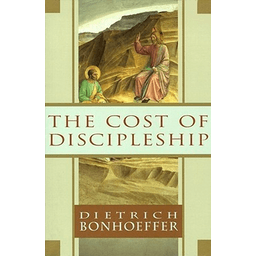 The Cost of DiscipleshipDietrich Bonhoeffer’s 1937 exposition of the Sermon on the Mount, written for pastors training under a regime that wanted them silent - and still the sharpest book in print on what following Jesus actually costs.
 Gentle and LowlyDane Ortlund’s 23 short chapters on Matthew 11:29 have quietly become the most-given new Christian book of the decade - and the reason is not what you’d guess.The Holiness of GodR.C. Sproul’s career-defining book on the one attribute of God the church most forgets - and the vision in Isaiah 6 he believed everything else flows from.
 The Weight of GloryThe 1941 sermon many call Lewis's single finest piece of writing - "there are no ordinary people" - gathered with eight other addresses into one slim, uneven, unforgettable collection.
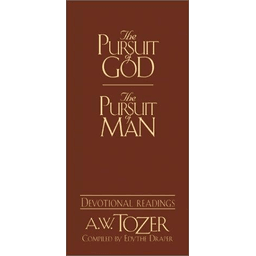 The Pursuit of GodA.W. Tozer’s ten-chapter wake-up call on knowing God personally - short, severe, and the one devotional Reformed, Wesleyan, Catholic, and Orthodox readers all seem to keep on the nightstand.