- Starting price
- ~$17 paperback
- Free tier
- No
- Platforms
- Print · Kindle
- Developer
- Eerdmans
- Launched
- 2014
- Updated
- May 31, 2026
The verdict
How (Not) to Be Secular has quietly become the standard on-ramp to Charles Taylor’s A Secular Age - a compact, sympathetic guide that distills 900 pages of philosophy into a portable account of what it actually feels like to believe, or doubt, in the modern world. Slim, lucid, and unusually generous toward both faith and unbelief.
Try How (Not) to Be Secular ↗Opens eerdmans.com
How (Not) to Be Secular is not the right book for everyone. It is a guide to another book - Charles Taylor’s 900-page A Secular Age - and it assumes a reader willing to think slowly about ideas most people absorb without noticing. But for anyone who has felt the strange weather of modern belief, the way faith and doubt now seem to haunt each other no matter which one you hold, Smith’s little book lands with a quiet, clarifying force.
It doesn’t argue you into Christianity, and it doesn’t argue you out of secularism. It doesn’t hand you proofs for God or knockdown refutations of unbelief. It doesn’t pick a winner. What it does, patiently, is describe the air we are all breathing - the conditions under which belief became contestable in the first place - and then map how a believer and a skeptic in 2026 can end up looking across the table at each other, each feeling the pull of the other’s position.
Smith is a philosopher who teaches and writes from a Reformed vantage, and he is candid that he comes to Taylor as a Christian reader hoping the church will understand its own moment better. But the book’s achievement is how little that vantage narrows it. Taylor is a Catholic philosopher; the secular condition he describes is the one everyone in the West shares, religious or not; and Smith’s job here is less to persuade than to translate. The result is a book that pastors assign, that doubters find oddly hospitable, and that has become - for a generation that will never read all of A Secular Age - the way most people actually meet Charles Taylor.
✓ The good
- The single best on-ramp to Taylor in print - Smith distills a notoriously dense 900-page book into roughly 140 pages without flattening it, and most readers who try Taylor start here
- The reframing of "secular" is genuinely clarifying - Taylor’s distinction between secularism as the absence of belief and secularism as a condition in which belief is merely one option reorganizes the whole conversation
- Unusually generous toward both belief and unbelief - Smith and Taylor describe the modern skeptic and the modern believer as facing the same "cross-pressure," which keeps the book from reading as a takedown of secular people
- Vocabulary you keep - terms like "the immanent frame," "the buffered self," and "the malaise of immanence" give readers durable language for things they had felt but could not name
- Smith is a clear, vivid writer - he reaches for contemporary novels, films, and music to illustrate Taylor’s abstractions, which keeps a philosophy guide from feeling like a textbook
- A glossary and chapter-by-chapter structure make it usable as a companion - readers working through Taylor himself can keep Smith open alongside as a map
- Ages well - written in 2014, its account of doubt, meaning, and disenchantment reads as more relevant in 2026, not less
✗ Watch out
- It still assumes intellectual stamina - this is the accessible version of Taylor, not an easy one, and readers expecting a breezy popular paperback will find it demands real attention
- It is a guide, not a stand-alone book - Smith is summarizing and interpreting Taylor, so the ideas are filtered through a second author rather than encountered first-hand
- More analytical than devotional - there are no application steps, prayers, or formation exercises; the payoff is understanding, not a practice
- Smith’s Reformed reading occasionally surfaces - his framing of where Taylor leaves the church sometimes carries his own tradition’s emphases, which readers from other traditions will notice
- Thin on critique of Taylor - Smith is mostly an enthusiastic interpreter, so readers wanting a vigorous argument with A Secular Age will need to look elsewhere
Best for
- Readers who want Taylor’s argument without his 900 pages
- Pastors and leaders trying to understand modern doubt
- Believers and skeptics curious why faith feels contestable now
- Anyone using it as a companion while reading A Secular Age
Avoid if
- You want a short devotional or formation read
- You want apologetics arguments for specific doctrines
- You want to skip secondary sources and read Taylor directly
- You want a critique of Taylor rather than a guide to him
What How (Not) to Be Secular is
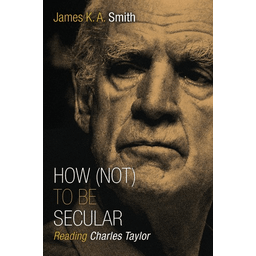
How (Not) to Be Secular is a compact reader’s guide to Charles Taylor’s A Secular Age (2007), written by philosopher James K. A. Smith and published by Eerdmans in 2014. At roughly 140 pages, it walks chapter by chapter through Taylor’s much larger argument, restating his core ideas in plainer language, supplying a glossary of his coined terms, and illustrating his abstractions with examples from contemporary culture. It is explicitly a "small field guide" to a big book - a bridge, not a replacement.
Taylor’s question is historical: how did the West move, in roughly five centuries, from a society in which not believing in God was nearly impossible to one in which belief is simply one option among many, and often not the easiest one? Smith’s book carries that question to a wider audience. He writes as a Christian reader, and says so, but the secular condition Taylor describes belongs to believers and unbelievers alike - which is why the guide is read across that whole spectrum rather than only inside the church.
Why readers reach for Smith before reaching for Taylor
A Secular Age is one of the most admired and least-finished works of recent philosophy - 900 pages, dense with intellectual history, written in Taylor’s long looping sentences. Most people who own it have not read it through. Smith’s book exists for exactly that reader: someone who keeps hearing about Taylor’s argument, suspects it explains something true about their own moment, and needs a way in that does not require a semester. The genius of the guide is that it respects the difficulty of the original while making its payoff portable.
The reframing it carries is the reason readers keep returning to it. The ordinary assumption is that "secular" means a world with less religion - fewer believers, emptier churches, subtraction. Taylor, by way of Smith, reorganizes that: the deeper change is not how many people believe but the conditions of belief itself. In a secular age, belief and unbelief are both contestable, both haunted by the other. The believer feels the pull of doubt; the unbeliever feels the pull of transcendence. That diagnosis - that we are all living inside the same "cross-pressured" condition rather than on opposite sides of a wall - is what readers carry out of the book and cannot stop seeing afterward.
Three "stories" of secularization: the move the whole guide turns on
Smith opens by laying out Taylor’s central distinction, the hinge the rest of the book swings on. There are, Taylor says, different things people mean by "secular." One sense is the retreat of religion from public institutions - the courtroom and the classroom no longer run on theology. A second sense is the simple decline of belief and practice - fewer people in the pews. But Taylor is after a third sense: secularity as a change in the very conditions of belief, such that faith becomes one contestable option among many rather than the unquestioned background. Smith names the dominant account of how this happened the "subtraction story" - the idea that modernity simply stripped away superstition to reveal the secular world underneath, the way you might wipe fog off a window.
The reason this section matters is that Taylor, through Smith, rejects the subtraction story and replaces it with something richer. The secular age was not produced by merely removing belief; it was constructed - built out of new ideas about the self, nature, time, and meaning that had to be invented before unbelief could even become thinkable. That reframing is the book’s first gift to readers: it turns "secularization" from an inevitability into a contingent human story with a beginning, a sequence, and an author’s fingerprints all over it. Once you stop reading the modern world as the natural default and start reading it as a thing that was made, you cannot un-see the seams.
The immanent frame and the buffered self: Taylor’s vocabulary, made usable
The middle of the guide is where Smith earns his keep, because it is where he translates Taylor’s coined terms into language a reader can hold. The "immanent frame" is Taylor’s name for the taken-for-granted world most moderns now inhabit: a closed natural order that runs by its own laws and does not obviously require anything beyond itself. The "buffered self" is the kind of person that frame produces - an individual sealed off from outside spiritual forces, no longer "porous" to enchantment the way a medieval villager was, but protected, bounded, the master of meaning inside their own head. Smith pairs these with "the malaise of immanence" - Taylor’s term for the nagging sense, even inside a comfortable secular life, that something is flattened or missing.
What makes this section so durable is that the vocabulary does real work after you close the book. Readers describe suddenly being able to name experiences they had only felt: the way a stunning piece of music or a death in the family can make the closed immanent frame feel, for a moment, like it has a crack in it; the way a thoughtful believer can be visited by doubt and a thoughtful atheist by a sense of transcendence, each "cross-pressured" by the other’s world. Smith’s gift is not to resolve any of this. It is to give a believer and a skeptic the same words for the same weather, so they can finally describe to each other what living in a secular age is actually like.
Living faithfully (or honestly) inside the secular condition: the closing thesis
The final movement of the guide turns from description to posture. Having shown that the secular age is a shared condition rather than a battle line, Smith draws out Taylor’s implication for how a person might actually live in it. The temptation, on the religious side, is nostalgia - to imagine you can simply step back into a pre-secular world where belief was easy, or to treat the secular as an enemy to be defeated. Taylor’s account makes both moves impossible: there is no outside to the immanent frame to retreat to. The honest options are to inhabit the condition with open eyes, neither pretending the cross-pressure away nor surrendering to flatness.
This is where Smith’s own Reformed vantage becomes most visible, and he is upfront about it: he reads Taylor partly as a diagnosis the church needs in order to understand its own people, who are buffered selves whether they like it or not. But the charge he draws out reaches past any one tradition. It is an argument that the way forward is not better proofs but a fuller imagination - a recovery of the sense that the immanent frame might be open rather than closed, held as a live possibility rather than a settled verdict. Many readers cite this closing section as the part that reframed not their arguments but their posture, the way they hold belief and doubt in the same modern hand.
Pricing
Paperback
~$17
The standard Eerdmans paperback - the most common edition and the one most readers own.
Kindle
~$13
Digital edition with full text, glossary, and search - useful for a book this quotable, and the cheapest way in.
A Secular Age (the source)
~$30
Taylor’s 900-page original - not this book, but the work it guides. Buy alongside if you intend to read the source.
Used paperback
~$8-12
Widely available secondhand, since it is assigned in many courses and small groups - the budget entry point.
How (Not) to Be Secular is sold mostly as a paperback - the standard Eerdmans edition runs around $17 new and is widely available used for less, since it is assigned in many courses and reading groups. For most readers, the paperback is the right buy: it is the version small groups assume, it is slim enough to annotate heavily, and the layout keeps Taylor’s terminology and Smith’s glossary easy to flip between.
The Kindle edition at roughly $13 is the cheapest new entry point and the most practical version for readers who want to search the text or highlight as they go - genuinely useful here, given how often you will want to revisit a single definition. There is no separate audiobook in wide circulation, which suits the material: this is a book of diagrams of thought and coined terms that reward being seen on the page rather than heard.
A note on what you are buying. This book is the guide, not the source. Taylor’s A Secular Age runs around $30 for its own 900-page paperback, and Smith’s entire purpose is to make that larger work approachable. Most readers do not need both at once - start with Smith if you want the argument distilled, and add Taylor only if you decide you want the full thing. Used copies of the guide turn up for $8-12, which is how a lot of students still acquire their first one.
There is no premium or expanded edition to hunt for. The 2014 text is the current text, and anything sold as How (Not) to Be Secular is the same book. The paperback is the balanced default and the copy you will keep on the shelf next to the bigger book it unlocks.
Where How (Not) to Be Secular falls behind
It is a guide, not a stand-alone work. Smith is summarizing and interpreting Taylor, which means everything you take from the book arrives through a second author’s lens. That is the point of the format and it is done well, but a reader who wants to wrestle with Taylor’s actual sentences - his hedges, his qualifications, his thousand-page accumulation - will eventually have to open A Secular Age itself. Smith is a map, and a map is not the territory.
It still demands stamina. This is the accessible version of Taylor, not an easy one. The ideas are abstract, the vocabulary is invented, and the argument moves by accumulation rather than by punchy takeaways. Readers expecting a brisk popular paperback the size of a typical Christian-living title will be surprised at how much attention even 140 distilled pages require.
More analytical than devotional or practical. There are no application steps, no prayers, no formation exercises, no "five things to do this week." The book’s entire payoff is understanding - a clearer picture of the condition you are living inside. Readers looking for something to practice, rather than something to grasp, are reading the wrong book and should reach for a formation title instead.
Light on argument with Taylor. Smith is an admiring interpreter, and the guide is mostly exposition rather than critique. Where a reader might want pushback - places A Secular Age overreaches, or claims other scholars dispute - Smith largely stays in translation mode. That keeps the book clean as an introduction, but anyone wanting a real debate about Taylor’s thesis will have to assemble the critics themselves.
A Reformed accent that goes mostly unflagged. Smith writes from a Reformed Protestant vantage and says so, but his framing of what the secular condition means for the church sometimes carries that tradition’s particular emphases without pausing to mark them. Taylor himself is Catholic, and the condition he describes is shared by everyone; readers from other traditions will occasionally feel Smith’s own lane in the applications even though the underlying diagnosis is common ground.
How (Not) to Be Secular vs. Making Sense of God vs. Total Truth
Different strengths, different angles on the same modern predicament. All three books take seriously that life in the secular West shapes how people believe, doubt, and find meaning - but they come at it differently. How (Not) to Be Secular is the descriptive one: it does not try to win the argument so much as to map the condition we are all living inside, the world where belief itself has become contestable. It is the most philosophical of the three and the most useful if your question is, "why does faith feel like one option among many now, even to me?"
Making Sense of God is Tim Keller’s account, and it does something Smith’s guide deliberately does not: it makes a case. Where Smith describes secularity as a shared condition with sympathy and restraint, Keller argues that the secular frame cannot deliver the meaning, satisfaction, freedom, and hope it promises, and that Christianity addresses those longings more coherently. It is warmer toward the doubter than a debate, but it is still aimed at persuasion. Read Smith to understand the weather; read Keller for an argument made inside it.
Total Truth is Nancy Pearcey’s worldview account, and it moves the conversation again - toward ideas and their public consequences. Pearcey’s concern is the "two-story" split that files faith under private values while secular-empirical claims get to count as public facts, and her project is to recover Christianity as a total claim about reality across academic disciplines. Read together, the three form a sequence. Smith says: see the condition you are inside, honestly. Keller says: test whether the secular story can bear the weight you put on it. Pearcey says: refuse the fact/value split and think Christianly across every field. None of them replaces the others.
The bottom line
How (Not) to Be Secular is the book that made Charles Taylor reachable for ordinary readers - and a decade on, it is still the best single way into A Secular Age without surrendering a season to its 900 pages. It is slim, lucid, and unusually generous toward both faith and doubt, written from a Reformed Christian vantage that Smith never hides but that rarely narrows the view. It assumes some intellectual stamina, it summarizes Taylor rather than standing alone, and it is more analytical than devotional. If you can sit with those constraints, it remains one of the most clarifying short books on what it actually feels like to believe, or not believe, in the modern world.
Alternatives to How (Not) to Be Secular
 You Are What You LoveSmith’s own popular-level book on formation - shorter and more practical, arguing that habits and liturgies shape us more than ideas do.
 Making Sense of GodTim Keller’s case that the secular frame cannot deliver the meaning it promises - the argumentative counterpart to Smith’s descriptive guide.
 Total TruthNancy Pearcey’s worldview classic - the ideas-and-disciplines account of secularism, denser and more systematic than Smith.
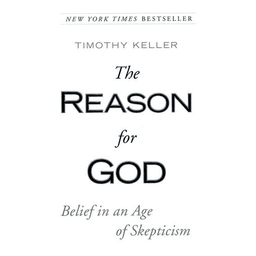 The Reason for GodKeller’s urban-skeptic apologetic - the broad, conversational case for faith that pairs well with Smith’s map of the secular condition.
Frequently asked questions
Do I need to read A Secular Age before this book?
No - it is the other way around. How (Not) to Be Secular is designed as the on-ramp to Taylor’s A Secular Age, not a sequel to it. Smith assumes you have not read the 900-page original and walks you through its argument. Many readers use Smith as their only exposure to Taylor; others read it first and then tackle the source with Smith open as a companion.
What does Charles Taylor mean by "secular"?
Taylor distinguishes three senses. One is the retreat of religion from public institutions; another is the decline of belief and practice. But his real subject is a third sense: secularity as a change in the conditions of belief, such that faith becomes one contestable option among many rather than the unquestioned background. Smith makes this distinction the hinge of the whole guide.
What tradition is James K. A. Smith writing from?
Smith is a philosopher who writes from a Reformed Protestant vantage, and he says so openly. He reads Taylor partly as a diagnosis the church needs. Charles Taylor himself, the philosopher being summarized, is Catholic - and the secular condition the book describes is shared by believers and unbelievers across every tradition, which is why the guide is read well beyond Smith’s own.
Is this book an argument against secularism?
Not really. It is more descriptive than polemical. Smith and Taylor are trying to explain what it feels like to live in a world where belief has become contestable - for the skeptic and the believer alike - rather than to attack secular people or score points. Readers wanting a sustained argument for faith inside the secular frame should pair it with Tim Keller’s Making Sense of God.
Is it hard to read?
It is the accessible version of Taylor, not an easy book in absolute terms. At around 140 pages it is short, and Smith writes clearly and reaches for contemporary culture to illustrate abstractions. But the ideas are genuinely demanding and the vocabulary is invented, so plan to read slowly and revisit the glossary. It rewards attention more than speed.
What are "the immanent frame" and "the buffered self"?
They are two of Taylor’s key terms, and Smith explains both. The "immanent frame" is the taken-for-granted modern world that seems to run by its own natural laws without needing anything beyond itself. The "buffered self" is the kind of person that frame produces - bounded and sealed off from outside spiritual forces, rather than "porous" to enchantment the way pre-modern people were. The vocabulary is a big part of what readers carry away.
Where should I go after this book?
If you want the source, read Taylor’s A Secular Age itself, with Smith kept open as a map. For more from Smith in a popular register, You Are What You Love turns the conversation toward formation. For an argument made inside the secular condition rather than a description of it, Tim Keller’s Making Sense of God is the natural next read, and Nancy Pearcey’s Total Truth supplies the worldview-and-ideas angle.
Sources & further reading
More Apologetics Books
The Reason for GodTim Keller’s 2008 apologetic has quietly become the default gift for the smart, secular friend who has questions - and it earns the reputation.Making Sense of GodTim Keller’s 2016 “prequel” to The Reason for God doesn’t argue that God exists - it argues that the things you already want make more sense inside Christianity than outside it, and it’s the book for the skeptic who isn’t ready for the argument yet. TacticsGreg Koukl wrote the book that teaches you how to talk about faith without it turning into an argument - the one most people reach for when "I never know what to say" is the real problem.
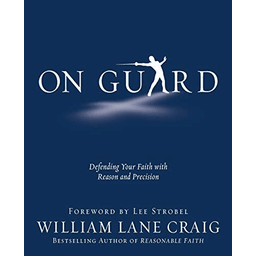 On GuardWilliam Lane Craig’s 2010 primer takes the formal arguments from his heavyweight Reasonable Faith and redraws them as flowcharts a layperson can actually follow - apologetics taught like a skill, not a sermon.
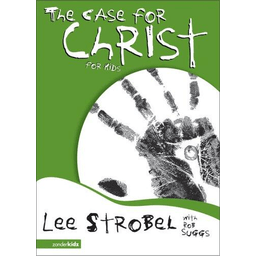 The Case for ChristLee Strobel’s investigative-journalist apologetic has quietly become the default gift book for skeptical friends - and the on-ramp into apologetics for an entire generation of readers.Total TruthThe book that taught a generation of evangelicals to think in terms of worldview - and to stop letting their faith get filed under "private values" while everyone else got "public facts."