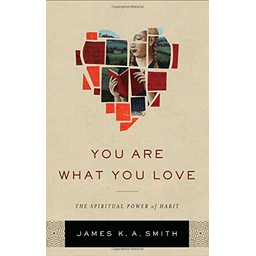
- Starting price
- ~$20 paperback
- Free tier
- No
- Platforms
- Print · Kindle · Audiobook
- Developer
- Brazos Press
- Launched
- 2016
- Updated
- May 31, 2026
The verdict
A short, vivid, surprisingly disruptive book that reframes discipleship around desire rather than information. Smith argues that habits and "liturgies" - sacred and secular - quietly aim our hearts, and that worship is how those hearts get re-aimed. More diagnosis than program, and the liturgical emphasis lands more naturally in some traditions than others, but the central idea is hard to un-see once you have read it.
Try You Are What You Love ↗Opens brazospress.com
You Are What You Love has quietly become the book that pastors, worship leaders, and Christian educators hand each other when they want to explain why information alone never seems to change anyone. Released in 2016, it is James K.A. Smith’s popular-level distillation of his denser three-volume academic project, "Cultural Liturgies" - and in trade-book form, with the footnotes thinned and the prose loosened, the central argument finally reached the small groups and staff meetings the academic volumes never did.
It is not a study Bible. It is not a systematic theology. It is not, in the usual sense, a how-to book. What it is: a single sustained argument that human beings are defined less by what we know or even what we believe than by what we love - and that our loves are not chosen so much as trained, formed over time by habits and rituals Smith calls "liturgies." Some of those liturgies happen in church. Most of them, he argues, happen at the mall, on the phone, and in the stadium, where we are being discipled all day long without noticing.
Smith is a philosophy professor - he taught for years at Calvin University and writes from a Reformed vantage - but the book leans hard on Augustine and on the historic liturgical tradition of the wider church, sources that belong to no single communion. The contribution here is not a new doctrine. It is a lens. Once you start seeing ordinary routines as formation, the question of the book ("what do you want?" versus "what do you think?") becomes very difficult to set back down.
✓ The good
- A genuinely disruptive central idea - the claim that you are formed by what you love, not what you know, reframes discipleship in a way most readers find hard to un-see
- Vivid, concrete diagnosis of secular "liturgies" - the extended reading of the shopping mall as a temple is the passage everyone quotes, and it earns the attention
- Accessible on-ramp to a dense academic project - Smith strips the Cultural Liturgies argument down to trade-book length without dumbing it down
- Draws on Augustine and the historic liturgical tradition - sources that sit upstream of denominational divisions rather than inside any one of them
- Strong chapters on family, education, and vocation - the back half applies the thesis to the home, the school, and the workplace concretely
- Short and well-paced - around 200 pages, written to be read by a church staff or a small group together rather than studied alone
- Names something readers already half-suspected - that their phones and routines are shaping them more than their stated beliefs are
✗ Watch out
- More diagnosis than program - Smith is brilliant at naming how formation works but lighter on a concrete, step-by-step rule for re-forming your own loves
- Popularizes a denser project - specialists who want the full argument, with the philosophy and citations intact, will need the three Cultural Liturgies volumes
- The emphasis on formal, historic worship lands more naturally in liturgical traditions than in low-church or non-liturgical ones, where the practices Smith praises are less familiar
- Occasionally repetitive - the core thesis is stated, restated, and re-illustrated often enough that veteran readers may feel the point well before the chapter ends
- Assumes a reader already inside the church - the book is written to re-form Christian worshipers, not to argue a skeptic toward faith
Best for
- Pastors and worship leaders rethinking why services are shaped the way they are
- Christian parents and educators thinking about how homes and schools form children
- Readers who feel their habits and screens are shaping them more than their beliefs
- Small groups wanting a short, idea-dense book to discuss over several weeks
Avoid if
- You want a step-by-step program or a rule of life rather than a diagnosis
- You want the full philosophical argument with citations - read the Cultural Liturgies volumes
- You want a verse-by-verse study of a biblical book rather than a thematic argument
- You are looking for an introduction to the faith for a skeptic rather than a book for worshipers
What You Are What You Love is
You Are What You Love is a short trade book - about 200 pages - built around a single thesis: that human beings are fundamentally lovers before they are thinkers, and that what we love is shaped over time by habits and rituals Smith calls "liturgies." Worship, on this account, is not first about transmitting ideas; it is about aiming the heart. The book moves from that claim through chapters on what Smith calls "secular liturgies" (the mall, the smartphone, the stadium, the university), then turns to Christian worship, the family, education, and vocation as sites where the heart gets re-formed toward God.
It is positioned as the accessible version of Smith’s academic "Cultural Liturgies" trilogy - Desiring the Kingdom, Imagining the Kingdom, and Awaiting the King - which made the same argument at far greater length and with full philosophical apparatus. Smith writes from a Reformed background and taught philosophy for years at Calvin University, but the book’s core sources are Augustine and the historic liturgical tradition of the wider church, and he writes for any reader inside the Christian tradition who wants to understand why formation works the way it does.
Why the “you are what you love” lens broke through
The single biggest reason this book traveled where the academic volumes did not is its central reframe, stated in a single accessible sentence: the most important question is not "what do you think?" but "what do you want?" Most discipleship, Smith argues, has operated as if people were "brains-on-a-stick" - as if changing what someone believes would automatically change how they live. The book’s contribution is to insist that this gets the human person backwards. We are shaped from the bottom up, by what we do repeatedly and love habitually, long before our stated beliefs catch up. That claim is intuitive enough to grasp in a paragraph and unsettling enough to chew on for years.
The other piece is Smith’s diagnostic eye for the ordinary. He reads the shopping mall, the smartphone, and the sports stadium as "liturgies" - rituals that, whether or not anyone intends them to, are training our desires toward a particular vision of the good life. He reads the thoughtful Christian’s daily routine the same way. The triplet runs underneath the whole book: you are not primarily what you think. You are not primarily what you say you believe. You are what you love - and what you love is being formed all day long, by something.
The thesis: you are what you love, not what you think
The structural argument of the book is that the human person is, at the deepest level, a lover rather than a thinker - that we are oriented toward some vision of "the good life" by our desires before we ever reason about it. Smith draws this directly from Augustine, whose claim that the heart is restless until it rests in God runs underneath every chapter. On this account, to be human is to be aimed at something; the only question is what. And because our aim is set by what we love rather than what we merely know, simply giving people more correct information rarely re-aims them. The will follows the heart, and the heart follows habit.
This is the move that reorganizes everything else in the book. If people are formed by what they love, then discipleship cannot be primarily a matter of downloading the right beliefs - it has to involve retraining the desires themselves. Smith is careful not to dismiss the intellect; he is a philosopher, and he insists that belief still matters. But he argues that belief sits downstream of love, and that any account of Christian formation that skips the heart and aims only at the head will keep producing people who know all the right answers and live by other loves entirely. Readers across traditions tend to report this as the chapter that rearranged how they think about their own faith.
Secular liturgies: the mall, the phone, and the stadium as temples
The most-quoted section of the book is Smith’s extended reading of the shopping mall as a kind of religious site. He walks the reader through it deliberately, as an anthropologist might describe a temple: the grand architecture, the icons in the windows, the priestly sales associates, the ritual of acquisition that promises a fuller self on the other side of a purchase. The point is not that shopping is uniquely sinful. The point is that the mall is a "liturgy" - a set of repeated practices that, working on us below the level of conscious thought, trains us to want a particular vision of the good life. He extends the same analysis to the smartphone, the stadium, and the modern university.
This sounds like a small thing - calling a mall a temple. In practice it is the part of the book that does the most work on readers, because it makes a claim that is hard to unsee once stated: that we are being "discipled" constantly, by institutions and devices that never announce themselves as formative. The argument is descriptive rather than scolding; Smith is not handing out a list of forbidden places. He is asking the reader to notice that their loves are being shaped whether or not they consent, and that noticing is the first step toward choosing which liturgies get to do the shaping.
Counter-formation: worship, family, and vocation as re-forming practices
The back half of the book turns from diagnosis to counter-formation: if secular liturgies are aiming the heart away from God, what re-aims it? Smith’s answer is the historic practices of Christian worship, together with the formative habits of the home, the school, and the workplace. He reads the elements of a worship service - gathering, confession, Scripture, table, sending - as a counter-liturgy that, repeated over years, slowly retrains desire toward God and neighbor. He then carries the same logic into family rhythms, into how schools form students, and into how the routines of a job shape a worker’s vision of the good.
It is worth naming plainly that the worship Smith holds up as formative is the historic, structured liturgical tradition, and that this lands differently across the Christian landscape. In liturgical traditions - where a set order of service, the church calendar, and sacramental practice are already central - much of what Smith describes is simply the existing furniture, freshly explained. In low-church and non-liturgical traditions, where worship is shaped more spontaneously, the practices he praises are less familiar and the chapters read more as an invitation than a description. Smith presents the case as a recovery of something the wider church has long held; how natural that recovery feels will depend a good deal on where the reader already worships.
Pricing
Paperback
~$20
The standard Brazos Press edition. The copy most readers and small groups own.
Kindle
~$13
Full text, searchable, highlight-syncs across the Kindle app on every device.
Audiobook
~$18
Unabridged narration, well-paced for commute listening - though the book is idea-dense enough that some readers prefer print for marking up.
Hardcover
~$28
Less common than the paperback; the gift-grade or library edition.
You Are What You Love is not free. A new Brazos Press paperback runs around $20, and used copies turn up readily once a book has been in print since 2016 - call the paperback the everyday default and the version almost every small group ends up buying. It is the format the book functions best in, because it is dense enough that most readers want to underline as they go.
The Kindle edition runs around $13 and gives you searchable text with highlight sync - useful for a book this quotable, especially the mall passage and the closing chapters on worship. The audiobook (around $18) is well-paced for commute listening, but the book is argument-driven rather than narrative, and several readers find that the ideas stick better in print where they can mark and re-read a paragraph.
There is no companion app, subscription, or paywalled study course attached to this title - what you buy is the book. A hardcover exists at around $28 and is mostly a gift-grade or library pick rather than the copy most readers reach for.
Most readers do not need more than the paperback. If you find the argument grips you and you want the full version - the philosophy, the interlocutors, the citations Smith thinned out for this edition - the next purchase is not another format of this book but the academic trilogy it distills, beginning with Desiring the Kingdom.
Where You Are What You Love falls behind
More diagnosis than program. Smith is exceptional at naming how formation works and why information alone fails to change us. He is lighter on a concrete, step-by-step rule for re-forming your own loves day to day. The book leaves you convinced your habits are forming you and wanting a clearer plan for what to do about it on Monday morning - a plan it gestures at more than it spells out.
It popularizes a dense project. By design, this is the trade-edition distillation of Smith’s three-volume Cultural Liturgies work. That makes it accessible, but it also means specialists, students, and readers who want the full philosophical argument - the engagement with Heidegger, Bourdieu, and Merleau-Ponty, the full citations - will find this version deliberately streamlined and need to go to Desiring the Kingdom and its sequels for the complete case.
The liturgical emphasis is tradition-dependent. The worship practices Smith holds up as counter-formative are the historic, structured liturgical ones, and that emphasis is more native to some traditions than others. Readers in liturgical churches will recognize the furniture; readers in low-church or non-liturgical settings may find parts of the back half describing practices that are not part of their week, so the chapters land more as invitation than description.
Some repetition. The central thesis - you are what you love, and your loves are trained by habit - is compelling, and Smith returns to it often. For some readers that repetition is reinforcement; for others, particularly those who grasped the point in the first chapter, the restatements across later chapters can feel like the argument circling ground it has already covered.
You Are What You Love vs. How (Not) to Be Secular vs. The Ruthless Elimination of Hurry
These three sit near each other on the shelf but do different jobs. You Are What You Love (Smith, 2016) is the popular thesis on formation - it argues that habits and liturgies aim our loves, and reframes discipleship around desire rather than information. How (Not) to Be Secular (Smith, 2014) is Smith’s accessible guide to philosopher Charles Taylor’s A Secular Age - it explains the cultural conditions of belief and doubt in the modern West, and is a diagnosis of the age rather than a formation handbook. The Ruthless Elimination of Hurry (John Mark Comer, 2019) is the practice-forward cousin - it names hurry as corrosive to formation and offers concrete habits to slow down.
Different strengths. You Are What You Love is the best at the underlying theory of how anyone is formed at all. How (Not) to Be Secular is the best at explaining why belief feels different now than it did five centuries ago. The Ruthless Elimination of Hurry is the best at handing the reader something specific to do this week. Smith is the more philosophical writer of the two authors; Comer is the more pastoral and practice-driven.
How to sequence them: read You Are What You Love if you want to understand why your habits, not just your beliefs, are shaping you. Add How (Not) to Be Secular if you want the wider cultural backdrop that makes faith contested in the first place. Add The Ruthless Elimination of Hurry if you have the diagnosis and now want a concrete on-ramp. The two Smith books are designed to live on the same shelf; Comer’s is the one that turns the theory into a Tuesday-evening practice.
The bottom line
You Are What You Love is not a step-by-step program, and it does not try to be - it is, openly, the accessible distillation of a much larger academic project. But it is one of the most genuinely disruptive popular books on formation written this decade, because its central claim is so simple to grasp and so hard to set back down: you are shaped by what you love, and your loves are being trained all day long, by something. Worth buying. Worth reading slowly. Worth discussing with a group. Real gaps on the practical "how" and a liturgical emphasis that fits some traditions more naturally than others, but they are worth knowing about going in rather than dealbreakers.
Alternatives to You Are What You Love
 How (Not) to Be SecularSmith’s accessible guide to Charles Taylor’s A Secular Age - the cultural-diagnosis companion to this book, explaining why belief feels contested in the modern West.
 Practicing the WayJohn Mark Comer’s formation book organized around nine practices - the practice-forward, how-to counterpart to Smith’s more theoretical account of why habits form us.
 Emotionally Healthy SpiritualityPeter Scazzero’s book on joining emotional and spiritual maturity - a different angle on formation, focused on the inner life rather than habits and liturgies.
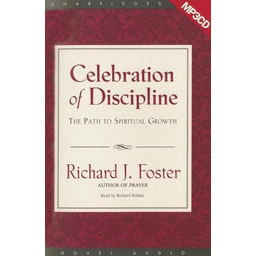 Celebration of DisciplineRichard Foster’s classic on the spiritual disciplines - the older, practice-by-practice survey that much of this formation conversation traces back to.
Frequently asked questions
What is the main argument of You Are What You Love?
That human beings are shaped less by what we think or even believe than by what we love - and that our loves are not simply chosen but trained over time through habits and rituals Smith calls "liturgies." Worship, on this account, is primarily about aiming the heart rather than transmitting information, and Christian formation has to involve retraining desire, not just teaching correct beliefs.
What does James K.A. Smith mean by "liturgies"?
Smith uses "liturgies" broadly to mean repeated practices that form what we love and how we picture the good life. Some are explicitly religious - the order of a worship service. Many are not: he reads the shopping mall, the smartphone, and the sports stadium as "secular liturgies" that train our desires whether or not anyone intends them to. The point is that we are being formed constantly, by rituals we rarely notice.
Is this book denominationally specific?
Smith writes from a Reformed background and taught philosophy at Calvin University, but the book’s core sources are Augustine and the historic liturgical tradition of the wider church, which sit upstream of denominational divisions. The emphasis on formal, structured worship lands more naturally in liturgical traditions than in low-church or non-liturgical ones, where the practices Smith praises are less familiar, though readers across traditions report finding the central thesis compatible.
How is it different from Smith’s "Cultural Liturgies" books?
You Are What You Love is the accessible, trade-length distillation of the same argument Smith made in his three-volume academic series - Desiring the Kingdom, Imagining the Kingdom, and Awaiting the King. This book thins out the philosophy and citations and writes for a general church audience. If you want the full argument with its philosophical interlocutors and footnotes intact, read the trilogy, beginning with Desiring the Kingdom.
Does the book give practical steps for changing your habits?
Somewhat, but it is more diagnostic than prescriptive. Smith excels at explaining how formation works and why information alone rarely changes us, and the back half applies the thesis to worship, family, education, and vocation. Readers wanting a concrete, step-by-step rule of life often pair it with a more practice-forward book such as John Mark Comer’s Practicing the Way or Richard Foster’s Celebration of Discipline.
Is the audiobook worth it?
The narration is fine and well-paced for commute listening, but the book is argument-driven rather than narrative, and many readers find the ideas stick better in print where they can underline and re-read a paragraph - especially the mall passage and the chapters on worship. If you tend to mark up idea-dense books, the paperback is the better pick; if you mostly listen, the audiobook works.
Who should read this book?
Pastors and worship leaders rethinking why services are shaped the way they are, parents and educators thinking about how homes and schools form children, and any reader who suspects their habits and screens are shaping them more than their stated beliefs are. It assumes a reader already inside the Christian tradition - it is written to re-form worshipers, not to argue a skeptic toward faith.
Sources & further reading
More Christian Living Books
 The Prodigal GodTim Keller’s 130-page reading of Luke 15 has quietly become one of the most-gifted Christian books of the last twenty years - and the reason is the title itself.Practicing the WayComer’s 2024 follow-up to The Ruthless Elimination of Hurry has quietly become the default spiritual-formation book in a thousand small groups - and the reasons are worth unpacking.
 Walking with God Through Pain and SufferingTim Keller’s most comprehensive book on suffering - part survey of how every culture has tried to explain pain, part biblical theology, part field manual for the people actually walking through it.
 FerventThe prayer book that turned “strategic, specific prayer” into a fill-in-the-blank battle plan - and rode the War Room moment to the top of the bestseller lists.
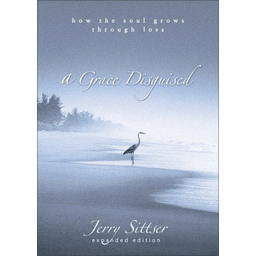 A Grace DisguisedJerry Sittser lost his mother, his wife, and his four-year-old daughter in a single car crash - and the book he wrote about it has quietly become the one grieving people press into each other’s hands, because it refuses to tell you how to get over your loss.
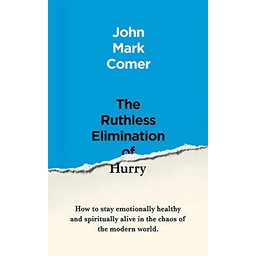 The Ruthless Elimination of HurryJohn Mark Comer’s 2019 breakout - a pastor’s case that hurry is the great spiritual enemy of our age - has quietly become the go-to slow-down book for an exhausted generation of Christians. Here’s what it actually delivers, and where it doesn’t.