- Starting price
- $14.99 paperback
- Free tier
- No
- Platforms
- Print · Kindle · Audiobook · Audible
- Developer
- HarperOne (English ed.); Fortress (DBWE critical ed.)
- Launched
- 1939 German / 1954 English
- Updated
- May 24, 2026
The verdict
A short book that punches harder than most 500-page ecclesiologies. Bonhoeffer wrote it in 1938 from inside an outlawed seminary, which is why it reads less like theory and more like a survival manual for people who actually have to live with each other.
Try Life Together ↗Opens harpercollins.com
Life Together has quietly become the favorite of pastors, small-group leaders, monastic-curious Protestants, intentional community founders, and exhausted church members who have started to suspect the problem is not their congregation but their own expectations. It is roughly 120 pages. It was first published in German in 1939 as Gemeinsames Leben, and arrived in English in 1954. Dietrich Bonhoeffer - a Lutheran pastor and theologian later executed by the Nazi regime in 1945 - wrote it directly out of his experience leading the Finkenwalde seminary, an underground training house for the Confessing Church, the wing of German Protestantism that refused to bend to the Reich.
It is not a memoir. It is not a sentimental ode to fellowship. It is not a how-to manual in the modern small-group sense - there are no icebreakers, no curriculum, no team-building exercises. What it is instead is a tightly argued five-part theology of Christian common life, written by someone whose community had just been forcibly shut down and who knew, in the writing, that he was preserving on paper what could no longer exist on the ground.
That is the strange power of the book. It reads like notes from the front. Bonhoeffer is not speculating about what shared Christian life might look like; he is describing what it actually looked like for two years at Finkenwalde, and what almost broke it, and what kept it together. The structure is simple - Community, The Day Together, The Day Alone, Ministry, Confession - but the contents have been read for eighty years across Lutheran, Reformed, Anglican, Catholic, evangelical, and even some monastic settings as the most honest short statement of what people in Christ owe each other.
✓ The good
- Field-tested, not theoretical - every chapter grew out of two years of actual shared life at the Finkenwalde seminary, not a study desk
- The "wish dream" warning alone is worth the price - Bonhoeffer’s diagnosis of romanticized community has aged into one of the most quoted paragraphs in modern Christian writing
- Astonishingly short - roughly 120 pages, readable in a weekend, re-readable for a lifetime
- Bridges traditions - claimed by Lutheran, Reformed, Anglican, Catholic, and monastic-curious readers without belonging neatly to any single camp
- Treats solitude and community as inseparable - the "Day Alone" chapter rescues the introvert from feeling like a worse Christian
- The chapter on Ministry redefines church service in terms of listening, helpfulness, bearing, and not interrupting - a practical antidote to platform-driven ministry culture
- Pairs naturally with The Cost of Discipleship - Discipleship is the call out, Life Together is the call into one another
✗ Watch out
- Dense for its length - Bonhoeffer’s German-philosophical sentence structure survives translation and rewards slow reading more than speed
- Assumes a 1930s monastic-seminary rhythm - daily psalmody, common meals, a single roof - that most modern readers will have to translate into their own context
- The Confession chapter is shaped by Lutheran sacramental practice - readers from other traditions may need to adapt rather than adopt the specifics
- Almost nothing on programs, structures, or church governance - if you want a manual for running a small group, you’ll need a second book
- No real treatment of children, families, or mixed-age congregations - Finkenwalde was a house of young men in training (yet the principles transfer)
Best for
- Pastors and small-group leaders rebuilding burnt-out community
- Christians considering intentional community, house churches, or neo-monastic life
- Readers who loved The Cost of Discipleship and want the companion volume
- Anyone whose disappointment with their church has started to feel like grief
Avoid if
- You want a step-by-step program for launching a small-group ministry
- You bounce off mid-century theological prose and prefer breezy contemporary writing
- You’re looking for a biography of Bonhoeffer - try Metaxas or Marsh instead
- You want a long, footnoted academic treatment - Life Together is deliberately compact
What Life Together is
Life Together is a five-section theological essay on what Christians actually owe each other when they share daily life. The five parts move from the general to the intimate: Community (what binds believers together), The Day Together (corporate worship, work, table fellowship), The Day Alone (silence, meditation, prayer in solitude), Ministry (how members serve one another), and Confession and Communion (the practice of bringing sin into the light and receiving the Lord’s Supper as one body).
It was written in late 1938 and published in 1939, drawing directly on Bonhoeffer’s leadership of the Confessing Church seminary at Finkenwalde from 1935 until the Gestapo closed it in 1937. That timing matters. The book is not a theology of community in the abstract; it is the distillation of a particular community that the state had just made illegal.
Why readers across traditions keep returning to Life Together
The single biggest practical difference between Life Together and most modern books on church or community is the source. Bonhoeffer is not writing as a conference speaker or a consultant. He is writing as a pastor who has just lost the community he is describing. That gives the book an unusual register - affectionate but unsentimental, demanding but tender, theological but immediately practical.
The other reason it travels so well across traditions is that Bonhoeffer keeps the argument anchored to two things almost everyone can agree on: the Word and the table. He resists turning community into a personality, a program, or a feeling. Community, in his telling, is what happens when believers gather around Scripture, prayer, work, and the Supper - and the rules and warnings follow from that center. Lutheran, Reformed, Anglican, Catholic, and free-church readers have all found their own practice reflected in it without feeling colonized by someone else’s.
The five-section structure: Community, Day Together, Day Alone, Ministry, Confession
The book is organized as a tight five-movement progression, and the order is the argument. Part one ("Community") defines the church not as a human ideal but as a reality created through Christ - believers belong to one another only because they first belong to him. Part two ("The Day Together") walks through morning worship, common meals, work, and evening prayer, treating the ordinary rhythm of a shared day as a theological act. Part three ("The Day Alone") then insists, sharply, that anyone who cannot be alone should beware of community, and anyone who cannot be in community should beware of being alone. The two halves of the Christian life are inseparable; either one in isolation deforms a person.
Part four ("Ministry") catalogues the small services believers owe one another - holding the tongue, meekness, listening, helpfulness, bearing, proclaiming, and authority - and reframes "ministry" away from offices and platforms toward the quiet daily disciplines of love. Part five ("Confession and Communion") closes with the practice of confessing sin to a trusted brother or sister and gathering around the Lord’s Supper as the visible sign that the community has been reconciled. The arc moves from the why to the what to the how, and each part is short enough to be read in a single sitting and dense enough to be re-read for years.
Finkenwalde: the book as a real-world rehearsal
Life Together is not a thought experiment. From 1935 to 1937 Bonhoeffer ran a small seminary for the Confessing Church at Finkenwalde, in what is now Poland - an underground training house for pastors who refused to swear loyalty to the Nazi state-church arrangement. Roughly two dozen ordinands at a time lived under one roof, sharing morning and evening prayer, psalms, Scripture meditation, common meals, mutual confession, and manual work. The Gestapo shut the seminary down in September 1937. Bonhoeffer wrote Life Together the next year, partly to preserve what had been learned there and partly to model it for other Confessing communities forced underground.
That backdrop changes how the book reads. The passages on bearing with the irritating brother, on listening rather than fixing, on the moral danger of romanticizing your own community - these are not abstract counsel. They are the lessons of two years in a house where everyone knew the police could arrive any morning, and where the disciplines of love had to be load-bearing or the community would not survive. Modern readers in low-stakes small groups can still hear that pressure under the prose, and it tends to expose how thin our own expectations of one another have become.
The "wish dream" warning: Bonhoeffer’s critique of romanticized community
The most quoted passage in the book - and arguably in all of Bonhoeffer outside of Discipleship - is the warning against the "wish dream." Early in part one he writes that the person who comes into Christian community carrying an idealized picture of what it ought to be becomes a destroyer of that community, even if their intentions are pure. The wish dream is the fantasy of the church you wanted; it is what makes you contemptuous of the actual brothers and sisters in front of you when they fail to match it. God, in Bonhoeffer’s telling, is not gentle with such dreams. He shatters them - and what is left, the disappointing real community, is the only one in which grace can actually do its work.
This sounds like a small thing. In practice it is transformative. It reframes every disappointment with your church, your small group, your monastery, your missions team, your house church, as a gift - the dismantling of an idol you did not know you were holding. Eighty years after it was written, the wish-dream paragraph is still the line pastors send to discouraged members, the line elders quote at burnt-out leaders, and the line that re-anchors expectations whenever Christian community starts to feel less like a sacrament and more like a brand.
Pricing
Paperback
~$14.99
HarperOne reissue with Geffrey B. Kelly’s introduction - the default everyday edition.
Hardcover
~$22
Cloth edition for gift-giving or seminary shelves; same translation as the paperback.
Kindle
~$11
Searchable digital text - useful if you plan to quote it in talks or sermons.
Audible
~$10
Roughly four hours of audio; works well on a single long drive or two walks.
DBWE Critical Edition (Vol. 5)
~$35
Fortress Press’s Dietrich Bonhoeffer Works in English - Life Together bundled with Prayerbook of the Bible, with full critical apparatus.
Gemeinsames Leben (German original)
~$20
For German readers or seminarians working from the source text.
The HarperOne paperback at around $14.99 is the everyday default and what most readers should buy. It carries Geffrey B. Kelly’s introduction, the standard English translation, and at roughly 120 pages it costs about what a small group might spend on coffee in a single week.
The hardcover at around $22 is purely about durability and giving - same translation, nicer object. Worth it if you re-read the book every year or if you want a gift edition for an ordination, a community launch, or a discouraged pastor friend.
Kindle at around $11 is the right pick if you preach, teach, or quote heavily - searchable text and copy-paste are real advantages with a book this aphoristic. The Audible edition at around $10 runs about four hours; it is a strong option for the first read but a poor one for study, because Bonhoeffer’s prose rewards stopping and re-reading sentences.
The Dietrich Bonhoeffer Works in English (DBWE) critical edition from Fortress Press, around $35, bundles Life Together with Prayerbook of the Bible and adds full critical apparatus, footnotes, and historical introductions. Most readers do not need this. Anyone writing a paper, preparing a long teaching series, or wanting to understand Bonhoeffer in his German context will find it the best value of the lot.
Where Life Together falls behind
No real treatment of mixed-age, family-shaped congregations. Finkenwalde was a house of young men preparing for ordination. The wisdom transfers, but readers leading parishes with children, marriages, elderly members, and competing schedules will have to do the translation work themselves - Bonhoeffer doesn’t do it for you.
Light on structures and governance. There is almost nothing here on elder boards, budgets, denominational polity, conflict procedures, or church discipline as a process. The book operates one layer beneath the structural - at the level of what shared life feels like and demands - which is its strength but also its limit.
The Confession chapter is shaped by Lutheran practice. Bonhoeffer writes about confession to a brother as a normal, expected discipline of the gathered church, in continuity with his Lutheran heritage. Readers from low-church evangelical, Reformed, or Anabaptist traditions can adapt the principles, but the specific practice he describes will feel less natural - and Catholic and Orthodox readers will notice he is not describing sacramental confession as their traditions know it.
No engagement with modern community failure modes. Bonhoeffer could not foresee social media, megachurch dynamics, online "community," intentional-community burnout, or the abuse crises that have shaped a generation of ecclesiology since. The principles still apply, but the diagnostic vocabulary is yours to supply.
It is short, and that is sometimes a con. Anyone hoping to use Life Together as a comprehensive ecclesiology will find it gestural in places where a longer book would argue. It is a manual, not a systematics - which is why it is usually read alongside, not instead of, something fuller.
Life Together vs. The Cost of Discipleship vs. Practicing the Way
These three are the small canon of modern Christian formation books that almost everyone ends up reading eventually. Different strengths. The Cost of Discipleship (Bonhoeffer, 1937) is the call out - a long, searing meditation on the Sermon on the Mount and the meaning of "follow me," anchored by the famous distinction between cheap and costly grace. It is twice the length of Life Together and harder going, but it is the foundation on which Life Together is built.
Life Together (Bonhoeffer, 1939) is the call into one another. It assumes the costly grace of Discipleship and asks what happens next, when those who have answered the call have to share a roof, a table, and a daily office. The two books are companions in the most literal sense; Bonhoeffer wrote them within two years of each other, out of the same Finkenwalde experiment, and they are properly read as a pair.
Practicing the Way (John Mark Comer, 2024) is the contemporary counterpart - a modern, accessible, eight-practice rule of life aimed at the post-evangelical reader who senses they need a deeper formation than weekly church attendance provides. Comer is broader in audience (covers personal habits, technology, hurry, community, suffering) and gentler in register; Bonhoeffer is narrower and more demanding. Most readers benefit from starting with Comer for vocabulary and on-ramp, then moving to Life Together for depth, and finally to Discipleship for the underlying argument.
The bottom line
Life Together is the thoughtful person’s book on Christian community. It is short, it is demanding, and it is field-tested by a pastor who paid for its convictions with his life. If you lead a small group, a house church, a seminary, a missions team, or any gathered body of believers, it belongs on the shelf next to your Bible - and it should be re-read every couple of years, because the wish dream grows back. The few gaps (governance, families, sacramental specifics for non-Lutheran readers) are real, but they are gaps worth knowing about going in rather than dealbreakers.
Alternatives to Life Together
 The Cost of DiscipleshipBonhoeffer’s longer, more demanding companion volume - the call out before Life Together becomes the call in.
 Practicing the WayJohn Mark Comer’s contemporary rule-of-life book - gentler on-ramp, broader scope, less monastic specificity.
 Mere ChristianityC. S. Lewis’s short, plain-spoken case for the faith - different concern, but the same family of mid-century classics.
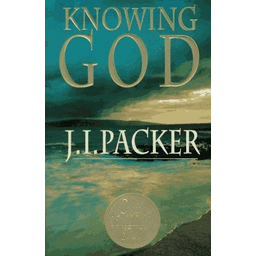 Knowing GodJ. I. Packer’s modern classic on the character of God - pair it with Life Together for inner life plus shared life.
Frequently asked questions
How long is Life Together, and how long does it take to read?
About 120 pages in the standard HarperOne paperback. A careful first read takes most people four to six hours, or roughly a weekend. The Audible edition runs about four hours. Bonhoeffer’s prose rewards slowing down, so plan to re-read sections rather than race through.
Do I need to read The Cost of Discipleship first?
No, but it helps. Life Together assumes the picture of costly grace and the call to follow Christ that Discipleship lays out. You can read Life Together first as a standalone and many people do - just expect to want Discipleship soon after.
What is the "wish dream" Bonhoeffer warns about?
It is the idealized fantasy of Christian community that someone carries into a real church or group - what fellowship "should" feel like. Bonhoeffer argues this dream makes you secretly contemptuous of the actual brothers and sisters in front of you, and that God mercifully shatters it so that grace can work in the real community he has given you.
What is Finkenwalde and why does it matter?
Finkenwalde was the underground seminary Bonhoeffer led from 1935 to 1937 for the Confessing Church - the wing of German Protestantism that refused to align with the Nazi state-church arrangement. Roughly two dozen ordinands lived under one roof in a shared rule of prayer, study, meals, and work. The Gestapo shut it down in 1937, and Life Together was written the next year to preserve what had been learned there.
Which edition should I buy?
For most readers, the HarperOne paperback at around $14.99. If you preach or quote it often, add the Kindle for search. If you are doing serious study or seminary work, the Dietrich Bonhoeffer Works in English (DBWE) Volume 5 from Fortress Press, around $35, is the critical edition and includes Prayerbook of the Bible.
Is Life Together only for monastic or intentional communities?
No. Bonhoeffer was writing out of a seminary setting, but he is explicit that the book is for any gathered body of Christians sharing life - small groups, parishes, families, mission teams, house churches. The disciplines scale; the principles do not change.
What tradition does Bonhoeffer come from?
Bonhoeffer was a Lutheran pastor and theologian formed in the German Confessing Church. Life Together has been read warmly across Lutheran, Reformed, Anglican, Catholic, evangelical, and monastic-curious settings, in part because its argument stays close to Scripture, prayer, work, and the Lord’s Supper rather than to tradition-specific distinctives.
Sources & further reading
More Modern Christian Classics
Knowing GodJ.I. Packer’s 1973 classic on the doctrine of God has sold more than 1.5 million copies and is still the book most pastors hand to laypeople who want theology that goes somewhere - here’s what it actually does and who it’s for.The Cost of DiscipleshipDietrich Bonhoeffer’s 1937 exposition of the Sermon on the Mount, written for pastors training under a regime that wanted them silent - and still the sharpest book in print on what following Jesus actually costs.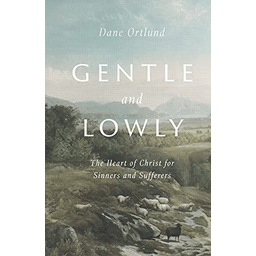 Gentle and LowlyDane Ortlund’s 23 short chapters on Matthew 11:29 have quietly become the most-given new Christian book of the decade - and the reason is not what you’d guess.
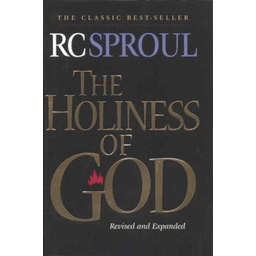 The Holiness of GodR.C. Sproul’s career-defining book on the one attribute of God the church most forgets - and the vision in Isaiah 6 he believed everything else flows from.
 The Weight of GloryThe 1941 sermon many call Lewis's single finest piece of writing - "there are no ordinary people" - gathered with eight other addresses into one slim, uneven, unforgettable collection.
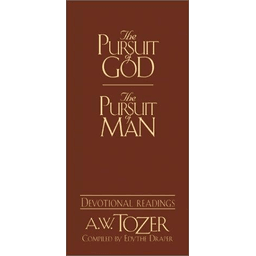 The Pursuit of GodA.W. Tozer’s ten-chapter wake-up call on knowing God personally - short, severe, and the one devotional Reformed, Wesleyan, Catholic, and Orthodox readers all seem to keep on the nightstand.