- Starting price
- ~$17 hardcover
- Free tier
- No
- Platforms
- Developer
- Tyndale House
- Launched
- 2010
- Updated
- May 31, 2026
The verdict
My First Hands-On Bible is built for the age when sitting still is the hard part. It retells around 75 Bible stories in very simple language and pairs each one with a short, multisensory activity - the "Jesus Connection" - so a preschooler hears the story and then does something with their hands while you read. It is a Protestant-tradition storybook, and the writing is deliberately plain rather than literary. But for a three-to-six-year-old who learns by moving and touching, it is one of the most genuinely useful read-aloud Bibles on the shelf.
Try My First Hands-On Bible ↗Opens tyndale.com
My First Hands-On Bible has quietly become the storybook Bible that preschool teachers and worn-out parents recommend to each other when "read aloud and sit still" is not working. Published in 2010 by Group Publishing in partnership with Tyndale House, it is built on a simple observation about small children: a three-year-old does not absorb a story by sitting quietly and listening, the way an adult does. A three-year-old absorbs it by doing something - clapping, reaching, pretending, touching. So this Bible turns every story into a brief activity, and the activity is the point.
It is not a reference Bible and does not pretend to be. It does not include every story. It does not reproduce the text verse by verse. It does not aim for literary polish or grown-up depth. What it does instead is take around 75 Bible stories, retell each in very short, very plain language a preschooler can follow, and attach to each one a hands-on, multisensory moment the adult and child do together - the feature the book calls the "Jesus Connection." Read a line, then have the child do the motion; read the next, then touch or pretend or count. The book is a script for an activity as much as it is something to read.
The organizing idea is participation. Where most children’s Bibles ask a child to be an audience, My First Hands-On Bible asks the child to be a participant, on the conviction - drawn straight from how young children actually learn - that a story you act out lodges deeper than a story you merely hear. It follows the Protestant 66-book canon and, like every storybook Bible, retells the stories rather than quoting them, adding simple framing and interpretation to make them land for a preschooler. It is aimed squarely at roughly ages three to six, the window where the hands-on format does the most work, and it is read across Protestant households and in many church preschool and Sunday-school rooms.
✓ The good
- Built around how preschoolers actually learn - every story comes with a short hands-on activity, so a wiggly three-to-six-year-old stays engaged instead of tuning out
- The "Jesus Connection" activities are genuinely simple - they use motions, pretend play, and things already in the room, with no prep, printouts, or supplies required
- Very plain, very short text - written at a true preschool level, so the words do not outrun a small child’s attention the way fuller retellings can
- Around 75 stories across the Old and New Testaments - broad enough to give a young child the sweep of the Bible’s major events
- Excellent for groups as well as homes - preschool teachers and Sunday-school leaders use it precisely because the activities work with a roomful of children
- Durable, kid-friendly format - bright illustrations and a sturdy build aimed at little hands, with boardbook-style editions for the youngest
- Low effort for a tired adult - the activities are scripted right into the text, so there is nothing to plan before bedtime
✗ Watch out
- Follows the Protestant 66-book canon - there are no deuterocanonical stories, so Catholic and Orthodox families wanting Tobit, Judith, or Maccabees, and Latter-day Saint families wanting Book of Mormon content, will need a different or additional book
- The retellings paraphrase and add interpretation - the text simplifies and frames each story for preschoolers, so a parent wanting word-for-word Scripture should know it is an interpretive retelling
- The writing is functional, not literary - it is built for clarity and activity, not for the storyteller’s craft some families prize in a read-aloud
- A narrow age window - the format lands best around three to six, and many children outgrow it by early grade school and want fuller narrative
- The hands-on format needs an engaged adult - it works only if the grown-up actually does the activities, so it is less suited to a child reading alone
Best for
- Parents of preschoolers (roughly ages 3-6) who learn by doing
- Sunday-school and preschool teachers wanting built-in activities
- Families where a wiggly toddler will not sit through longer stories
- Protestant-tradition households (the canon and framing fit that tradition)
Avoid if
- You want every Bible story or a verse-by-verse text for kids
- You want deuterocanonical books or Book of Mormon content included
- Your children have aged past early grade school and want fuller narrative
- You want a literary read-aloud rather than an activity-driven one
What My First Hands-On Bible is
My First Hands-On Bible is an interactive children’s storybook Bible for preschoolers, published in 2010 by Group Publishing in partnership with Tyndale House. It retells around 75 Bible stories from across the Old and New Testaments in very short, very simple language, and pairs each story with a brief hands-on, multisensory activity - the "Jesus Connection" - that the adult and child do together as they read. The activities use motions, pretend play, counting, and ordinary objects rather than supplies or printouts, and they are written directly into the text. It is aimed at roughly ages three to six and follows the Protestant 66-book canon.
Its distinctive feature is that it treats the child as a participant rather than an audience. Most storybook Bibles are written to be read to a listening child; this one is written to be done with an active one, on the principle - borrowed from how young children actually learn - that acting a story out helps it stick better than simply hearing it. That makes it as much a tool for an adult leading a child as a book a child consumes. It is a narrative retelling with simple interpretive framing, not a reference Bible or a word-for-word translation, and it is widely used in homes as well as in church preschool and Sunday-school settings.
Why so many parents and teachers reach for this one
Most children’s Bibles fight the central problem of reading to a preschooler - that the child cannot sit still - by ignoring it. They print a story and hope the pictures hold attention. My First Hands-On Bible takes the opposite approach: it assumes the wiggling is going to happen and builds the wiggling into the lesson. Instead of asking a three-year-old to be quiet, it asks them to clap, to reach up high, to pretend to be the storm on the sea, to count the animals, to touch their own heart. The activity is not a reward for sitting through the story; it is how the story gets told.
That single design choice is what earns the book its reputation among the people who read to preschoolers all day. A teacher with a roomful of three-year-olds or a parent at the end of a long day does not need a beautiful paragraph the child will squirm through - they need something the child will actually do. The framing sits within Protestant tradition, which is worth knowing going in: it is the lens that shaped the book. For families and classrooms in that tradition with children in the right age band, the hands-on format is close to ideal, precisely because it works with how young children are wired rather than against it.
The "Jesus Connection": a hands-on activity for every story
The book’s signature feature is the "Jesus Connection," a short, hands-on activity attached to each of its roughly 75 stories. As the adult reads, the text cues the child to do something - make a motion, act out a moment, touch an object, pretend, or count - so that the storytelling and the doing happen together rather than one after the other. These activities are deliberately low-friction: they call for things already in the room or for nothing at all, never for printouts, craft supplies, or advance preparation. The instructions are written right into the read-aloud, so the adult is never juggling a separate activity guide.
This is the part of the book that does the real work. For a preschooler, a story that comes with a motion is a story the body remembers, not just the ears - and for the adult, an activity scripted into the text removes the planning that makes most "interactive" resources collapse in practice. The simplicity is the genius of it: a tired parent at bedtime or a volunteer teacher with a restless class can pick the book up cold and have the child engaged on the first page. It is the feature that separates My First Hands-On Bible from the many storybook Bibles that simply ask a small child to sit and listen.
Written for the preschool attention span
The text itself is calibrated to a very young child, and that is a deliberate trade. The stories are short - short enough to finish before a three-year-old loses the thread - and the language is plain, concrete, and stripped of the abstractions and longer sentences that lose a preschooler. There is no literary flourish and no attempt at the storyteller’s craft; the writing exists to carry the child quickly to the activity and the point. Around 75 stories span the Old and New Testaments, giving a young child a broad first map of the Bible’s major events without overloading any single sitting.
For the target age, this plainness is a strength rather than a shortcoming. A retelling short and simple enough to hold a three-year-old is a retelling that actually gets read, night after night, instead of abandoned halfway. The flip side is real and worth knowing: families who prize a beautifully written read-aloud, or who have older children, will find the prose thin and the stories slight. The book is excellent inside its narrow window and simply outgrown above it - it is built for the preschooler, not for the parent who wants literature.
Built for homes and classrooms alike
My First Hands-On Bible was designed by Group Publishing, a company known for active-learning church curriculum, and it shows in how well the book works beyond a single child on a lap. The hands-on activities translate directly to a group: a preschool teacher or Sunday-school volunteer can lead a whole room of three-to-five-year-olds through the same motions and pretend play, which is exactly why the book is a fixture in church preschool and early-childhood ministry settings. The format scales from one child to a classroom without changing how it is used.
That dual usefulness is part of why the title has stayed in print and circulation. A family can read it at bedtime while the same book is being used in the child’s Sunday-school room, reinforcing the same stories and the same activities in both places. Group and church suppliers offer it in multi-copy and curriculum bundles for classroom use, and Tyndale offers sturdier, simpler editions for the very youngest children. As of writing, exact bundle contents and prices vary by edition, retailer, and whether you are buying for a home or a program.
Pricing
Hardcover
~$17
The standard Tyndale hardcover. The full ~75-story edition with the Jesus Connection activities, and the copy most families and classrooms own.
Boardbook-style / younger edition
~$10-13
A sturdier, simpler edition adapted for the youngest hands - fewer stories and tougher pages for toddlers who chew on books.
Used hardcover
~$4-9
Widely available secondhand - the book has sold steadily since 2010, so used copies turn up cheaply at library sales and online.
Classroom / multi-copy pack
Varies
Group Publishing and church suppliers sell it for preschool and Sunday-school use; pricing depends on quantity and the curriculum bundle.
My First Hands-On Bible is not free, and it sits in the normal price range for a hardcover children’s storybook Bible. The standard Tyndale hardcover - the full edition with roughly 75 stories and the Jesus Connection activities - runs around $17 as of writing, and it is the copy most families and classrooms end up with and the everyday default.
For the very youngest children, there are sturdier, simpler boardbook-style editions, usually in the $10-13 range, with fewer stories and tougher pages built to survive a toddler who treats books as teething toys. These are a good entry point for a one- or two-year-old, with the full hardcover waiting for when the child is ready for the activities.
Because the book has sold steadily since 2010, used copies are easy to find cheaply - often $4-9 at library sales and online - which is how a lot of families and budget-minded classrooms acquire it. For a home, the hardcover is the balanced default; for a preschool or Sunday-school program, Group Publishing and church suppliers sell multi-copy and curriculum bundles priced by quantity.
Prices drift, and editions vary, so treat every figure here as approximate and check the current edition before buying - particularly whether you are getting the full hands-on hardcover or one of the abbreviated younger versions.
Limitations and considerations
Protestant 66-book canon. My First Hands-On Bible works from the Protestant canon and the framing that shaped it. There are no deuterocanonical stories, so Catholic and Orthodox families wanting Tobit, Judith, or the Maccabees - and Latter-day Saint families wanting Book of Mormon content - will find those absent and should plan to supplement or choose a book from their own tradition. This is buyer information, not a flaw: it simply tells you which tradition the book serves.
It is a retelling, not a translation. Like every storybook Bible, this one simplifies, paraphrases, and adds light interpretation to make each story land for a preschooler. The result is well suited to its purpose, but a parent wanting word-for-word Scripture should know going in that this is an interpretive retelling rather than a verse-by-verse text. It is a first introduction to the stories, not the text of the Bible itself.
Functional prose. The writing is built for clarity and for getting a small child quickly to the activity, not for literary beauty. Families who prize a gorgeously written read-aloud - the kind adults enjoy too - will find the text plain and the stories brief. That plainness is exactly right for the target age and a drawback for anyone wanting craft, so it comes down to what you are buying the book to do.
A narrow age window. The hands-on format and the simple text land best from about three to six. Younger toddlers do better with the boardbook editions; older grade-schoolers tend to outgrow both the activities and the brevity and want a fuller narrative Bible or the text itself. The book is built for the preschool years and is simply aged out of above them.
Needs an engaged adult. The whole approach depends on a grown-up actually doing the activities with the child - the book is a script for participation, not a story a child works through alone. For a parent or teacher who wants to lead, that is the point; for anyone hoping to hand a child a book to read independently, the hands-on design does not fit.
My First Hands-On Bible vs. The Beginner’s Bible vs. The Jesus Storybook Bible
These three come up constantly for the youngest readers, and they do genuinely different jobs. My First Hands-On Bible (Group / Tyndale, 2010) is the interactive one - around 75 very simple retellings, each paired with a hands-on activity, built for the three-to-six-year-old who learns by doing and for the adult leading them. The Beginner’s Bible is the simplest, broadest pick - bright cartoon art, very short text, wide story coverage, ideal as a first Bible for a listening toddler. The Jesus Storybook Bible (Sally Lloyd-Jones, 2007) is the literary, one-big-Story option - 44 stories threaded to Jesus in genuine storyteller’s prose, aimed at roughly four to eight and loved by adults too.
Different strengths. My First Hands-On Bible is the most participatory - the one to pick if your child cannot sit still and learns through motion and touch, or if you are teaching a roomful of preschoolers. The Beginner’s Bible is the simplest and broadest, the better choice for a very young child you simply want to read to. The Jesus Storybook Bible is the best-written and the most re-readable, the pick if you care about the prose and the child can sit for a few minutes. If you want hands-on engagement for a wiggly preschooler, it is My First Hands-On Bible. For a simple first read-aloud, start with The Beginner’s Bible. For literary craft and an older preschooler, it is The Jesus Storybook Bible.
All three sit within Protestant tradition and the 66-book canon. Families in other traditions - Catholic, Orthodox, or Latter-day Saint - should weigh that framing and may prefer a children’s Bible published within their own tradition.
The bottom line
My First Hands-On Bible solves the one problem most children’s Bibles ignore: the preschooler who will not sit still. By pairing around 75 simple retellings with a short, no-prep activity for each, it turns story time into something a three-to-six-year-old does rather than merely hears - which is how young children actually learn, and why teachers and tired parents keep recommending it. It is a Protestant-tradition retelling with deliberately plain writing and a narrow age window, all of which is worth knowing before you buy. But for an active preschooler in that window, this is one of the most genuinely useful read-aloud Bibles you can hand a parent or a Sunday-school room.
Alternatives to My First Hands-On Bible
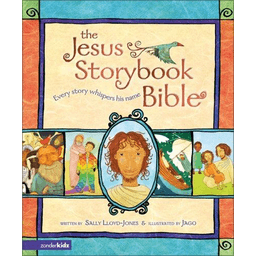 The Jesus Storybook BibleSally Lloyd-Jones’s literary, one-big-Story retelling - the best-written read-aloud for a slightly older preschooler who can sit and listen.
 The Beginner's BibleThe bright, simple cartoon classic - broad story coverage and very short text, ideal as a first Bible for the youngest listeners.
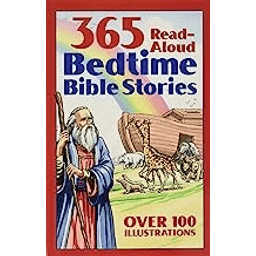 Read-Aloud Bible StoriesElla Lindvall’s oversized, very simple retellings built specifically for reading aloud to toddlers and preschoolers.
 The Bible App for KidsYouVersion’s free animated, interactive children’s Bible app - the screen-based, touch-driven companion to a print storybook.
Frequently asked questions
What ages is My First Hands-On Bible best for?
It is written for preschoolers, roughly ages three to six. The simple text and the hands-on activities are calibrated to that age, where children learn best by doing. Younger toddlers do better with the sturdier boardbook editions, and older grade-schoolers tend to outgrow the brevity and the activities and move on to a fuller narrative Bible.
What is the "Jesus Connection"?
It is the book’s signature feature - a short, hands-on activity attached to each of its roughly 75 stories. As you read, the text cues the child to make a motion, pretend, touch something, or count, so the story and the activity happen together. The activities need no supplies or prep and are written right into the read-aloud, so an adult can pick the book up and use it cold.
Does it cover the whole Bible?
No. It retells around 75 stories from across the Old and New Testaments - broad enough to give a young child the sweep of the Bible’s major events, but not comprehensive and not verse by verse. Like other storybook Bibles, it is a first introduction to the stories and a companion to Scripture reading, not a replacement for the text itself.
Which tradition or canon does it follow?
It follows the Protestant 66-book canon and the framing that shaped it. It does not include deuterocanonical books, so Catholic and Orthodox families wanting those - and Latter-day Saint families wanting Book of Mormon content - should plan to supplement it or choose a book published within their own tradition.
Is it a word-for-word Bible translation?
No. It is a narrative retelling. The stories are simplified, paraphrased, and lightly framed to land for a preschooler, so a parent wanting verse-by-verse Scripture should know it is an interpretive retelling rather than a translation. It is designed as a young child’s first encounter with the stories, not as the biblical text.
Does it work for Sunday school or a classroom?
Yes - it was designed by Group Publishing, which specializes in active-learning church curriculum, and the hands-on activities translate directly to a group. Preschool teachers and Sunday-school volunteers use it to lead a whole room of young children through the same motions and pretend play, and church suppliers offer multi-copy and curriculum bundles for that purpose.
Which edition should I buy?
The standard hardcover (around $17 as of writing) is the right default for most homes and classrooms - it is the full edition with the hands-on activities. For a one- or two-year-old, a sturdier boardbook-style edition (roughly $10-13) is a better starting point. Used copies turn up cheaply since the book has sold steadily since 2010, and churches can buy multi-copy bundles for program use.
Sources & further reading
More Children's Bibles & Kids Books
The Jesus Storybook BibleThe children's storybook Bible that retells 44 stories as a single rescue plan pointing to Jesus - the one most parents and grandparents end up gifting, and the one adults quietly read for themselves.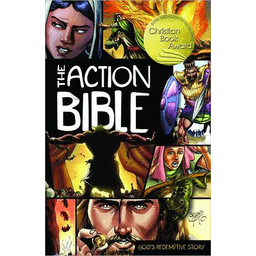 The Action BibleThe best-selling graphic-novel Bible of its era - 215+ Scripture narratives told in full-color comic art, built to pull reluctant and visual readers into the story.
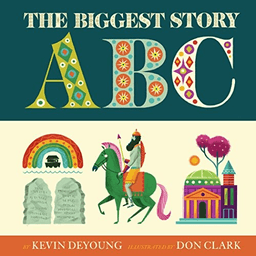 The Biggest StoryKevin DeYoung and Don Clark trace the whole Bible as one story - from the garden, through the promised snake crusher, to the new creation - in a single flowing read-aloud for ages four to eight.The Beginner's BibleThe illustrated storybook Bible that has been the default 'first Bible' for toddlers and preschoolers for more than thirty years - and quietly became the art behind the most-downloaded kids' Bible app in the world.
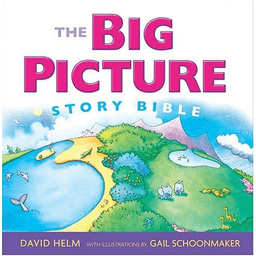 The Big Picture Story BibleThe storybook Bible that tells the whole Bible as one story - God's people, in God's place, under God's rule - written slow and gentle enough for a two-year-old on your lap.
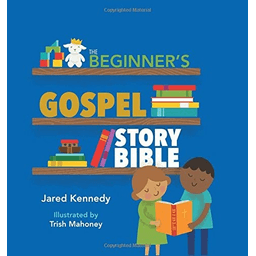 The Gospel Story BibleThe 156-story family storybook Bible that ends every story by connecting it to Jesus - and the hub of a whole devotional-and-curriculum ecosystem built for reading with a range of ages at once.