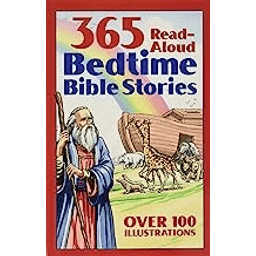
- Starting price
- ~$14 per volume
- Free tier
- No
- Platforms
- Hardcover (multi-volume series)
- Developer
- Moody Publishers
- Launched
- 1982
- Updated
- May 31, 2026
The verdict
The most patient Bible storybook on the shelf, built for the age almost nothing else is built for - babies and toddlers, roughly one to four. Each volume tells only a handful of stories, in tiny words, with enormous repetition and big simple pictures a pre-verbal child can read. That extreme simplicity is the whole design, not a shortcoming. If you need a literal first Bible for a child too young to sit through a sentence, this series is in a class of its own. Just know it is a Protestant 66-book selection, deliberately light on doctrine, and you will need several volumes to cover much ground.
Try Read-Aloud Bible Stories ↗Opens moodypublishers.com
Read-Aloud Bible Stories has quietly become the Bible that a lot of children meet before they can talk. It is the book on the floor of the nursery, in the crib, in the diaper bag - the one a parent reaches for when the audience is a one-year-old who cannot yet sit through a full sentence, let alone a paragraph. Where most children's Bibles aim at a preschooler who can follow a short story, Ella K. Lindvall's series aims a full stage younger, at the lap-sitting, picture-pointing, attention-of-a-hummingbird child. That is a narrow target, and the series hits it more squarely than almost anything else in print.
It did not start as the sprawling set families know now. The first volume appeared from Moody Publishers in 1982, written by Lindvall and illustrated by H. Kent Puckett, and it worked well enough that it grew into a multi-volume series - around five volumes in all, each adding a small clutch of stories in the same format. The format is the entire product, and it is ruthlessly disciplined. It doesn't try to be comprehensive. It doesn't try to teach doctrine. It doesn't try to do anything a parent or a Sunday-school teacher does better. What it does is hold the attention of a child who is barely verbal, and for that one job it is purpose-built.
What you actually get in each hardcover volume is only a handful of Bible stories - not ninety, not thirty, but a small number - each told very slowly across many pages, in tiny vocabulary, with heavy repetition and one large, uncluttered picture at a time. A single story will circle back on the same simple phrase again and again, the way you naturally talk to a toddler, and it pauses constantly to ask the child to look at the picture. The whole series is engineered around the reality that a one-year-old participates by pointing and repeating, not by listening quietly, and the text is shaped to that reality on every page.
There is a tradeoff baked into that design, and it is the single fact a buyer most needs to understand. Extreme simplicity and repetition is what makes the series work for a baby and what makes it feel thin to a five-year-old. A handful of stories per volume means a family wanting broad coverage buys several books, or graduates to a fuller storybook Bible sooner than they expect. None of that is a flaw - it is the cost of building a Bible for an age group most publishers skip entirely - but it shapes how families end up using it.
✓ The good
- Built for an age almost nothing else serves - babies and toddlers roughly one to four, the pre-verbal "lap book" stage that most children's Bibles are too wordy for
- Tiny vocabulary and heavy repetition by design - each story circles the same simple phrases the way a parent naturally talks to a toddler, which is exactly what holds a young child's attention
- Big, simple, uncluttered pictures - one clear image at a time that a child who cannot read words can read emotionally, with the text pausing constantly to invite pointing
- Genuinely engineered for reading aloud - the pacing, the pauses, and the repeated lines are tuned for a parent on a couch with a squirming child, not for silent reading
- Often a family's literal first Bible - durable hardcovers that survive the youngest hands and become the book a child meets before any other scripture
- A multi-volume series that lets you add stories as a child grows - start with one volume and build the set over months rather than buying everything at once
- Inexpensive per volume - around $14 each, with used copies common at library sales and secondhand shops
✗ Watch out
- Only a handful of stories per volume - readers wanting broad coverage in one book (the 90+ stories of The Beginner's Bible, say) will need several volumes or a different title
- Very little doctrinal content - the series narrates simple stories for toddlers and leaves all framing to the parent, which is the right call for the age but a limit if you want depth
- A Protestant 66-book selection - its stories come from the 66-book canon, so Catholic and Orthodox families wanting children's versions of the Deuterocanonical books will need something else
- Short shelf life per child - the spareness and repetition that work for a one-year-old feel thin to a five-year-old, so most children graduate to a fuller storybook Bible early
- Sold mostly as individual hardcovers - there is no single 'whole Bible' volume, so covering more of the story means buying and storing multiple books
- Art style is dated and plain to some adults - the simple 1980s illustrations that toddlers respond to read as old-fashioned to a few parents who prefer a more modern look
Best for
- Parents reading to a baby or toddler aged roughly one to four
- Families wanting a literal first Bible before a child can talk
- Bedtime and lap reading where pointing and repetition matter more than plot
- Church nurseries and infant rooms needing a durable, age-down pick
Avoid if
- You want broad coverage in a single volume
- You want richer, more literary storytelling for a school-age child
- You want children's versions of the Deuterocanonical books
- Your child is past five and reading longer stories
What Read-Aloud Bible Stories is
Read-Aloud Bible Stories is a multi-volume series of Bible storybooks for the very youngest children, written by Ella K. Lindvall, illustrated by H. Kent Puckett, and published by Moody Publishers. The first volume appeared in 1982, and the series grew to around five volumes, each containing only a handful of stories told very slowly - tiny vocabulary, heavy repetition, and one large, simple picture at a time. The design target is the baby-to-toddler range, roughly ages one to four: the stage where a child cannot yet sit through a full story and participates by pointing at pictures and repeating words.
It is broadly evangelical and non-denominational in flavor, drawing its stories from the Protestant 66-book canon and keeping the doctrinal content almost nonexistent - appropriate for an audience that is still learning to talk. The series makes no attempt at theological exposition; it narrates a few stories in the simplest possible language and leaves all interpretation to the adult reading aloud. For many families it serves as a literal first Bible, the book a child meets before any other, used at bedtime and on laps long before a fuller storybook Bible would land.
Why parents reach for Read-Aloud Bible Stories for the littlest kids
The single biggest practical difference between Read-Aloud Bible Stories and the children's Bibles around it is the age it is built for. Most of the books parents compare it to - The Beginner's Bible, The Jesus Storybook Bible, The Big Picture Story Bible - are written for preschoolers and grade-schoolers who can follow a real story, roughly ages three through ten. Lindvall's series aims a full stage younger, at the one-to-four window, where a child cannot yet sit through a paragraph and a story has to survive constant interruption, pointing, and repetition. That is a genuinely different design problem, and almost no other Bible storybook attempts it on purpose.
The second thing parents notice is how it is meant to be used. This is not a book a child reads quietly or even listens to passively - it is a script for an interaction. The repeated phrases are there so a toddler can chime in. The big single pictures are there so the child can point and the parent can name. The slow pacing is there because a one-year-old's attention arrives in two-second bursts. For the specific job of putting a Bible in front of a child who is barely verbal, that combination of right-sized text, repetition, and big simple art is exactly why it tends to be the one parents reach for first.
Extreme simplicity and repetition: the format that fits a toddler
The defining trait of the series is how little it says and how often it says it. A single story is told across many pages in very short sentences, circling back on the same simple phrase again and again - the way a parent naturally talks to a one-year-old. Vocabulary is stripped to words a toddler already knows, complex names and details are minimized, and the plot is reduced to its plainest shape. Each story closes with a tiny, concrete takeaway pitched at the child's level rather than a doctrinal summary. The repetition is not padding; it is the mechanism by which a pre-verbal child latches onto the story and starts to participate.
This matters because the usual children's-Bible problem at this age is too many words, not too few. A book aimed at a toddler that leans on paragraphs loses the child in seconds; a book that repeats a simple phrase the child can predict keeps them engaged and lets them join in. The spareness that makes the series feel thin to a five-year-old is the exact thing that makes it work for a one-year-old. Parents who understand that treat the book for what it is - a Bible engineered around a toddler's attention span - rather than judging it against storybooks built for older kids.
Big, simple pictures and read-aloud pacing: a lap book by design
Each page carries one large, uncluttered illustration by H. Kent Puckett, with very little visual noise competing for a young child's eye. The art does a lot of the storytelling work at an age that processes faces and actions long before it processes sentences: a child who cannot read a word can see who is happy, who is afraid, who is being rescued. The text is built to pause at these images and effectively invite the child to look and point, so the reading becomes a back-and-forth rather than a monologue. It is a lap book in the truest sense - designed to be read with a child on your knee, not handed to them to read alone.
The read-aloud pacing is the other half of the design, and it is right there in the title. The sentences are shaped for a voice, the repeated lines give a toddler something to chime in on, and the slow rhythm matches the two-second bursts of attention a very young child offers. This is why the series survives the chaos of reading to a squirming baby in a way denser books do not: it expects the interruptions and is built around them. For a parent on a couch at bedtime with a child who will not sit still, that tuning is the whole value, and it is rare to find a Bible storybook that gets it this right for the age.
A multi-volume series: a few stories at a time, growing with the child
Rather than packing dozens of stories into one fat book, the series spreads a smaller number of stories across around five hardcover volumes, each adding a fresh clutch in the same slow, repetitive style. A family can start with a single volume, learn whether the format fits their child, and add books over months as the child grows into more stories. The stories span familiar arcs across both Testaments - creation, the patriarchs, the life and miracles of Jesus, and more - chosen for their accessibility to a very young listener rather than for completeness.
The tradeoff is built into this structure and worth naming plainly. Because each volume holds only a handful of stories, covering much of the scriptural storyline means buying and shelving several books, where a single-volume storybook Bible would do it in one. That is the cost of the age-down design: the same slow pacing that makes each story work for a toddler is why there are only a few per book. Many families use the series as a stepping stone - a literal first Bible for the baby-and-toddler years - and then graduate a child to a broader storybook Bible once they can sit through longer stories.
Pricing
Single volume
~$13-15
One hardcover of the series - a handful of stories in the trademark slow, repetitive style. The natural way to try the format before committing.
Volumes 1-5 set
~$60-70
The full series bought together, covering the widest run of stories the format offers. The best overall value for a family planning to read it for a few years.
Used / library copies
~$2-6
Secondhand hardcovers turn up constantly at library sales, thrift stores, and church giveaways - the cheapest way to assemble the set one book at a time.
Kindle / ebook (where available)
Varies
Digital editions appear for some volumes. Handy for travel, but the format loses the lap-and-paper feel that matters most at this age.
Read-Aloud Bible Stories is not free, but it is inexpensive per book. A new hardcover volume runs roughly $13 to $15 - call it the everyday price of trying the format - and a family can start with a single volume rather than committing to the whole series up front. Because each book holds only a handful of stories, the per-volume cost is the main thing to weigh against how much of the series you actually want.
Buying the full series is the better value for a family planning to read it across the baby-and-toddler years. The complete run of around five volumes typically lands somewhere near $60 to $70 bought together, and it covers the widest set of stories the format offers. For most households that intend to use the series for more than a few months, the set is the balanced choice - though there is nothing wrong with assembling it one volume at a time.
Used copies are easy to find and are how a lot of families build the set. Secondhand hardcovers turn up constantly at library sales, thrift stores, and church giveaways for a couple of dollars apiece, which makes filling in the volumes cheap if you are patient. Digital editions appear for some volumes where available; they are handy for travel but lose the lap-and-paper feel that matters a great deal at this age.
Most families do not need every volume at once. Start with one to see whether your child takes to the slow, repetitive style, add volumes as they grow into more stories, and buy the set together only if you already know the format works for your household. The hardcover is the format that matters here - a book this age is meant to be held, pointed at, and chewed on, not read off a screen.
Limitations and considerations
Few stories per volume. Each book in the series carries only a handful of stories, by design, which means covering much of the Bible takes several volumes. Readers who want broad coverage in a single book - the 90-plus stories of The Beginner's Bible, for instance - will find any one volume here narrow, and will either buy the full set or reach for a different title. The depth-per-page is traded for breadth, on purpose, to fit a toddler.
Minimal doctrinal content. The series narrates a few simple stories and stops. It does not explain the Trinity, the atonement, salvation, or the sacraments in any formal way - it leaves all of that to the adult reading aloud, which is exactly right for a one-year-old audience. That keeps it usable across a wide range of Christian families, but it means the book is a starting point for conversation rather than a self-contained teaching tool.
A 66-book selection. The stories are drawn from the Protestant 66-book canon. That is a neutral fact about the series' scope, but it matters for buyers: Catholic and Orthodox parents who want children's versions of the Deuterocanonical books will need a children's Bible from their own tradition, and Latter-day Saint families looking for stories beyond the Bible will likewise need to supplement.
A short runway per child. The spareness and repetition that make the series work for a baby make it feel thin to a five-year-old, so most children outgrow it early and move to a fuller storybook Bible. That is a category trait of an age-down book rather than a defect, but it means the series earns its keep over the toddler years, not a whole childhood, and many families buy a step-up title right behind it.
Dated, plain illustrations. The simple 1980s art is part of why the series works for a very young child, but its old-fashioned look reads as plain to some adults accustomed to more modern children's-book illustration. It is a matter of taste rather than function - toddlers respond to the clear single images regardless - but it is worth knowing before buying if illustration style matters to you.
Read-Aloud Bible Stories vs. The Beginner's Bible vs. The Big Picture Story Bible
These three sit at the youngest end of the children's-Bible shelf, and they step up in age fairly cleanly. Read-Aloud Bible Stories is the most age-down of the three - built for babies and toddlers roughly one to four, with only a handful of stories per volume, tiny vocabulary, heavy repetition, and big single pictures meant for a lap and a pointing finger. The Beginner's Bible is the classic first storybook Bible for preschoolers, ages about three to six, with 90-plus short stories and bright, friendly cartoon art in one volume. The Big Picture Story Bible (David Helm, illustrated by Gail Schoonmaker) also skews young, ages roughly two to seven, and traces one connected storyline across both Testaments at a gentle, simple level.
Different strengths. Read-Aloud Bible Stories is better for the very youngest stage - short enough and repetitive enough to hold a one-year-old, where the others would lose them. The Beginner's Bible is better once a child can sit through a short story and you want broad coverage in a single, recognizable book. The Big Picture Story Bible is better for a parent who wants a simple connected narrative - a sense of the whole storyline - for a toddler or young preschooler rather than a collection of separate episodes. If your child is barely verbal, start here. If they are three to six, The Beginner's Bible is the natural pick. If you want a single storyline at a young age, The Big Picture Story Bible is the one.
All three are broadly evangelical and Protestant in their story selection and are read widely across Christian traditions, with families often owning more than one as a child grows. Read-Aloud Bible Stories is the most age-down and the most common true first Bible of the group; the other two are where many families graduate to next.
The bottom line
Read-Aloud Bible Stories is the rare Bible built for the age before a child can really listen. The tiny vocabulary, the constant repetition, and the big single pictures are tuned for a one-year-old on a lap who would rather point than sit still, and almost nothing else on the shelf serves that stage as deliberately. The handful of stories per volume and the 66-book selection are real things to know going in - they make this a literal first Bible rather than a complete or long-term one, and rather than dealbreakers. If you are reading to a baby or toddler and want a Bible shaped to that reality, this series is still the place to start.
Alternatives to Read-Aloud Bible Stories
 The Beginner's BibleThe best-selling first storybook Bible for ages 3-6 - 90+ short stories and warm cartoon art in a single volume. The natural step up once a child can sit through a story.
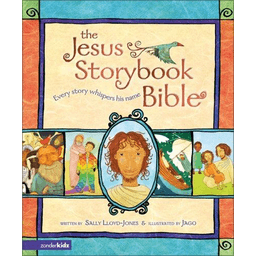 The Jesus Storybook BibleSally Lloyd-Jones's lyrical children's Bible for ages 4-10 - longer and more literary, tracing one storyline toward Jesus. Where many families head a few years on.
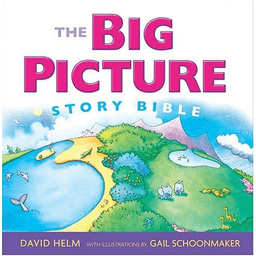 The Big Picture Story BibleDavid Helm's gentle, connected-storyline Bible for ages 2-7 - simple text and one continuous narrative, the closest peer here for very young children.
 Bible App for KidsYouVersion's free animated kids' Bible app, 100M+ installs - the interactive screen companion to a print first Bible for households that mix paper and tablet.
Frequently asked questions
What age is Read-Aloud Bible Stories for?
Roughly ages one to four - babies and toddlers, the 'lap book' stage. The stories are told very slowly with tiny vocabulary, heavy repetition, and big simple pictures, all tuned for a child who cannot yet sit through a sentence. Most children graduate to a fuller storybook Bible like The Beginner's Bible by around five.
How many stories are in Read-Aloud Bible Stories?
Only a handful per volume, by design. Rather than packing dozens of stories into one book, the series spreads a small number across around five volumes, telling each one very slowly with lots of repetition. Covering more of the Bible means collecting multiple volumes rather than buying a single comprehensive book.
How many volumes are in the series, and should I buy them all?
There are around five volumes. Start with one to see whether your child takes to the slow, repetitive style, then add volumes as they grow into more stories. The full set (roughly $60-70 together) is the better value for a family planning to read it across the toddler years, but assembling it one book at a time - including used - works just as well.
Why is the text so simple and repetitive?
On purpose. The series is engineered for babies and toddlers, who participate by pointing at pictures and repeating words rather than listening quietly. The tiny vocabulary and repeated phrases are the mechanism that holds a pre-verbal child's attention and lets them chime in. The same spareness that fits a one-year-old is why the books feel thin to an older child.
Is Read-Aloud Bible Stories tied to a particular denomination?
It is broadly evangelical and non-denominational, published by Moody Publishers, with stories drawn from the Protestant 66-book canon and almost no doctrinal framing. It narrates simple stories and leaves interpretation to the adult reading aloud, which is what lets it be used across a wide range of Christian families.
Is this a complete Bible?
No. It is a storybook series with only a handful of stories per volume, drawn from the 66-book canon, not a complete or verse-by-verse Bible. Families wanting children's versions of the Deuterocanonical books, or comprehensive coverage in one book, will want a different title.
Where should we go after Read-Aloud Bible Stories?
Once a child can sit through a short story, The Beginner's Bible (ages 3-6) is the most common next step for broad coverage, and The Big Picture Story Bible (ages 2-7) is a close peer with a single connected storyline. For richer storytelling a few years on, The Jesus Storybook Bible (ages 4-10) is the usual move, and the free Bible App for Kids extends the experience on screen.
Sources & further reading
More Children's Bibles & Kids Books
The Jesus Storybook BibleThe children's storybook Bible that retells 44 stories as a single rescue plan pointing to Jesus - the one most parents and grandparents end up gifting, and the one adults quietly read for themselves.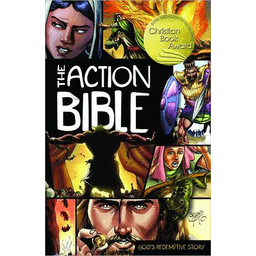 The Action BibleThe best-selling graphic-novel Bible of its era - 215+ Scripture narratives told in full-color comic art, built to pull reluctant and visual readers into the story.
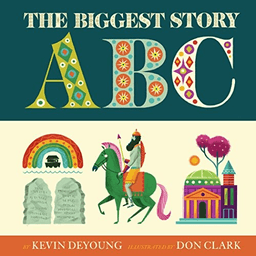 The Biggest StoryKevin DeYoung and Don Clark trace the whole Bible as one story - from the garden, through the promised snake crusher, to the new creation - in a single flowing read-aloud for ages four to eight.The Beginner's BibleThe illustrated storybook Bible that has been the default 'first Bible' for toddlers and preschoolers for more than thirty years - and quietly became the art behind the most-downloaded kids' Bible app in the world.The Big Picture Story BibleThe storybook Bible that tells the whole Bible as one story - God's people, in God's place, under God's rule - written slow and gentle enough for a two-year-old on your lap.
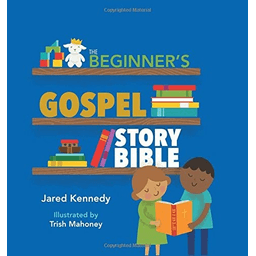 The Gospel Story BibleThe 156-story family storybook Bible that ends every story by connecting it to Jesus - and the hub of a whole devotional-and-curriculum ecosystem built for reading with a range of ages at once.