- Starting price
- ~$18 paperback
- Free tier
- No
- Platforms
- Print · Kindle
- Developer
- Eerdmans
- Launched
- 1955
- Updated
- May 31, 2026
The verdict
The standard compact text on the doctrine of salvation from a Reformed vantage - two short books in one, on what the cross accomplished and how that accomplishment is applied to a person step by step. It is dense, technical, and unapologetically systematic. For a reader who already wants to think hard about the atonement and the order of salvation, almost nothing does the job in fewer pages.
Try Redemption Accomplished and Applied ↗Opens eerdmans.com
Redemption Accomplished and Applied has quietly become the book Reformed seminaries reach for when they want one short, rigorous treatment of the doctrine of salvation that a student can actually finish in a term. John Murray taught systematic theology at Westminster Theological Seminary for nearly thirty years, and the book reads like a distilled lecture course - economical, precisely worded, every sentence carrying weight. It is not long. It is, page for page, one of the most concentrated theology books a general reader is likely to pick up.
It is not a survey of the whole faith. It does not try to introduce you to Christianity. It does not soften its argument for a casual reader. What it does is take one enormous subject - salvation - and split it cleanly in two: first the redemption Christ accomplished on the cross (its nature, its necessity, its perfection, and its extent), then the redemption applied to the individual (the sequence by which a saving work done two thousand years ago becomes effective in a particular life today).
Murray wrote from inside the Reformed tradition, and the book argues that tradition's positions - particular (or definite) atonement, and a specific order of salvation running from effectual calling through regeneration, faith, justification, adoption, sanctification, perseverance, and glorification. Readers from Wesleyan and Arminian, Catholic, Orthodox, and Latter-day Saint backgrounds will recognize where the argument is staking out distinctively Reformed ground, and on the extent of the atonement in particular they will find Murray defending a view that other traditions contest. That is worth knowing going in. It is also part of why the book remains the reference point for the conversation: Murray states the Reformed position about as carefully and compactly as it has been stated.
✓ The good
- The most economical serious treatment of the order of salvation in print - Murray covers calling, regeneration, faith, justification, adoption, sanctification, perseverance, and glorification in a fraction of the pages a systematic theology would spend
- The two-part structure is genuinely clarifying - separating what Christ accomplished from how it is applied keeps two debates that often blur together cleanly distinct
- Murray is a precise writer - definitions are stated with care, terms are not used loosely, and the argument rarely wastes a sentence
- The chapter sequence on the order of salvation is the clearest popular map of the Reformed ordo salutis available, and it is the part most readers cite years later
- Scripture is worked closely throughout - Murray builds from exegesis of specific texts rather than asserting a system and hanging verses on it
- Short enough to read in a few sittings and durable enough to re-read - it functions as a reference you return to rather than a book you finish once
- Has stayed continuously in print from Eerdmans since 1955 with almost no need for revision, which says something about how settled the writing is
✗ Watch out
- Dense and technical - Murray assumes you already know what words like propitiation, expiation, justification, and regeneration mean, and he does not stop to onboard a beginner
- Defends particular (definite) atonement - the view that Christ died specifically and effectually for the elect - which Wesleyan, Arminian, Catholic, Orthodox, Latter-day Saint, and other readers do not hold, and the case will not persuade everyone
- Argues a specific order of salvation as the right one - readers in traditions that frame the application of salvation differently (or that resist a fixed sequence at all) will agree with parts and not others
- Mid-century academic prose - clear and exact, but formal, with long sentences and no contemporary warmth or storytelling to carry a tired reader
- No illustrations, sidebars, study questions, or glossary - the reader gets argument and chapter divisions and nothing else
- Not a first book - it assumes you already want to think rigorously about salvation, not whether the topic matters
Best for
- Seminarians and students needing a compact, rigorous text on the doctrine of salvation
- Pastors and teachers wanting a clear map of the order of salvation for sermon or class prep
- Readers in the Reformed tradition who want their own position stated precisely
- Anyone studying the extent-of-the-atonement debate who wants the careful version of one side
Avoid if
- You are new to theological vocabulary and want a book that defines terms as it goes
- You want a neutral survey that lays out every tradition’s view of salvation at equal length
- You prefer warm, narrative, devotional prose over tight systematic argument
- You are looking for an introduction to the Christian faith rather than a deep dive on one doctrine
What Redemption Accomplished and Applied is
Redemption Accomplished and Applied is a compact systematic treatment of the doctrine of salvation, first published by Eerdmans in 1955 and continuously in print since. As the title signals, it is organized in two parts. Part One, "Redemption Accomplished," treats the atonement under four headings: its necessity, its nature, its perfection, and its extent. Part Two, "Redemption Applied," walks through the order in which that finished work is brought to bear on an individual - effectual calling, regeneration, faith and repentance, justification, adoption, sanctification, perseverance, union with Christ, and glorification.
It is a standard text on the ordo salutis - the Latin phrase for the 'order of salvation,' the sequence by which theologians describe how a person comes to be saved. Murray was Professor of Systematic Theology at Westminster Theological Seminary in Philadelphia, and the book carries the compression of a scholar setting down the core of a course he had taught many times. It is short - well under 200 pages in most printings - but it is not light reading; the brevity comes from precision, not from simplification.
Why students and pastors keep reaching for this one
The single biggest practical difference between Redemption Accomplished and Applied and a full systematic theology is compression. A reader who wants to understand the order of salvation can sit down with Murray and have the whole sequence - calling, regeneration, faith, justification, adoption, sanctification, perseverance, glorification - laid out in a couple of hundred tightly argued pages, each step defined and distinguished from the one before it. Most books that treat the subject at this level of care are three times the length and treat salvation as one chapter among fifty. Murray gives it a whole book and still keeps it short.
The other reason it has stayed on syllabi for seventy years is the two-part frame. By separating what Christ accomplished from how that accomplishment is applied, Murray keeps two questions distinct that beginners constantly run together - the objective work of the cross and the subjective experience of being saved. Readers who go on to disagree with his conclusions on the atonement’s extent or the exact order of salvation often still adopt his structure, because the distinction itself clarifies the whole field before any particular position is argued.
Part One - the atonement’s necessity, nature, perfection, and extent
The first half of the book treats redemption as accomplished - the finished work of Christ on the cross - under four questions. Was the atonement necessary, and in what sense? What was its nature (Murray works through sacrifice, propitiation, reconciliation, and redemption as the four categories the New Testament uses)? Was it perfect and complete in itself? And for whom was it made - the question of its extent? Murray defines each term with characteristic care; the chapter on the nature of the atonement in particular is a tightly argued walk through the biblical vocabulary that many readers find clarifying regardless of where they land on the harder questions.
The most contested chapter is the one on extent. Murray argues for particular (or definite) atonement - the Reformed position that Christ died not merely to make salvation possible for everyone but to actually secure the salvation of those given to him. This is one of the genuine dividing lines in Christian theology: Wesleyan and Arminian Protestants, Catholics, the Orthodox, Latter-day Saints, and many others hold that Christ’s death was made for all people without exception, and they read the same passages to a different conclusion. Murray states the Reformed case about as compactly and rigorously as it has been put, which is exactly why the chapter is assigned even in classrooms that disagree with it. A reader should know going in that this is the section where the book is arguing a position others actively dispute - and should weigh it as one carefully made case among several.
Part Two - the order of salvation, step by step
The second half is the part most readers come for. Murray takes the application of redemption and lays it out as an ordered sequence: effectual calling (God’s summons that actually brings a person to himself), regeneration (the new birth), faith and repentance, justification (being declared righteous), adoption (being received as a child of God), sanctification (being made holy over a lifetime), perseverance (being kept to the end), and glorification (the final state). He insists the order is not arbitrary - that calling logically precedes faith, that justification is distinct from sanctification, and so on - and he threads union with Christ through the whole sequence as the reality that holds the steps together.
This is the clearest short map of the Reformed ordo salutis in popular print, and it is genuinely useful even to a reader who frames salvation differently, because it makes the distinctions explicit. The sharp separation of justification (a one-time declaration) from sanctification (a lifelong process), for instance, is a hallmark of the Reformed and broader Protestant reading; Catholic, Orthodox, and Latter-day Saint theology relate the two in other ways, and a reader from those traditions will see precisely where Murray’s sequence parts from their own. That clarity cuts both ways - it is as useful for understanding a disagreement as for settling into agreement.
Murray’s Reformed vantage - precise, systematic, text-driven
Murray wrote from inside the confessional Reformed tradition - a Scottish Presbyterian who spent the bulk of his career as Professor of Systematic Theology at Westminster Theological Seminary, an institution founded to carry forward the older Princeton theology. That location is audible on every page. The instinct is systematic: define the term, distinguish it from adjacent terms, ground it in specific texts, and fit it into a coherent order. There is no storytelling, little warmth on the surface, and no attempt to meet a reluctant reader halfway.
It matters for what kind of book this is. Murray is not writing a neutral comparison of how different traditions understand salvation; he is setting out one tradition’s account with maximum care. The value of that for a reader outside the Reformed world is precision - you get the strongest, most clearly stated version of these particular positions, which is more useful than a watered-down summary when you are trying to understand the actual shape of the disagreement. Pastors, students, Catholic and Orthodox readers studying Protestant soteriology, Latter-day Saint readers comparing accounts of how salvation is applied, and Wesleyan readers weighing the case for definite atonement against their own all get something from reading the position stated by someone who held it with rigor.
Pricing
Paperback
~$18
The standard Eerdmans edition and the copy most readers own. Inexpensive for a book you will mark up and return to, and the right default for nearly everyone.
Kindle
~$15
Full text, searchable, with highlighting that syncs across devices. A real advantage for a book this term-dense - being able to jump back to where Murray first defined "effectual calling" speeds up a second reading.
Used / library
under $10 used
A long-in-print title, so used copies are easy to find and most seminary libraries carry several. The genuinely free option for students.
The paperback at around $18 is the version almost everyone should buy. It is inexpensive for a serious theology book, it is the edition most quotations and class assignments are keyed to, and the print quality from Eerdmans is fine for a book you will underline heavily.
The Kindle edition at roughly $15 is the right call if you read on a tablet or want your highlights to export. The book is term-dense enough that searchable text is a genuine advantage - Murray reuses precise vocabulary across chapters, and being able to jump back to where he first distinguished, say, 'effectual calling' from the general call speeds up a second reading considerably.
There is no audiobook edition in wide circulation, which is just as well - the argument is compressed enough that it would be hard to follow by ear, with definitions stacked closely and frequent back-references to earlier terms.
There is no free version of this book and no streaming-subscription tier that includes it. Used copies run under ten dollars given how long it has been in print, and most seminary and many public libraries carry it - which is the genuinely free way in.
Where Redemption Accomplished and Applied falls behind
Accessibility. This is the book’s real cost. Murray assumes a working theological vocabulary - propitiation, expiation, regeneration, justification, imputation - and does not define those terms for a newcomer the way a more introductory book would. A reader without that background can get through it, but only slowly and with a reference handy. It is concise precisely because it is dense, and the two are the same fact.
Even-handedness on the atonement’s extent. The book argues the Reformed view of definite atonement rather than surveying the alternatives at equal length. Murray represents the opposing readings only enough to answer them; a reader wanting the Wesleyan, Arminian, Catholic, Orthodox, or Latter-day Saint case for a universal extent in its own best form will need to read those traditions directly. The book is a strong statement of one position, not a balanced map of all of them.
Format. There are no sidebars, no diagrams of the order of salvation, no study questions, no glossary - just paragraphs and chapter headings. For the audience Murray wrote for that is fine, but readers used to the formatting affordances of contemporary Christian publishing, or wanting a visual chart of the ordo salutis, will not find them here.
Newer scholarship. The book is from 1955, and it has not been substantially revised. Major later conversations - the New Perspective on Paul and the debates over justification it reopened, more recent cross-traditional work on union with Christ - are obviously not engaged. The core argument stands on its own terms, but the book is a period statement, not a survey of the current literature.
Breadth. By design it covers salvation and only salvation. It is not a systematic theology and makes no attempt to treat the doctrine of God, Scripture, the church, or last things except where they bear directly on redemption. A reader wanting a one-volume reference across all the loci needs a full systematic alongside it.
Redemption Accomplished and Applied vs. The Cross of Christ vs. Grudem’s Systematic Theology
These three turn up together on a lot of soteriology reading lists, and they do genuinely different jobs. Different strengths. John Stott’s The Cross of Christ is the broad, irenic deep dive on the atonement - roughly 350 pages, with real chapters engaging Christus Victor, satisfaction, and moral-influence accounts before arguing its own, and a back third on what the cross means for worship, suffering, and ethics. Stott is longer, warmer, more pastoral, and more concerned to represent other views at length. He treats the cross; he does not map the order of salvation.
Murray’s Redemption Accomplished and Applied is the compact, systematic specialist. It is far shorter, far more technical, and it does something Stott does not: it lays out the application of salvation - calling, regeneration, faith, justification, adoption, sanctification, perseverance, glorification - as an ordered sequence. It argues a more sharply Reformed line (definite atonement, a fixed ordo salutis) and represents the alternatives more briefly. Read Stott to sit with the cross at length; read Murray for the tight map of how that work is applied.
Wayne Grudem’s Systematic Theology is the reference shelf - about 1,500 pages across every major doctrine, with the atonement and the order of salvation as a few chapters among dozens. Grudem is broadly Reformed and lands near Murray on many of these questions, but at survey altitude. Use Grudem to look a doctrine up; use Murray to think hard about salvation specifically in one short, concentrated volume.
The bottom line
Seventy years on, Redemption Accomplished and Applied is still the compact standard on the doctrine of salvation - the book seminarians are assigned and pastors keep within reach when they want the order of salvation laid out cleanly and the atonement treated with rigor in as few pages as possible. It argues a specific Reformed line, defending definite atonement and a particular ordo salutis that Wesleyan, Catholic, Orthodox, Latter-day Saint, and other readers will weigh against their own, and it assumes a vocabulary it does not stop to teach. But for a reader who already wants to think carefully about what the cross accomplished and how that salvation reaches a person, almost nothing does the job better in so little space.
Alternatives to Redemption Accomplished and Applied
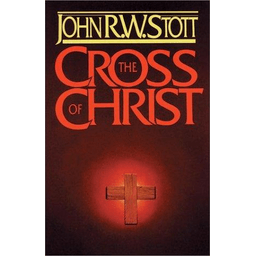 The Cross of ChristJohn Stott’s broad, irenic treatment of the atonement - longer, warmer, and more concerned to engage every view at length. Read Stott to sit with the cross; read Murray for the compact map of how salvation is applied.
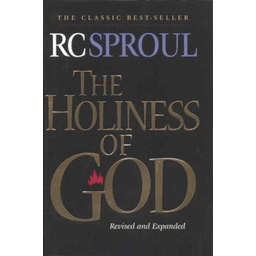 The Holiness of GodR. C. Sproul’s accessible, vivid study of God’s holiness and what it means for sin and grace. A gentler on-ramp from a related Reformed vantage if Murray’s density is too steep a first step.
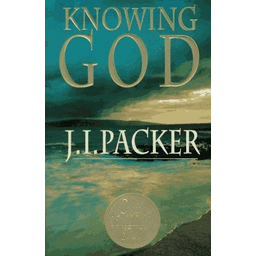 Knowing GodJ. I. Packer’s devotional systematic theology - broader and warmer than Murray, with celebrated chapters on propitiation and adoption. Read Packer for the wide angle, Murray for the deep, ordered dive on salvation.
 Systematic Theology (Grudem)Wayne Grudem’s 1,500-page one-volume systematic. Use Grudem to look the doctrine of salvation up among all the others; use Murray to think hard about it on its own.
Frequently asked questions
What is the book actually about?
It is a two-part study of the doctrine of salvation. Part One, 'Redemption Accomplished,' treats Christ’s atonement - its necessity, nature, perfection, and extent. Part Two, 'Redemption Applied,' walks through the order of salvation: how that finished work is brought to bear on an individual through effectual calling, regeneration, faith and repentance, justification, adoption, sanctification, perseverance, union with Christ, and glorification. It is a standard reference on what theologians call the ordo salutis.
What is the "ordo salutis"?
Ordo salutis is Latin for 'the order of salvation.' It is the term theologians use for the sequence by which a person comes to be saved - from God’s effectual call through regeneration, faith, justification, adoption, sanctification, perseverance, and glorification. Part Two of the book is one of the clearest short treatments of this order in print. Different Christian traditions describe and sequence these steps in different ways; Murray sets out the Reformed account.
Is this a Reformed book, and does that matter for me?
Yes, it is written from the Reformed tradition, and that is worth knowing as buyer information. It defends particular (definite) atonement - the view that Christ died to actually secure the salvation of the elect - and a specific order of salvation. Wesleyan, Arminian, Catholic, Orthodox, Latter-day Saint, and other readers hold different views on the atonement’s extent and on how salvation is applied, and they read the same passages differently. The book is a precise statement of one position, not a neutral survey of all of them, so a reader from another tradition can learn a great deal from it while disagreeing with parts of the argument.
Is it hard to read for someone without a seminary background?
It is challenging. Murray writes precisely and assumes you already know terms like propitiation, regeneration, and justification - he does not pause to define the vocabulary for a beginner. A motivated reader without formal training can absolutely get through it, especially with a reference handy, but it is denser than its short length suggests. It is the kind of book to read slowly, with a pencil.
How long is it, and how does that compare to other books on the atonement?
It is short - well under 200 pages in most printings - which is unusual for a book that covers this much ground. By comparison, John Stott’s The Cross of Christ runs around 350 pages and Wayne Grudem’s Systematic Theology around 1,500. Murray’s brevity comes from compression, not simplification: he packs a full treatment of both the atonement and the order of salvation into the space most books give to a single chapter.
Which format should I buy?
The paperback at around $18 is the right default for almost everyone - inexpensive, the edition most assignments are keyed to, and easy to mark up. Choose the Kindle (~$15) if you read on a tablet or want searchable text, which genuinely helps with a book this term-dense. There is no widely available audiobook, and given how compressed the argument is, that is no great loss. Used copies run under ten dollars, and most seminary libraries carry it.
Who was John Murray?
John Murray (1898-1975) was a Scottish-born Reformed theologian who served for nearly thirty years as Professor of Systematic Theology at Westminster Theological Seminary in Philadelphia. He was known for careful, exacting biblical and theological writing, and Redemption Accomplished and Applied, published in 1955, is generally regarded as his most widely read book.
Sources & further reading
More Modern Christian Classics
Knowing GodJ.I. Packer’s 1973 classic on the doctrine of God has sold more than 1.5 million copies and is still the book most pastors hand to laypeople who want theology that goes somewhere - here’s what it actually does and who it’s for.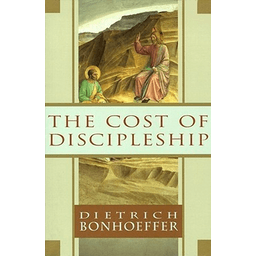 The Cost of DiscipleshipDietrich Bonhoeffer’s 1937 exposition of the Sermon on the Mount, written for pastors training under a regime that wanted them silent - and still the sharpest book in print on what following Jesus actually costs.
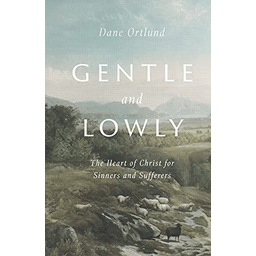 Gentle and LowlyDane Ortlund’s 23 short chapters on Matthew 11:29 have quietly become the most-given new Christian book of the decade - and the reason is not what you’d guess.The Holiness of GodR.C. Sproul’s career-defining book on the one attribute of God the church most forgets - and the vision in Isaiah 6 he believed everything else flows from.
 The Weight of GloryThe 1941 sermon many call Lewis's single finest piece of writing - "there are no ordinary people" - gathered with eight other addresses into one slim, uneven, unforgettable collection.
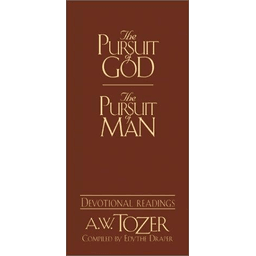 The Pursuit of GodA.W. Tozer’s ten-chapter wake-up call on knowing God personally - short, severe, and the one devotional Reformed, Wesleyan, Catholic, and Orthodox readers all seem to keep on the nightstand.