1 Samuel 4
People in this chapter
Israel loses a battle. Four thousand men fall. The elders, shaken, ask exactly the right question - Wherefore hath the LORD smitten us to day before the Philistines? - and then give exactly the wrong answer. Go get the ark. Carry it into the camp. That, when it cometh among us, it may save us. No repentance. No turning. Just a box, hauled to the front like a charm, with Eli's corrupt sons walking beside it.1
Tap any highlighted phrase to jump to the commentary that unpacks it.
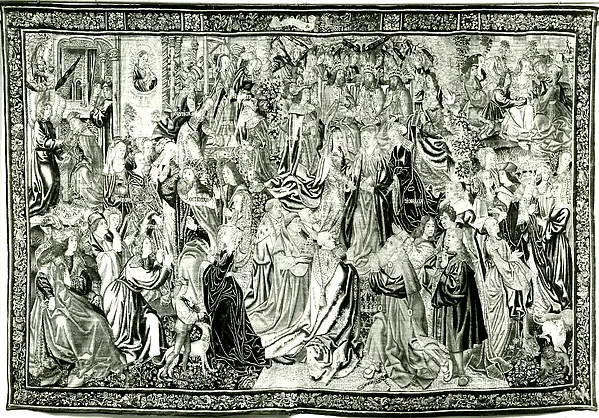
1 Samuel 4:1-5Let Us Fetch the Ark, That It May Save Us
1And the word of Samuel came to all Israel. Now Israel went out against the Philistines to battle, and pitched beside Ebenezer: and the Philistines pitched in Aphek. 2And the Philistines put themselves in array against Israel: and when they joined battle, Israel was smitten before the Philistines: and they slew of the army in the field about four thousand men. 3And when the people were come into the camp, the elders of Israel said, Wherefore hath the LORD smitten us to day before the Philistines? Let us fetch the ark of the covenant of the LORD out of Shiloh unto us, that, when it cometh among us, it may save us out of the hand of our enemies. 4So the people sent to Shiloh, that they might bring from thence the ark of the covenant of the LORD of hosts, which dwelleth between the cherubims: and the two sons of Eli, Hophni and Phinehas, were there with the ark of the covenant of God. 5And when the ark of the covenant of the LORD came into the camp, all Israel shouted with a great shout, so that the earth rang again.
Notice what the elders get right before you watch them get everything else wrong. Four thousand men have fallen, and in the shaken camp they ask, Wherefore hath the LORD smitten us to day before the Philistines? (v. 3). They do not blame the weather, the terrain, or a failure of nerve. They trace the defeat straight to the hand of God - the LORD smote us - and that is the beginning of wisdom. A people who can see the LORD's hand in their losses are halfway to repentance.
But the right question can be answered the wrong way. The honest move would have been to stay with the why - to search their own lives, to remember the corruption festering in the house of God, to turn. Instead, having sensed that this is about God, they reach for a way to manage Him rather than to meet Him.1
The narrator describes the ark with deliberate weight - the LORD of hosts, which dwelleth between the cherubims (v. 4) - and the phrase matters. This was the most sacred object Israel possessed: the gold-covered chest that held the tablets of the covenant, over whose lid, between two carved cherubim, the presence of the LORD was understood to dwell. It was the visible token of God's nearness, the place where heaven touched the camp. So this is no small thing the elders propose.
It is the holiest article of their faith, pulled from Shiloh and marched toward a battlefield. Then the narrator drops in the detail that exposes the whole enterprise: the two sons of Eli, Hophni and Phinehas, were there with the ark. The very men whose sacrilege has already drawn God's sentence are the ones escorting His throne into war. The sign of the covenant is in the hands of men who have despised the covenant.
You are meant to feel the contradiction before the disaster ever lands.
On the surface this is the high point of faith - a whole army roaring with confidence as God's presence arrives, a shout so vast that the earth rings again. Look closer, and it is hollow. There is no repentance in it, no confession of the sin that brought the first defeat, no return to the covenant whose chest they are cheering. They have not changed; they have simply acquired what they take to be a guarantee.
The shout is presumption dressed up as devotion - men who believe that because the right object has arrived, the outcome is now secured. It is worth pausing on how natural this mistake is. The same instinct lives in any heart that treats the props of religion as insurance: get the symbol in place, make the right noise, and surely God must now perform. But He does not come when summoned by a relic. He cannot be triggered by a shout.
The earth rings, and heaven stays silent, because the one thing the LORD asks for - a turned and humbled heart - is exactly the thing the shout does not contain.
1 Samuel 4:6-8God Is Come into the Camp
6And when the Philistines heard the noise of the shout, they said, What meaneth the noise of this great shout in the camp of the Hebrews? And they understood that the ark of the LORD was come into the camp. 7And the Philistines were afraid, for they said, God is come into the camp. And they said, Woe unto us! for there hath not been such a thing heretofore. 8Woe unto us! who shall deliver us out of the hand of these mighty Gods? these are the Gods that smote the Egyptians with all the plagues in the wilderness.
Here is the sharp irony the narrator wants you to feel: the uncircumcised enemy takes the arrival of Israel's God far more seriously than Israel does. The shout carries across the lines, the Philistines grasp that the ark of the LORD was come into the camp (v. 6), and they are afraid - God is come into the camp… Woe unto us! (v. 7). They remember the reputation: these are the Gods that smote the Egyptians with all the plagues in the wilderness (v. 8).
Their theology is muddled. They speak of Gods in the plural, reading the LORD through their own crowded pantheon, and they jumble the geography of the exodus. But their instinct is sounder than the elders'. They at least tremble. Confused fear of God is closer to the truth than a confidence that treats Him as a possession. Still, fear is not faith, and dread is not surrender. The Philistines are frightened enough to panic - and then do something other than bow.
1 Samuel 4:9-11The Ark Taken; Hophni and Phinehas Slain
9Be strong, and quit yourselves like men, O ye Philistines, that ye be not servants unto the Hebrews, as they have been to you: quit yourselves like men, and fight. 10And the Philistines fought, and Israel was smitten, and they fled every man into his tent: and there was a very great slaughter; for there fell of Israel thirty thousand footmen. 11And the ark of God was taken; and the two sons of Eli, Hophni and Phinehas, were slain.
Out of their fear the Philistine commanders forge resolve: Be strong and quit yourselves like men, O ye Philistines… quit yourselves like men, and fight (v. 9). The phrase rings out twice, a battlefield exhortation to courage. They will not be enslaved without a struggle; if they must fight a god, they will fight. And the outcome is shattering: the Philistines fought, and Israel was smitten, and they fled every man into his tent: and there was a very great slaughter; for there fell of Israel thirty thousand footmen (v. 10).
Read the numbers against each other. The first battle, fought without the ark, cost Israel four thousand men (v. 2). The second battle, fought with the ark and a triumphant shout, costs them thirty thousand - more than seven times as many. The disaster multiplied, seven times what the first battle cost. This is the terrible logic of presumption: it does not collapse quietly. A people sure that God is on their side because they hold the right object will press in where they should have fallen on their faces, and the ruin is greater for the false confidence.
Their shout had made the earth ring; now they flee to their tents, and the field is a graveyard.
A word spoken long before now comes true to the letter, and the order of the verse is deliberate. First the unthinkable - the ark of God in enemy hands. Then the deaths of the two priests who carried it, named in the same breath (v. 11). The man of God had warned Eli that judgment was fixed on his house, with a precise sign attached: in one day they shall die both of them (1 Sam. 2:34).
Here is that day. Both sons fall together, exactly as foretold. The narrator does not editorialize; he simply sets the prophecy and its fulfillment side by side, and the effect is sobering. The same God who will not be wielded as a charm keeps His word with perfect fidelity - in promise and in judgment alike. The men who turned the worship of the LORD into a feeding trough did not escape because they marched beside His ark.
If anything, carrying the holy thing into a presumptuous war only brought the appointed day upon them faster.
1 Samuel 4:12-15Eli Watching by the Wayside
12And there ran a man of Benjamin out of the army, and came to Shiloh the same day with his clothes rent, and with earth upon his head. 13And when he came, lo, Eli sat upon a seat by the wayside watching: for his heart trembled for the ark of God. And when the man came into the city, and told it, all the city cried out. 14And when Eli heard the noise of the crying, he said, What meaneth the noise of this tumult? And the man came in hastily, and told Eli. 15Now Eli was ninety and eight years old; and his eyes were dim, that he could not see.
The scene cuts from the battlefield to a road outside Shiloh, where the news is about to land. A man of Benjamin runs from the army with his clothes rent, and with earth upon his head (v. 12) - the ancient signs of grief worn on the body, so that the catastrophe is visible before a word is spoken. And there sits Eli: lo, Eli sat upon a seat by the wayside watching: for his heart trembled for the ark of God (v. 13).
The detail is quietly devastating. The old priest is not anxious for his sons, nor for the army, nor even for himself - his heart trembles for the ark of God. Whatever his failures as a father, Eli's deepest fear is for the holy thing he should never have let leave Shiloh in the hands of his corrupt sons. He cannot see - Eli was ninety and eight years old; and his eyes were dim, that he could not see (v. 15) - so he sits in the dark and listens, waiting for the sound of the city to tell him what his eyes cannot.
There is a terrible patience in the picture: a blind old man on a roadside, knowing that whatever comes down that road is coming for him, his heart already trembling before the worst is spoken.
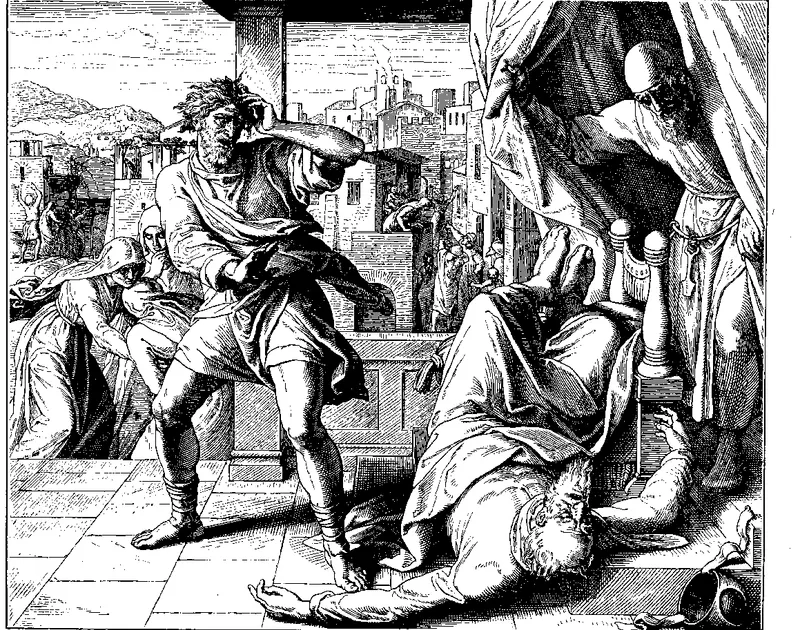
1 Samuel 4:16-18The Ark of God Is Taken; Eli Falls
16And the man said unto Eli, I am he that came out of the army, and I fled to day out of the army. And he said, What is there done, my son? 17And the messenger answered and said, Israel is fled before the Philistines, and there hath been also a great slaughter among the people, and thy two sons also, Hophni and Phinehas, are dead, and the ark of God is taken. 18And it came to pass, when he made mention of the ark of God, that he fell from off the seat backward by the side of the gate, and his neck brake, and he died: for he was an old man, and heavy. And he had judged Israel forty years.
Watch how the messenger's report climbs, because the order is the whole point. The rout of the army is dreadful; the great slaughter is worse; the death of his two sons, named in a single breath, is a father's nightmare (v. 17). And then, set even after the death of his own children, comes the blow the messenger knows is heaviest: and the ark of God is taken. The arrangement tells you where Eli's heart truly lies.
A lesser grief would have stopped at the sons. But to this old priest the unbearable word is the last one - that the seat of the LORD's presence, the holiest possession of his people, is now in the hands of the uncircumcised. We saw his heart trembling for the ark back on the roadside (v. 13); now we learn it was right to tremble. The worst has happened, and it is named last because it is felt most.
It is not the death of his sons that fells Eli. It is the mention of the ark. When he made mention of the ark of God, the old man topples backward off his seat by the gate, his neck breaks, and he dies (v. 18). His grief for the holy thing outweighs even his grief for his own children. The narrator adds two sober endnotes. The first is almost tender in its plainness - for he was an old man, and heavy - a fact, not a verdict, the simple physics of a frail body and a hard fall.
The second is the closing of an era: he had judged Israel forty years. Forty years of leadership end on a roadside in an instant, and with the same stroke the word against his house is finished. The man of God had said the LORD would cut off thine arm, and the arm of thy father's house (1 Sam. 2:31); now the house has fallen with its head. No appeal, no reprieve, no softening - only the quiet certainty that what God said would happen has happened.
His word stands, even when it is hard, even when it falls on a man whose last trembling thought was for the honour of God's presence.
1 Samuel 4:19-22Ichabod: The Glory Is Departed
19And his daughter in law, Phinehas’ wife, was with child, near to be delivered: and when she heard the tidings that the ark of God was taken, and that her father in law and her husband were dead, she bowed herself and travailed; for her pains came upon her. 20And about the time of her death the women that stood by her said unto her, Fear not; for thou hast born a son. But she answered not, neither did she regard it. 21And she named the child Ichabod, saying, The glory is departed from Israel: because the ark of God was taken, and because of her father in law and her husband. 22And she said, The glory is departed from Israel: for the ark of God is taken.
In the same hour the ruin reaches one more soul. Phinehas' wife is far along with child, and the triple blow - the ark of God was taken… her father in law and her husband were dead - sends her into labour: she bowed herself and travailed; for her pains came upon her (v. 19). The women attending her try to comfort her with what should be the gladdest news a mother can hear: Fear not; for thou hast born a son (v. 20).
A son - a living heir, the line continuing, a reason to hope in the middle of death. But she cannot receive it: she answered not, neither did she regard it. The birth that should have lifted her cannot reach her, because she sees past her own grief to the grief of the whole nation. Her husband is dead, her father-in-law is dead, and the ark is gone - and against that, even a newborn son does not register.
It is one of the most desolate moments in the books of Samuel: a mother dying as she gives life, unable to take comfort in the very child she has borne, because what has been lost is, to her, larger than what has been gained.
With her last strength she does not bless the child or name him for hope; she turns his name into the elegy of a nation. And she named the child Ichabod, saying, The glory is departed from Israel: because the ark of God was taken (v. 21). Then, as if to make sure the reason is not missed, she says it again: The glory is departed from Israel: for the ark of God is taken (v. 22).
The repetition is the Bible's way of pressing finality and weight; this is no passing sorrow but a settled verdict on the day. Notice that she names the loss precisely. She does not say the LORD has cast off His people forever, or that He has been defeated - she says the glory is departed, the visible presence withdrawn, the brightness gone out of the camp. This is the sober truth the whole chapter has been building toward: the glory of God departs from a presumptuous and corrupt people.
The glory withdrew from those who had treated it with contempt and then tried to wield it as a charm. And yet the dying mother's words leave a door ajar that she could not see through. Glory that has departed can return. The same word, kavod, that names what is lost here will name what God promises to restore - and what He would finally bring back in a way no enemy could touch.
Research trail
Sources & further study
These references support the historical, linguistic, manuscript, and contextual notes in this chapter. Scripture remains the primary text; external sources are provided so readers can inspect the research directly.
- 1 Samuel 4 - Translators' NotesThe NET Bible's detailed footnotes on 1 Samuel 4 - the elders' reasoning over the ark in verse 3, the Philistines' cry about the mighty Gods in verses 7-8, the fulfillment of the word against Eli's house in verse 11, and the naming of Ichabod in verse 21.
- 1 Samuel 4 · Hebrew + classical Jewish commentaryThe Hebrew text of 1 Samuel 4 with Rashi, Radak, and other classical commentators side by side - useful for aron habberit (vv. 3-5, the “ark of the covenant”), for kavod (vv. 21-22, the “glory” that departs), and for the name I-kavod (Ichabod) the dying mother gives her son.
- 1 Samuel 4 ↔ Jeremiah 7 · Ezekiel 10 · John 1Traces the threads tying 1 Samuel 4 to the rest of Scripture - the ark trusted as a charm (v. 3) read beside the temple of the LORD cried as a false refuge (Jer. 7:4), and the glory departing (vv. 21-22) read beside the glory rising from the temple in Ezekiel 10 and the glory returning in the Word made flesh (John 1:14).
Where this echoes in Scripture
Let Us Fetch the Ark, That It May Save Us
- Jeremiah 7:4Trust ye not in lying words, saying, The temple of the LORD, The temple of the LORD, The temple of the LORD, are these.The same error as verse 3 - leaning on the holy place as a charm while the heart is unturned.
- Jeremiah 7:9-10Will ye steal, murder... and come and stand before me in this house... and say, We are delivered?The presumption of verse 3 spelled out - sin in the life, then shelter claimed in the holy place.
- Matthew 7:21Not every one that saith unto me, Lord, Lord, shall enter into the kingdom of heaven; but he that doeth the will of my Father.The Lord Jesus on the same swap as verses 3-5 - the right words without the turned heart.
- 2 Timothy 3:5Having a form of godliness, but denying the power thereof: from such turn away.The outward form of verse 5 emptied of its power - religion as a shell.
- Isaiah 29:13this people draw near me with their mouth, and with their lips do honour me, but have removed their heart far from me.The hollowness beneath the great shout of verse 5 - lips that honour while the heart is far away.
- Numbers 14:44-45they presumed to go up unto the hill top... Then the Amalekites came down... and smote them.An earlier presumption like the elders' in verse 3 - going to battle without the LORD and being struck.
- Matthew 15:8-9This people draweth nigh unto me with their mouth... but their heart is far from me. But in vain they do worship me.The Lord Jesus naming the very sin of verses 3-5 - outward worship emptied of the heart.
- Exodus 25:22there I will meet with thee, and I will commune with thee from above the mercy seat, from between the two cherubims.The ark of verse 4 as God meant it - the place of meeting and covenant, not a charm to be carried into war.
The Ark Taken; Hophni and Phinehas Slain
- 1 Samuel 2:34this shall be a sign unto thee... on Hophni and Phinehas; in one day they shall die both of them.The word fulfilled in verse 11 - the sign against Eli's house, both sons dead in a single day.
- Psalm 78:60-61So that he forsook the tabernacle of Shiloh... And delivered his strength into captivity, and his glory into the enemy’s hand.Israel's own later song on this very day - the ark of verse 11 given into the enemy's hand.
- Ezekiel 10:18Then the glory of the LORD departed from off the threshold of the house, and stood over the cherubims.The same grief as the lost ark of verse 11 - the glory of the LORD departing from His house.
- John 10:17-18I lay down my life... No man taketh it from me, but I lay it down of myself.Set against the ark that was taken (v. 11) - the glory in person, which no enemy could seize.
- Proverbs 16:18Pride goeth before destruction, and an haughty spirit before a fall.The logic of verse 10 - the great shout of presumption ending in the greater slaughter.
Ichabod: The Glory Is Departed
- 1 Samuel 2:31Behold, the days come, that I will cut off thine arm, and the arm of thy father’s house.The sentence on Eli's house fulfilled in his fall (v. 18) - the word spoken long before, now come to pass.
- Ezekiel 10:18Then the glory of the LORD departed from off the threshold of the house, and stood over the cherubims.The same lament as Ichabod's name (vv. 21-22) - the glory of the LORD departing in the same Hebrew word, kavod.
- Ezekiel 43:4-5And the glory of the LORD came into the house... and, behold, the glory of the LORD filled the house.The answer to Ichabod - the departed glory of verses 21-22 promised back, and returning to fill the house.
- Haggai 2:9The glory of this latter house shall be greater than of the former, saith the LORD of hosts.The promise running past Ichabod (vv. 21-22) - a greater glory still to come to God's house.
- John 1:14And the Word was made flesh, and dwelt among us, (and we beheld his glory, the glory as of the only begotten of the Father,) full of grace and truth.The final return of the glory whose loss Ichabod names (vv. 21-22) - come in person, no longer to be carried off.
- Hebrews 1:3Who being the brightness of his glory, and the express image of his person.The glory mourned in verses 21-22 made visible in the Son - the brightness of God in person.
- 2 Corinthians 4:6God... hath shined in our hearts, to give the light of the knowledge of the glory of God in the face of Jesus Christ.Where the departed glory of verses 21-22 is finally seen - in the face of Christ.
- Romans 9:4Who are Israelites; to whom pertaineth the adoption, and the glory, and the covenants.The very things lost on this day - the glory and the ark of the covenant - named as Israel's inheritance.