- Starting price
- ~$40 hardcover
- Free tier
- No
- Platforms
- Print · Kindle
- Developer
- InterVarsity Press
- Launched
- 1986
- Updated
- May 31, 2026
The verdict
Foundations of the Christian Faith is James Montgomery Boice’s warm, pastoral, single-volume systematic - four earlier books gathered into one. It is written from a clearly Reformed evangelical vantage and reads more like extended sermons than a reference work. Know the frame going in, and it is one of the most accessible doctrine books a thoughtful layperson can own.
Try Foundations of the Christian Faith ↗Opens ivpress.com
James Montgomery Boice’s Foundations of the Christian Faith has quietly become the systematic that pastors hand to the curious layperson who asks "where do I even start with theology?" It began life as four separate volumes published across the late 1970s and early 1980s, was gathered into a single revised one-volume edition in 1986, and has stayed in print ever since as the accessible middle option between a study Bible and a 1,500-page reference like Grudem or Berkhof.
It is not a neutral textbook. It does not survey every tradition evenhandedly. It does not split the difference between competing schools of doctrine. Boice writes from a clearly stated Reformed evangelical position - he pastored Tenth Presbyterian Church in Philadelphia for more than three decades and chaired the council that produced the Chicago Statement on biblical inerrancy - and that vantage shapes how each doctrine is framed and which conclusions are defended.
What sets the book apart is the voice. Most systematics read like lecture notes; Boice reads like a gifted preacher who has spent thirty years explaining hard doctrines to ordinary people on Sunday mornings. The chapters are short, the illustrations are concrete, and the tone is closer to a sermon series than a syllabus. That accessibility is the whole appeal - and it is why Foundations keeps turning up on the shelves of small-group leaders and new believers who would never finish a denser book.
✓ The good
- Genuinely readable for a one-volume systematic - Boice writes in short, sermonic chapters with concrete illustrations, and the prose carries a reader with no theology background
- Four-volumes-in-one value - the doctrine of God, of humanity and sin, of Christ and salvation, and of the church and Christian life gathered into a single affordable book
- Pastoral and devotional in tone - doctrine is consistently tied to worship and the Christian life rather than left as abstract information
- Clearly states its Reformed evangelical commitments up front rather than smuggling them in, so you always know the vantage you are reading from
- Strong on the doctrine of God and on Scripture - Boice’s chapters on God’s attributes and on the authority of the Bible are among the most accessible popular treatments in print
- Excellent entry point before a heavier reference - many readers use Foundations first, then graduate to Grudem, Berkhof, or Calvin for depth
- Compact and approachable next to the doorstop systematics - one volume you can actually read cover to cover
✗ Watch out
- Reformed evangelical frame throughout - chapters on election, perseverance, the sacraments, and the church argue for specific positions, and readers of other traditions will find their views described from that vantage
- A survey rather than an exhaustive reference - Boice covers the major doctrines well but does not pretend to the completeness of a Grudem or a Berkhof
- Less technical than the standard seminary systematics - light on Greek and Hebrew detail, sparse footnotes, and limited interaction with the history of doctrine
- One author’s synthesis - you are getting Boice’s pastoral reading of the whole, not a survey of how different writers handle each question side by side
- Limited scripture and subject indexing compared with the major reference works, which makes it weaker as a lookup tool
- Dated in places - the 1986 revision reflects the debates and examples of its era, and some references feel of their decade
Best for
- Lay Christians who want one readable doctrine book to start with
- New believers graduating from a study Bible toward systematic theology
- Small groups wanting sermon-paced chapters they can discuss
- Readers who already lean Reformed evangelical and want a pastoral synthesis
Avoid if
- You want a tradition-neutral survey of all Christian theology
- You are looking for a Catholic, Orthodox, or Latter-day Saint systematic
- You need an exhaustive reference with deep original-language and historical detail
- You want each doctrine surveyed across multiple schools rather than synthesized by one author
What Foundations of the Christian Faith is
Foundations of the Christian Faith is James Montgomery Boice’s single-volume systematic theology, first gathered and revised in 1986 from four earlier books published by InterVarsity Press across the late 1970s and early 1980s. It moves through the standard systematic categories - the doctrine of God and revelation, the doctrine of humanity and sin, the person and work of Christ and the way of salvation, and the doctrine of the church and the Christian life - in short, sermon-length chapters aimed at the thoughtful person in the pew rather than the seminarian.
Boice spent his ministry as pastor of Tenth Presbyterian Church in Philadelphia and as a leading voice in late-20th-century Reformed evangelicalism, and the book is written from that position. It is published by InterVarsity Press and is widely recommended as an accessible first systematic - the book to read before a heavier reference, or alongside one as the readable companion that keeps the doctrine tied to ordinary Christian life.
Why ordinary readers reach for Boice
The single biggest practical difference between Foundations and the standard seminary systematics is that Boice wrote it for the congregation, not the classroom. Berkhof is terse and outline-driven and assumes you know the categories. Grudem is friendlier but still runs past 1,500 pages. Calvin is magnificent and four centuries old and demanding. Boice, by contrast, writes the way he preached - short chapters, a single clear idea per chapter, concrete illustrations drawn from ordinary life, and an unhurried pace that never assumes you have read a theology book before.
This sounds like a small thing. In practice it is the reason the book exists. A reader with no formal training can pick up the chapters on the attributes of God or the work of Christ, follow the argument, and come away with real doctrinal vocabulary and a sense of why it matters for worship - without ever feeling lectured at. That is rare in systematic theology, and it is why Foundations ends up recommended as the on-ramp: the book that makes someone ready to read Grudem or Calvin later, and glad they started here.
Four volumes in one: the whole sweep of doctrine
Foundations gathers what were originally four separate books - The Sovereign God, God the Redeemer, Awakening to God, and God and History - into a single revised volume. The result follows the familiar systematic arc: it opens with God and how he is known through Scripture, moves to humanity and the problem of sin, turns to the person and work of Christ and the application of salvation, and closes with the church, the means of grace, and the shape of the Christian life. Each major doctrine gets a cluster of short chapters rather than one long technical treatment.
The advantage of the one-volume gathering is scope at a manageable size. A reader gets the entire field - God, humanity, Christ, salvation, church, last things - in a book they can actually finish, at a price that undercuts the multi-volume sets. The trade is that breadth comes before depth: Boice touches every major doctrine, but he is sketching the territory in a way a layperson can walk, not mapping every contour the way an exhaustive reference does. For the audience the book is reaching, that is the right trade.
The pastor’s voice: doctrine tied to worship
What distinguishes Foundations from a reference work is its relentless pastoral application. Boice does not let a doctrine sit as abstract information; he carries it through to what it means for prayer, for assurance, for how a Christian lives on Monday morning. The chapters on the attributes of God, for instance, are not just definitions of omniscience and holiness - they are arguments for why those attributes should change how you worship and how you face suffering. The book reads, by design, like the printed form of a long sermon series.
That voice is the reason the book endures. It treats the reader as someone who wants not only to understand doctrine but to be formed by it, and it consistently bridges from the lecture hall to the prayer closet. Readers who find pure reference theology dry tend to find Boice the opposite - warm, direct, and concerned with the heart as well as the head. The cost is that this is plainly Boice’s synthesis: one pastor’s integrated reading of the whole, expressed in his Reformed evangelical idiom, rather than a neutral catalog of options.
An on-ramp, not a destination: where Foundations fits
Foundations is best understood as a first systematic rather than a final one. It is the book many pastors recommend to a layperson who is ready to move beyond a study Bible but is not yet prepared for the density of Grudem, the concision of Berkhof, or the scale of Calvin. The short chapters and sermonic pacing make it learnable, and the consistent Reformed evangelical frame gives the reader a coherent whole to hold in mind before they start comparing traditions.
Used that way, the book’s limitations become features. Because it is a survey, it does not overwhelm. Because it is one author’s synthesis, it hangs together. Because it is readable, people finish it - and finishing one systematic is the thing that makes a reader ready for the next. Many readers keep Foundations on the shelf even after they own heavier references, returning to it for the clarity of a particular chapter or the way Boice frames a doctrine devotionally. It is the on-ramp that stays useful after you have merged onto the highway.
Pricing
Hardcover (one-volume ed.)
~$40
The standard IVP one-volume hardcover gathering all four original books. The format most readers own.
Kindle / ebook
~$25
Same text, searchable, syncs across devices. The everyday-use format for readers who want portability.
Used hardcover
~$15-25
Widely available secondhand given its long print run. The cheapest way into the full text.
Original four volumes
varies (used)
The pre-1986 set - The Sovereign God, God the Redeemer, Awakening to God, God and History. Collectible, but the one-volume edition is the practical buy.
The one-volume hardcover runs around $40 at most retailers and is the format the book is best known in. For a single volume covering the whole of systematic theology, that is a reasonable price - you are getting what were four separate books for less than the cost of a multi-volume set, and it is the copy to own if you want a readable reference you can mark up.
The Kindle edition lands around $25 and is the everyday-use format for readers who want to carry the book around. Search works well and highlights sync, though, as with most systematics, the indexes are less satisfying to use on a small screen than in print.
Because the book has been in print for decades, used hardcovers are easy to find for roughly $15-25, which is the cheapest way into the full text and a fine option for a first-time reader who is not sure they will keep it.
The original four volumes still circulate secondhand for collectors, but there is no practical reason to assemble them when the 1986 one-volume edition contains the revised whole. Most readers should simply buy the single volume - hardcover if they want a copy for life, Kindle if portability matters more.
Where Foundations of the Christian Faith falls behind
A survey, not an exhaustive reference. Boice covers the major doctrines clearly, but he does not aim for the completeness of Grudem’s 1,500 pages or Berkhof’s tight systematic coverage. Readers who want every sub-doctrine treated, with extensive qualifications and objections, will find Foundations sketches where a reference work fills in.
Less technical than the seminary standards. The book is light on Greek and Hebrew, sparse on footnotes, and limited in its engagement with the history of doctrine. Boice argues from Scripture in a pastoral register; if you want sustained interaction with the church fathers, the medieval scholastics, or post-Reformation Reformed orthodoxy, you will outgrow it and need Bavinck, Berkhof, or Muller.
A Reformed evangelical synthesis throughout. The frame shapes the treatment of election, perseverance, the sacraments, and the church, and these are presented as Boice’s settled positions rather than surveyed across traditions. Catholic, Orthodox, Wesleyan-Arminian, and Latter-day Saint readers will find their own views described from outside and will want a second book that states their tradition on its own terms.
One author’s integrated reading. The strength of a single pastoral voice is also a limit: you get Boice’s synthesis of the whole, not a comparison of how different writers handle each question. Grudem’s cross-tradition bibliographies and Berkhof’s precise distinctions both do something Foundations does not attempt.
Dated in spots. The 1986 revision reflects the concerns and illustrations of its era. The core doctrine is timeless, but a reader in 2026 will occasionally hit an example or a reference to the wider world that feels of its decade.
Boice vs. Grudem vs. Berkhof
These three one-volume systematics are likely to sit on the same shelf, and they serve different readers. Different strengths. Boice is the most pastoral and the shortest. Grudem is the most thorough lay-friendly reference, with the scripture index and the cross-tradition bibliographies. Berkhof is the most concise and the most precisely systematic of the three.
Wayne Grudem’s Systematic Theology runs past 1,500 pages and functions as a near-complete reference - exhaustive scripture index, memory verses, discussion questions, and bibliographies that line up how Catholic, Lutheran, Reformed, Arminian, and other writers handle each topic. It is broader and more technical than Boice and reads, as systematics go, remarkably well. The trade is length: it is a reference you work through over a year, not a book you read in a few weeks. Many readers start with Boice and move to Grudem when they want the fuller treatment.
Louis Berkhof’s Systematic Theology (1939) is the historic Reformed standard - around 750 pages, tightly outlined, and precise about distinctions. It is shorter than Grudem and more technical than Boice, and it assumes a reader who already knows the vocabulary. Where Boice explains a doctrine pastorally and Grudem documents it thoroughly, Berkhof states it with economy; if you have had some theology already it rewards you, and if you have not, Boice is the gentler door in. The honest summary: start with Boice if you want a readable first systematic that keeps doctrine tied to worship, move to Grudem when you want the fuller indexed reference, and add Berkhof when you want it shorter and more precisely Reformed. For traditions outside Reformed evangelicalism, look elsewhere as well - Aquinas’s Summa or Ott for Catholic, Lossky or Stăniloae for Orthodox, an Arminian systematic such as Oden for Wesleyan readers, and the relevant Latter-day Saint authors for that tradition.
The bottom line
Foundations of the Christian Faith earns its place as one of the most accessible one-volume systematics in print - not because it is the deepest or most complete book on the shelf, but because it is the one a layperson will actually finish and be formed by. Boice writes like the seasoned pastor he was, tying every doctrine to worship and the Christian life, and the four-volumes-in-one scope gives a reader the whole field at a manageable size. Know the Reformed evangelical frame going in, read it as an on-ramp toward heavier references rather than a replacement for them, and pair it with a voice from your own tradition. For a thoughtful beginner, it is one of the best first systematics you can buy.
Alternatives to Foundations of the Christian Faith
 Systematic Theology by Wayne GrudemThe most-used modern one-volume systematic in English-speaking evangelicalism. Far longer and more thorough than Boice, with an exhaustive scripture index - the natural next step after Foundations.Concise TheologyJ. I. Packer’s short, accessible survey of the major doctrines in brief entries. An even more compact alternative to Boice for readers who want the essentials in small bites.
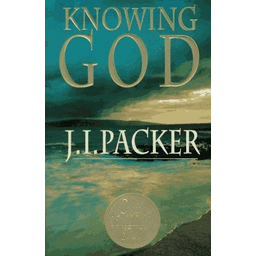 Knowing GodJ. I. Packer’s devotional-theological classic on the attributes of God. Pairs well with Boice’s doctrine-of-God chapters and is warmer and more focused than a full systematic.
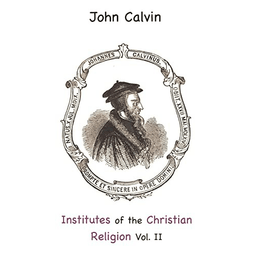 Institutes of the Christian ReligionThe 16th-century Reformed source text behind much of Boice’s frame. Longer, denser, and more devotional - the original voice rather than a modern pastoral restatement.
Frequently asked questions
Is Foundations of the Christian Faith good for someone with no theology background?
Yes - it is one of the best entry points in print. Boice writes in short, sermon-length chapters with concrete illustrations and assumes no prior training. Most beginners find it more approachable than a heavier reference like Grudem or Berkhof, and it is frequently recommended as the first systematic to read.
What is Boice’s theological position?
James Montgomery Boice wrote from a Reformed evangelical position. He pastored Tenth Presbyterian Church in Philadelphia and was a leading voice in late-20th-century Reformed evangelicalism. That vantage shapes how the book frames doctrines such as election, perseverance, the sacraments, and the church, and he states those commitments openly rather than assuming them.
How does Foundations compare to Grudem’s Systematic Theology?
Boice is shorter, more pastoral, and more devotional; Grudem is longer, more thorough, and built like a reference with an exhaustive scripture index and cross-tradition bibliographies. Many readers start with Boice for accessibility and move to Grudem when they want the fuller treatment. The two share a broadly Reformed evangelical frame.
Why is it called four volumes in one?
Foundations was assembled from four earlier books Boice published with InterVarsity Press in the late 1970s and early 1980s - The Sovereign God, God the Redeemer, Awakening to God, and God and History - and revised into a single volume in 1986. The one-volume edition is the practical buy; there is no need to track down the originals.
Will this book work for Catholic, Orthodox, Wesleyan, or Latter-day Saint readers?
Readers in those traditions will find their own theology described from a Reformed evangelical vantage rather than from within their own tradition. Foundations can still be useful as a window into how Reformed evangelicalism approaches each doctrine, but it should not be the only systematic on the shelf for readers whose tradition Boice is not writing from.
Print or Kindle - which should I buy?
Hardcover (around $40) if you want one marked-up reference copy for life. Kindle (around $25) if you want to carry it around and search the text. Because the book has a long print run, used hardcovers are also easy to find for $15-25, which is the cheapest way into the full text.
Where should I go after Foundations of the Christian Faith?
For more depth in a similar frame, Grudem’s Systematic Theology is the natural next reference, and Berkhof if you want it shorter and more precise. For a devotional companion on the doctrine of God, J. I. Packer’s Knowing God pairs well. For the original Reformed source, Calvin’s Institutes. Readers outside Reformed evangelicalism should add a systematic from their own tradition.
Sources & further reading
More Systematic Theology Books
Systematic Theology by Wayne GrudemThe most-used modern systematic theology in English-speaking evangelicalism, and the one most laypeople actually finish - here’s what that readability costs you, and what it buys.Institutes of the Christian ReligionThe most influential systematic theology of the Protestant Reformation, still in print after almost five centuries - and still one of the most argued-about books in Christian history.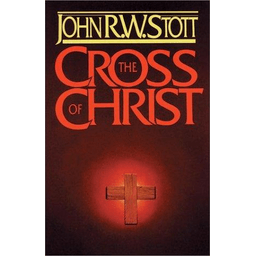 The Cross of ChristJohn Stott’s 1986 masterwork is the book most modern evangelical pastors point to when someone asks what the cross actually accomplished - and four decades later it still earns the recommendation.Reformed DogmaticsA century-old Dutch Reformed masterwork that reads the whole catholic tradition before it argues - magnificent, demanding, and long enough that most readers should start with the one-volume abridgement.Summa TheologicaThe thirteenth-century synthesis that became the backbone of Catholic theology - vast, rigorous, free in the public domain, and almost no one reads it the way it looks like you should.A Body of DivinityThe 1692 Puritan exposition of the Westminster Shorter Catechism - still the warmest, most quotable systematic theology a layperson can actually finish.