- Starting price
- $28.99 paperback (DBWE)
- Free tier
- No
- Platforms
- Print · Kindle · DBWE critical edition
- Developer
- Fortress (DBWE critical ed.); various older translations
- Launched
- 1949 (posthumous); DBWE vol. 6 critical English ed. 2008
- Updated
- May 24, 2026
The verdict
Ethics is the book Bonhoeffer was writing when the Gestapo arrested him, and it reads like it - urgent, fragmentary, dense, unfinished, unmatched. It is not where you start with Bonhoeffer, but it is where you end up if you stay with him.
Try Ethics ↗Opens fortresspress.com
Bonhoeffer’s Ethics has quietly become the favorite of pastors, theologians, and lay readers who want to think about Christian conduct after Cost of Discipleship has done its work. It is the book he was writing when the Gestapo came for him in April 1943 - drafted in pieces between 1940 and that arrest, smuggled between his cell at Tegel, the Benedictine abbey at Ettal, and his parents’ house in Berlin. The manuscript was never finished. His friend and biographer Eberhard Bethge assembled the surviving fragments and published them in 1949, four years after Bonhoeffer was hanged at Flossenbürg. The book you hold is, in a real sense, a recovered text.
It is not a systematic ethics. It doesn’t offer rules. It doesn’t build a decision-procedure. It doesn’t hand you a Christian framework you can apply to cases. What it does is ask the question that haunted Bonhoeffer through the years of the Third Reich - how does a Christian act responsibly when the world has gone mad and every available option carries guilt? - and then refuse to let the reader off the hook with a tidy answer.
The result is the most sustained piece of Christian ethical reflection of the 20th century. Catholic moral theologians cite it. Reformed and Anglican ethicists assign it. Wesleyan and Lutheran scholars have built whole careers reading it. It sits on seminary syllabi from Yale Divinity School to the Pontifical Gregorian. Stanley Hauerwas calls it indispensable. Eric Metaxas wrote a 600-page biography largely to set it in context. And yet most readers who pick it up cold bounce off it inside fifty pages - because Ethics is not, and has never been, an entry-level Bonhoeffer book.
✓ The good
- Unmatched on Christian action in extremity - no other 20th century book wrestles as honestly with what it means to act responsibly under tyranny
- Christological grounding throughout - Bonhoeffer locates ethics in the person of Christ, not in autonomous reason, natural law, or duty alone, in a way ethicists across traditions can engage
- "Structure of Responsible Life" essay - a genuinely original framework for how vocation, conscience, and freedom intersect when a Christian must act
- "Ethics as Formation" - reframes the moral life around being conformed to Christ rather than rule-following, an idea picked up by virtue ethicists ever since
- The DBWE critical edition is meticulous - Clifford Green’s editorial work reconstructs the chronological order of the fragments, with extensive footnotes situating each piece in Bonhoeffer’s life
- Genuinely dangerous prose - sentences that arrest you and re-frame an entire moral category in a paragraph
- Honest about guilt - Bonhoeffer’s insistence that responsible action sometimes incurs guilt is unique in modern Christian ethics and shaped his own decision to join the conspiracy against Hitler
✗ Watch out
- Unfinished - the book is fragments, not a complete argument; readers expecting a chapter-by-chapter build will be frustrated
- Dense German theological prose - even in good English translation, sentences run long and assume Hegel, Kant, Luther, and Barth in the background
- Not where to start with Bonhoeffer - Cost of Discipleship and Life Together are far more accessible entry points
- The order of the essays is editorial reconstruction - what you read in any given edition is Bethge or Green deciding how Bonhoeffer would have arranged them
- No practical decision-procedure - readers wanting "here’s how to think about X moral issue" will not get it; this is a meditation, not a manual
- Older translations (Smith, 1955) are abridged and rearranged in ways the DBWE edition explicitly corrects - edition choice matters
Best for
- Pastors and seminarians ready for Bonhoeffer’s mature thought
- Ethicists working on responsibility, conscience, and political theology
- Readers who have already finished Cost of Discipleship and Life Together
- Christians wrestling with action in morally compromised situations
Avoid if
- You are new to Bonhoeffer and want a starting point
- You want a practical ethics handbook with cases and answers
- You dislike unfinished or fragmentary books on principle
- You are looking for a devotional read rather than rigorous theology
What Ethics is
Ethics is a collection of essay-length manuscripts Bonhoeffer drafted between 1940 and his arrest in April 1943, intended as the major theological work of his life. He worked on it during the Confessing Church years, during his courier work for the Abwehr resistance, in the guest rooms of Ettal Abbey, and at his parents’ home in the Marienburger Allee. He never produced a final draft. What survives - roughly a dozen substantial fragments plus shorter notes - was sorted, sequenced, and published by Eberhard Bethge in 1949 under the title Ethik.
The English-language standard today is volume 6 of Dietrich Bonhoeffer Works in English (DBWE), released by Fortress Press in 2008. Editor Clifford Green reordered the essays based on later manuscript scholarship, restored material the older Smith translation had abridged, and added the critical apparatus that lets readers see what Bonhoeffer wrote, when he wrote it, and how much was provisional. It is a roughly 550-page volume in paperback, with the bulk of the text divided into the major essays - "Christ, Reality, and Good," "Ethics as Formation," "Heritage and Decay," "Guilt, Justification, Renewal," "History and Good," and "The Structure of Responsible Life," among others.
Why serious readers across traditions return to Ethics
The thoughtful Christian’s ethics shelf is crowded - Aquinas, Calvin, Edwards, Niebuhr, Hauerwas, O’Donovan, Wright - and most of those books are more complete, more systematic, and easier to teach. What Bonhoeffer has that none of them quite match is the credential of having written under a regime he was actively conspiring to bring down, and then dying for it. The book’s authority is biographical. Every page was drafted by a man whose theology was being tested in conditions almost no other modern ethicist has faced.
That credential matters because the central question of Ethics is not "what is good?" but "what is the will of God, here, now, for me, when every available action carries cost?" Bonhoeffer refuses both legalism (apply the rule) and situationism (the situation decides). Instead he tries to think out what it means that Christ - concrete, particular, crucified, risen - is the source and shape of the good. That move is what makes the book teachable in Catholic, Reformed, Anglican, Lutheran, and Wesleyan classrooms alike. Different traditions interpret it differently, but everyone has to deal with it.
Responsible action: the framework that justified joining the conspiracy
The "Structure of Responsible Life" essay is the most discussed piece in the book, and for good reason - it is the closest Bonhoeffer comes to giving a positive account of how a Christian should decide and act in the world. Responsibility, in his telling, has four interlocking elements: vocation (the concrete place God has put you), deputyship (acting on behalf of others, the way Christ acted on our behalf), correspondence with reality (taking the actual situation seriously rather than fleeing into abstractions), and the willingness to bear guilt. That last element is the one that scandalizes first-time readers - Bonhoeffer insists that responsible action under conditions of evil sometimes means accepting that you cannot keep your hands clean, and that the Christian must act anyway, casting himself on grace.
This is the framework Bonhoeffer used to think through his own participation in the Abwehr resistance and, eventually, the plot to assassinate Hitler. He never argues that tyrannicide is permitted by a moral rule. He argues something harder - that a Christian standing before God may be called to act in ways no rule sanctions, knowing the action carries guilt, and trusting Christ to bear that guilt with him. Readers in Catholic just-war traditions, Reformed two-kingdoms thinking, Anabaptist pacifism, and Lutheran orders of creation all engage this essay differently. Nobody dismisses it. It is the most honest piece of writing in modern Christian ethics on what to do when the political order has become an enemy of the good.
The Christological foundation: ethics that begins with Christ, not reason
The opening essay - "Christ, Reality, and Good" - does the foundational work for everything that follows. Bonhoeffer’s claim is that ethics cannot start with autonomous human reason, with natural law abstracted from revelation, with duty, or with consequences calculated in advance. It must start with Jesus Christ as the one in whom God and the world are reconciled. The good is not an idea that Christ illustrates. The good is Christ. Reality is not a neutral field on which Christian ethics is then applied. Reality, for Bonhoeffer, is already the world that God has reconciled to himself in Christ, and ethics is learning to see and act in that world as it actually is.
This move has consequences that ripple through the book. It is why Bonhoeffer is suspicious of the two-spheres thinking that puts "religious" matters on one side and "secular" matters on the other - he calls that division a "two-realms" heresy that lets Christians retreat from the world. It is why he insists ethical formation is about being conformed to Christ (the language of Romans 8) rather than achieving an ideal. And it is why Ethics has been productively read by Catholic moral theologians (who hear echoes of the analogia entis debate), Reformed thinkers (who hear Barth), Wesleyans (who hear sanctification), and Lutherans (who hear law and gospel). The Christological center is broad enough to give each tradition something to work with.
The unfinished nature: what Bethge had to do, and what we are reading
No honest review of Ethics can skip the editorial story. When Bonhoeffer was arrested on April 5, 1943, the manuscript existed as a stack of essays in various stages - some near-final, some clearly drafts, some marginal notes. Some pages were at Ettal, some at his parents’ house, some at the homes of friends. Eberhard Bethge spent the postwar years gathering what survived, deciding sequence, and editing the text into a publishable book. The 1949 edition reflected Bethge’s best judgment about how Bonhoeffer would have arranged the material. Later scholarship - especially the work of Ilse Tödt and the German DBW team in the 1990s, then Clifford Green for the English DBWE in 2008 - re-dated the manuscripts and reordered the essays based on paper analysis, internal references, and Bonhoeffer’s own outlines.
What this means for the reader is that the book you hold has been shaped by editorial decisions Bonhoeffer never made. The DBWE edition is transparent about this - its introduction walks you through what is fragment, what is draft, what is near-final, and what order the editors think things belong in. Reading Ethics is reading Bonhoeffer-as-reconstructed. That is not a flaw, exactly - it is the price of having the book at all, given what happened to the author. But it does change how you read. Some apparent contradictions or shifts of tone are not Bonhoeffer changing his mind in the same essay; they are different drafts spliced together. The newer edition is the one that lets you see the seams.
Pricing
DBWE Paperback (Vol. 6)
~$28.99
The critical English edition - Clifford Green ed., Reinhard Krauss, Charles West, and Douglas Stott trans. Fortress Press, 2008. Restores the manuscript ordering, includes the editor’s introduction and afterword, and is the version cited in modern scholarship.
DBWE Hardcover
~$50
Same critical edition in cloth binding - the library and reference copy. Worth the upgrade if this is a book you will return to over decades.
Touchstone (Older Ed.) Paperback
~$22
The older Neville Horton Smith translation, edited by Eberhard Bethge. Long the standard English text and still in print. Abridged and rearranged relative to the DBWE - fine for a first read, but not what scholars cite.
Kindle (DBWE)
~$25
Digital version of the critical edition. Searchable footnotes are a real benefit for a book this dense - though physical margins still help on a text that demands annotation.
Ethik (German original)
~$30
The German DBW Band 6, ed. Ilse Tödt et al. The right copy if you read theological German and want Bonhoeffer’s actual sentences - which lose real density in translation.
The DBWE paperback at around $28.99 is the right default. It is the critical edition, the one professors assign, the one scholars cite, and it includes the editorial apparatus that turns a stack of fragments into something teachable. If this is the only Bonhoeffer book you intend to buy at this depth, this is the one.
The hardcover at roughly $50 is for readers who know they will return to this book repeatedly across years. Margin space and binding both matter for a text people annotate heavily.
The older Touchstone edition - Neville Horton Smith’s translation, edited by Bethge himself - is still in print at around $22 and is a perfectly fine first read. Just know that it is abridged relative to the DBWE and reflects an earlier ordering of the essays. Pastors and study-group readers often pick this one up first; serious students upgrade to DBWE later.
The Kindle DBWE around $25 is genuinely useful for a book this dense - searchable footnotes are not trivial when an essay references another essay forty pages away. Physical margins still help on a text that demands annotation, so many readers end up with both.
Where Ethics falls behind
No complete argument. The book is fragments, and reading it as if it were a finished systematic ethics will frustrate you within a chapter. Bonhoeffer is sketching, revising, reaching - not concluding. Readers who want the polished version Bonhoeffer would have given us if he had lived are reading a book that does not exist.
No practical decision-procedure. Ethics will not tell you what to do about end-of-life care, just war, climate, immigration, or any other specific case. Bonhoeffer is working at a deeper layer - what does it mean to be a moral agent before God, in this world, under Christ? - and he leaves application to the reader. For some readers that is the book’s strength. For others it is a disappointment.
Demanding prose, even in good translation. Bonhoeffer wrote dense German theology, with Luther, Hegel, Kant, and Barth in the background. The English versions are faithful but cannot make the sentences shorter than the German ones. Expect to reread paragraphs. Expect to read with another book - Bethge’s biography, or Green’s introduction - open beside you.
Not the right Bonhoeffer to start with. Cost of Discipleship is more focused and more readable. Life Together is shorter and warmer. Letters and Papers from Prison shows the same mind in correspondence rather than treatise. Most readers who hit Ethics first and bounce off it would have stayed with Bonhoeffer if they had started elsewhere.
Edition matters more than with most books. The older Smith translation, the newer DBWE, the German original - these are meaningfully different reading experiences. Choosing the wrong edition for your purpose (a serious reader buying the abridged version, say) is a real waste.
Bonhoeffer’s Ethics vs. Cost of Discipleship vs. Life Together
Different books, different seasons of the same mind. Cost of Discipleship (1937) is the book Bonhoeffer wrote while running an illegal seminary at Finkenwalde - it is sermonic, urgent, focused on what it means to follow Jesus when following him is costly. Life Together (1939) is the short, practical book on Christian community that grew out of that same Finkenwalde experiment. Ethics (1940-1943) is what comes after - the mature theologian trying to think through what discipleship looks like when the cost is no longer just professional or social but mortal, and when ordinary moral categories have been compromised by the regime.
Different strengths. Cost of Discipleship is better at confronting the comfortable Christian - its "cheap grace vs. costly grace" framing is the most quoted single distinction in 20th century theology, and the book is structured to keep punching. Life Together is broader and warmer - communal prayer, the discipline of the day, the ministry of listening, the ministry of bearing - and is the easiest Bonhoeffer to put in a small group’s hands. Ethics is harder than either and more rewarding than either, but only if you have done the work to be ready for it.
The right reading order is almost always Discipleship, then Life Together, then Letters and Papers from Prison, then Ethics. Metaxas’s biography fits anywhere along the way and helps especially before Ethics, because the conspiracy years are when Ethics was being written and the book makes more sense when you know what was happening around the desk. Read in that order, Ethics lands as the culmination it was meant to be. Read first, it lands as a wall.
The bottom line
Ethics is the 20th century’s most demanding Christian ethics book, written under conditions that gave its author a moral authority almost no other modern theologian can claim. It is unfinished, fragmentary, dense, and not where you start with Bonhoeffer - but for readers willing to do the work, it is also unmatched. The DBWE paperback is the edition to buy. Read Cost of Discipleship and Life Together first, then come here when you are ready. This is the book that will reshape how you think about Christian action in a compromised world, and it is worth the effort it costs.
Alternatives to Ethics
 The Cost of DiscipleshipBonhoeffer’s 1937 book on what it means to follow Jesus when following him is costly - the right place to start with him.
 Life TogetherThe short, warm, practical companion to Discipleship - Christian community as Bonhoeffer lived it at Finkenwalde.
 Bonhoeffer: Pastor, Martyr, Prophet, SpyEric Metaxas’s 600-page biography - controversial in places, but the most readable introduction to the life that produced Ethics.
 Mere ChristianityC.S. Lewis’s broadly accessible defense of basic Christian belief - a different register entirely, but the other 20th century book serious readers reach for.
Frequently asked questions
Is Ethics a good starting point for Bonhoeffer?
No. Start with Cost of Discipleship or Life Together. Ethics is his most mature and most demanding work, and it was unfinished when he died - readers who hit it cold typically bounce off. Come here after you have read the more accessible Bonhoeffer and ideally a biography that sets the conspiracy years in context.
Which English edition should I buy?
The DBWE paperback (Fortress, 2008, vol. 6) is the critical edition and the one cited in modern scholarship. The older Touchstone edition translated by Neville Horton Smith is still in print, more affordable, and a fine first read, but it is abridged and rearranged relative to the DBWE. If you intend to engage the book seriously, get the DBWE.
Why is the book unfinished?
Bonhoeffer was drafting Ethics between 1940 and April 1943, when the Gestapo arrested him for his role in the Abwehr resistance against Hitler. He was executed at Flossenbürg in April 1945. The manuscript existed as a stack of essay-length fragments. Eberhard Bethge gathered, sequenced, and published them in 1949.
Is Ethics readable for a layperson without theology training?
It is harder than most lay readers expect, but not impossible. The prose is dense German theological writing in translation, with Luther, Hegel, Kant, and Barth in the background. Many lay readers do well with the DBWE edition because its introduction and footnotes provide the context the text assumes. Reading slowly, in small sections, with a study guide or Bethge’s biography nearby, is the realistic plan.
Does Bonhoeffer justify the plot to assassinate Hitler in Ethics?
Not in those terms. The "Structure of Responsible Life" essay develops a framework in which a Christian acting under conditions of grave evil may be called to act in ways no moral rule sanctions, accepting that the action carries guilt, and trusting Christ to bear that guilt. This framework is widely understood as how Bonhoeffer thought about his own participation in the conspiracy, but he never argues a general case for tyrannicide.
How does Ethics fit alongside Catholic, Reformed, or Wesleyan ethics?
It is engaged across traditions. Bonhoeffer was Lutheran, but Ethics is taught in Catholic moral theology programs, Reformed seminaries, Anglican theological colleges, and Wesleyan and Methodist faculties. Different traditions emphasize different parts of the book - natural-law readers focus on the Christological foundation, Reformed readers on the rejection of two-spheres thinking, virtue ethicists on the formation chapters - but the book is treated as a serious conversation partner by all of them.
What should I read alongside Ethics?
Eberhard Bethge’s biography, Dietrich Bonhoeffer: A Biography, is the indispensable companion - Bethge knew Bonhoeffer personally and explains the manuscript’s history. Clifford Green’s editor’s introduction to the DBWE volume is also essential. Metaxas’s biography is more popular and more readable, though contested in places by academic Bonhoeffer scholars. Letters and Papers from Prison shows the same mind in shorter form during the months after the book’s drafting stopped.
Sources & further reading
More Modern Christian Classics
 Knowing GodJ.I. Packer’s 1973 classic on the doctrine of God has sold more than 1.5 million copies and is still the book most pastors hand to laypeople who want theology that goes somewhere - here’s what it actually does and who it’s for.The Cost of DiscipleshipDietrich Bonhoeffer’s 1937 exposition of the Sermon on the Mount, written for pastors training under a regime that wanted them silent - and still the sharpest book in print on what following Jesus actually costs.
 Gentle and LowlyDane Ortlund’s 23 short chapters on Matthew 11:29 have quietly become the most-given new Christian book of the decade - and the reason is not what you’d guess.
 The Holiness of GodR.C. Sproul’s career-defining book on the one attribute of God the church most forgets - and the vision in Isaiah 6 he believed everything else flows from.
 The Weight of GloryThe 1941 sermon many call Lewis's single finest piece of writing - "there are no ordinary people" - gathered with eight other addresses into one slim, uneven, unforgettable collection.
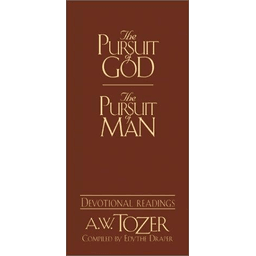 The Pursuit of GodA.W. Tozer’s ten-chapter wake-up call on knowing God personally - short, severe, and the one devotional Reformed, Wesleyan, Catholic, and Orthodox readers all seem to keep on the nightstand.