- Starting price
- ~$20 complete edition
- Free tier
- No
- Platforms
- Print · Kindle · Audiobook · Box set
- Developer
- HarperCollins
- Launched
- 1950
- Updated
- May 31, 2026
The verdict
Seventy years on, The Chronicles of Narnia is still the children's fantasy series adults and kids read together and remember for the rest of their lives. Lewis built a world where the lion Aslan stands at the center, and he called the Christian dimension a "supposal" rather than strict allegory - which is exactly why the books are loved across every Christian tradition and read just as happily as ordinary children's literature. If you read one series aloud to your kids, read this one.
Try The Chronicles of Narnia ↗Opens narnia.com
The Chronicles of Narnia has quietly become the children's series that nearly every reading family eventually owns. Catholic parents read it aloud at bedtime. Evangelical homeschoolers build whole units around it. Orthodox families treasure it. Latter-day Saint households keep the box set on the shelf. And millions of readers with no faith at all simply love it as one of the great fantasy worlds ever invented. That is unusual real estate for a set of seven slim books - and it is the result of how Lewis built them: a story first, with the deeper meaning woven in rather than stamped on top.
The series did not arrive all at once. Lewis published the seven books across seven years, beginning with The Lion, the Witch and the Wardrobe in 1950 and finishing with The Last Battle in 1956. He had long wanted to write the kind of story he himself had wanted to read as a boy. It doesn't lecture. It doesn't moralize in the heavy-handed Victorian way. It doesn't ask the reader to decode a puzzle. It simply opens a door - sometimes a literal wardrobe - and walks a child through into a country where the trees can talk, the winters can be enchanted, and a great Lion is on the move.
What you actually get is seven short novels set in and around the world of Narnia: The Lion, the Witch and the Wardrobe; Prince Caspian; The Voyage of the Dawn Treader; The Silver Chair; The Horse and His Boy; The Magician's Nephew; and The Last Battle. The prose is plain, warm, and quick - Lewis writes the way a good uncle tells a story, breaking the fourth wall to address "you" directly. At the heart of all seven stands Aslan, the great talking Lion who created Narnia and keeps returning to it. Lewis described Aslan not as an allegory for Christ but as a "supposal": what might the Son of God be like if He chose to appear in a world of talking beasts? That single decision is why the books read so differently to different people, and why they have stayed in print, in dozens of languages, for three quarters of a century.
✓ The good
- The most beloved children's fantasy series of the last century - across Catholic, Protestant, Orthodox, and LDS homes, almost every reading family owns a set or grew up with one
- Works on two levels at once - a rip-roaring adventure for a six-year-old and a layered story for the adult reading it aloud, so it rewards re-reading for decades
- The "supposal" framing keeps it ecumenical by design - Aslan is a Christ-figure woven into the story rather than a lesson stamped on it, so readers of every tradition (and none) find their footing
- Prose built to be read aloud - short sentences, warm narrator asides, and a pace that holds a child's attention through a chapter a night
- Genuinely great fantasy on its own terms - the world-building and set-pieces like the wardrobe, the Dawn Treader's voyage, and the stable in The Last Battle stand with the best of the genre
- Seven short books, not a sprawling saga - most run well under 200 pages, so a family can read the whole world in a season
- Endlessly available - complete editions, box sets, paperbacks, ebooks, and acclaimed audiobook and full-cast dramatizations cover every format and budget
✗ Watch out
- It is fiction, not instruction - the Christian themes are carried by story and image, so a reader who wants doctrine spelled out will not find it here (and may miss the themes entirely)
- The themes are woven in, not explicit - some readers finish having simply enjoyed a great adventure, while others wish Lewis had drawn the connections more plainly; the books won't do that work for you
- The 1950s register shows in places - a handful of mid-century cultural attitudes (around gender, ethnicity, and manners) surface here and there, and many modern parents like to preview or contextualize them
- The reading-order debate is real and unresolved - publication order versus internal chronological order genuinely changes the experience, and new readers have to pick a side before they start
- Uneven across the seven - most readers rank The Lion, the Witch and the Wardrobe and The Voyage of the Dawn Treader well above, say, The Horse and His Boy or stretches of The Last Battle
Best for
- Families looking for one fantasy series to read aloud together
- Children ready for their first chapter-book adventure series
- Adults who loved the films and want the fuller world the books hold
- Long-time readers wanting a re-read that still rewards grown-up attention
Avoid if
- You want explicit Christian teaching - these are stories, and the meaning is implied, not spelled out
- You want a single self-contained novel rather than a seven-book world to live in
- You bounce off whimsical, narrator-forward children's prose and prefer realism
- You want a thoroughly modern voice with no mid-century period texture at all
What The Chronicles of Narnia is
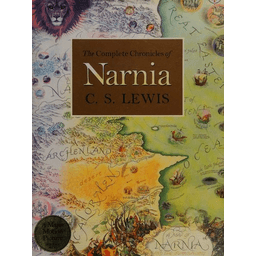
The Chronicles of Narnia is C.S. Lewis's seven-book children's fantasy series, published between 1950 and 1956 and continuously in print since. Each book is short - most run well under 200 pages - and follows children from our world who are pulled into Narnia, a land of talking animals and mythological creatures. The series opens with four siblings stepping through a wardrobe into a Narnia frozen in endless winter, and across the seven volumes it ranges from the world's creation in The Magician's Nephew to its final days in The Last Battle. At the center of every story is Aslan, the great Lion who sang Narnia into being and keeps returning to set it right.
The books are fantasy fiction first, read and loved by children and adults of every background - including many readers with no religious interest at all. Lewis, an Oxford and Cambridge literature scholar who had returned to Christian faith as an adult, was explicit that Narnia was not a coded allegory to be decoded line by line. He called it a "supposal": he supposed a world of talking beasts and then asked what the Son of God might be like there. Aslan is the answer - a Christ-figure carried by story and image rather than by sermon. That is why the series travels so well across Catholic, Protestant, Orthodox, and Latter-day Saint homes, and just as comfortably onto the shelf of a family that simply wants a great story.
Why families across every tradition keep reaching for Narnia
Most children's books that carry a Christian message wear it on the outside - a moral at the end of the chapter, a lesson the characters spell out. Lewis did the opposite. He wrote a real adventure with real stakes and let the meaning live underneath, in the shape of the story rather than in its dialogue. A child can read all seven books purely for the talking beasts and the sword-fights and never once feel preached at. An adult reading the same pages aloud catches resonances the child will only find years later, on a re-read.
That design is why Narnia crosses every line a more explicit book would run into. A Catholic family does not have to navigate denominational claims. A Latter-day Saint family encounters nothing aimed at their tradition. An Orthodox or Protestant reader finds the same open, ungated story. And a family with no faith at all gets one of the great fantasy worlds ever built, no strings attached. Because Lewis kept the Christian dimension a "supposal" rather than a lesson, every reader meets Aslan on their own terms - which is rarer in children's literature than it sounds, and the quiet reason the series has outlasted nearly everything published alongside it.
Aslan and the "supposal": a Christ-figure, not an allegory
Aslan, the great talking Lion, is the spine of the whole series - he sings Narnia into existence in The Magician's Nephew, lays down his life on the Stone Table in The Lion, the Witch and the Wardrobe, and reappears across the other books to guide, rebuke, and rescue. Readers have long noticed that his story rhymes with the Gospel accounts of Jesus, and Lewis knew exactly what he was doing. But he was careful about how he described it. He rejected the word "allegory," which implies a one-to-one code where every element stands for a fixed idea, and preferred "supposal": suppose there were a world like Narnia, and suppose the Son of God chose to enter it - what might he be like? Aslan is Lewis's imaginative answer.
The distinction matters more than it seems. Because Aslan is a supposal rather than a cipher, the books never reduce to a puzzle with one correct solution, and they never become a tract. The reader is free to feel the weight of Aslan's death and return as a story, and to bring whatever they bring to it. That openness is why Christians of every tradition - and plenty of readers outside any tradition - can love the same Lion without the book taking sides. Lewis trusted the image to do the work, and across seventy years it has.
A real world, built to be lived in across seven books
Narnia is one of the most fully realized fantasy worlds in children's literature, and Lewis populated it with a magpie's delight in everything he loved: fauns and centaurs from classical myth, dwarfs and giants from Norse and fairy tale, talking beasts of every kind, and ordinary English children dropped into the middle of it. Across the seven books the world gains a deep history - its creation, its golden ages, its conquests and rescues, and finally its end - so that by the time a reader finishes, Narnia feels less like a setting and more like a place they have visited. The famous set-pieces earn their fame: the lamppost in the snowy wood, the voyage to the world's end aboard the Dawn Treader, the dark journey under the earth in The Silver Chair, the strange and moving stable scene that closes The Last Battle.
What keeps the world from feeling like mere scenery is Lewis's voice. He narrates like a storyteller who knows you personally, dropping in asides about what a kind of weather feels like, or which character he himself is fond of. It is the prose equivalent of being read to by someone who loves both the story and you. That intimacy is why the books work so well aloud, a chapter a night, and why children who were read Narnia at six so often come back at thirty and find the whole country waiting exactly where they left it.
Reading order: publication vs. chronological - and why it matters
There are two common ways to read the series, and which you pick genuinely shapes the experience. The original publication order starts with The Lion, the Witch and the Wardrobe (1950), the book Lewis wrote first and the one most readers consider the perfect doorway into Narnia. The internal chronological order, used by many modern editions that number the books 1 through 7, starts instead with The Magician's Nephew, which tells the story of Narnia's creation and explains where the wardrobe and the lamppost came from - events that happen earliest in Narnian time but that Lewis wrote sixth.
Devoted readers argue about this with real feeling. The case for publication order is that The Lion, the Witch and the Wardrobe is built to be a first encounter - the wardrobe is meant to surprise you, and several payoffs in The Magician's Nephew land far better once you already know Narnia. The case for chronological order is simply that it follows the story's internal timeline. There is no official ruling that settles it; even Lewis's own remarks are more relaxed than the debate around them. New readers should just know the choice exists, pick one, and go - most longtime fans quietly recommend starting with the wardrobe.
Pricing
Complete single-volume edition
~$20-25
All seven books in one volume. The most economical way to own the whole world, and the copy most families keep on the shelf.
Box set (7 paperbacks)
~$30-45
Seven separate paperbacks in a slipcase. Easier for kids to carry one book at a time; prices vary by edition and retailer.
Individual paperback
~$8-10 each
Buy a single title to start - The Lion, the Witch and the Wardrobe is the usual entry point.
Kindle / ebook
~$8-10 each, or bundle
Searchable and highlight-syncing; individual titles or a complete bundle, with prices that drift over time.
Audiobook / dramatization
~$15-40
Single-narrator recordings (the full-cast HarperAudio readings are widely loved) plus the Focus on the Family Radio Theatre dramatizations.
The Chronicles of Narnia is not free, but it is among the most affordable ways to bring a whole imaginative world into a home. Used paperbacks turn up at every library sale and thrift store for a dollar or two, which is how a great many readers acquired their first copy. A new single-volume complete edition runs around $20 to $25 - call it the everyday default - and is the most economical way to own all seven books in one place. If you would rather have them as separate volumes, a paperback box set generally runs $30 to $45, and single paperbacks roughly $8 to $10 each if you want to start with just The Lion, the Witch and the Wardrobe.
The audio editions deserve a special mention, because Narnia was made to be heard. Single-narrator audiobooks - the HarperAudio recordings, with a different well-known British actor reading each title, are the ones most often praised - run around $15 to $40 depending on format and whether you buy them individually or bundled. The Focus on the Family Radio Theatre dramatizations are a separate full-cast treatment, with sound effects and music, that many families love for road trips.
Most readers do not need every format. For a family planning to read aloud, the complete single-volume edition is the balanced default and the copy you will reach for again. Add the audiobooks if you have a commute or long drives; add the box set if you want each child holding their own book at bedtime.
Where The Chronicles of Narnia falls behind
Implied meaning, not stated meaning. The Christian themes in Narnia are carried entirely by story and image, never spelled out - the source of the books' charm and also a genuine limitation. A reader hoping the series will teach doctrine directly will be disappointed, and a reader not looking for the themes may finish all seven books having simply enjoyed a fine adventure. The books won't connect the dots for you; that is by design, but worth knowing going in.
Dated cultural texture. Lewis was writing in 1950s Britain, and a handful of his attitudes - around gender roles, around the portrayal of the Calormene people, around what counts as good old-fashioned behavior - read as artifacts of their decade. None of it dominates, but many modern parents like to preview these moments or talk them through with their children rather than be caught off guard.
The reading-order question. Publication order versus chronological order is a real, unsettled debate, and a new reader has to make a choice before the first page that genuinely affects the experience. It is a small obstacle, but it trips up newcomers who just want to be told where to start. (Most longtime fans say: begin with the wardrobe.)
Unevenness across seven books. The series does not hold a perfectly steady altitude. The Lion, the Witch and the Wardrobe and The Voyage of the Dawn Treader are widely regarded as the high points; The Horse and His Boy sits apart from the main arc, and parts of The Last Battle divide readers. A family reading straight through should expect a few stretches that hold attention less firmly than the openers.
The Chronicles of Narnia vs. The Space Trilogy vs. The Lord of the Rings
These are the three great works of Lewis-adjacent imaginative fiction, and they aim at very different readers. The Chronicles of Narnia (Lewis, 1950-1956) is the children's series - short, warm, fast, written to be read aloud, with Aslan at the center as a Christ-figure carried by story rather than statement. The Space Trilogy (Lewis, 1938-1945) is Lewis's adult science fiction - Out of the Silent Planet, Perelandra, and That Hideous Strength - a denser, stranger, more philosophical set. The Lord of the Rings (J.R.R. Tolkien, 1954-1955) is the towering high-fantasy epic by Lewis's close friend and fellow Inkling - far longer, far more intricate, and aimed squarely at adults and older teens.
Different strengths. Narnia is the most accessible and the best entry point for children and families - the place to start at almost any age. The Space Trilogy is the one for an adult Lewis reader who has finished Narnia and Mere Christianity and wants to see his imagination at full strength on grown-up material. The Lord of the Rings is broader and deeper as a feat of world-building, but it asks far more patience and is a very different experience from a Narnia chapter at bedtime. If you are choosing one to read with children, it is Narnia. If you want Lewis for grown-ups, add the Space Trilogy. If you want the genre's grandest epic, Tolkien is your shelf.
All three are read across Catholic, Protestant, Orthodox, and other Christian traditions, and all three are enjoyed by countless readers with no religious interest at all. Narnia is the most ecumenical and the most welcoming to the youngest readers. The Space Trilogy wears its Christian imagination a little more openly. Tolkien kept his own faith almost entirely beneath the surface of Middle-earth, which is part of why his epic, too, belongs to everyone.
The bottom line
The Chronicles of Narnia is the children's fantasy series other children's fantasy is measured against. Lewis wrote seven short, warm, fast-moving books that a six-year-old can love as pure adventure and an adult can re-read for the rest of their life, finding more each time. Aslan sits at the center as a Christ-figure woven into the story rather than stamped on it - which is why the books are at home in Catholic, Protestant, Orthodox, and Latter-day Saint households alike, and just as happily on the shelf of a family that simply wants a great story. If you are choosing one series to read aloud with your children, this is still the one to reach for.
Alternatives to The Chronicles of Narnia
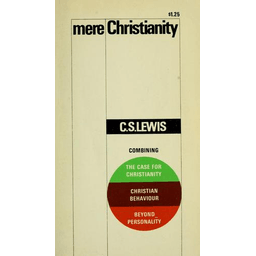 Mere ChristianityLewis's most-recommended work of nonfiction - the place adult readers go after Narnia to meet his thinking head-on.
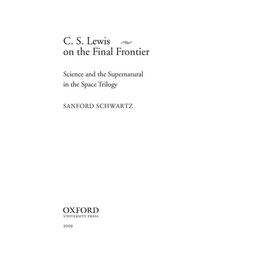 The Space TrilogyLewis's adult science fiction - denser and stranger than Narnia, for the grown-up reader who wants more.
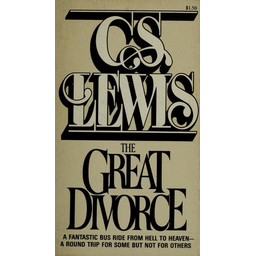 The Great DivorceLewis's short, dreamlike fable about heaven, hell, and the choices that lead to each - imaginative fiction for adults.
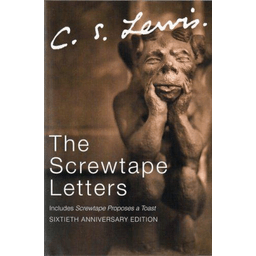 The Screwtape LettersLewis's wickedly funny letters from a senior demon to his nephew - satire that has never gone out of print.
Frequently asked questions
How many Chronicles of Narnia books are there, and in what order?
There are seven, published between 1950 and 1956: The Lion, the Witch and the Wardrobe; Prince Caspian; The Voyage of the Dawn Treader; The Silver Chair; The Horse and His Boy; The Magician's Nephew; and The Last Battle. They can be read in publication order (starting with the wardrobe) or in internal chronological order (starting with The Magician's Nephew). Many longtime readers recommend publication order.
Is Narnia a Christian book or just a fantasy story?
Both, depending on how you read it. The Chronicles are fantasy adventures first, enjoyed by millions of readers of every background, including many with no religious interest. At the same time, the Lion Aslan is a Christ-figure, and Lewis wove Christian themes through the series. He described this not as strict allegory but as a "supposal" - imagining what the Son of God might be like in a world of talking beasts. The meaning is carried by story and image rather than spelled out, so some readers feel it deeply and others simply enjoy the adventure.
Was C.S. Lewis Catholic, Protestant, or something else?
Lewis was a lifelong Anglican (Church of England). He wrote Narnia, like much of his work, to stay on the shared center of Christian belief rather than to advocate for any one tradition's distinctives, which is part of why the series is read and loved across Catholic, Protestant, Orthodox, and Latter-day Saint homes - and by readers of no faith at all.
What reading order should I use - publication or chronological?
There is no official answer, and devoted readers disagree. Publication order begins with The Lion, the Witch and the Wardrobe, which Lewis wrote first and designed as a first encounter - the wardrobe is meant to surprise you. Chronological order begins with The Magician's Nephew, which tells of Narnia's creation. Most longtime fans quietly recommend starting with the wardrobe.
What ages are the Chronicles of Narnia good for?
They work as read-alouds for children roughly five and up, and as independent reading for confident readers around seven or eight and older. Because they operate on two levels at once, adults enjoy them as much as children. A handful of mid-century cultural attitudes surface here and there, which some parents like to preview or talk through with younger children.
Which edition or format should I buy?
For most families, the complete single-volume edition (~$20-25) is the best value and the natural default. A paperback box set (~$30-45) is handy if you want each child holding their own book. Single paperbacks (~$8-10) let you start with just The Lion, the Witch and the Wardrobe. The audiobooks and the Focus on the Family Radio Theatre dramatizations are excellent for car trips.
What should I read after the Chronicles of Narnia?
For more Lewis fiction: The Screwtape Letters and The Great Divorce are short and superb, and The Space Trilogy is his adult science fiction. For Lewis's nonfiction, Mere Christianity is the most-recommended next step. For grand fantasy in a similar spirit, his friend J.R.R. Tolkien's The Lord of the Rings is the natural follow-on for older readers.
Sources & further reading
More Modern Christian Classics
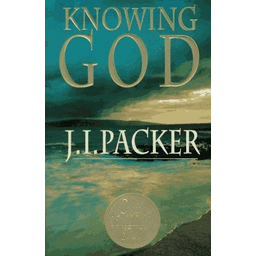 Knowing GodJ.I. Packer’s 1973 classic on the doctrine of God has sold more than 1.5 million copies and is still the book most pastors hand to laypeople who want theology that goes somewhere - here’s what it actually does and who it’s for.
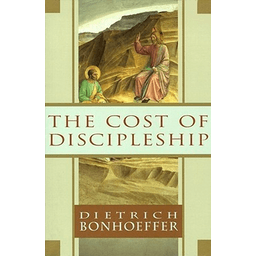 The Cost of DiscipleshipDietrich Bonhoeffer’s 1937 exposition of the Sermon on the Mount, written for pastors training under a regime that wanted them silent - and still the sharpest book in print on what following Jesus actually costs.
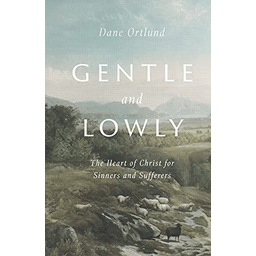 Gentle and LowlyDane Ortlund’s 23 short chapters on Matthew 11:29 have quietly become the most-given new Christian book of the decade - and the reason is not what you’d guess.
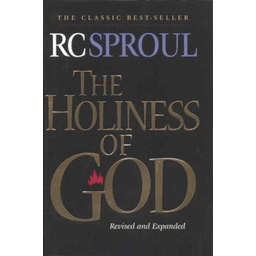 The Holiness of GodR.C. Sproul’s career-defining book on the one attribute of God the church most forgets - and the vision in Isaiah 6 he believed everything else flows from.
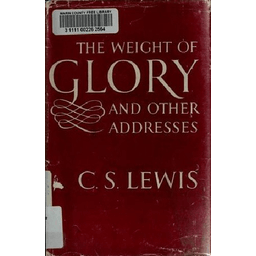 The Weight of GloryThe 1941 sermon many call Lewis's single finest piece of writing - "there are no ordinary people" - gathered with eight other addresses into one slim, uneven, unforgettable collection.
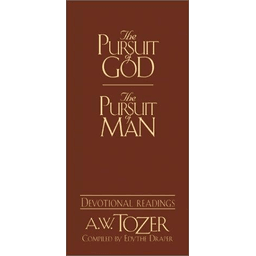 The Pursuit of GodA.W. Tozer’s ten-chapter wake-up call on knowing God personally - short, severe, and the one devotional Reformed, Wesleyan, Catholic, and Orthodox readers all seem to keep on the nightstand.