- Starting price
- ~$16 per volume
- Free tier
- No
- Platforms
- Print · Kindle · Audiobook
- Developer
- HarperCollins
- Launched
- 1938
- Updated
- May 31, 2026
The verdict
The Space Trilogy is the C.S. Lewis most people have never read - three adult science-fiction novels written between 1938 and 1945 that smuggle moral and theological imagination into a genre Lewis half-loved and half-distrusted. It is uneven by design: the first book is a tight planetary adventure, the second a strange and gorgeous temptation story, the third a sprawling earthbound thriller that divides readers. Read for the imagination, not for instruction.
Try The Space Trilogy ↗Opens cslewis.com
The Space Trilogy is the corner of the C.S. Lewis bookshelf most readers walk straight past. Everyone has read Mere Christianity. Most have read Narnia or at least seen the films. But the three adult science-fiction novels Lewis published between 1938 and 1945 - Out of the Silent Planet, Perelandra, and That Hideous Strength - remain a kind of open secret, beloved by the people who find them and unknown to almost everyone else. They are, depending on who you ask, the most underrated thing Lewis ever wrote or the most self-indulgent. Often both at once.
The series goes by several names - the Ransom Trilogy, after its hero Elwin Ransom; the Cosmic Trilogy; the Space Trilogy. It did not begin as a grand plan. It is sometimes said that Lewis and his friend J.R.R. Tolkien made a pact to each write the kind of story they wished existed - Tolkien a tale of time travel, Lewis one of space travel - because nobody else was writing them well. Lewis went first and kept going. The result is not a tidy arc. It does not read like one author's three-act structure. It reads like a man following an image across three very different books and arriving somewhere he did not originally intend.
What you actually get is a philologist named Ransom - modeled, by most accounts, partly on Tolkien - who is kidnapped and taken to Mars in the first book, sent to an unfallen Venus in the second, and dropped into a fight against a technocratic conspiracy in rural England in the third. Along the way Lewis builds a whole cosmology: planets governed by angelic intelligences, an Earth that has fallen silent and dark, a long backstory that touches Arthurian legend and the deep past. The tone lurches from boys'-own adventure to dense theological dialogue to satire of academic bureaucracy. It is the strangest thing in the Lewis catalog, and for a certain kind of reader it is the thing they love best.
✓ The good
- Out of the Silent Planet is a genuinely great short novel - tight, strange, and one of the best evocations of a truly alien world in early science fiction
- Perelandra contains some of the most beautiful prose Lewis ever wrote - the descriptions of the floating islands of Venus are justly famous
- Read across traditions - the moral imagination travels well beyond any one denomination, and the books are also read straight as classic sci-fi
- A rare science fiction series that takes ideas seriously - temptation, the limits of scientific ambition, what a creature owes its Creator - without flattening into a tract
- Ransom is one of Lewis's most interesting protagonists - an ordinary scholar, frightened and out of his depth, who grows across the three books
- That Hideous Strength is wildly ambitious - part dystopia, part marriage drama, part Arthurian fantasy - and when it works it is unlike anything else in the genre
- Short enough to be approachable - the first two books are each a weekend read, and the trilogy rewards the reader who finishes all three
✗ Watch out
- Wildly uneven across the three books - That Hideous Strength is far longer and tonally very different from the first two, and many readers stall in it
- The science is dated - these are 1930s-40s ideas of space travel, Mars, and Venus, and a modern reader has to accept them as fantasy rather than science
- The philosophical and theological dialogues slow the plot, sometimes for many pages - Perelandra in particular pauses its story for long stretches of argument
- That Hideous Strength carries the heavy fingerprints of its era - the Arthurian and academic-satire material, and some of the marriage material, will not be to every reader's taste
- It is fiction, not instruction - Lewis is dramatizing ideas, not teaching doctrine, and reading the novels as a systematic statement of belief misreads them
Best for
- Lewis fans who have read Narnia and Mere Christianity and want what comes next
- Readers who enjoy idea-driven, classic science fiction and fantasy
- Anyone drawn to stories about temptation, ambition, and moral choice
- Patient readers willing to ride out a series that changes shape book to book
Avoid if
- You want hard, scientifically current science fiction - the science here is period fantasy
- You want a fast, plot-driven page-turner with no long dialogues
- You want a clear doctrinal statement - these are novels, not theology
- You bounce off mid-century British prose or Arthurian and academic settings
What The Space Trilogy is
The Space Trilogy is C.S. Lewis's three-novel excursion into adult science fiction, written and published between 1938 and 1945. Out of the Silent Planet (1938) introduces Elwin Ransom, a Cambridge philologist who is abducted and taken to Mars - called Malacandra - where he discovers a world that never fell and three races living without fear of death. Perelandra (1943) sends Ransom to Venus - Perelandra - a young, unfallen, ocean-covered world, where he must contend with an attempt to repeat the temptation that ruined Earth. That Hideous Strength (1945), the longest and most earthbound, drops the cosmic backdrop onto rural England, where a married couple is pulled into opposite sides of a conflict between a sinister scientific institute and a small household resisting it.
Across the three books Lewis builds a layered cosmology - planets watched over by angelic intelligences, an Earth gone dark and silent, a deep mythic history that reaches back to Arthurian legend. The novels are commonly read two ways at once: as classic mid-century science fiction and fantasy, and as fiction freighted with Lewis's recurring concerns - temptation and moral choice, the proper and improper uses of knowledge and power, and the idea that the universe is inhabited and meaningful rather than empty. The themes are dramatized in story, not argued in propositions, which is what separates the trilogy from Lewis's nonfiction.
Why the trilogy still finds devoted readers
Most science fiction of Lewis's era was, by his own account, thin on the things he cared about - it could imagine a rocket and an alien but rarely a moral universe. Lewis wrote the kind of book he wished existed: planetary adventure that treated good and evil, beauty and corruption, as real features of the cosmos rather than set dressing. The genre gave him room a sermon never could. He could put a reader on the surface of an unfallen world and let them feel, viscerally, what innocence might be like - and then dramatize, in the second book, exactly how that innocence comes under attack.
The result is a series that works on two channels at once. A reader who picks it up purely as vintage science fiction gets strange worlds, real suspense, and one of the better alien-contact stories of the 1930s. A reader drawn to the moral and imaginative weight finds Lewis turning over the same questions that animate his other work - what a creature owes its Maker, where ambition curdles into something monstrous, what it costs to refuse a temptation - but rendered in image and event instead of argument. That double life is rare, and it is why the people who love these books tend to love them fiercely.
Out of the Silent Planet (1938): the gateway, and the best-built of the three
The first novel is the one to hand a newcomer. Ransom, on a walking tour, is drugged and bundled aboard a spacecraft by two men who intend to deliver him to the rulers of Malacandra - Mars - for purposes he does not understand. He escapes into the Martian landscape and discovers, slowly and with real wonder, that the planet is not the dead red desert of pulp fiction. It is inhabited, beautiful, and ordered: three distinct rational species live alongside one another without rivalry, governed by an unseen intelligence, untouched by the fear and grasping that Ransom carries with him from Earth.
What makes the book hold up is its restraint. Lewis takes his time letting Ransom - and the reader - unlearn the assumptions that everything alien must be hostile and everything strange must be conquered. The famous reveal is that Earth is the odd one out: the 'silent planet,' cut off and bent, while the rest of the cosmos hums along unfallen. It is a short, controlled, atmospheric novel, and it is the volume most likely to win over a reader who came in skeptical that 'C.S. Lewis science fiction' could be anything but a curiosity. Many readers stop here and are perfectly satisfied - though they miss what the second book does.
Perelandra (1943): the temptation story, and the prose high point
Perelandra is the volume longtime readers most often name as their favorite, and it is the one where Lewis's prose reaches highest. Ransom is sent - this time willingly, even reverently - to Venus, a young ocean world of floating islands and golden skies that has not yet fallen. There he finds a kind of Eden in progress, and an adversary who has come to undo it: a man from Earth, possessed and emptied out, who sets to work on the world's innocent inhabitant with patient, exhausting argument, trying to talk her into the one forbidden thing.
The novel is built around that long temptation, and it is both its strength and its difficulty. The descriptions of Perelandra itself - the warm seas, the drifting islands that rise and fall with the swell - are among the most beautiful passages Lewis ever wrote, and readers quote them for the sheer sensory richness. But the book also pauses its plot for extended stretches of philosophical and theological back-and-forth, and a reader looking for forward momentum can find those stretches slow. It is dramatizing a moral struggle rather than racing through a plot. Taken on its own terms, it is the artistic center of the trilogy.
That Hideous Strength (1945): the divisive, ambitious finale
The third book is where opinions split hardest. That Hideous Strength abandons outer space entirely and stays on Earth, in and around a provincial English university, where a young academic couple - Mark and Jane Studdock - are drawn onto opposite sides of a struggle. Mark is seduced into the orbit of the N.I.C.E., a scientific institute whose bland bureaucratic surface hides something genuinely sinister; Jane is drawn toward a small resisting household led by Ransom. Around this domestic drama Lewis layers Arthurian legend, satire of academic ambition, and the cosmic mythology of the first two books, and the whole thing runs far longer than either predecessor.
When it works, it is unlike anything else in the genre - a dystopian thriller about the corruption of institutions and the dehumanizing reach of a certain kind of technocratic power, grounded in a marriage and a few ordinary people. When it does not work for a reader, it is because the tonal mixture is so ambitious that the seams show: the satire, the supernatural, the marriage plot, and the Arthurian material do not always pull in the same direction, and the length tests patience the first two books never did. It is the volume readers most often stall in, and also the one its admirers defend most passionately. Go in knowing it is a different kind of book.
Pricing
Out of the Silent Planet (paperback)
~$16
The first and most approachable volume. The one to start with - and the easiest sell to a skeptical reader.
Perelandra (paperback)
~$16
The second volume, and the one many longtime readers love best. Roughly the same price as the first.
That Hideous Strength (paperback)
~$17
The longest of the three, and priced a little higher for the page count. The most divisive volume.
Omnibus / boxed set
~$40-50
All three novels collected. As of writing, single-volume omnibus and three-book boxed editions both exist; check the listing before buying.
Kindle / Audiobook
~$10-25 per volume
Ebook and audiobook editions exist for each volume; bundle pricing varies. The Geoffrey Howard audiobook narrations are well regarded.
The Space Trilogy is not free, and unlike a single Lewis title it is three separate books to acquire. New paperbacks run around $16 each as of writing - call it roughly $48 to buy all three new - though used copies are common and cheap, and the first volume in particular turns up constantly at library sales and secondhand shops.
If you know you want the whole series, an omnibus or boxed set is usually the better value: single-volume collected editions and three-book boxed sets both exist, generally in the $40-50 range, which saves a little over buying each separately and keeps the matching spines together. Check the specific listing before you buy - editions and bundles change, and the trilogy has been reissued many times.
Ebook and audiobook editions exist for each volume, with per-book pricing in roughly the $10-25 range depending on format and any bundle. The audiobooks are worth a look: the Geoffrey Howard narrations are well regarded, and Lewis's descriptive prose - especially the Perelandra passages - reads beautifully aloud.
If you are testing the waters, just buy Out of the Silent Planet first. It is the cheapest commitment, the most self-contained, and the surest way to find out whether the series is for you before you spend on the set. Most readers do not need to buy all three up front - start with the first and let it earn the next two.
Where The Space Trilogy falls behind
Uneven across volumes. This is the central thing to know going in. Out of the Silent Planet is tight and controlled, Perelandra is gorgeous but slow, and That Hideous Strength is long, sprawling, and tonally a different animal. Readers who expect a consistent trilogy are often thrown by how much the third book differs from the first two, and a meaningful number stall before finishing it.
Dated science. These are 1930s and 40s conceptions of space, Mars, and Venus - breathable atmospheres, oceans on Venus, a habitable Mars. A modern reader has to accept the settings as fantasy rather than science fiction in the technical sense. That is not a flaw in the storytelling, but a reader coming for plausible hard SF will be disappointed.
Slow philosophical stretches. Lewis stops the plot to think, sometimes at length, especially in Perelandra. The long temptation dialogues are the artistic point of that book, but a reader wanting steady forward motion will feel the brakes. It rewards patience and frustrates impatience.
Period and stylistic friction. That Hideous Strength leans on Arthurian legend and university satire, and some of its material - including parts of the marriage plot - carries the assumptions of its era and will not land for every reader. The trilogy as a whole asks comfort with mid-century British prose. None of this is a defect in what Lewis set out to do; it is worth knowing about going in rather than being surprised by it.
Not instruction. These are novels. Lewis is dramatizing ideas in story, not laying out a position, and the books resist being read as a doctrinal statement. A reader who comes looking for a system, or who tries to map every image onto a fixed meaning, will misread what the trilogy actually is.
The Space Trilogy vs. The Chronicles of Narnia vs. The Great Divorce
These are the three places readers most often go for Lewis's imaginative fiction, and they aim at different readers. The Space Trilogy (1938-1945) is the adult, idea-heavy science fiction - strange worlds, long arguments, a hero out of his depth - written for grown readers willing to sit with ambiguity and length. The Chronicles of Narnia (1950-1956) is the children's fantasy, seven shorter books built for younger readers but famously enjoyed by adults, with a warmth and accessibility the Space Trilogy does not aim for. The Great Divorce (1945) is a short standalone fantasy - a bus ride from a grey town to the outskirts of heaven - that dramatizes choice and self-deception in under 150 pages.
Different strengths. Narnia is the easiest entry point and the broadest in appeal - the place to start with Lewis's fiction if you want something approachable. The Space Trilogy is the deepest and strangest, the most demanding, and the most rewarding for a reader who likes ideas worked out in story. The Great Divorce is the most concentrated - one sharp image carried all the way through, readable in an evening. If you loved Narnia and want the adult version of that imagination, the Space Trilogy is the move; if you found the trilogy slow, The Great Divorce gives you Lewis's fiction in a tighter, faster form.
All three are read widely across Catholic, Protestant, Orthodox, and Latter-day Saint readers, and all three are also read simply as fantasy and science fiction. The Space Trilogy is the least overtly devotional of the three and the most at home on a general science-fiction shelf, which is part of why it travels so easily outside Christian readership.
The bottom line
The Space Trilogy is the C.S. Lewis worth discovering once you have read the famous ones. Start with Out of the Silent Planet - short, strange, and the easiest to love. Stay for Perelandra, where Lewis's prose is at its most beautiful. Approach That Hideous Strength knowing it is longer, odder, and more divisive than the two before it. The science is dated and the pacing is uneven, but no other classic science fiction series does quite what this one does with imagination and moral weight. For the right reader, it becomes a lifelong favorite.
Alternatives to The Space Trilogy
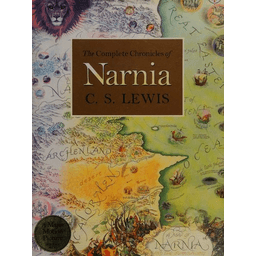 The Chronicles of NarniaLewis's seven-book fantasy series - the accessible, beloved entry point to his fiction, written for children and read by everyone.
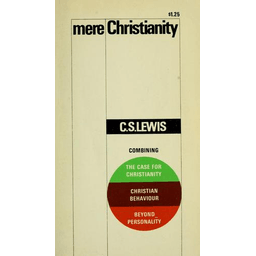 Mere ChristianityLewis's wartime radio talks on the faith - the nonfiction counterpart to the trilogy, and the book people press into your hands.
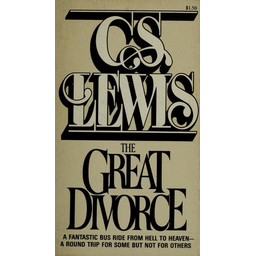 The Great DivorceA short standalone fantasy - a bus ride from hell to the edge of heaven - and a faster, tighter taste of Lewis's fiction.
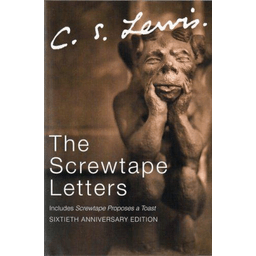 The Screwtape LettersLewis's satirical correspondence from a senior devil to his nephew - witty, sharp, and his most quotable work of fiction.
Frequently asked questions
What order should I read the Space Trilogy in?
Read them in publication order: Out of the Silent Planet (1938), then Perelandra (1943), then That Hideous Strength (1945). The books build on one another and follow Ransom across all three, so reading in order is the intended experience. The first book is also the most self-contained, which makes it the natural starting point.
Is the Space Trilogy related to The Chronicles of Narnia?
No, they are separate works with different characters and settings. Both are by C.S. Lewis, but the Space Trilogy is adult science fiction following the scholar Elwin Ransom, while Narnia is a children's fantasy series set in a different imagined world. The trilogy came first, in the late 1930s and 1940s; Narnia followed in the 1950s.
Do I need to be religious to enjoy the Space Trilogy?
No. The books are read both as classic science fiction and fantasy and as fiction carrying Lewis's recurring moral and imaginative concerns. Readers who come purely for vintage SF find strange worlds and real suspense; readers drawn to the deeper themes find more. The series is read across many Christian traditions and by readers of none.
Why is That Hideous Strength so different from the first two books?
It is the longest of the three and stays entirely on Earth rather than in space, blending dystopian thriller, a marriage drama, academic satire, and Arthurian legend. Many readers find it the most ambitious volume; others find it the hardest to finish. It helps to go in expecting a different kind of book rather than a continuation of the planetary adventure.
Which book in the trilogy is the best?
Opinions vary. Out of the Silent Planet is the most tightly built and the easiest to recommend to a newcomer. Perelandra is the one longtime readers most often call their favorite, largely for the beauty of its prose. That Hideous Strength is the most divisive - admired by some for its ambition, set aside by others for its length and tonal mix.
Is the science in the trilogy accurate?
No, and a modern reader should treat the settings as fantasy. The books reflect 1930s and 1940s ideas - a habitable Mars, an ocean-covered Venus, breathable space travel - that later science has overtaken. The science is a vehicle for the story rather than the point of it; readers who can accept the premise as imaginative fantasy get the most out of the series.
Where should I go after the Space Trilogy?
For more of Lewis's fiction: The Chronicles of Narnia, The Great Divorce, and The Screwtape Letters are the natural next reads. For his nonfiction, Mere Christianity is the standard starting point. Readers who especially liked the imaginative cosmology of the trilogy often go on to enjoy other classic mid-century fantasy and science fiction in a similar vein.
Sources & further reading
More Modern Christian Classics
 Knowing GodJ.I. Packer’s 1973 classic on the doctrine of God has sold more than 1.5 million copies and is still the book most pastors hand to laypeople who want theology that goes somewhere - here’s what it actually does and who it’s for.
 The Cost of DiscipleshipDietrich Bonhoeffer’s 1937 exposition of the Sermon on the Mount, written for pastors training under a regime that wanted them silent - and still the sharpest book in print on what following Jesus actually costs.
 Gentle and LowlyDane Ortlund’s 23 short chapters on Matthew 11:29 have quietly become the most-given new Christian book of the decade - and the reason is not what you’d guess.
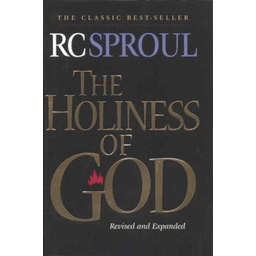 The Holiness of GodR.C. Sproul’s career-defining book on the one attribute of God the church most forgets - and the vision in Isaiah 6 he believed everything else flows from.
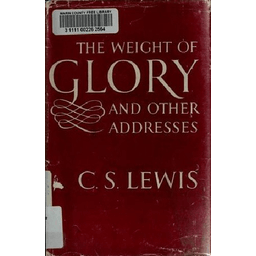 The Weight of GloryThe 1941 sermon many call Lewis's single finest piece of writing - "there are no ordinary people" - gathered with eight other addresses into one slim, uneven, unforgettable collection.
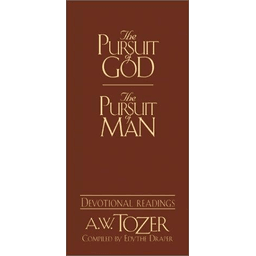 The Pursuit of GodA.W. Tozer’s ten-chapter wake-up call on knowing God personally - short, severe, and the one devotional Reformed, Wesleyan, Catholic, and Orthodox readers all seem to keep on the nightstand.