- Starting price
- ~$17 paperback
- Free tier
- No
- Platforms
- Print · Kindle · Audiobook
- Developer
- Dutton / Penguin
- Launched
- 2009
- Updated
- May 31, 2026
The verdict
The most useful short book on idolatry in print. Keller’s thesis is that a counterfeit god is almost never a bad thing - it is a good thing (love, family, work, money, a cause) that has quietly become an ultimate thing. Read it in two sittings; you will recognize yourself somewhere in it, probably more than once.
Try Counterfeit Gods ↗Opens penguinrandomhouse.com
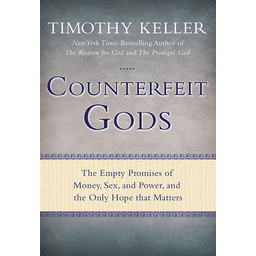
Counterfeit Gods has quietly become the book people reach for when something good in their life has started to feel like it is eating them alive. It is short - under 200 pages, readable in two sittings - and it does one thing with great precision: it argues that idolatry is not a primitive problem about carved statues but the most contemporary problem there is. A counterfeit god, in Keller’s definition, is anything so central to your life that losing it would feel like losing the reason to live. Almost by definition, that means it is usually a good thing turned ultimate.
That reframe is the move that makes the book. It doesn’t scold the reader for wanting love or money or success. It doesn’t treat ambition as sin or pleasure as a trap. It doesn’t add a list of forbidden things to avoid. Instead it works through a handful of biblical narratives - Abraham and Isaac, Jacob and Leah, Zacchaeus, Naaman the Syrian general - and shows how each one’s deepest ache attached itself to something that then turned on them. Keller’s claim, gentle but relentless, is that the human heart is, in Calvin’s phrase, a perpetual idol-factory: it does not stop manufacturing ultimate things, it only changes which one is on the line.
That is why a book published in 2009 still gets handed across kitchen tables during a divorce, a layoff, an empty-nest season, or a quiet midlife unraveling. It manages to diagnose the specific way modern, secular, often irreligious people are still profoundly religious - about their careers, their children, their relationships, their politics. If you have ever gotten everything you wanted and felt strangely worse, Counterfeit Gods is going to explain why, and it is not going to let you off the hook easily.
✓ The good
- Frame-shifting definition - defining idolatry as a good thing made ultimate reorients the whole subject in a single sentence and makes it immediately personal
- Genuinely short - under 200 pages, engineered to be read in a weekend and lent without ceremony
- Diagnoses secular life precisely - the chapters on success, money, and power read modern career and political anxiety as religious devotion, which lands hard with non-religious readers too
- Narrative-driven - built on Abraham, Jacob/Leah, Zacchaeus, and Naaman rather than abstract argument, so it reads like story more than lecture
- Convicting without sneering - the diagnosis is sharp but Keller never caricatures the reader’s attachments as stupid or shameful
- Works across traditions - Catholic, Wesleyan, Reformed, Anglican, and non-denominational readers all find the idolatry-of-the-heart theme resonant, since it is shared ground
- Pairs naturally with a study - short chapters map cleanly onto a four-to-six-week small-group arc
✗ Watch out
- Short and accessible rather than deep - readers wanting a sustained theological treatment of idolatry or a technical reading of the source texts will find it thin
- Sermonic in origin - the book grew out of Keller’s preaching, and the chapters still carry a sermon’s shape, including the recurring turn to the cross at the close of each
- Reuses themes Keller develops elsewhere - the heart-idol framework also runs through The Reason for God and his preaching, so committed Keller readers may feel they’ve met it before
- Light on application steps - Keller names the idol and points to the remedy but rarely hands over numbered practices for dismantling it
- Premium price for the length - at around $17 list for under 200 pages, the per-page cost runs high compared to longer paperbacks
Best for
- Readers in a season of loss, success, or transition who sense something good has become too central
- Professionals and high-achievers wrestling with career, money, or status anxiety
- Small groups wanting a four-to-six-week study on the heart
- Readers new to Keller looking for a short, story-driven on-ramp
Avoid if
- You want a deep or technical theology of idolatry
- You prefer broad, multi-passage books over a short thematic one
- You’re looking for a step-by-step program for breaking a specific habit
- You’ve already absorbed Keller’s heart-idol framework from his other work
What Counterfeit Gods is
Counterfeit Gods is a short standalone book by Timothy Keller - the late Reformed Presbyterian pastor who founded Redeemer Presbyterian Church in Manhattan - on the subject of idolatry as a present-tense, universal human problem rather than an ancient one. It was published in 2009 by Dutton, a Penguin imprint, and runs under 200 pages across an introduction, five themed chapters, and a closing chapter on how counterfeit gods are dismantled.
The book is not a systematic treatment of the doctrine. It is a sustained, accessible argument built around biblical narratives - Abraham and Isaac on the mountain, Jacob’s lifelong ache for Leah’s sister, Zacchaeus and his money, Naaman and his pride - each used to illustrate a different counterfeit god: love, success, money, power, and the self. Keller writes at a thoughtful general-reader level and assumes a reader willing to be told, gently, that the thing they cherish most may be the thing most quietly running their life.
Why everyday readers reach for Counterfeit Gods
The reason this book gets handed to people who don’t think they have a spiritual problem is that it doesn’t open with one. It opens with a diagnosis of ordinary modern unhappiness - the promotion that didn’t satisfy, the relationship that became suffocating, the success that curdled into emptiness - and only then names what is underneath. There’s no jargon to push through and no demand that you already believe anything. The thoughtful person’s introduction to why getting what you want so often makes things worse.
The other reason is the redefinition itself. Almost everyone picks up a book on idolatry expecting it to be about other people’s vices, or about religion they left behind. They get blindsided by the claim that a counterfeit god is usually a good thing - their child, their marriage, their work, their cause - that has slid into the place only God can occupy. Keller’s description of how love or ambition becomes an ultimate thing is the part readers underline and text to friends. This sounds like a small thing. In practice it’s the reason the book has stayed in print.
Idolatry redefined: a good thing made ultimate
Keller’s central move is a definition, and the whole book hangs on it. A counterfeit god, he writes, is anything more important to you than God, anything that absorbs your heart and imagination more than God, anything you seek to give you what only God can give. The crucial point is that the thing itself is almost never bad. Love, family, work, achievement, money, a country, a cause - these are good gifts. They become counterfeit gods not when we value them but when we make them ultimate, when we ask them to deliver the meaning, security, and worth that no finite thing can carry. He borrows Calvin’s image: the human heart is a factory that runs day and night producing idols.
Once that definition lands, the subject stops being about other people and starts being about the reader. The test Keller offers is practical: look at what you cannot live without, what your imagination returns to when it drifts, what your worst nightmares circle around, where you turn for comfort when things go wrong. Whatever that is - and for most modern people it is something perfectly respectable - is functioning as a god. Whether that diagnosis feels freeing or uncomfortable depends on the reader, but the redefinition is the engine the rest of the book runs on, and it is the part nearly everyone remembers.
The biblical case studies: idolatry told as story
Rather than argue in the abstract, Keller works the theme through a sequence of narratives, and the stories are what make the book stick. Abraham, asked to give up the son he had waited a lifetime for, becomes the case study for love and family turned ultimate. Jacob, who works fourteen years for Rachel and wakes up married to Leah, becomes the study of romantic longing as a counterfeit god - and Leah, unloved and overlooked, becomes the one who finally stops needing her husband’s approval. Zacchaeus the tax collector carries the chapter on money; Naaman the Syrian commander, healed only when he swallows his pride and dips in a muddy river, carries the chapter on power and success.
Each story does the same quiet work: it shows a person whose deepest ache attached itself to a real, good thing, and what happened when that thing was threatened or lost. The narrative approach is why the book reads faster and lands harder than a topical treatment would. You are not being lectured about money or sex or power in the abstract - you are watching specific people grasp and lose and sometimes be set free, and recognizing the shape of your own grasping in theirs. It is the difference between being told you have an idol and seeing one operate.
The remedy: reordering the heart rather than removing the desire
The closing argument is where Keller separates his approach from simple moralism. The answer to a counterfeit god, he insists, is not to try harder to stop wanting the thing - willpower against a deep desire almost always fails, and often just relocates the idol somewhere else. Nor is it to despise the good thing, as if love or work or family were the problem. The remedy is reordering: the displacement of the counterfeit by something more beautiful and more satisfying, so that the good thing can return to its proper, lower, genuinely enjoyable place. Idols are not so much removed, in Keller’s framing, as replaced.
For Keller, that replacement is the gospel itself, and each chapter turns at its close toward the cross - the reason the book reads as sermonic to some readers. He argues that only a love that cannot be lost can free a person from clutching at loves that can. Readers from a range of traditions find the diagnosis universally recognizable even where they would articulate the remedy in their own theological vocabulary; the idea that a disordered heart is healed by a rightly ordered love is old and widely shared. The book’s last move is to point past the idol to what it was a counterfeit of in the first place.
Pricing
Paperback
~$17
The standard Dutton edition and the one most people buy. Easy to mark up, easy to lend, easy to gift.
Hardcover
~$26
The original 2009 gift edition; same text, sturdier binding. Worth it only if it’s going on a shelf for the long term.
Kindle
~$13
The convenient way in, and good for highlighting. Drops on sale periodically below the paperback.
Audiobook
~$15
Around five hours of runtime - a single long drive or a few commutes. Included with some audiobook memberships.
There is no free tier. Paperback runs around $17 list, and used copies turn up cheaply at library sales and secondhand shops, which is how a lot of people acquire their first one. If you want the cheapest legitimate way in, watch the Kindle store - the title drops on sale several times a year, often below the print price.
The paperback is the version almost everyone buys, and the one to lend. It’s the right size, it survives being marked up, and at around $17 it’s an easy purchase to make for someone going through a hard season without overthinking it. The hardcover edition exists for readers who want it on a shelf for the long term, but the text is identical and the upgrade is mostly cosmetic.
The audiobook is a solid option for commuters. At roughly five hours it fits inside a weekend road trip or a week of driving, and the case-study structure carries well in audio because each chapter is essentially a self-contained story. For readers who already know Keller’s preaching rhythm, the spoken version sits comfortably alongside it.
Most readers do not need more than the paperback. There is no separate first-party study guide as tightly bound to this title as the one for The Prodigal God, but the five themed chapters map naturally onto a short small-group arc, and discussion questions for it circulate widely. The paperback is the balanced default and the copy you will reach for again.
Where Counterfeit Gods falls behind
Not a deep treatment. Readers expecting a sustained theology of idolatry - a careful survey of the biblical material, the history of the doctrine, the philosophical questions underneath - will find this isn’t that book. Keller is doing accessible pastoral diagnosis, not academic treatment, and it’s on purpose. For depth on the subject you would need to read further, which Keller would be the first to say.
Sermonic in origin. The book grew out of Keller’s preaching, and the chapters still carry a sermon’s shape - a problem set up, a story worked through, a turn to the cross at the end. Readers who love that cadence find it a strength; readers who want a different structure may notice every chapter resolving the same way, and the recurring closing move can feel patterned over the length of the book.
Reuses familiar themes. The heart-idol framework - good things made ultimate, the heart as an idol factory - is one Keller develops across his other work, including The Reason for God and a great deal of his preaching. For someone who has already absorbed it elsewhere, Counterfeit Gods can feel like the dedicated treatment of a theme they’ve met several times, rather than new ground.
Light application. Keller is excellent at naming the counterfeit and pointing to the remedy, but he is not a writer who hands readers numbered steps for dismantling a specific attachment. The book ends in reflection and reorientation, not in a programme. Readers who want concrete spiritual-practice instructions - do this, journal that, pray this - will need to bring those from elsewhere.
Premium per-page cost. At roughly $17 for under 200 pages, the math is less generous than a longer paperback at a similar price. The brevity is genuinely a feature for the reader in a hurry or in pain, but the wallet notices.
Counterfeit Gods vs. The Prodigal God vs. The Reason for God
Different strengths, all by the same author. Counterfeit Gods (2009) is the diagnostic book - it names the disordered loves running a modern life and traces them through biblical case studies. The Prodigal God (2008) is the shortest entry point, a single-parable reading of Luke 15 designed above all to be gifted. The Reason for God (2008) is the broad apologetics volume, the one that takes up the cultural and intellectual objections a skeptic actually raises and works through them at length. They were written in the same season and share a voice, but they do different jobs.
If you want the heart’s-eye view of why success and love and money keep failing to satisfy, Counterfeit Gods is the one. If you want the shortest possible on-ramp to the gospel’s core to hand a friend, reach for The Prodigal God. If the person you’re thinking of isn’t convinced Christianity is worth taking seriously in the first place, The Reason for God is the longer, argument-driven book built for exactly that reader. Many people own all three and pass them around depending on what a particular friend is wrestling with.
All three are read widely across Catholic, Protestant, and other Christian traditions. Keller wrote from a Reformed Presbyterian perspective, and that vantage shows most in how he frames the remedy; the central diagnosis in Counterfeit Gods - that the heart turns good things into ultimate things - is old, broadly shared ground that readers across traditions recognize in their own terms. Making Sense of God, his later prequel to The Reason for God, is the natural next step for a reader who wants the cultural argument extended further.
The bottom line
Counterfeit Gods is the rare short book that changes how you read your own life. Keller takes a subject most people assume is ancient and irrelevant, redefines idolatry as a good thing made ultimate, and then walks through Abraham, Jacob, Zacchaeus, and Naaman until the reader recognizes the shape of their own grasping somewhere in the pages. It is the book to hand to someone - including yourself - who got what they wanted and felt worse, or who is losing something good and can’t tell why it feels like the end of the world. At around $17, it is the most useful short diagnosis of the modern heart in print.
Alternatives to Counterfeit Gods
 The Prodigal GodKeller’s 130-page reading of Luke 15 - the shortest on-ramp to the heart of the gospel and the most-gifted of his short books.
 The Reason for GodKeller’s broad apologetics volume from the same season - for the skeptic who needs the cultural objections answered before anything else will land.
 Making Sense of GodKeller’s prequel to The Reason for God - the case for why faith is even worth considering, aimed at a reader further from belief.
 Generous JusticeKeller on why grace experienced reorders a person toward the poor - a companion theme to the reordered-heart argument in Counterfeit Gods.
Frequently asked questions
What is a "counterfeit god," according to the book?
Keller defines a counterfeit god as anything more important to you than God - anything that absorbs your heart and imagination, anything you look to for the meaning, security, or worth that only God can give. The key point is that it is almost always a good thing (love, family, work, money, a cause) that has been made ultimate, not a bad thing. The redefinition is the book’s thesis.
How long is the book and how long does it take to read?
Under 200 pages across an introduction, five themed chapters, and a closing chapter on dismantling idols. Most readers finish it in two sittings or a single weekend. The audiobook runs around five hours, which fits a long drive or a week of commutes.
Which Bible stories does Counterfeit Gods use?
It is built around narratives rather than abstract argument. Abraham and Isaac illustrate love and family made ultimate; Jacob and Leah illustrate romantic longing as a counterfeit god; Zacchaeus carries the chapter on money; and Naaman the Syrian commander carries the chapter on power and pride. Each story shows a person whose deepest ache attached itself to a good thing.
Does the book work for readers who aren’t religious?
Many non-religious readers find it useful, because its core observation is that secular people are still profoundly devoted - to careers, relationships, children, status, and causes. Keller frames ordinary modern anxiety as a kind of religious devotion to finite things, which is a diagnosis a reader can recognize whether or not they share his conclusions about the remedy.
Does Counterfeit Gods work for readers outside the Reformed tradition?
Yes - broadly. Keller wrote from a Reformed Presbyterian perspective, but the central idea (that the heart turns good things into ultimate things and needs them reordered) is old and widely shared across Catholic, Wesleyan, Anglican, non-denominational, and other readers. It has been used in small groups across a wide range of traditions because the theme is common ground; readers often articulate the remedy in their own theological vocabulary.
How is this different from The Prodigal God or The Reason for God?
All three are short-to-medium Keller books from roughly the same period. Counterfeit Gods is the diagnostic book about disordered loves; The Prodigal God is the shortest, a one-parable reading of Luke 15 made to be gifted; The Reason for God is the longer apologetics volume that engages cultural objections to Christianity. They share a voice but do different jobs, and many readers own all three.
Is there a study guide for small-group use?
There is no first-party study guide as tightly bound to this title as the one published for The Prodigal God. That said, the five themed chapters map cleanly onto a four-to-six-week arc, and discussion questions for the book circulate widely, so it is commonly used in small groups without a dedicated curriculum.
Sources & further reading
More Christian Living Books
The Prodigal GodTim Keller’s 130-page reading of Luke 15 has quietly become one of the most-gifted Christian books of the last twenty years - and the reason is the title itself. Practicing the WayComer’s 2024 follow-up to The Ruthless Elimination of Hurry has quietly become the default spiritual-formation book in a thousand small groups - and the reasons are worth unpacking.
 Walking with God Through Pain and SufferingTim Keller’s most comprehensive book on suffering - part survey of how every culture has tried to explain pain, part biblical theology, part field manual for the people actually walking through it.
 FerventThe prayer book that turned “strategic, specific prayer” into a fill-in-the-blank battle plan - and rode the War Room moment to the top of the bestseller lists.
 A Grace DisguisedJerry Sittser lost his mother, his wife, and his four-year-old daughter in a single car crash - and the book he wrote about it has quietly become the one grieving people press into each other’s hands, because it refuses to tell you how to get over your loss.
 The Ruthless Elimination of HurryJohn Mark Comer’s 2019 breakout - a pastor’s case that hurry is the great spiritual enemy of our age - has quietly become the go-to slow-down book for an exhausted generation of Christians. Here’s what it actually delivers, and where it doesn’t.