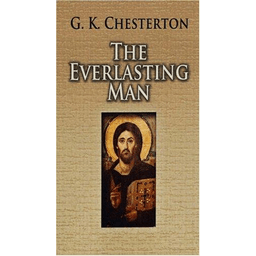
- Starting price
- Free (public domain)
- Free tier
- Yes
- Platforms
- Print · Kindle · Audiobook · Free (public domain)
- Developer
- Various / Public domain
- Launched
- 1925
- Updated
- May 31, 2026
The verdict
A hundred years on, The Everlasting Man is still one of the most ambitious popular apologetics ever attempted - a whirlwind tour of human history that tries to make the familiar strange again so you can see it fresh. The prose is dense, allusive, and in love with paradox, which means it rewards patience and punishes skimming. If you can get its wavelength, few books are more exhilarating. If you can't, it can feel like being out-talked by a very clever stranger.
Try The Everlasting Man ↗Opens gutenberg.org
The Everlasting Man has quietly become the apologetics classic that other apologetics writers keep pointing back to. It is the book a young, still-atheist C.S. Lewis read and later said gave him, for the first time, the whole Christian outline of history laid out in a way that made sense - a debt he repaid by recommending it for the rest of his life. It is cited by Catholic and Protestant writers alike, turns up on reading lists across traditions, and has never really gone out of print. That is unusual company for a sprawling 1925 history book written by a journalist with no theology degree.
The book did not begin in a vacuum. It began as an answer. H.G. Wells had published The Outline of History, a hugely popular secular telling of the human story in which religion was a passing phase and humanity was a clever animal slowly climbing out of the mud. G.K. Chesterton - English essayist, novelist, debater, and by 1922 a convert to Roman Catholicism - thought Wells had gotten the shape of the story exactly wrong. So he wrote his own outline. It does not argue point by point. It does not stack up footnotes. It does not pretend to be a textbook. Instead it tries to make you stand far enough back from human history that you can see its two strangest facts plainly: that man is not merely an animal, and that Christ is not merely a man.
What you actually get is one book in two halves. Part One, "On the Creature Called Man," walks from cave paintings through ancient mythology and philosophy and argues that human beings are a break in nature, not a smooth continuation of it. Part Two, "On the Man Called Christ," turns to the Gospels and the early Church and argues that they, too, are a break - that Christianity does not sit on the shelf next to the other religions and myths as one more example of the same thing. The voice throughout is unmistakably Chesterton: witty, paradoxical, fond of turning a cliché inside out to show you the lining. It is the most ambitious thing he ever wrote, and it earns that ambition more often than not.
✓ The good
- Genuinely original argument - instead of defending Christianity point by point, Chesterton tries to defamiliarize the whole human story so you see it from the outside, an approach almost nobody else attempts at book length
- The prose is electric when it lands - Chesterton writes some of the most quotable sentences in 20th-century English, and the best passages have a momentum few apologetics books ever reach
- Famously influential - credited by C.S. Lewis as a key book in his move from atheism, which alone has put it on reading lists across traditions for a century
- Two clean halves that stand on their own - the chapters on man-as-something-new and on Christ-as-something-new can each be read and argued with independently
- Sweeping historical and cultural range - cave art, Greek mythology, Roman religion, Buddhism, and the philosophers all pass through, giving the reader an unusually wide frame
- Public domain - free, complete, and legal in dozens of editions, so the only cost of trying it is your attention
- Wears its wit lightly - for a book wrestling with the meaning of all human history, it is frequently, deliberately funny
✗ Watch out
- The 1920s prose is dense and allusive - long sentences, piled-up clauses, and a love of paradox mean it asks considerably more of a modern reader than a contemporary apologetics paperback
- Assumes a lot - Chesterton expects you to recognize the myths, the philosophers, and the period references he name-drops, and a reader without that background will miss some of the force
- The argument moves by image and rhetoric, not by step-by-step proof - the sweeping generalizations are made to persuade and delight rather than to satisfy a scholar checking sources
- Some history has dated - a few of Chesterton's broad claims about prehistoric and ancient peoples reflect the state of knowledge in 1925 and would be qualified by specialists now
- Not a reference book - there is no system, no outline to memorize, no clean takeaways; you absorb it more than you study it
Best for
- Readers who loved Lewis and want to read the book that influenced him
- Patient readers who enjoy dense, witty, paradox-loving prose
- Anyone wanting a big-picture, history-shaped case rather than a debate manual
- Re-readers who like a book they can mine for quotes for years
Avoid if
- You want a quick, plainly written introduction to the faith
- You want footnoted, up-to-date scholarship rather than rhetorical sweep
- You bounce off ornate early-20th-century prose
- You want a step-by-step evidential or philosophical argument
What The Everlasting Man is
The Everlasting Man is G.K. Chesterton's 1925 popular apologetic told as a history of the human race. It is one book in two parts. Part One, "On the Creature Called Man," argues that human beings are not simply the cleverest animals but a genuine break in the natural order - the cave painter, the myth-maker, the worshipper is doing something no animal does. Part Two, "On the Man Called Christ," makes a parallel argument about Jesus and the Church: that they are not one more entry in the catalogue of religions and myths but, in Chesterton's reading, a category of their own. The book runs a few hundred pages and is built from short, essayistic chapters.
It is, by biography, a Catholic book - Chesterton had been received into the Roman Catholic Church in 1922, three years before publication, and the conviction behind the argument is his. But it is not a catechism or a defense of Catholic distinctives. Chesterton spends his energy on the broad shape of the human story and the figure of Christ at its center, which is why the book has traveled far beyond his own communion. He wrote it partly as a direct rejoinder to H.G. Wells's secular Outline of History, and the contrast he is drawing - between a story where humanity is just a clever animal and one where it is something stranger - runs through every chapter.
Why readers still reach for Chesterton
Most apologetics works you up an argument: here is the evidence, here are the objections, here is the conclusion. The Everlasting Man does something rarer and harder. Chesterton's whole method is to take things you have stopped noticing because they are so familiar - that humans bury their dead, that they paint and pray and tell stories, that a particular carpenter's son has occupied two thousand years of Western history - and make them strange again, so that you have to ask what kind of creature, and what kind of person, could produce facts like these. He is not adding information you lacked. He is rearranging the furniture of things you already knew until the room looks different.
That method is why the book outlived its occasion. Wells's Outline of History is now mostly a period piece; Chesterton's reply is still read, because the reply was never really about Wells. It was about learning to look. A reader does not have to share Chesterton's Catholicism, or any particular tradition, to feel the jolt of his central trick - and that jolt, more than any single proof, is what readers across very different backgrounds keep coming back for. Lewis felt it as a young atheist. Plenty of readers since have felt it too.
Part One - "On the Creature Called Man": making humanity strange again
The first half of the book is Chesterton's argument that man is a break in nature rather than a rung on a ladder. He opens, famously, in the cave - not with the brutish cave-man of popular imagination but with the cave painter, the creature who drew animals on a wall. An animal, Chesterton points out, leaves tracks; it does not draw the deer it hunts. From there he moves through ancient mythology and ancient philosophy, treating the myth-makers and the thinkers as two different ways the human mind reached for something beyond itself. He is not sneering at the myths. He reads them as genuine, groping acts of imagination - beautiful, often noble, and incomplete.
The point of all this range is cumulative rather than linear. Chesterton is not proving a theorem; he is building a picture. By the end of Part One you are meant to feel the sheer oddity of the human animal - that it alone makes art, builds altars, tells stories about gods, and senses that the world means something. Whether that picture amounts to an argument or an enchantment is exactly the question critics have always raised, and admirers have always answered by saying: read it and see whether the world looks the same afterward. The chapters move by image and analogy, and the reader who insists on a footnote at every turn will be frustrated; the reader willing to follow the pictures is usually the one who finishes the book a fan.
Part Two - "On the Man Called Christ": the figure at the center
The second half turns from humanity in general to one particular man. Chesterton's argument here is that Christ and the Church do not belong on the comparative-religion shelf as one more specimen of the same kind. He works through the Gospels as literature and as report, lingering on how strange the figure of Jesus actually is when you read the accounts without the smoothing varnish of familiarity - by turns gentle and severe, plain-spoken and impossible to pin down. He then argues, in his most-discussed chapter, that the early Church's survival and oddness are themselves part of the evidence: the thing kept dying and coming back, outlasting the empires that buried it.
It is important to be clear about what kind of claim this is. Chesterton is contrasting Christianity with the other religions and myths he surveyed in Part One - that comparison is the engine of the whole book - but the contrast is his argument, advanced with wit and rhetorical flourish, not a neutral survey and not a verdict the book pretends to prove like a sum. He never sets out to belittle what other traditions hold; he treats the myths of Part One with real affection and reads them as serious human achievements. Readers who do not share his conclusion can still follow the case as Chesterton's, and many do - Part Two is the section most often excerpted, argued with, and quoted, precisely because it is where Chesterton lays his cards on the table.
The Chesterton sentence: paradox as a tool, not a tic
The thing everyone notices first about The Everlasting Man is the prose. Chesterton thinks in paradox - he is forever taking a worn-out phrase and turning it inside out, insisting that the familiar is the truly astonishing thing and that what looks like common sense is often a half-remembered habit. At its best this is thrilling: a sentence will set off in one direction, double back, and land somewhere you did not expect but immediately recognize as true. The book is endlessly quotable for exactly this reason, and readers who fall for it tend to fall hard.
It is also, in fairness, the book's steepest barrier. The paradoxes pile up; the sentences run long; the allusions assume a reader who already knows the myth or the philosopher being glanced at. A modern reader coming from contemporary nonfiction can find the first chapters slow going until the ear adjusts. The honest advice is to read the opening stretch generously, let the rhythm settle, and decide around the end of the first part whether Chesterton's wavelength is one you enjoy. Plenty of readers do not - and for them a plainer book is genuinely the better choice. For those who do, the style stops being an obstacle and becomes the main reason to keep going.
Pricing
Free (public domain)
Free
The full text is public domain - Project Gutenberg, the Internet Archive, and LibriVox (free audio) all carry complete copies. The honest default for most readers.
Kindle / ebook
Free-$2
Free or near-free public-domain ebooks abound; a couple of dollars buys a cleaner, better-formatted edition if the free files annoy you.
Paperback (Ignatius, etc.)
~$15
The Ignatius Press edition is the most-cited modern reprint and runs around $15 - a tidy, readable physical copy with consistent pagination for study groups.
Audiobook
Free-$15
LibriVox offers a free volunteer-read recording; commissioned narrations on Audible run up to roughly $15 or come with a membership.
The Everlasting Man costs nothing if you want it to. It entered the public domain long ago, and the full text is freely and legally available at Project Gutenberg and the Internet Archive, with a complete volunteer-read audiobook at LibriVox. For most readers that is the honest starting point - there is no reason to pay to find out whether Chesterton's style works for you.
If the free files irritate you - and bare public-domain ebooks sometimes do, with odd line breaks or no working table of contents - a cleaner Kindle edition runs a dollar or two and is worth it for a long book you may want to highlight. Highlighting and search are genuinely useful here, because The Everlasting Man is the kind of book readers return to for quotations.
For a physical copy, the Ignatius Press paperback is the most-cited modern edition and runs around $15. The practical advantage of a standard print edition is shared pagination: if you are reading the book in a group, everyone pointing at the same page saves a lot of fumbling. Most readers do not need anything fancier than this.
On audio, the free LibriVox recording is perfectly serviceable; commissioned narrations on Audible cost up to roughly $15 or come with a membership and tend to handle Chesterton's long sentences more smoothly. The prose is rhetorical and was clearly meant to be heard, so audio suits it well - though the density means it rewards a second listen more than a distracted one.
Where The Everlasting Man falls behind
Density. Chesterton's 1920s prose is the single biggest hurdle. The sentences are long, the clauses stack, and the paradoxes come fast - this is not a book you skim on a phone between meetings. A reader expecting the clean, plain register of a modern apologetics paperback will need to slow down and adjust, and some never warm to it. That is a real cost, not a small one.
Assumed background. The book leans on a reader who already half-knows the myths, the philosophers, and the historical sweep Chesterton gestures at. When he name-drops an ancient mystery religion or a Greek thinker to make a point, the force of the point depends on your recognizing the reference. Readers without that grounding will still get the gist but will miss some of the music.
Rhetoric over proof. Chesterton argues by image, analogy, and paradox, not by laying out evidence and walking through it step by step. The sweeping generalizations - about prehistoric man, about whole civilizations, about the religions of the world - are made to persuade and delight, not to survive a specialist's fact-check. Read as rhetoric, they soar; read as scholarship, several would need heavy qualification.
Dated specifics. The book is a century old, and a handful of its claims about prehistory and the ancient world reflect what was thought in 1925. None of this sinks the argument, which never really depended on the details, but a modern reader should hold the specific historical assertions loosely.
No system to take away. Unlike a study guide or a systematic theology, The Everlasting Man gives you no outline to memorize and no checklist of conclusions. It works by cumulative impression. That is a feature for some readers and a frustration for others, especially anyone who wants something they can summarize on an index card afterward.
The Everlasting Man vs. Mere Christianity vs. The Reason for God
These three sit naturally together, and the most direct line runs from Chesterton to Lewis: the young, still-atheist C.S. Lewis read The Everlasting Man and credited it with showing him the whole Christian outline of history for the first time, then went on to write Mere Christianity (1952), the book that became the default modern introduction to the faith. Chesterton's book is the grander, stranger, more literary of the two - a sweeping history meant to make you see humanity and Christ from the outside. Lewis is plainer, shorter, and built for a general radio audience, with no insider vocabulary and a steady, conversational hand. The Reason for God (Tim Keller, 2008) is the contemporary update, engaging modern objections - suffering, science, exclusivism - in the vocabulary of a present-day skeptic, and quoting both Lewis and Chesterton along the way.
Different strengths. Chesterton is the most ambitious and the most demanding - the book you read for the jolt of seeing the familiar made strange, if you can ride his prose. Lewis is the most accessible and the easiest to hand to a friend with no background. Keller is the most useful for a reader bringing specific modern objections to the table. If you are starting from zero and want one readable book, most people should start with Lewis. If you already love Lewis and want to read the book behind the book, go to Chesterton. If your questions are pointed and contemporary, add Keller.
All three are read widely across Catholic, Protestant, and other Christian traditions. Chesterton wrote as a Catholic and Keller from a Reformed Presbyterian perspective, while Lewis stayed deliberately on the shared center; in each case the books travel well beyond the author's own tradition, which is much of why they have lasted.
The bottom line
The Everlasting Man is a swing for the fences, and a hundred years later it still mostly connects. Chesterton tries to retell the entire human story so you can see its two strangest facts fresh, and he does it with a wit and momentum few writers in any genre can match. The price of admission is patience: the prose is dense, the references assume a lot, and the argument persuades by image rather than proof. If that sounds like a feature, this may become a book you quote for the rest of your life - and it is free to find out. If it sounds like a chore, start with Lewis and come back to Chesterton later.
Alternatives to The Everlasting Man
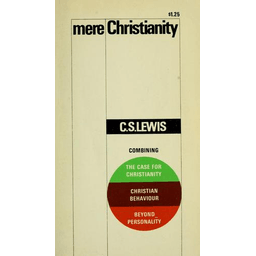 Mere ChristianityC.S. Lewis's plain-spoken introduction to the faith - Lewis credited The Everlasting Man as influential on his own conversion, making this the natural sibling read.
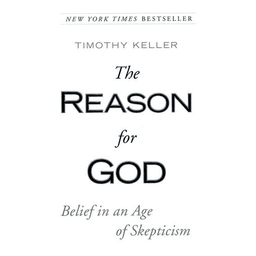 The Reason for GodTim Keller's contemporary apologetic, engaging modern objections in a skeptic's vocabulary - the present-day update to what Chesterton and Lewis began.
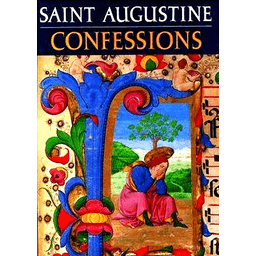 ConfessionsAugustine's fourth-century spiritual autobiography - the foundational personal narrative of conversion that Chesterton's grand history complements.
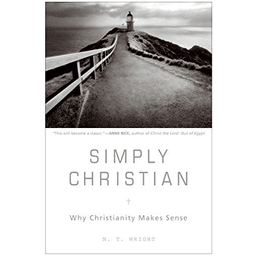 Simply ChristianN.T. Wright's modern 'mere Christianity for a new generation' - a more recent, plainer big-picture case for the faith.
Frequently asked questions
What is The Everlasting Man about?
It is G.K. Chesterton's 1925 apologetic told as a history of humanity, in two parts. Part One argues that human beings are categorically different from animals - the only creature that makes art, myth, and worship. Part Two argues that Jesus and the Church are categorically different from other religions and myths. The book's method is to make the familiar strange so the reader sees the human story fresh.
Did The Everlasting Man really influence C.S. Lewis?
Yes. Lewis read it while he was still an atheist and later said it gave him, for the first time, the whole Christian outline of history in a form that made sense. He recommended the book throughout his life, which is a large part of why it has stayed on reading lists across traditions for a century.
Was Chesterton Catholic?
Yes. G.K. Chesterton was received into the Roman Catholic Church in 1922, three years before The Everlasting Man was published, and the conviction behind the book is his. That said, the book is not a defense of Catholic distinctives - it concentrates on the broad shape of human history and the figure of Christ, which is why it is read well beyond his own tradition.
Is The Everlasting Man hard to read?
It can be. Chesterton writes long, paradox-loving sentences and assumes a reader who recognizes the myths and thinkers he references. Compared with a modern apologetics paperback it asks more patience. Readers who enjoy ornate early-20th-century prose tend to love it; readers who want something plain and quick are usually better served starting with Lewis's Mere Christianity.
Is The Everlasting Man free?
Yes. The book is in the public domain, so the complete text is freely and legally available at Project Gutenberg and the Internet Archive, with a free volunteer-read audiobook at LibriVox. Paid editions exist - the Ignatius Press paperback runs around $15 and commissioned audiobooks up to roughly $15 - mainly for cleaner formatting or narration.
How does it compare to Mere Christianity?
They are siblings, with Chesterton the elder influence. The Everlasting Man is grander, stranger, and more literary - a sweeping history meant to jolt you into seeing humanity and Christ fresh. Mere Christianity is plainer, shorter, and built for a general audience. Most newcomers should start with Lewis; readers who already love Lewis often go to Chesterton next to read the book behind the book.
Where should I go after The Everlasting Man?
For more Chesterton, his earlier Orthodoxy covers similar ground in a more personal key. For the plain-spoken introduction, C.S. Lewis's Mere Christianity is the natural pairing. For a contemporary case engaging modern objections, Tim Keller's The Reason for God. And Augustine's Confessions is the classic first-person companion to Chesterton's wide-angle history.
Sources & further reading
More Apologetics Books
The Reason for GodTim Keller’s 2008 apologetic has quietly become the default gift for the smart, secular friend who has questions - and it earns the reputation.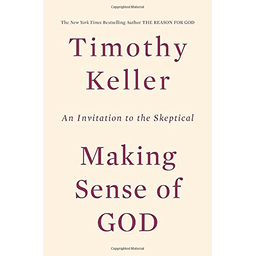 Making Sense of GodTim Keller’s 2016 “prequel” to The Reason for God doesn’t argue that God exists - it argues that the things you already want make more sense inside Christianity than outside it, and it’s the book for the skeptic who isn’t ready for the argument yet.
 TacticsGreg Koukl wrote the book that teaches you how to talk about faith without it turning into an argument - the one most people reach for when "I never know what to say" is the real problem.
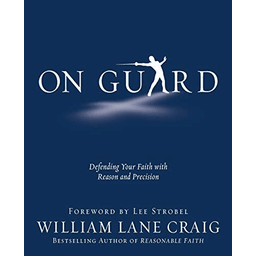 On GuardWilliam Lane Craig’s 2010 primer takes the formal arguments from his heavyweight Reasonable Faith and redraws them as flowcharts a layperson can actually follow - apologetics taught like a skill, not a sermon.
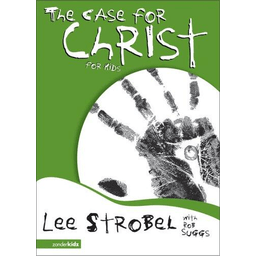 The Case for ChristLee Strobel’s investigative-journalist apologetic has quietly become the default gift book for skeptical friends - and the on-ramp into apologetics for an entire generation of readers.
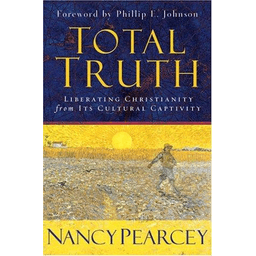 Total TruthThe book that taught a generation of evangelicals to think in terms of worldview - and to stop letting their faith get filed under "private values" while everyone else got "public facts."