- Starting price
- ~$18 paperback
- Free tier
- No
- Platforms
- Print · Kindle · Free (desiringGod.org)
- Developer
- Multnomah
- Launched
- 1995
- Updated
- May 31, 2026
The verdict
Future Grace is John Piper turning one idea over for thirty-one chapters: that holiness runs on faith in what God has promised to be for you in the next moment, not on gratitude for what He did in the last one. Whether the "future grace" framing strikes you as the missing key or as one good insight stretched long, the meditations on anxiety, lust, shame, and forgiveness carry the same pulpit weight readers know from Desiring God.
Try Future Grace ↗Opens desiringgod.org
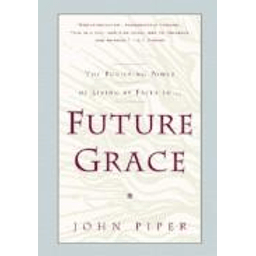
Future Grace has quietly become the book a certain kind of Christian reaches for when gratitude alone stops working. John Piper wrote it in 1995, a decade after Desiring God, and it sets out to answer a question the earlier book left open: if joy in God is the engine of the Christian life, what actually powers the daily fight against sin? Piper's answer is a single, insistent claim - the power comes from faith in future grace, the moment-by-moment confidence that God will be there for you in the next minute, the next hour, and forever.
It is not a memoir. It is not a how-to manual. It is not a systematic theology, though it leans on one throughout. What it is, structurally, is thirty-one meditations - one idea examined from thirty-one angles. Piper takes anxiety, then lust, then covetousness, then bitterness, then impatience, then shame, and asks the same question of each: what promise of future grace, believed right now, breaks this sin's grip? The voice is the one readers already know - short sentences, Scripture stacked on Scripture, Jonathan Edwards in the footnotes, and a willingness to press a claim until you either flinch or agree.
The book also rides the same publishing engine as the rest of Piper's work. It came out of the desiringGod.org ministry, sits inside a catalog of twenty-plus related titles, and most of that catalog - Future Grace included in its digital form - is downloadable at little or no cost from the ministry's site. That last fact shapes how the book is read: many readers meet it for free, in a chapter at a time, long before they ever buy the paperback.
✓ The good
- One sharp, memorable thesis - "faith in future grace" is the kind of frame readers carry into their own anxieties and temptations for years
- A genuinely useful reframe of sin-fighting - recasting the daily struggle as a battle to believe God's promises rather than to summon willpower lands hard for readers who have tried willpower and lost
- Thirty-one self-contained meditations - the structure is built for a chapter a day or a chapter a week, and each one stands on its own
- Substantive on the hard ones - anxiety, shame, bitterness, and lust each get a full chapter rather than a paragraph, which is rare in popular Christian publishing
- Much of Piper's work is free at desiringGod.org - the cost-of-entry barrier for the wider catalog is essentially zero, which is unusual for an author this widely cited
- Jonathan Edwards as undercurrent - Piper keeps an 18th-century thinker most modern readers have never opened quietly in the room the whole way through
- Holds up after thirty years - the revised edition reads as current as the original, and the core argument has not aged out
✗ Watch out
- Long and repetitive by design - thirty-one chapters on a single idea means the thesis is restated constantly, which is the method but can feel hammered
- The "future grace" framing is a distinctive emphasis - some readers find it clarifying, others find it over-extended past the point where one frame can carry every chapter
- Dense for first-time readers - Piper writes like a preacher, and several chapters reward a second pass rather than a skim
- Reformed framework throughout - the underlying account of grace and assurance is explicit, which some readers will appreciate and others will want to bracket
- Footnote-heavy - readers who skip the footnotes and the Edwards material will miss a real share of the argument
- Best taken in pieces, not in one sitting - read straight through, the cumulative repetition wears; read a chapter at a time, it works as intended
Best for
- Christians who have tried gratitude and willpower against a recurring sin and want a different frame
- Readers who like sermon-shaped prose and a chapter-a-day rhythm
- Small groups and devotional readers wanting a structured 31-chapter study
- Anyone who liked Desiring God and wants Piper's fuller account of how holiness actually works
Avoid if
- You want a short, narrative, story-driven Christian book
- You bounce off dense prose with stacked Scripture proofs and long footnotes
- You want a single idea covered briefly rather than examined for thirty-one chapters
- You are looking for a Catholic or Orthodox spirituality classic on the same themes
What Future Grace is
Future Grace is John Piper's 1995 book-length argument that the daily power to live in holiness comes from faith in future grace - the believed promise that God will be God for you in the next moment, the next hour, and forever. The subtitle states the claim directly: The Purifying Power of Living by Faith in Future Grace. Piper contrasts this with what he calls the "debtor's ethic" - the common but, in his reading, mistaken idea that we obey mainly to pay God back for grace already received. Gratitude looks backward, he argues; the faith that actually purifies looks forward, to what God has pledged still to do.
It is built as thirty-one meditations, often read one per day across a month or one per week in a group. Each chapter takes a specific sin or struggle - anxiety, pride, shame, lust, covetousness, bitterness, despondency, impatience - and asks which promise of future grace, believed in the moment, severs its root. The book has been issued in a later revised edition, which is the text most commonly in print today; the core argument is unchanged. Like the rest of Piper's catalog, the digital edition is widely available through desiringGod.org.
Why everyday Christians read Future Grace
The thesis is the differentiator. Most popular books on fighting sin lean on gratitude - remember what Christ did, and obey out of thankfulness - or on willpower, or on accountability. Piper argues that gratitude, while right and good, is the wrong fuel for the actual moment of temptation, because it points backward to a debt that can never be repaid. The fuel that works, he says, is faith in a specific promise about the next moment: that God will help, will provide, will satisfy, will be there. For a reader who has tried to white-knuckle a besetting sin and lost, that reframe lands like a tool finally fitting the screw.
The second differentiator is voice and structure. Piper writes the way he preaches - short sentences, parallel clauses, Scripture stacked on Scripture, and a refusal to soften a claim because someone might push back - and here that voice is poured into thirty-one short, targeted chapters. Each one is a self-contained meditation aimed at a single struggle, which makes the book unusually easy to use devotionally even though the cumulative argument is dense. The third differentiator, almost as important to its reach, is that so much of Piper's work is free.
The faith-in-future-grace thesis: holiness powered by believed promises
The thesis is one claim and the book is thirty-one chapters of pressing it into the corners of real life. Piper argues that the moment-by-moment power to resist sin and pursue holiness comes from faith in future grace - trusting a concrete promise that God will be there for you in the very next moment. He sets this against the "debtor's ethic," the instinct to obey God in order to repay Him for past grace. You cannot repay infinite grace, Piper says, and trying to turns the Christian life into anxious bookkeeping. Faith in future grace, by contrast, frees you: the next moment is already covered by a promise, so you can obey out of confidence rather than debt. He builds the case from the Psalms, from the promises of the prophets, from Jesus, from Paul, and from a long thread of Jonathan Edwards on the nature of faith.
The thesis is presented from within a Reformed framework, and that shapes how it reads. The account of grace, assurance, and perseverance that underlies the argument is consistent with Piper's tradition, and he does not hide it. Readers who share that framework often describe Future Grace as the book that finally made the daily fight against sin make sense; readers from Wesleyan, Catholic, Orthodox, Anglican, or other backgrounds tend to engage the core insight - that believed promises about the future can break a sin's grip in the present - while bracketing some of the surrounding scaffolding. The book is at its strongest when read as a sharp corrective to gratitude-only and willpower-only sin-fighting rather than as a complete map of sanctification.
Thirty-one meditations: one idea, applied to the actual struggles
The structure is the second big idea. Rather than argue the thesis once and move on, Piper applies it thirty-one separate times, each chapter taking a particular sin or fear and asking which promise of future grace dismantles it. Anxiety gets a chapter; so do pride, misplaced shame, lust, covetousness, bitterness, despondency, and impatience. The pattern repeats deliberately - name the struggle, locate the lie underneath it, find the specific promise that answers the lie, and believe that promise into the next moment. The chapter count is not incidental; the book is plainly built to be read across a month, one meditation a day, which is how a great many readers actually use it.
For readers used to narrative or memoir-driven Christian books, this is an adjustment, and it is also where the most common complaint lives. The repetition that makes the book usable as a daily devotional makes it feel long and circular if you try to read it straight through in a few sittings. Taken a chapter at a time, the structure is the point - you get a fresh application of one true idea every day, aimed at whatever you happen to be fighting that morning. Taken in bulk, the same idea returning in chapter after chapter can wear. How you read it largely determines whether the length reads as thoroughness or as over-extension.
The desiringGod.org model: most of the catalog is free
Much of John Piper's work - sermons, articles, and a large share of his books - is available at no cost through desiringGod.org, the ministry that grew up around his writing. The operation runs on a deliberate model: print royalties and donor support fund the work, and the digital editions are released widely rather than locked behind a hard paywall. For a body of work this widely cited, that is unusual; most modern Christian classics still sit behind publisher paywalls. Future Grace lives inside that catalog, alongside Desiring God, The Pleasures of God, Don't Waste Your Life, and twenty-plus other titles, many of which extend or apply ideas the book introduces.
In practical terms it means a reader can begin Future Grace, or sample the chapters that match a current struggle, without paying anything, and a pastor in a country where the paperback would cost a week's wages can reach the same text a seminary professor in the United States is using. The Kindle, audiobook, and paperback editions still sell - many readers prefer print or audio, and the publisher economics still work - but the free channel is a large part of why Piper's catalog has reached the corners of the global church it has. It is also why review-aggregator ratings for his books skew high: a lot of the ratings come from readers who paid nothing to read them.
Pricing
Paperback (Revised Ed.)
~$18
The standard physical edition. Around 450 pages including the appendices and Scripture index.
Free (desiringGod.org)
Free / low-cost
Much of Piper's catalog is downloadable at no cost from the ministry's site; check the current listing for this title's digital availability.
Kindle
~$13
Searchable, syncs with Kindle highlights. Often discounted below the paperback.
Hardcover
~$28
Heavier binding, same text. The edition most often bought as a gift.
Audiobook
~$20
Narrated edition; long, given the chapter count. Most useful for re-reads rather than a first pass.
Future Grace is, in its paperback form, a paid book - around $18 for the revised edition, which runs roughly 450 pages once the appendices and Scripture index are counted. That is the standard physical buy and the version most small groups use. The page count reflects the thirty-one-chapter structure; it is a substantial volume, not a slim devotional.
Much of Piper's catalog is free or low-cost at desiringGod.org, and Future Grace generally sits inside that model - worth checking the current listing for this specific title's digital availability, since the ministry releases most of its work widely and updates what is offered over time. For many readers that free or low-cost digital channel is the first point of contact with the book.
The Kindle edition hovers around $13, often less on sale, and syncs highlights across devices - useful for a book this quotable and this long. The hardcover runs about $28 and is mostly bought as a gift. The audiobook (around $20) is long given the chapter count and is most useful for a second or third pass; the footnotes and the Edwards material carry real weight and are easy to lose in audio on a first read.
Most readers do not need every format. The paperback is the balanced default and the copy a group will mark up together; the free or low-cost digital edition is the natural starting point if you want to sample the chapters that match what you are fighting before committing to the whole month.
Where Future Grace falls behind
Long, and repetitive on purpose. Thirty-one chapters on one idea is the design - a meditation a day for a month - but it means the central claim returns in chapter after chapter, and a reader pushing straight through in a handful of sittings will feel the repetition before the book intends them to. It rewards the slow, one-a-day pace it was built for and frustrates the reader who wants the argument made once and then developed onto new ground.
The framing is Piper's distinctive emphasis. "Future grace" is a particular lens, and not every reader finds one frame strong enough to carry every struggle in the book. Some come away convinced it is the missing key to sanctification; others find it a genuinely useful insight that has been stretched past its natural reach by the time it is applied for the thirty-first time. Where you land on that largely decides how you rate the book.
A Reformed framework runs through it. The account of grace, assurance, and perseverance underneath the argument is consistent with Piper's tradition and is stated openly. Readers from Wesleyan, Catholic, Orthodox, Anglican, or LDS backgrounds will read past several passages that assume positions they do not share. The core insight about believed promises does not strictly require that framework, but the surrounding scaffolding is not hidden.
Dense prose, sparse narrative. There are few stories and almost no extended anecdotes; the engine is argument and Scripture, not illustration. The reader who learns best through narrative will find Knowing God, Mere Christianity, or The Pursuit of God an easier first stop, and Future Grace a better second once the appetite for stacked-Scripture argument is there.
It leans on a narrow theological canon. As with much of Piper's work, Jonathan Edwards does most of the supporting scaffolding, with relatively little from the broader devotional tradition - Augustine, Bernard, Teresa, a Kempis. Readers who want a wider range of voices behind a book this influential will find the bibliography surprisingly concentrated.
Future Grace vs. Desiring God vs. The Pleasures of God
These three are the core of John Piper's early catalog, and they do related but distinct jobs. Desiring God (1986) is the foundational thesis - that God is most glorified in us when we are most satisfied in Him - and it is the book most readers should start with. Future Grace (1995) is the sanctification sequel: it takes the joy-in-God framework and asks how, practically and moment by moment, that joy actually defeats sin, landing on faith in God's promises about the future as the mechanism. The Pleasures of God turns the camera around entirely and asks what God Himself delights in - His Son, His creation, His own glory - on the logic that you cannot rightly enjoy God until you know what He enjoys.
Different strengths. Desiring God is the most quotable and the best single entry point; you finish it with one sentence you can teach a teenager. Future Grace is the most practical of the three for the daily fight against a specific sin, and also the longest and most repetitive, by design. The Pleasures of God is the most God-centered and arguably the most worshipful, spending its energy on the character of God rather than on the reader's experience. All three share the same voice, the same Edwards undercurrent, and the same free-or-low-cost availability through desiringGod.org.
For most readers the right order is Desiring God first, then Future Grace if the question that grips you is "how do I actually change?", or The Pleasures of God if the question is "who is this God I'm supposed to enjoy?" The three are written from the same Reformed vantage and do not contradict one another - they are successive angles on the same account of the Christian life, and serious readers of Piper usually end up with all three on the shelf.
The bottom line
Future Grace is Piper at his most practical and his most patient - one idea, that holiness runs on faith in God's promises about the next moment, turned over for thirty-one chapters until it has touched nearly every fear and temptation a reader brings to it. The length and the repetition are the price of that thoroughness, and the "future grace" frame is a distinctive emphasis that some readers find clarifying and others find stretched; it is written from a Reformed vantage that will not be every reader's home tradition. But the central insight has done real work for readers who had run out of road on gratitude and willpower, and much of Piper's catalog is free for the asking. Read it a chapter at a time, the way it was built to be read.
Alternatives to Future Grace
 Desiring GodPiper's 1986 book that launched Christian Hedonism. The foundational thesis behind Future Grace and the right first read of the two.
 The Pleasures of GodPiper's meditation on what God Himself delights in. The God-centered companion to Desiring God and Future Grace, same voice and same free-PDF model.
 Don't Waste Your LifePiper's shorter, more autobiographical call to live for God's glory. The most accessible entry point into his catalog if Future Grace feels dense.
 The Holiness of GodR. C. Sproul's book on the doctrine of God's holiness. Reformed in framing, accessible in prose, and a common companion read to Piper.
Frequently asked questions
What is "future grace"?
It is Piper's term for the grace God has promised to supply in the moments still ahead - the next minute, the next hour, and forever. His thesis is that the power to resist sin and live in holiness comes from faith in that future grace, believed moment by moment, rather than from gratitude for grace already received. Looking forward to what God has promised to do, he argues, is what actually purifies.
What is the "debtor's ethic" Piper argues against?
It is the common assumption that Christians obey God mainly to pay Him back for grace already given. Piper argues this is the wrong fuel: infinite grace cannot be repaid, and trying turns the Christian life into anxious bookkeeping. He proposes faith in future grace as the alternative - obeying out of confidence in what God will do next, not out of a debt for what He has done.
Do I have to be Reformed to read Future Grace?
No. The book is written from a Reformed framework and does not hide it, particularly in its account of grace, assurance, and perseverance. But the central insight - that believed promises about the future can break a sin's grip in the present - has been engaged across Wesleyan, Anglican, Catholic, and broader evangelical traditions. Readers from other backgrounds often take the core reframe while bracketing the surrounding scaffolding.
How is Future Grace different from Desiring God?
Desiring God (1986) argues that the chief end of the Christian life is joy in God. Future Grace (1995) is the practical sequel: it takes that joy-in-God framework and asks how, moment by moment, that joy actually defeats sin - landing on faith in God's promises about the future as the mechanism. Most readers start with Desiring God and come to Future Grace when the question that grips them becomes "how do I actually change?"
Is the book really long and repetitive?
It is long - around 450 pages in the revised paperback - and it does restate its thesis often, because it is built as thirty-one meditations, roughly one per day for a month. Read straight through in a few sittings, the repetition wears. Read a chapter at a time, the structure is the point: a fresh application of one idea each day, aimed at whatever you are fighting that morning. The pace you read it at largely decides how it lands.
Is Future Grace available for free?
Much of John Piper's catalog - sermons, articles, and a large share of his books - is available at no cost through desiringGod.org, which runs on print royalties and donor support rather than a hard paywall. Future Grace generally sits inside that model; it is worth checking the current listing for this specific title, since the ministry releases most of its work widely and updates what is offered over time. The Kindle, audiobook, and paperback editions are paid.
Where does Future Grace sit alongside The Pleasures of God and Don't Waste Your Life?
All three are part of Piper's early catalog with the same voice and the same free-or-low-cost availability. Future Grace is the most practical for the daily fight against a specific sin. The Pleasures of God is the most God-centered, asking what God Himself delights in. Don't Waste Your Life is the shortest and most autobiographical, a call to live for God's glory. Many readers of Piper end up with all of them on the shelf; temperament and the question gripping you usually decide the order.
Sources & further reading
More Modern Christian Classics
 Knowing GodJ.I. Packer’s 1973 classic on the doctrine of God has sold more than 1.5 million copies and is still the book most pastors hand to laypeople who want theology that goes somewhere - here’s what it actually does and who it’s for.
 The Cost of DiscipleshipDietrich Bonhoeffer’s 1937 exposition of the Sermon on the Mount, written for pastors training under a regime that wanted them silent - and still the sharpest book in print on what following Jesus actually costs.
 Gentle and LowlyDane Ortlund’s 23 short chapters on Matthew 11:29 have quietly become the most-given new Christian book of the decade - and the reason is not what you’d guess.The Holiness of GodR.C. Sproul’s career-defining book on the one attribute of God the church most forgets - and the vision in Isaiah 6 he believed everything else flows from.
 The Weight of GloryThe 1941 sermon many call Lewis's single finest piece of writing - "there are no ordinary people" - gathered with eight other addresses into one slim, uneven, unforgettable collection.
 The Pursuit of GodA.W. Tozer’s ten-chapter wake-up call on knowing God personally - short, severe, and the one devotional Reformed, Wesleyan, Catholic, and Orthodox readers all seem to keep on the nightstand.