- Starting price
- ~$17 paperback
- Free tier
- No
- Platforms
- Print · Kindle · Free (desiringGod.org)
- Developer
- Multnomah
- Launched
- 1991
- Updated
- May 31, 2026
The verdict
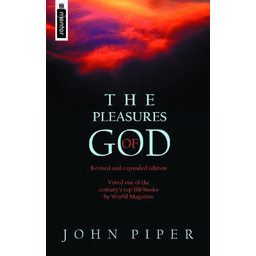
The Pleasures of God is the book Piper wrote to put a floor under Desiring God. Before you can be satisfied in God, he argues, you have to see that God is first satisfied in God - delighting in His Son, His works, His mercy, His own glory. Slower and more worshipful than its famous companion, it rewards readers who want the why beneath the how.
Try The Pleasures of God ↗Opens desiringgod.org
The Pleasures of God has quietly become the book serious readers of Desiring God reach for second. John Piper's 1991 paperback - expanded in a later edition - is built on a single observation that most popular Christian writing skips past entirely: before the Bible ever tells you to be happy in God, it spends chapter after chapter describing God being happy in God. God delights in His Son. God rejoices over His works. God takes pleasure in showing mercy. Piper's claim is that you cannot understand human joy in God until you have watched God's joy in being God.
It is not a sequel in the marketing sense. It is the logical prequel. Desiring God argued that we are most satisfied in God when we pursue our joy in Him hardest; The Pleasures of God asks the prior question - what is God Himself most satisfied in? - and answers it across a tour of God's own delights: in His Son, in creation, in His fame, in election, in His name, in well-doing, in the prayers of the upright, in personal obedience. The voice is the one readers know. Short sentences. Scripture stacked on Scripture. Jonathan Edwards close at hand. A willingness to push a claim until you either flinch or follow.
Piper has said this is the more foundational of the two books and, by his own account, the one he found hardest and most rewarding to write. It carries the same free-text DNA as the rest of his catalog - much of Piper's work, this title included, is readable at no cost through desiringGod.org alongside the paperback and ebook. That accessibility, plus the worshipful weight of the chapters themselves, is part of why the book's ratings run as high as they do among the readers who finish it.
✓ The good
- A genuinely original angle - most Christian books are about how we should feel about God; this one is about how God feels, which almost nothing in the popular shelf attempts
- The foundation beneath Desiring God - it answers the prior question (what is God satisfied in?) that the more famous book assumes, and reframes the whole argument once you see it
- Worshipful by construction - the chapters read like sustained meditations rather than arguments, and many readers describe the act of reading it as itself a form of worship
- Scripture-saturated - Piper builds each chapter from stacked biblical texts rather than anecdote, so the book doubles as a guided tour through passages most readers skim
- Jonathan Edwards as undercurrent - Piper channels an 18th-century thinker on the affections of God in a way most modern readers have never encountered
- Much of the text is free at desiringGod.org - the cost-of-entry barrier for Piper material is unusually low for a book this substantial
- Holds up after more than thirty years - the later expanded edition reads as fresh as the original, and the central meditation has not aged out
✗ Watch out
- Dense and slow by design - this is the more demanding of the two books; readers who found Desiring God a stretch will find this one a steeper one
- Worshipful rather than quick - there is almost no practical 'how-to' and very little narrative, so a reader looking for application or story will feel the absence
- The chapters on election and sovereignty argue from a Reformed framework - readers of other traditions will recognize those sections as that tradition's position rather than a shared starting point
- Best read after Desiring God - coming to it cold, without the companion's thesis in hand, makes the payoff harder to feel
- Repetition of theme - God's delight in His own glory is restated from many angles, which is the point but can feel circular to some readers
- Footnote-heavy - as with most Piper, readers who skip the notes and the Edwards material miss a real share of the scaffolding
Best for
- Readers who finished Desiring God and want the foundation beneath it
- Christians drawn to worshipful, meditative theology over practical how-to
- Anyone curious how the Bible portrays God's own joy and delight
- Small groups wanting a slow, chapter-at-a-time study of the character of God
Avoid if
- You want a short, narrative, story-driven Christian book
- You have not yet read Desiring God and want the more accessible starting point
- You bounce off dense prose built from stacked Scripture proofs
- You are looking for a practical guide to spiritual disciplines or daily habits
What The Pleasures of God is
The Pleasures of God is John Piper's 1991 book-length meditation on God's own joy - subtitled Meditations on God's Delight in Being God. Where Desiring God argued that human beings glorify God by being satisfied in Him, this book turns the camera around and asks what God Himself delights in. Across its chapters Piper walks through God's pleasure in His Son, in all that He does, in creation, in His fame, in election, in His name, in well-doing to His people, in the prayers of the upright, and in personal obedience - building each from a dense cluster of biblical texts.
It is a paperback of around 350 pages, and it is rarely read in a hurry. Most readers move through it a chapter at a time, often alongside or after Desiring God, of which Piper calls it the foundation. The text was later revised and expanded, and that fuller edition is the one most commonly in print today. As with the rest of Piper's catalog, much of the content is also available at no cost through desiringGod.org, where print royalties and donor support fund the writing and the digital text is released widely.
Why everyday Christians read The Pleasures of God
The angle is the differentiator. Almost every popular Christian book is about the reader's posture toward God - how you should feel, what you should pursue, how you should obey. Piper spends an entire book on the opposite subject: God's posture toward Himself and His works. He argues that the Bible is far more interested in God's happiness than modern readers assume, and that this is not an abstract curiosity. If God is most glorified in us when we are most satisfied in Him, then the engine of that whole claim is that God is first and supremely satisfied in God. Watch God delight in being God, Piper argues, and your own delight finally has something solid to rest on.
The second differentiator is register. This is worship more than argument. Piper writes the way he preaches - short sentences, parallel structures, Scripture stacked on Scripture, Edwards close behind - but here the rhythm slows and deepens, and many readers report that reading it functions less like study and more like adoration. The third differentiator is that, like the rest of Piper's work, much of the text is free. A reader can begin tonight, at no cost, with the foundation beneath the book that made Piper a household name.
The premise: God's delight in being God comes first
The book's organizing claim is that God's own happiness is the foundation of everything Christians say about joy. Piper opens with the pleasure of God in His Son - the eternal delight of the Father in the Son, which he treats as the original and overflowing fountain of all other joy - and works outward from there. God rejoices in His works. God takes pleasure in His own fame and name. God delights in showing mercy. Each chapter is built from stacked biblical texts rather than illustration, so the cumulative effect is a portrait of a God who is, in Piper's phrase, supremely happy in the fellowship of the Trinity and overflowing in that happiness toward creation.
The payoff is what this does to Desiring God's thesis. If the famous companion told readers that God is most glorified in us when we are most satisfied in Him, this book supplies the missing premise: that God's pursuit of His own glory and God's love for us are not in tension, because the most loving thing God can give a creature is the enjoyment of the most satisfying Being in existence - Himself. Readers describe the moment that lands as the moment the whole framework clicks. The book is at its strongest read this way: not as a standalone, but as the floor that holds up everything Desiring God builds.
The chapter on election: where the Reformed frame is most explicit
One of the book's central chapters treats God's pleasure in election - the delight Piper argues God takes in choosing a people for Himself. It is the most theologically loaded section of the book and the one where the underlying framework is most visible. Piper builds the chapter from a Reformed reading of texts in Romans, Ephesians, and the Gospels, and he does not soften the conclusions; he treats unconditional election as a source of worship rather than a problem to be managed, and he engages the obvious objections head-on rather than around.
For buyers, the practical note is simply this: these chapters argue from a Reformed framework, and readers of other traditions will recognize them as that tradition's position rather than as neutral ground. A Wesleyan, Catholic, Orthodox, Anglican, or Latter-day Saint reader will read several stretches of this chapter as a clear statement of where Piper stands, not as common starting points. That is worth knowing going in. The book's larger meditation on God's joy in His Son, in creation, and in mercy travels much more widely across traditions than the election material does, and many readers outside the Reformed world value the former while bracketing the latter.
Piper's voice and the meditative chapter
Every chapter of The Pleasures of God reads like a sustained meditation, and that is a deliberate shift from the more argumentative gait of Desiring God. The familiar machinery is all here - a thesis sentence near the top, a long unfolding through stacked Scripture, an extended quotation from Jonathan Edwards on the affections of God, a closing return to the chapter's opening claim - but the pace is slower and the tone more worshipful. Piper is not mainly trying to win an argument in these pages. He is trying to get the reader to see something, and then to linger over it.
For readers used to narrative or memoir-driven Christian books, this is an adjustment, and a bigger one than the companion required. There are almost no contemporary anecdotes. There are very few illustrations from daily life. What there is, instead, is contemplation - and the contemplation rewards re-reading more than racing. A common pattern among long-time readers is to return to a single chapter the way a reader might return to a chapter of The Imitation of Christ, slowly and more than once. The footnotes and the Edwards material carry real weight, so readers who skip them lose a meaningful share of the book.
Pricing
Paperback
~$17
The standard Multnomah edition. The copy most readers own; around 350 pages with appendices.
Free (desiringGod.org)
Free
Much of Piper's catalog, this title included, is readable at no cost on desiringGod.org. Check availability for the current edition.
Kindle / ebook
~$10
Searchable, syncs highlights across devices. Often discounted below the paperback.
Hardcover
~$25
Heavier binding, same text. The natural gift edition.
Expanded edition
~$19
The later revised-and-expanded edition with additional material. The fullest version of the text in print.
The headline buy is the paperback, around $17 for the Multnomah edition and roughly 350 pages with appendices. It is the version most small groups use and the copy most quotations are keyed to. Hardcover runs closer to $25 and is mostly bought as a gift.
As with the rest of Piper's catalog, much of this title is also available at no cost through desiringGod.org, where the ministry runs on print royalties and donor support and releases digital text widely. Availability can vary by edition, so it is worth checking the site for the current version - but for many readers the free channel means the cost of entry is essentially zero.
The Kindle and ebook editions hover around $10, often less on sale, and sync highlights across devices, which is useful for a book this quotable. There is less of an established audiobook tradition for this title than for Desiring God, so print, ebook, or the free desiringGod.org text are the usual routes in.
The later revised-and-expanded edition is the fullest text in print and the one most readers should reach for. Earlier printings are still entirely readable - the central meditation has not changed - but the expanded edition gathers the additional material in one place. Most readers do not need more than the paperback; it is the balanced default and the copy you will return to.
Where The Pleasures of God falls behind
Slow and demanding, not quick. The Pleasures of God is worshipful and meditative rather than fast or practical - there is almost no 'what to do on Tuesday' application and very little narrative. Readers who come looking for momentum, story, or a practical takeaway sometimes leave frustrated. It is built to be lingered over, and it punishes racing.
Best read second. This is the foundation beneath Desiring God, and it reads that way - the payoff lands hardest once the companion's thesis is already in hand. A reader who starts here cold, without 'God is most glorified in us when we are most satisfied in Him' as a reference point, has a harder time feeling why God's own joy matters so much. The natural order is Desiring God first, then this.
The election and sovereignty chapters assume a Reformed frame. The central chapter on God's pleasure in election argues from a Reformed reading of Scripture, and readers of other traditions will recognize it as that tradition's position rather than shared ground. The thesis about God's delight in being God does not by itself require that framework, but the surrounding treatment of election and sovereignty is consistent with Piper's tradition and is not hidden.
It is one voice and one well. The book leans hard on Jonathan Edwards and almost nowhere else for its theological scaffolding. Readers who want a broader devotional canon - Augustine, Bernard, à Kempis, Lewis - will again find the bibliography surprisingly narrow for a book this substantial, the same way they do across Piper's catalog.
Pair it with Desiring God or it can feel abstract. On its own, the sustained focus on God's happiness can read as rarefied - a meditation without a clear destination. Read as a pair with its companion, the abstraction resolves into a single argument with a floor and a top. Most readers who love this book love it as half of a set, not as a standalone.
The Pleasures of God vs. Desiring God vs. Knowing God
Three books, three different vantage points on the same God. The Pleasures of God (Piper, 1991) is about God's joy - what God Himself delights in, from His Son to His mercy to His own glory. Desiring God (Piper, 1986) is about our joy - that we glorify God by being most satisfied in Him. J. I. Packer's Knowing God (1973) is about the knowledge of God - relational, doctrinal, and personal - and argues that everything in the Christian life flows from rightly knowing who God is.
Different strengths. The Pleasures of God is the most worshipful and the most foundational of the Piper pair; you finish it understanding why human joy in God has anything to rest on. Desiring God is the more accessible and the more thesis-driven; you finish it with a single sentence you can teach a teenager. Knowing God is the most evenly paced and the most doctrinally rounded; it reads like a careful theologian writing for the pew, and it sits comfortably across traditions in a way the more explicitly Reformed Piper material does not always match.
For most readers the order is Desiring God first, then The Pleasures of God for the foundation beneath it, with Knowing God as the broader companion whenever a reader wants a fuller portrait of God's character. The two Piper books are best read as a pair. Packer is the book to add when you want depth on the knowledge of God rather than on joy specifically. Serious readers usually end up with all three on the shelf.
The bottom line
The Pleasures of God is the deeper, slower, more demanding half of John Piper's great pair, and for readers willing to linger it is the more rewarding one. It supplies the premise the famous companion assumes - that God is first and supremely satisfied in God - and once you see it, Desiring God reads differently for the rest of your life. The Reformed framing in the election chapters will not be every reader's home tradition, and it is not the book to hand someone who wants a quick or practical read. But as a worshipful meditation on the joy of God in being God, much of it free at desiringGod.org, it has few peers. The thoughtful Christian's book on the happiness of God.
Alternatives to The Pleasures of God
 Desiring GodPiper's 1986 companion on human joy in God - the more accessible, more famous half of the pair. Read it first, then The Pleasures of God for the foundation beneath it.
 Future GracePiper's argument that faith in God's future grace is what frees us from sin and anxiety. The third pillar of his major works alongside Desiring God and The Pleasures of God.
 Don't Waste Your LifePiper's shorter, more autobiographical and urgent book on living for what lasts. The most accessible entry point into his catalog.
 Knowing GodJ. I. Packer's 1973 classic on the knowledge of God - the most doctrinally rounded companion to Piper, and the broadest of the set across traditions.
Frequently asked questions
How is The Pleasures of God different from Desiring God?
They are companions that look in opposite directions. Desiring God is about human joy in God - that we glorify God by being satisfied in Him. The Pleasures of God is about God's own joy - what God Himself delights in, from His Son to His mercy to His own glory. Piper calls this the more foundational of the two, because God's delight in being God is the floor under the whole claim that we should be satisfied in Him.
Which should I read first?
Most readers should start with Desiring God. It is shorter, more accessible, and more thesis-driven, and it gives you the sentence - "God is most glorified in us when we are most satisfied in Him" - that makes The Pleasures of God land. Then read The Pleasures of God for the foundation beneath it. The two are best read as a pair, in that order.
Do I have to be Reformed or Calvinist to read it?
No, though it is worth knowing the framework going in. Piper is Reformed Baptist, and the chapters on election and sovereignty argue from that framework explicitly - readers of other traditions will recognize those sections as Piper's tradition's position rather than shared ground. The broader meditation on God's delight in His Son, in creation, and in mercy travels much more widely, and many readers outside the Reformed world value that while bracketing the election material.
Is the book really available for free?
Much of John Piper's catalog, this title included, is readable at no cost through desiringGod.org, where the ministry runs on print royalties and donor support. Availability can vary by edition, so it is worth checking the site for the current version. The paperback, hardcover, and ebook editions are paid, but for many readers the free channel means the cost of entry is essentially zero.
Is it a hard read?
It is the more demanding of the two books. The prose is dense, built from stacked Scripture and long quotations from Jonathan Edwards, and the pace is slow and meditative rather than quick. There is very little narrative and almost no practical how-to. Readers who found Desiring God a stretch will find this one steeper - but readers who want depth and are willing to linger tend to find it the more rewarding of the pair.
Which edition should I buy?
The later revised-and-expanded edition is the fullest text in print and the one most readers should reach for; the paperback runs around $17. Earlier printings are still entirely readable - the central meditation has not changed - but the expanded edition gathers the additional material in one place. The Kindle edition hovers around $10 and syncs highlights. Most readers do not need more than the paperback.
Where should I go after The Pleasures of God?
If you have not read it, Desiring God is the natural companion - the two work as a pair. Future Grace is the third pillar of Piper's major works. For a broader portrait of God's character from outside Piper's specific framing, J. I. Packer's Knowing God is the standard recommendation, and Don't Waste Your Life is Piper's shorter, more urgent and autobiographical book for readers who want a faster next step.
Sources & further reading
More Modern Christian Classics
Knowing GodJ.I. Packer’s 1973 classic on the doctrine of God has sold more than 1.5 million copies and is still the book most pastors hand to laypeople who want theology that goes somewhere - here’s what it actually does and who it’s for. The Cost of DiscipleshipDietrich Bonhoeffer’s 1937 exposition of the Sermon on the Mount, written for pastors training under a regime that wanted them silent - and still the sharpest book in print on what following Jesus actually costs.
 Gentle and LowlyDane Ortlund’s 23 short chapters on Matthew 11:29 have quietly become the most-given new Christian book of the decade - and the reason is not what you’d guess.
 The Holiness of GodR.C. Sproul’s career-defining book on the one attribute of God the church most forgets - and the vision in Isaiah 6 he believed everything else flows from.
 The Weight of GloryThe 1941 sermon many call Lewis's single finest piece of writing - "there are no ordinary people" - gathered with eight other addresses into one slim, uneven, unforgettable collection.
 The Pursuit of GodA.W. Tozer’s ten-chapter wake-up call on knowing God personally - short, severe, and the one devotional Reformed, Wesleyan, Catholic, and Orthodox readers all seem to keep on the nightstand.