- Starting price
- ~$18 paperback
- Free tier
- No
- Platforms
- Print · Kindle
- Developer
- Baker Books
- Launched
- 2011
- Updated
- May 31, 2026
The verdict
The most accessible single-volume answer to the “the Old Testament God is a monster” argument, and the one most people get handed when that question comes up. Copan’s ancient-Near-East-context approach is careful and well-sourced - but the texts he is working with are genuinely hard, Christians and skeptics both read them differently, and this is one strong contribution to a live debate rather than the last word on it.
Try Is God a Moral Monster? ↗Opens bakerpublishinggroup.com
Is God a Moral Monster? exists because of a specific moment. In the mid-2000s a cluster of bestselling atheist authors - Richard Dawkins most loudly - made the moral character of the Old Testament God a centerpiece of their case against religion. The famous line from Dawkins describes that God as, among other things, jealous, petty, bloodthirsty, and a moral monster. Paul Copan, a philosopher at Palm Beach Atlantic University, set out to answer that charge head-on, and the title is a direct quotation of the accusation he is responding to.
It is not a book that pretends the hard passages do not exist. It does not skip the Canaanite conquest. It does not change the subject from the slavery laws. It does not soften the harshest commands in the Law. Copan goes straight at the texts a thoughtful reader actually finds disturbing - God ordering the destruction of Canaanite cities, regulations that permit servitude, laws prescribing severe penalties, the treatment of women and of conquered peoples - and works through them one cluster at a time, mostly by setting each against the legal and cultural background of the ancient Near East.
The result became the standard recommendation for a reader wrestling with this particular objection. When someone - a doubting student, a skeptical friend, a believer rattled by a hostile reading of Joshua - asks how a Christian makes sense of these passages, this is the book that most often gets pressed into their hands. That popularity is earned by its accessibility and its sourcing. It should be paired, though, with a clear-eyed acknowledgment that Copan is making an argument, that other scholars read several of these texts quite differently, and that the questions he is wrestling with remain genuinely contested.
What you actually get is eighteen short chapters, conversational rather than technical, each tackling a specific flashpoint. Copan writes for the general reader, not the seminar room - the heavier scholarship sits in the endnotes - and the tone is patient rather than combative. He disagrees sharply with the New Atheist reading, but he argues with it; he does not caricature it.
✓ The good
- The most accessible single-volume treatment of the hard Old Testament texts - written for a general reader, with the technical apparatus kept in the endnotes
- Goes straight at the difficult passages - the conquest, the slavery laws, harsh penalties, the treatment of women - rather than changing the subject
- Heavy on ancient-Near-East context - Copan’s central method is to read each law and command against the legal codes and customs of surrounding cultures, which reframes how a modern reader hears them
- Argues with the New Atheist case rather than caricaturing it - he quotes Dawkins, Hitchens, and Harris directly and engages the actual claims
- Well-sourced - leans on Old Testament scholars (Christopher Wright, John Walton, Richard Hess and others) so the reader can follow the argument back to its sources
- Reads Scripture as a trajectory - Copan’s recurring frame is that the Law regulates and constrains a brutal ancient world while pointing beyond itself, which gives a reader a coherent way to hold the Testaments together
- Genuinely useful as a starting point - it gives a worried reader vocabulary, categories, and a reading list for a question that otherwise feels like a dead end
✗ Watch out
- The texts are genuinely hard, and not every reader is persuaded - some readers, including some Christians, find the conquest chapters and the slavery chapters more convincing than others
- Tied to a specific 2000s moment - the book is framed as a reply to the New Atheist authors who were ascendant when it was written, and that framing dates it
- One voice in a live debate - biblical scholars disagree, sometimes sharply, about how to read the conquest narratives and the Law, and Copan’s contextual approach is one position among several rather than a settled consensus
- Some arguments lean on contested readings - for example, the case that conquest language is partly hyperbolic ancient war rhetoric, or that certain servitude laws functioned closer to contract labor, is defended by some scholars and disputed by others
- Not a devotional or a systematic theology - it is a focused apologetic on one cluster of objections, and a reader looking for a broader doctrine of God will need to go elsewhere
- Mostly Old Testament - the New Testament’s own hard passages (hell, certain household codes) are largely outside its scope
Best for
- Readers troubled by the violence and harsh laws in the Old Testament
- Students who have encountered the New Atheist version of the argument
- Small groups and apologetics classes working through Scripture’s hard texts
- Pastors and teachers who need a sourced, accessible reference on these passages
Avoid if
- You want a neutral survey of every scholarly position rather than one argued case
- You want a technical, footnote-dense academic monograph
- Your questions are mainly about New Testament hard texts
- You want a settled, last-word answer rather than a contribution to an open debate
What Is God a Moral Monster? is
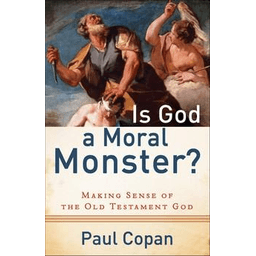
Is God a Moral Monster? is a general-audience apologetics and philosophy book by Paul Copan, published in 2011 by Baker Books. Its subtitle - Making Sense of the Old Testament God - names the task precisely: it is a response to the charge, popularized by the New Atheist authors of the 2000s, that the God depicted in the Old Testament is morally repugnant. Copan, a philosopher, organizes the book around the specific passages that fuel that charge and works through them in eighteen short, accessible chapters.
The method is consistent throughout. Copan’s recurring move is to set each disputed law or command against the background of the ancient Near East - the legal codes, the warfare conventions, the social structures of the surrounding cultures - and to read the biblical text as part of a larger trajectory rather than as a freestanding endorsement of everything it describes or permits. He argues that many of the laws regulated and limited practices that were brutal and unrestrained elsewhere, and that the Bible’s own arc moves toward something the New Atheist reading misses. That is his argument; this review reports it as such, and notes throughout where other scholars read the same texts differently.
Why readers reach for Copan on the hard texts
The single biggest practical difference between this book and a general apologetic like Mere Christianity or The Reason for God is focus. Copan is not making the broad case for God’s existence or for Christianity as a whole. He is answering one objection - the moral character of the Old Testament God - and he is answering it at the level of specific texts. When the reader’s real question is “but what about the command to destroy the Canaanites?” or “but doesn’t the Law permit slavery?”, this is the book that actually stops on that verse and works through it rather than gesturing past it.
The other distinctive is the use of ancient-Near-East context as the primary tool. Copan’s wager is that a modern reader hears these passages with modern assumptions - about warfare, about labor, about law - and that placing each text back in its own world changes the reading. A reader who finds that wager persuasive gets a coherent framework for the whole Old Testament. A reader who finds parts of it strained still comes away with the scholarly sources, the categories, and the competing considerations laid out clearly enough to think with. Either way, the book treats the reader as someone capable of sitting with a hard question rather than someone to be reassured and moved along.
The Canaanite conquest: the hardest chapter, handled at length
The passages where God appears to command the destruction of the Canaanite peoples are the sharpest edge of the whole objection, and Copan gives them the most sustained treatment in the book. He assembles several strands rather than resting on a single move: that the conquest was a bounded, one-time judgment on specific peoples for specific reasons rather than a general license for violence; that the language of total destruction in Joshua may follow the conventions of ancient Near Eastern war rhetoric, which routinely used sweeping, hyperbolic terms for victory; that the archaeological and textual picture suggests the targets were primarily military and governmental strongholds rather than civilian population centers; and that the larger biblical narrative consistently frames the episode as exceptional rather than normative.
This is the chapter where the reader most needs to know that they are reading an argument. The hyperbole reading and the “strongholds rather than cities” reading are defended by a number of Old Testament scholars and disputed by others, including some who share Copan’s faith and some who do not. There are Christian scholars who read the conquest texts more starkly and locate the difficulty elsewhere, and there are skeptics who find Copan’s contextual reading unconvincing. Copan makes his case carefully and points the reader to the deeper scholarship - he and Matthew Flannagan later wrote a whole academic volume on this single question - but the honest summary is that this is a genuinely contested matter on which thoughtful people, inside and outside the church, continue to disagree. The chapter is a strong entry into that debate, not a verdict that closes it.
Slavery, the Law, and the “regulate then transcend” frame
Several chapters take up the laws in the Pentateuch that a modern reader finds hardest - regulations governing servitude, penalties that strike a contemporary conscience as severe, and rules touching the treatment of women and of foreigners. Copan’s organizing claim across these chapters is that Israelite law has to be read against the far harsher legal codes of the surrounding cultures, and as a regulating framework rather than a moral ideal. On servitude, he argues that much of what English translations render as “slavery” functioned, in the Israelite case, closer to indentured or contract labor - debt-servitude with release provisions and legal protections - and was categorically different from the race-based chattel slavery of the modern Atlantic world. On the harsh penalties, he argues for reading them within their judicial and rhetorical context rather than as a flat endorsement.
As with the conquest, this is contested ground. The “regulate then transcend” reading is a real and defended position in Old Testament scholarship, and Copan supports it with comparative legal material. It is also true that the biblical texts contain provisions - distinctions in how different classes of servants could be treated, for instance - that many readers, including many Christians, still find difficult on any reading, and that some scholars argue Copan understates. The careful way to take this section is as Copan intends it: an argument that these laws are better than a hostile reading allows and point beyond themselves, offered alongside the candid recognition that the texts remain hard and that the matter is debated. The book is most valuable here when read as one well-made case among several rather than as the end of the conversation.
Reading Scripture as a trajectory, not a snapshot
Underneath the individual chapters is a single interpretive instinct that gives the book its shape: the idea that the Old Testament should be read as a trajectory rather than a snapshot. Copan repeatedly argues that the Law meets a brutal ancient world where it is and constrains it, while pointing forward to something fuller - that a given regulation is a step within a larger story rather than the destination, and that reading any single command in isolation from that arc misreads it. This is what lets him hold the Testaments together: the same God, a developing revelation, an unfolding direction.
It is a genuinely useful frame, and it is also one of the places where the book is making an interpretive choice that a reader should see clearly. Reading Scripture as a moral trajectory is a long-standing and widely shared approach, but how far it can carry the hardest texts - and whether it resolves the difficulty or relocates it - is exactly what scholars argue about. For many readers the trajectory frame is the most clarifying thing in the book; for others it raises its own questions about what it means for a text to permit something on the way to transcending it. Copan presents it persuasively. Whether it fully answers the objection is, fairly, left for the reader to weigh.
Pricing
Paperback
~$18
The standard Baker Books edition. The copy most readers and study groups own.
Kindle
~$13
Searchable and highlight-syncs across devices - handy for a book this endnote-heavy. Usually a few dollars under paperback.
Used / library
~$5 and up
A 2011 title that turns up used and in church and seminary libraries. The cheapest way in.
Companion volume
~$22
Copan and Matthew Flannagan’s later, more academic Did God Really Command Genocide? goes deeper on the conquest specifically - a separate purchase for readers who want the full scholarly case.
Pricing on a book is simple, and Is God a Moral Monster? prices like a standard Baker Books trade paperback - around eighteen dollars new for the print edition, a few dollars less on Kindle.
For most readers the paperback is the right pick. It is the version study groups standardize on, the endnotes are easier to flip to in print, and it is easy to lend to the person who actually had the question. Being a 2011 title, it also turns up used and in church and seminary libraries for very little, which is the cheapest way to read it.
The Kindle edition runs a few dollars under paperback and is worth considering specifically because the book is heavy on endnotes and citations - searchable text and syncing highlights are genuinely handy for following Copan’s sourcing back to the underlying scholarship.
If the conquest chapters are your actual reason for reading, the natural companion is Copan and Matthew Flannagan’s later Did God Really Command Genocide? (around twenty-two dollars), a separate and more academic volume that goes deeper on that single question. Most readers do not need it. It is the right next purchase for anyone who wants the full scholarly case rather than the accessible summary.
Where Is God a Moral Monster? falls behind
Not the last word. The questions Copan takes on - the conquest, the slavery laws, the harsh penalties - are among the most actively debated in Old Testament studies, and his contextual reading is one position among several. Some Christian scholars read these texts more starkly; some skeptics find the contextual case unpersuasive. The book is a strong entry point into that debate, not a settlement of it, and it reads best when held that way.
Tied to its moment. The book is framed as a reply to the New Atheist authors who were dominating the bestseller lists when it was written. The underlying texts and arguments are timeless, but the specific opponents - and the cultural temperature of the mid-2000s religion debates - date the framing. A reader coming to it fresh in 2026 will notice it is answering a particular argument from a particular decade.
Persuasiveness varies by chapter. Even sympathetic readers tend to find some chapters more convincing than others - the “these were strongholds, not civilian cities” reading of the conquest and the “debt-servitude, not chattel slavery” reading of the Law are the two most likely to divide an audience. That is not a flaw in the writing so much as a reflection of how genuinely hard the source material is.
Narrow by design. This is a focused apologetic on one cluster of objections. It is not a doctrine of God, not a survey of Old Testament theology, and not a devotional. Copan stays on the moral-objection question on purpose, which is the right call for the book he set out to write - but it means a reader wanting a fuller picture of the Old Testament will need other books alongside it.
Light on the New Testament. A reader whose hardest questions are about the New Testament - final judgment, certain household codes, the relationship of the Testaments on violence - will find those largely outside the book’s scope. The title is about the Old Testament God, and the book keeps that promise narrowly.
Is God a Moral Monster? vs. The Reason for God vs. The Case for Faith
These three are all answers to objections, but they aim at different objections. Is God a Moral Monster? (Copan, 2011) is the specialist - it does one thing, the moral character of the Old Testament God, and does it at the level of specific texts. The Reason for God (Tim Keller, 2008) is the generalist - it takes the seven broad objections a modern secular reader raises, including suffering and the church’s record, and the moral-character question is one chapter among many rather than the whole book. The Case for Faith (Lee Strobel, 2000) is the journalist’s tour - Strobel interviews scholars across a spread of “tough questions,” and the Old Testament violence question is one stop on a wider itinerary.
Different strengths. Keller is better for the reader whose doubts are broad and conversational - he covers the most surface area. Strobel is better for the reader who likes the interview format and wants a survey of several hard questions at once. Copan is better - by a wide margin - for the reader whose specific, sharp, unavoidable question is the violence and the laws of the Old Testament. If that text-level question is the wall someone has hit, the generalist books will gesture at it; Copan stops and works through it.
A practical note on scope: none of the three is a neutral referee. Each argues a case, and on the Old Testament texts in particular, careful readers - Christian and otherwise - land in different places. Copan goes deepest on these passages and is the most useful starting point for them, but the responsible way to read any of the three is alongside the awareness that thoughtful people continue to disagree about exactly how the hardest texts should be read.
The bottom line
Is God a Moral Monster? is the book to reach for when the question is specifically about the violence, the slavery laws, and the harsh commands of the Old Testament - no other accessible single volume goes at those texts as directly or sources the answer as well. Read it knowing what it is: a careful, well-argued contribution to a debate that biblical scholars, Christian and non-Christian alike, have not settled, and that the hardest chapters are exactly the ones reasonable readers weigh differently. As a starting point it is excellent. As the last word it was never meant to be, and it is best read as the strong opening of a conversation rather than the close of one.
Alternatives to Is God a Moral Monster?
 The Reason for GodTim Keller’s 2008 apologetic covering the seven broad objections a modern skeptic raises. The generalist to Copan’s specialist - buy it for wide-ranging doubts, Copan for the Old Testament texts specifically.
 The Case for FaithLee Strobel’s interview-driven tour through a spread of tough questions, including Old Testament violence. Broader and more journalistic; Copan goes far deeper on the hard texts.
 Mere ApologeticsAlister McGrath’s primer on how to do apologetics well - method rather than a single objection. A good companion for a reader who wants the bigger toolkit alongside Copan’s focused case.
 Making Sense of GodTim Keller’s 2016 prequel to The Reason for God, aimed at the reader not yet ready for the standard arguments. A gentler, more foundational entry point than Copan’s text-by-text work.
Frequently asked questions
What is Is God a Moral Monster? actually about?
It is Paul Copan’s 2011 response to the charge - popularized by the New Atheist authors of the 2000s - that the God of the Old Testament is morally repugnant. Copan works through the specific passages that fuel that charge: the Canaanite conquest, the slavery laws, harsh penalties, and the treatment of women and foreigners, mostly by reading each against its ancient Near Eastern background.
Does the book actually deal with the hard passages, or talk around them?
It deals with them directly. Copan does not skip the conquest or the slavery laws; he gives them dedicated chapters and works through the texts in detail. Whether his particular readings persuade you is a separate question - some readers, including some Christians, find certain chapters more convincing than others - but the book does not change the subject.
Is Copan’s reading of these texts the accepted Christian view?
There is no single accepted view. Copan’s contextual, ancient-Near-East approach is one well-defended position, but biblical scholars - Christian and non-Christian - read the conquest narratives and the Law in genuinely different ways. Some Christian scholars read the hard texts more starkly than Copan does. The book is best understood as one strong argument in an ongoing debate rather than a settled consensus.
How does it compare to The Reason for God?
They do different jobs. Keller’s The Reason for God is a generalist apologetic covering seven broad objections, with the Old Testament moral question as just one part. Copan is a specialist who spends the whole book on that one question at the level of specific texts. If the Old Testament violence and laws are your specific sticking point, Copan goes far deeper; if your doubts are broader, start with Keller.
Is this a fair book, or does it just attack the New Atheists?
It engages the New Atheist authors - Dawkins, Hitchens, Harris - by quoting them directly and answering the actual claims rather than caricaturing them. Copan disagrees sharply with their reading, but the tone is argumentative in the careful sense, not dismissive. It describes the disagreement and makes its case.
Is there a more in-depth follow-up?
Yes. Copan and Matthew Flannagan later wrote Did God Really Command Genocide?, a more academic volume focused specifically on the conquest texts. It is the natural next read for anyone who wants the full scholarly case behind the accessible summary in Is God a Moral Monster?
Should this be my only book on the question?
It is an excellent starting point but not a complete picture on its own. Because the underlying texts are genuinely contested, the most responsible approach is to read Copan’s argument alongside scholars who read these passages differently, so you can weigh the positions yourself. The book gives you the vocabulary, the sources, and a reading list to do exactly that.
Sources & further reading
More Apologetics Books
The Reason for GodTim Keller’s 2008 apologetic has quietly become the default gift for the smart, secular friend who has questions - and it earns the reputation.Making Sense of GodTim Keller’s 2016 “prequel” to The Reason for God doesn’t argue that God exists - it argues that the things you already want make more sense inside Christianity than outside it, and it’s the book for the skeptic who isn’t ready for the argument yet. TacticsGreg Koukl wrote the book that teaches you how to talk about faith without it turning into an argument - the one most people reach for when "I never know what to say" is the real problem.
 On GuardWilliam Lane Craig’s 2010 primer takes the formal arguments from his heavyweight Reasonable Faith and redraws them as flowcharts a layperson can actually follow - apologetics taught like a skill, not a sermon.
 The Case for ChristLee Strobel’s investigative-journalist apologetic has quietly become the default gift book for skeptical friends - and the on-ramp into apologetics for an entire generation of readers.
 Total TruthThe book that taught a generation of evangelicals to think in terms of worldview - and to stop letting their faith get filed under "private values" while everyone else got "public facts."