- Starting price
- ~$25 paperback
- Free tier
- No
- Platforms
- Print · Kindle
- Developer
- Fortress Press
- Launched
- 1951
- Updated
- May 31, 2026
The verdict
Letters and Papers from Prison is the most personal book Bonhoeffer ever wrote and the one he never actually wrote - a collection of letters and fragments assembled after his death. The famous phrases (“religionless Christianity,” “the world come of age”) are unfinished sketches, not a finished argument, which is exactly why the book has been read so many different ways. It is a landmark of modern Christian thought and a difficult one to summarize honestly, because Bonhoeffer himself never got to.
Try Letters and Papers from Prison ↗Opens fortresspress.com
Letters and Papers from Prison has quietly become the book that people reach for when they want the real Bonhoeffer - not the systematic theologian of his earlier work, but the man in a cell writing to his closest friend while the world he knew collapsed. It is the most-discussed of his books and, in a strange way, the least finished. Bonhoeffer did not write it. He wrote letters, and his friend Eberhard Bethge kept them, and after Bonhoeffer was executed Bethge collected them, with prison notes and poems and theological fragments, into the volume the world now reads.
It does not feel like a treatise. It does not feel like a book with a thesis. It does not even feel like it was meant to be published. What it feels like is a brilliant mind working out loud, in real time, under conditions almost no theologian has written from - arrested by the Gestapo in April 1943 for his part in the resistance against Hitler, held in Tegel military prison in Berlin, writing to Bethge in letters that had to slip past the censors, and turning over questions he knew he might not live to finish answering. He did not. He was moved to a Gestapo cellar, then to concentration camps, and was executed at Flossenbürg in April 1945, weeks before the war ended.
What you actually get is a mosaic: warm, ordinary letters about books and cigarettes and missing his family; poems written in the cell, including the well-known “Who Am I?” and “Stations on the Road to Freedom”; and, threaded through the later letters of 1944, a handful of theological fragments that became some of the most quoted lines in modern Christianity. “Religionless Christianity.” “The world come of age.” “Before God and with God we live without God.” Bonhoeffer floats these ideas to Bethge as questions, not conclusions, promising to develop them later. The promise was never kept, and that unfinished quality is the single most important fact about the book - it is why the same pages have been claimed by theologians who agree on almost nothing else.
✓ The good
- The most personal portrait of Bonhoeffer in print - the letters show the man, not just the theologian, in the months before his death
- Historically extraordinary - there is almost no comparable theological writing produced from inside a Nazi prison by someone who would not survive it
- The 1944 theological fragments - “religionless Christianity,” “the world come of age,” faith lived in suffering - are among the most cited passages in 20th-century Christian thought
- The prison poems - “Who Am I?” and “Stations on the Road to Freedom” especially - are widely anthologized and read on their own merits
- Cross-traditional reach - read seriously by Protestant, Catholic, Anglican, and Orthodox readers, and argued over across the whole theological spectrum
- The Fortress DBWE critical edition (volume 8) is comprehensive - full correspondence, restored material, and the editorial apparatus to place every fragment in context
- A genuine window onto Christian faith under pressure - the letters are, among other things, a sustained account of hope held in a hopeless place
✗ Watch out
- Fragmentary and unsystematic - these are letters and notes, not a finished argument, and the book does not build to a conclusion the way a treatise would
- The famous phrases are easy to quote out of context - “religionless Christianity” and “the world come of age” are sketches Bonhoeffer never developed, and isolated quotations can be made to mean almost anything
- The critical edition is dense - the DBWE volume 8 is long, heavily footnoted, and assembled for scholars; a first-time reader can feel buried
- Needs background - the letters assume the reader knows the resistance, the German church situation, and the people Bonhoeffer is writing to and about
- No study guide - no edition ships with discussion questions or a session plan, and the fragmentary structure makes a group study harder to build than a normal book
- Uneven reading experience - long stretches of ordinary prison correspondence sit alongside the dense theological passages, and readers who come only for the famous ideas have to wade through a lot of daily life to reach them
Best for
- Readers who finished The Cost of Discipleship or Life Together and want the late, unguarded Bonhoeffer
- Anyone wrestling with how faith holds up under suffering and confinement
- Students of 20th-century theology who want the primary source behind the “religionless Christianity” debate
- Readers drawn to letters, journals, and prison literature as much as to systematic theology
Avoid if
- You want a single, finished theological argument you can summarize in a paragraph
- You are brand new to Bonhoeffer and have not yet read Discipleship or Life Together
- You want a light devotional you can read in five-minute morning bites
- You need a book with built-in study questions and a clean session-by-session structure
What Letters and Papers from Prison is
Letters and Papers from Prison is a posthumous collection of Dietrich Bonhoeffer’s correspondence, notes, poems, and theological fragments written between his arrest in April 1943 and the period before his execution in April 1945. He was held first in Tegel military prison in Berlin, having been arrested by the Gestapo for his involvement in the conspiracy against Hitler. The bulk of the material is letters - to his parents, to his fiancée Maria von Wedemeyer, and above all to his friend and former student Eberhard Bethge, who preserved them. Bethge compiled and first published the collection in German in 1951.
In shape it is not a single book but a gathered one. There are everyday letters about reading, music, the seasons, and family news. There are poems composed in the cell. There are the theological letters of 1944 in which Bonhoeffer sketches the ideas he is best remembered for - a Christianity stripped of what he called “religion,” a world that has “come of age” and learned to manage without the God-of-the-gaps, and a faith that meets God in the midst of life and suffering rather than at its edges. The Fortress Press critical edition (Dietrich Bonhoeffer Works English, volume 8) is the fullest version, with restored letters and extensive notes; older and abridged editions exist as well.
Why readers across traditions keep returning to the prison letters
The single biggest difference between Letters and Papers from Prison and the rest of Bonhoeffer’s work - and most other modern Christian classics - is that it is unfinished by nature. Discipleship and Life Together are arguments he completed and chose to publish. The prison material is the opposite: private letters and working notes, written to one trusted reader, never revised for an audience, broken off by an execution. That changes how the book reads. You are not receiving Bonhoeffer’s settled conclusions. You are watching him think, doubt, hope, and reach toward ideas he openly says he has not worked out yet.
That unfinished quality is exactly why the book travels across traditions - and why it has been argued over for more than seventy years. Because the famous fragments are sketches rather than systems, readers from very different places have heard very different things in them. Some have taken “religionless Christianity” as a radical secularizing program; others as a call to a deeper, less institutional faith; others as a critique of cheap piety entirely consistent with the costly grace of his earlier work. Bonhoeffer himself did not live to say which reading he meant, and he may have meant something none of them fully capture. The honest thing a reader can do is hold the fragments as fragments - provocative, open, and deliberately left for others to finish.
“Religionless Christianity” and “the world come of age”: the fragments everyone quotes
In the letters of April through July 1944 - especially a famous one dated 30 April 1944 - Bonhoeffer begins floating a set of ideas to Bethge that he calls, more or less in passing, the question he keeps circling: “what is bothering me incessantly is the question what Christianity really is, or indeed who Christ really is, for us today.” He observes that people in the modern West increasingly get along without appealing to God to explain the world; humanity, he writes, has “come of age,” learning to answer its own questions in science, politics, and ethics without the religious hypothesis. He wonders, then, what a Christianity would look like that no longer relied on “religion” - on God as a stopgap for human weakness, a God invoked only at the boundaries of life where human power runs out. He gathers all of this under the phrase “religionless Christianity.”
It is essential to read these passages as what they are: a handful of letters in which Bonhoeffer is thinking aloud and repeatedly says he intends to work the ideas out later. He never did. The phrases are vivid, compressed, and unguarded, which is why they are so quotable - and why isolated quotations of them have been pressed into the service of arguments Bonhoeffer never made on either side. Some readers have built a radical, secular theology on them; others have read them as a plea for a more honest, less institutional, more Christ-centered faith of the kind his earlier books describe. The text itself does not settle the dispute. The most defensible way to handle these pages is to treat them as genuine open questions Bonhoeffer posed under extraordinary pressure and left for the church to keep wrestling with, rather than as a doctrine he established.
Faith under confinement: the letters, the poems, and “Who Am I?”
Most of the book is not the famous theology. It is the texture of two years in a cell. Bonhoeffer writes to his parents about the books he is reading and the music he misses; he writes to Maria von Wedemeyer, to whom he was engaged and whom he would never marry; he writes to Bethge about ordinary things and then, abruptly, about ultimate ones. Threaded through are the prison poems, the most famous of which, “Who Am I?,” sets the calm, composed figure others see in him against the frightened, restless, longing man he knows himself to be - and resolves the tension only in the last line: “Whoever I am, thou knowest, O God, I am thine.” “Stations on the Road to Freedom” and the New Year’s poem later titled “By Gracious Powers” come from the same period; the latter has since passed into hymnody.
This is where the book does its quietest and most durable work. Stripped of his pulpit, his students, his freedom, and eventually his hope of release, Bonhoeffer keeps writing as a man trying to hold faith and honesty together at the same time. He refuses both despair and easy religious consolation. He insists on living fully in the present rather than treating the cell as mere waiting. For many readers, this is the real reason to read the book - not the contested fragments, but the sustained, unsentimental record of how one person carried belief through fear, boredom, and the nearing certainty of death. It is, among other things, one of the most honest pieces of prison literature in the Christian tradition.
Which edition to actually buy: DBWE vol. 8 vs. the older Touchstone
There are two main English versions in circulation, and the difference is real. The Fortress Press critical edition - Letters and Papers from Prison, Dietrich Bonhoeffer Works English (DBWE) volume 8 - is the complete and authoritative text: the full correspondence (including letters omitted from earlier versions), restored material, Bethge’s context, and heavy editorial footnotes that identify the people, books, and events Bonhoeffer refers to. It runs around $25 in paperback and roughly $50 in hardcover. The older Macmillan/Touchstone edition (Reginald Fuller’s translation, in the enlarged form Bethge edited) is shorter, cheaper at around $17, and the version most older quotations are keyed to - but it is abridged and lightly annotated by comparison.
For most serious readers, the DBWE volume 8 is the right purchase despite the higher price. The whole challenge of this book is context - knowing who Bonhoeffer is writing to, what is happening outside the prison, and where a given fragment sits in the sequence of letters - and the critical edition’s notes are exactly what supply it. The older Touchstone edition is a reasonable, lower-cost entry point if you mainly want the well-known letters and poems and are willing to read around the gaps. The DBWE is also the edition to buy if you are collecting the Dietrich Bonhoeffer Works series and want Discipleship, Life Together, Ethics, and the prison letters in matching critical volumes on the shelf.
Pricing
Fortress DBWE vol. 8 - paperback
~$25
The critical edition - the full, restored correspondence with Eberhard Bethge and others, prison notes, poems, and complete editorial apparatus. The reference copy for serious study.
Fortress DBWE vol. 8 - hardcover
~$50
The hardback critical edition. The durable reference copy for pastors, scholars, and anyone collecting the Dietrich Bonhoeffer Works English series in matching volumes.
Touchstone abridged paperback
~$17
The older, shorter Macmillan/Touchstone edition (the Reginald Fuller translation, enlarged by Bethge). More compact and cheaper, but abridged - fewer letters and less apparatus than the DBWE.
Kindle
~$20
Ebook form of the critical edition. Searchable and highlightable - useful for tracking a single idea like “religionless Christianity” across the scattered letters where it appears.
A Testament to Freedom (anthology)
~$30
Not this book, but a one-volume Bonhoeffer reader that includes the key prison letters alongside selections from his other works. A way to sample the prison writings inside the wider corpus.
There is no free tier - this is a book, not an app - and unlike Bonhoeffer’s shorter works there is no cheap go-to paperback that everyone owns. The Fortress DBWE volume 8 at around $25 is the standard serious recommendation, and the older Touchstone abridged paperback at around $17 is the cheapest entry point if you mainly want the famous letters and poems.
The Kindle edition of the critical text runs around $20 and is genuinely useful for this particular book: because ideas like “religionless Christianity” surface across scattered letters rather than in one chapter, a searchable copy makes it far easier to follow a single thread through the whole collection.
The DBWE hardcover at around $50 is the durable reference copy - worth it for pastors and scholars, and for anyone assembling the matching Dietrich Bonhoeffer Works series. A Testament to Freedom, a one-volume Bonhoeffer reader at around $30, is a different kind of purchase: not this book, but a way to read the key prison letters alongside selections from the rest of his corpus.
Most readers do not need both editions. If you want the full picture and the context that makes the fragments legible, buy the DBWE paperback. If you want a lower-cost first taste of the prison writings, the Touchstone abridged edition will do.
Where Letters and Papers from Prison falls behind
No single argument. This is the defining limitation: the book is a collection, not a treatise, and it does not build toward a conclusion. Readers trained to look for a thesis and supporting structure will not find one here, and the famous ideas appear as scattered, unfinished sketches rather than developed chapters. That is the nature of the material, not a flaw the publisher could fix - but it is worth knowing before you open it.
Easy to misread in fragments. The most quoted phrases - “religionless Christianity,” “the world come of age,” “before God and with God we live without God” - are compressed lines pulled from working letters, and lifted out of their setting they have been made to support arguments across the whole spectrum. Anyone reading or citing this book has to resist the pull to treat a striking sentence as a settled position. The fragments reward slow, contextual reading and punish proof-texting.
Dense critical apparatus. The DBWE volume 8 is long and heavily footnoted, assembled for scholars first. The very notes that supply the needed context can also bury a first-time reader, and the sheer volume of ordinary correspondence between the famous passages makes for an uneven read. A more selective reader’s edition would serve newcomers better than either version currently on offer.
Assumed background. Bonhoeffer writes to people who already know the resistance, the German church conflict, and his circle of family and friends. Without some grounding in his life and the historical moment - the kind a biography supplies - parts of the correspondence will feel like overhearing one side of a conversation. The critical edition’s notes help, but they do not replace a basic orientation to the period.
No study framework. Like Bonhoeffer’s other books, no edition ships with discussion questions or a session plan, and the fragmentary structure makes a group study harder to build here than for a normal book. A group can do excellent work with the poems and the 1944 theological letters, but the leader has to construct the path through the material themselves.
Letters and Papers from Prison vs. The Cost of Discipleship vs. Life Together
These are the three Bonhoeffer books most likely to share a reading list, and they do genuinely different work. Different strengths. The Cost of Discipleship (1937) is the argument - a finished, structured exposition of what following Jesus costs, built around the Sermon on the Mount. Life Together (1939) is the practice - a short, concrete handbook on Christian community drawn from his underground seminary at Finkenwalde. Letters and Papers from Prison (compiled 1951) is the unfinished frontier - the late, private, fragmentary writing in which Bonhoeffer pushes into new questions he did not live to resolve.
Discipleship is the most systematic and the best place to start with Bonhoeffer. Life Together is the most immediately practical and the shortest. Letters and Papers is the most personal and the most demanding - both because of its fragmentary form and because its most famous ideas are deliberately open-ended. A reader who works through all three moves from Bonhoeffer’s settled teaching, to its lived application in community, to the edge of his thought under the pressure of imprisonment and death.
If you have to pick one, the choice tracks where you are. If you want Bonhoeffer’s core message, start with Discipleship. If you want something short and usable about life in Christian community, start with Life Together. If you already know those books and want the late, unguarded Bonhoeffer - and are comfortable sitting with questions he left unanswered - Letters and Papers from Prison is the one. It is the richest and the least tidy of the three, and the order matters: most readers get far more from the prison letters after the earlier books than before them.
The bottom line
Letters and Papers from Prison is the late, intimate, unfinished Bonhoeffer - the letters, poems, and theological fragments he wrote from a Nazi cell before his execution, gathered after his death by his friend Eberhard Bethge. Its most famous phrases (“religionless Christianity,” “the world come of age”) are open questions rather than settled doctrine, which is why the book has been read so many ways and why it should be read slowly and in context. Buy the Fortress DBWE volume 8 at around $25 for the full text and the notes that make it legible; the older Touchstone abridged edition at around $17 is a cheaper entry point. Read Discipleship or Life Together first - the prison letters land far deeper once you know the man writing them.
Alternatives to Letters and Papers from Prison
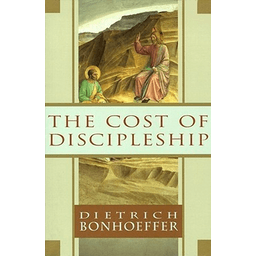 The Cost of DiscipleshipBonhoeffer’s 1937 exposition of the Sermon on the Mount and the cheap-grace / costly-grace framework. The finished, systematic Bonhoeffer - and the best place to start before the prison letters.
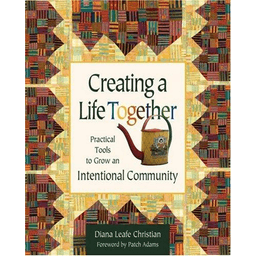 Life TogetherBonhoeffer’s short, concrete handbook on Christian community, drawn from his underground seminary. The most practical and most accessible of his books.
 Bonhoeffer (Metaxas)Eric Metaxas’s biography of Bonhoeffer. The natural companion - the prison letters mean far more once you know the story of the resistance, the arrest, and the execution behind them.
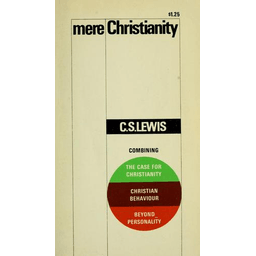 Mere ChristianityC. S. Lewis’s ecumenical introduction to the faith. A finished, accessible classic from the same era - the on-ramp where Bonhoeffer’s prison writings are the deep, demanding end.
Frequently asked questions
What is “religionless Christianity,” in one sentence?
It is the phrase Bonhoeffer floats in his 1944 prison letters for a Christianity no longer dependent on “religion” - on God as a stopgap invoked at the edges of human weakness - but he sketches it only briefly, calls it an open question, and never lived to develop it, which is why it has been interpreted in very different ways.
Did Bonhoeffer actually write this as a book?
No. These are private letters, prison notes, and poems, mostly written to his friend and former student Eberhard Bethge, who preserved them and compiled the collection after Bonhoeffer’s execution. It was first published in German in 1951. That posthumous, gathered origin is the most important thing to know about it - the book has no single argument because Bonhoeffer never wrote it as one.
Which edition of Letters and Papers from Prison should I buy?
For most serious readers, the Fortress Press critical edition - Letters and Papers from Prison, Dietrich Bonhoeffer Works English (DBWE) volume 8 - at around $25 paperback. It is the complete, restored text with the editorial notes that supply the context the letters assume. The older Macmillan/Touchstone abridged edition at around $17 is a cheaper entry point if you mainly want the well-known letters and poems.
Is this a good first Bonhoeffer book?
Usually not. Because it is fragmentary and assumes you know his life and his earlier thought, most readers get far more out of it after The Cost of Discipleship or Life Together. Start with one of those for the finished Bonhoeffer, then come to the prison letters for the late, unguarded, open-ended Bonhoeffer.
What does “the world come of age” mean?
It is Bonhoeffer’s phrase for his observation that modern people increasingly answer their own questions - in science, ethics, and politics - without appealing to God as an explanation, the way an adult no longer leans on a guardian. He raises it in the prison letters as part of his question about what Christianity should be in such a world. Like “religionless Christianity,” it is a sketch he left unfinished, and readers have drawn quite different conclusions from it.
Are the prison poems worth reading on their own?
Yes. Several are widely anthologized, including “Who Am I?,” “Stations on the Road to Freedom,” and the New Year’s poem known in English hymnody as “By Gracious Powers.” They stand on their own as poetry and as a record of faith under confinement, and many readers find them the most memorable part of the book.
Do I need to know Bonhoeffer’s life story to read this?
It helps a great deal. The letters assume the German church conflict, the resistance against Hitler, and Bonhoeffer’s own circle, and they read very differently once you know he was arrested in 1943 for resistance work and executed at Flossenbürg in April 1945, just weeks before the war ended. Eric Metaxas’s biography Bonhoeffer is the standard popular companion, and the DBWE edition’s notes fill in much of the rest.
Sources & further reading
More Modern Christian Classics
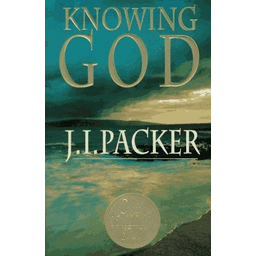 Knowing GodJ.I. Packer’s 1973 classic on the doctrine of God has sold more than 1.5 million copies and is still the book most pastors hand to laypeople who want theology that goes somewhere - here’s what it actually does and who it’s for.The Cost of DiscipleshipDietrich Bonhoeffer’s 1937 exposition of the Sermon on the Mount, written for pastors training under a regime that wanted them silent - and still the sharpest book in print on what following Jesus actually costs.
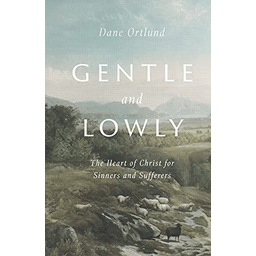 Gentle and LowlyDane Ortlund’s 23 short chapters on Matthew 11:29 have quietly become the most-given new Christian book of the decade - and the reason is not what you’d guess.
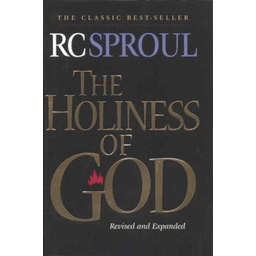 The Holiness of GodR.C. Sproul’s career-defining book on the one attribute of God the church most forgets - and the vision in Isaiah 6 he believed everything else flows from.
 The Weight of GloryThe 1941 sermon many call Lewis's single finest piece of writing - "there are no ordinary people" - gathered with eight other addresses into one slim, uneven, unforgettable collection.
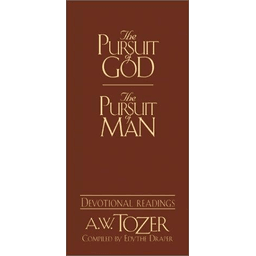 The Pursuit of GodA.W. Tozer’s ten-chapter wake-up call on knowing God personally - short, severe, and the one devotional Reformed, Wesleyan, Catholic, and Orthodox readers all seem to keep on the nightstand.