- Starting price
- $11.99 paperback
- Free tier
- No
- Platforms
- Print · Kindle · Audiobook · Audible
- Developer
- Touchstone (Simon & Schuster)
- Launched
- 1952
- Updated
- May 25, 2026
The verdict
A foundational American self-help text dressed in mid-century Protestant clothing - wildly influential, genuinely encouraging to millions, and substantively contested by serious theologians since the week it was published. Read it knowing both halves of that story.
Try The Power of Positive Thinking ↗Opens simonandschuster.com
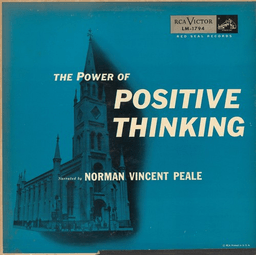
The Power of Positive Thinking has quietly become the book most people have heard of without having read - a 1952 hardcover that sold more than five million copies, stayed on the New York Times bestseller list for 186 weeks, and lent its title to a phrase the broader culture still uses. Norman Vincent Peale was the pastor of Marble Collegiate Church in Manhattan for more than fifty years, a Reformed Church in America minister with a radio program, a magazine (Guideposts), and a national speaking schedule. The book was the cultural distillation of his Sunday sermons: ten chapters of affirmation, visualization, and confidence-building, all framed inside a light Protestant vocabulary about faith in God.
It is not a Bible study. It is not a systematic theology. It is not, despite its many scripture quotations, primarily a book about Jesus. It is a self-help manual built on the premise that the contents of your mind shape the conditions of your life, and that prayer plus repetition plus expectancy can reorganize both. For millions of readers - including a generation of mid-century Americans hungry for confidence after two world wars and a depression - that was exactly what they wanted to hear, and they reported it changed them.
It is also the book that drew one of the most quoted theological reviews of the twentieth century, when Reinhold Niebuhr called Peale’s gospel a kind of "moral and spiritual ableism" - a faith for the already healthy, the already employed, the already optimistic. Conservative evangelicals like Carl F. H. Henry pushed back from a different angle. Contemporary Reformed critics still treat the book as the headwater of the American prosperity-gospel river. None of that has dented its sales. Both stories are true at once, and any honest review has to hold them together.
✓ The good
- Genuinely encouraging to readers in despair - millions of testimonies from people who say the book pulled them out of paralysis are not nothing, and a fair review has to acknowledge them honestly
- Practical, repeatable techniques - affirmations, scripture-memory cards, visualization exercises, breathing prompts; the book teaches concrete daily habits rather than abstract concepts
- Pastoral, anecdotal tone - Peale writes like the parish minister he was for fifty years, telling stories about real congregants, traveling salesmen, anxious housewives, and businessmen in his office
- Christian frame, accessible vocabulary - God, prayer, and Bible verses are present throughout, and the book reads as an explicitly religious work rather than a secular self-help text in disguise
- Massive cultural footprint - if you want to understand twentieth-century American religion, evangelicalism, motivational speaking, or the prosperity-gospel lineage, this is one of the four or five books you cannot skip
- Short chapters, conversational pacing - the book is genuinely easy to read; you can finish a chapter on a commute, and the structure works as a daily devotional even if that wasn’t the intent
✗ Watch out
- Theologically thin by design - the book treats faith largely as a technique for shaping mental states, and readers looking for serious doctrine, christology, or scriptural exposition will not find it here
- Scripture used as proof-text - verses appear as energy boosters and confidence aids rather than as passages to be understood in their literary or canonical context
- No real engagement with suffering, lament, or the cross - the framework can struggle to speak honestly to readers in chronic illness, grief, or material poverty, which is the substance of the Niebuhr critique
- Mid-century cultural baggage - the gender assumptions, the businessmen-centric anecdotes, and the assumption that the goal of faith is American middle-class success can feel dated and uncomfortable today
- Influence on prosperity gospel - the line from Peale to Robert Schuller to later prosperity preachers is real, and readers who object to that movement may find its seedbed here uncomfortable to sit in
- Light on the harder Christian teachings - sin, repentance, judgment, and self-denial are largely absent or softened into "negative thinking" to be replaced
Best for
- Readers studying twentieth-century American religious history
- Anyone who wants to understand the roots of modern motivational and self-help literature
- Students of homiletics curious about mid-century pulpit style
- Readers who want gentle, encouraging daily practice with a Christian vocabulary
Avoid if
- You want rigorous theology, exegesis, or systematic doctrinal teaching
- You are in deep grief or suffering and need a book that takes lament seriously
- You react strongly against prosperity-gospel framing of the Christian life
- You prefer dense, intellectually demanding spiritual reading (Lewis, Bonhoeffer, Augustine)
What The Power of Positive Thinking is
The Power of Positive Thinking is a ten-chapter self-help book first published in 1952 by Prentice Hall and now kept in print by Touchstone, a Simon & Schuster imprint. Its author, Norman Vincent Peale (1898-1993), was a Reformed Church in America minister who served Marble Collegiate Church in New York City from 1932 until 1984 - more than fifty years in a single pulpit. The book grew directly out of his Sunday preaching, his radio program "The Art of Living," and his magazine Guideposts, all of which targeted ordinary Americans dealing with anxiety, fear, and self-doubt.
The structure is simple: each chapter names a problem (worry, inferiority, anger, fatigue, illness, broken relationships, financial pressure) and offers a set of mental and spiritual practices to address it - usually some combination of affirmation, scripture-memory, visualization, and what Peale called "applied Christianity." The vocabulary is explicitly religious, the audience is mainstream mid-century Protestant America, and the implicit promise is that the reader who practices these techniques consistently will see measurable improvement in mood, work, health, and relationships.
Why millions of readers still pick it up
The single biggest practical difference between Peale and the books that came before him is tone. Mid-century American Protestant writing tended to be heavy - sin-conscious, war-shadowed, doctrinally dense. Peale wrote like a friendly pastor who genuinely believed his parishioners could be happier, and he did not apologize for saying so. For a reader in 1952 - or in 2026 - that posture is disarming. The book does not browbeat. It does not lecture. It does not require background in theology. It simply tells story after story of people who changed their minds and, Peale claims, changed their lives.
That accessibility is also why the book outlived its decade. It still works as a doorway resource for readers who would never pick up Calvin or Bonhoeffer but who will read ten short chapters by a smiling pastor with a story to tell. Whether that doorway opens onto deeper Christian formation or onto a self-help dead-end depends largely on what the reader does next - and that question is exactly where the critics live.
The affirmation framework: Peale’s actual method
Peale’s method is more concrete than its reputation suggests. The reader is asked to identify a recurring "negative thought" - fear of failure, resentment of a coworker, worry about money - and to replace it through three practices repeated daily: a scriptural affirmation spoken aloud (Philippians 4:13 is the famous one), a vivid mental picture of the desired outcome, and a prayer of expectancy that treats the outcome as already secured. Peale teaches this as a learnable skill, comparable to learning to drive or learning to type. He writes about practicing it on commutes, in elevators, during sales calls, before sleep.
Stripped of mid-century vocabulary, this is recognizably the skeleton of what later became cognitive-behavioral therapy on one side and prosperity-gospel "name it and claim it" preaching on the other. That dual lineage is part of why the book is so contested: the CBT side has decades of clinical evidence behind it, while the prosperity side has decades of theological pushback. The framework itself is doing a lot of work, and which direction it leans depends heavily on the reader and the chapter.
Cultural influence: the long arc from Peale to American religion today
Peale’s cultural footprint is bigger than the book itself. Robert Schuller, founder of the Crystal Cathedral and the "Hour of Power" television broadcast, considered Peale a mentor and openly built his ministry on Peale’s framework - Schuller’s "possibility thinking" is essentially Peale rebranded for the television age. The lineage runs from Schuller into the later prosperity-gospel television preachers, and from there into the megachurch motivational-pastor genre. The Peale fingerprint is on a startling amount of late-twentieth-century American religion.
On the political side, Donald Trump’s family attended Marble Collegiate during Peale’s pastorate, and Trump has repeatedly cited Peale as a formative influence on his thinking about confidence, branding, and self-presentation. Whatever the reader thinks of that connection, it is a real piece of the book’s afterlife and explains why The Power of Positive Thinking keeps getting re-litigated in cultural commentary decades after its author’s death. The book did not just sell millions of copies - it helped set the emotional default settings for a slice of American public life that is still being negotiated.
The theological critique: Niebuhr, Henry, and the contemporary pushback
The most famous critique came from Reinhold Niebuhr, the Union Theological Seminary theologian whose Christian realism was the dominant American Protestant intellectual current at mid-century. Niebuhr’s reading of Peale, captured in interviews and lectures throughout the 1950s, was that the book offered "a perversion of the Christian gospel" - a faith stripped of the cross, of lament, of solidarity with the suffering, and reduced to a technique for the comfortable. Carl F. H. Henry and other conservative evangelicals reached a similar conclusion from a different direction: Peale, they argued, treated scripture as raw material for mood management rather than as the authoritative word of God, and softened sin and repentance into "negative thinking" that could be overwritten by better affirmations.
Contemporary Reformed critics - writers at places like The Gospel Coalition, Ligonier, and various seminary blogs - continue that line, often pointing to Peale as the headwater of the prosperity-gospel river they spend their time opposing. None of these critiques have stopped readers from finding the book helpful, and Peale defenders fairly point out that he was a pastor writing for ordinary people in distress, not a systematician writing for the academy. But the critique is serious, it has been sustained for seventy years by serious people, and any reader picking the book up in 2026 should know it exists rather than meeting it for the first time on the back end.
Pricing
Paperback
~$11.99
The standard Touchstone trade paperback - the edition most readers buy and the one library stacks usually carry.
Hardcover
~$24
A more durable edition, occasionally re-issued in commemorative bindings; useful as a gift or for a shelf that keeps it.
Kindle
~$10
Full digital edition with adjustable type - handy if you want to annotate or highlight the affirmation passages.
Audible
~$15
Unabridged audiobook, just over seven hours; some editions include vintage Peale recordings as bonus material.
Pocket Edition
~$10
A small-format hardcover popular as a gift edition - the version that has spent decades on bedside tables and hotel-gift-shop shelves.
The paperback at around twelve dollars is the version almost everyone buys, and it is hard to beat - it is the cheapest entry point, the most durable for re-reading, and the one your library almost certainly has on the shelf. If you only buy one edition, this is it.
The Kindle edition runs a dollar or two less and is the right pick if you want to highlight and search the affirmation passages. The audiobook, just over seven hours, works well for commuters and is the format closest to Peale’s original homiletic style, since the book was essentially preached before it was written.
The hardcover and pocket editions exist mainly as gift formats. The pocket edition in particular has spent decades on bedside tables, hospital nightstands, and hotel-gift-shop shelves - a fact that says something true about who has historically read this book and why.
Most readers do not need more than the paperback. The content is identical across editions, and Peale’s prose does not reward expensive bindings.
Where The Power of Positive Thinking falls behind
No serious engagement with suffering. The book’s framework assumes a reader who can, with effort, change their circumstances through better thinking - and it has very little to say to the reader whose circumstances are not going to change no matter how positively they think. This is the substance of the Niebuhr critique, and it is the place the book most obviously falls behind better Christian writing on grief, illness, and lament.
No exegesis. Scripture appears throughout, but almost always as a confidence-boosting one-liner pulled from context. Readers who want to understand what a passage actually says will need a different book; Peale is using verses, not teaching them.
No doctrinal anchor. The Power of Positive Thinking is not heretical in the sense of attacking any particular Christian doctrine - it is more that it largely ignores doctrine. Sin, atonement, resurrection, judgment, sanctification, and the church barely appear. The Jesus of the book is a benevolent helper of those who think correctly, not the crucified and risen Lord of the creeds.
Dated cultural defaults. The anecdotes are mid-century - traveling salesmen, anxious housewives, businessmen in Peale’s office - and the assumed reader is a white middle-class American Protestant with a job to keep and a family to support. Many of the examples still land; many feel like dispatches from a vanished world.
No update for the digital age. Later self-help built on Peale’s foundations (Covey, Robbins, the wellness genre) has absorbed everything portable from this book and updated the vocabulary; Peale’s 1952 prose can feel quaint next to its descendants.
The Power of Positive Thinking vs. The Purpose Driven Life vs. Mere Christianity
These three books represent the three big modes of twentieth-century mass-market Christian writing - and lining them up clarifies what Peale actually is. Peale is a self-help book with Christian framing: the question on every page is "how do I feel and function better." Rick Warren’s The Purpose Driven Life is a discipleship primer with self-help framing: the question is "what is my life for and how do I align it with God." C. S. Lewis’s Mere Christianity is straight-up apologetics and doctrine for the educated layman: the question is "what is Christianity, and is it true."
Different strengths. Peale is better at getting a reader to do something tomorrow morning. Warren is better at giving a reader a coherent framework for the next forty days. Lewis is better at helping a reader think Christianly about anything for the rest of their life. Peale outsold both at the time, but Lewis and Warren have aged more durably in serious Christian circles, partly because they kept doctrine in the center where Peale did not.
Most thoughtful readers eventually want all three on the shelf - Peale for the historical and cultural understanding, Warren for the structured devotional, and Lewis for the intellectual backbone. The mistake is to read Peale alone and assume you have read Christianity.
The bottom line
The Power of Positive Thinking is the most successful Christian self-help book of the twentieth century and one of the most contested. Read it to understand a huge slice of American religious history, to encounter a genuinely pastoral mid-century voice, and to see where the prosperity and motivational currents in American Christianity actually come from. Read it alongside the serious critiques rather than instead of them, and read something with more doctrinal weight - Lewis, Warren, Bonhoeffer, anything - next. Three and a half stars: real influence, real encouragement, real gaps, all at once.
Alternatives to The Power of Positive Thinking
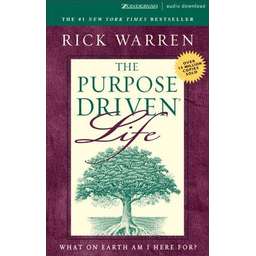 The Purpose Driven LifeRick Warren’s 40-day discipleship framework - the closest modern descendant of Peale’s mass-market reach, with more doctrinal scaffolding.
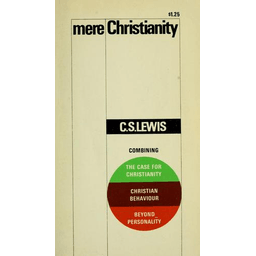 Mere ChristianityC. S. Lewis’s wartime BBC talks turned book - the intellectual ballast Peale’s framework is often accused of lacking.
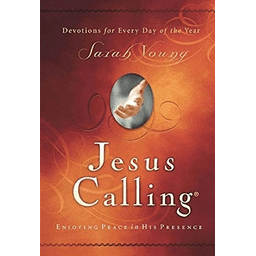 Jesus CallingSarah Young’s first-person devotional - another massively popular, similarly contested book worth understanding alongside Peale.
 The 5 Love LanguagesGary Chapman’s relationship framework - another Christian-framed self-help mega-bestseller, narrower in scope and more durable in influence.
Frequently asked questions
Is The Power of Positive Thinking a Christian book?
It is written by a Reformed Church in America pastor, quotes scripture throughout, and frames its practices in explicitly Christian language. Whether it is a substantively Christian book - in the sense of teaching the historic doctrines of the faith - is exactly the question critics have been arguing about since 1952. Different readers and different traditions answer it differently.
Who was Norman Vincent Peale?
Peale (1898-1993) was a Reformed Church in America minister who served Marble Collegiate Church in New York City for more than fifty years. Alongside the pulpit he ran a national radio program, founded Guideposts magazine, and wrote more than forty books. The Power of Positive Thinking remains his best-known work by a wide margin.
What did Reinhold Niebuhr say about the book?
Niebuhr, the leading American Protestant theologian of the era, repeatedly criticized Peale through the 1950s for offering a Christianity without the cross - a faith stripped of lament and solidarity with the suffering and reduced to a confidence-management technique. The critique is often paraphrased as "moral and spiritual ableism" and has been echoed by serious theologians ever since.
Is this a prosperity gospel book?
It is not a prosperity gospel book in the later "name it and claim it" sense. It is, however, widely regarded as one of the headwaters of that movement - Robert Schuller built directly on Peale, and later prosperity preachers built on Schuller. Calling Peale a proto-prosperity author is fairer than calling him a prosperity author.
Why is the book still in print after seventy years?
Because it keeps selling. Readers in distress have continued to report that the affirmation-and-visualization practices help them function, and the book’s short chapters and conversational tone keep it accessible to readers who would not pick up denser Christian writing. Cultural and political references - including Donald Trump’s well-documented family connection to Peale - also keep it in public conversation.
Should I read this as a Christian today?
It depends on what you want from it. If you want to understand twentieth-century American religion, motivational culture, or the lineage of the prosperity gospel, yes - it is one of the four or five essential books. If you want serious discipleship, exegesis, or a theology of suffering, read Lewis, Bonhoeffer, Keller, or a good study Bible instead, and read Peale later as a historical document.
How long does it take to read?
About six to eight hours of reading time, or just over seven hours on audio. The ten chapters are short and self-contained, which means many readers use it as a daily devotional rather than reading it straight through.
Sources & further reading
More Christian Living Books
 The Prodigal GodTim Keller’s 130-page reading of Luke 15 has quietly become one of the most-gifted Christian books of the last twenty years - and the reason is the title itself.
 Practicing the WayComer’s 2024 follow-up to The Ruthless Elimination of Hurry has quietly become the default spiritual-formation book in a thousand small groups - and the reasons are worth unpacking.
 Walking with God Through Pain and SufferingTim Keller’s most comprehensive book on suffering - part survey of how every culture has tried to explain pain, part biblical theology, part field manual for the people actually walking through it.
 FerventThe prayer book that turned “strategic, specific prayer” into a fill-in-the-blank battle plan - and rode the War Room moment to the top of the bestseller lists.
 A Grace DisguisedJerry Sittser lost his mother, his wife, and his four-year-old daughter in a single car crash - and the book he wrote about it has quietly become the one grieving people press into each other’s hands, because it refuses to tell you how to get over your loss.
 The Ruthless Elimination of HurryJohn Mark Comer’s 2019 breakout - a pastor’s case that hurry is the great spiritual enemy of our age - has quietly become the go-to slow-down book for an exhausted generation of Christians. Here’s what it actually delivers, and where it doesn’t.