- Starting price
- Free; ~$18 Banner of Truth print ed.
- Free tier
- Yes
- Platforms
- Print · Kindle · Web (free) · Public domain
- Developer
- Various / Public domain
- Launched
- 1746
- Updated
- May 31, 2026
The verdict
The deepest book ever written on the difference between feeling religious and being changed. Edwards lays out twelve signs of genuine, Spirit-wrought experience and lands the whole weight of the book on the last one - a transformed life. The 18th-century prose is demanding; a modern or abridged edition is the right way in for most first-time readers.
Try Religious Affections ↗Opens ccel.org
A Treatise Concerning Religious Affections has quietly become the book that pastors reach for whenever the question is not whether someone is excited about God but whether the excitement is real. Jonathan Edwards wrote it in 1746, a few years after the Great Awakening had swept through colonial New England and then collapsed into argument. Some people had been genuinely transformed. Others had wept, shaken, and fainted in revival meetings and then gone back to lives that looked exactly the same. Edwards - a Massachusetts pastor with a front-row seat to both outcomes - sat down to answer the hardest question the revival left behind: how do you tell the two apart?
It does not give you a test you can pass in an afternoon. It does not flatter the reader. It does not let you off the hook. Edwards's whole project is to take the comfortable signs people lean on - strong feelings, fluent God-talk, dramatic experiences, busy religious activity - and show, one by one, that every single one of them can be present in a person who has never actually been changed. Then he turns and lays out twelve signs that, taken together, point to the real thing. The book is long, the argument is patient, and the payoff is the most rigorous spiritual self-examination available between two covers.
The result is a book that has outlived its revival. Edwards is read today by people who have never heard of the Great Awakening and could not name a single other Puritan, because the question he is asking - is my religion real, or am I fooling myself - does not go out of date. The famous answer is the twelfth sign: that genuine religious affection shows itself, finally, not in how a person feels but in how a person lives.
✓ The good
- Unmatched on the psychology of conversion - Edwards maps the inner life of a person seeking God with a precision no later writer has equaled
- Built to expose self-deception - the first half catalogs the religious experiences that prove nothing, before a single reliable sign is offered
- The twelve signs are genuinely useful - a working framework for examining your own heart that pastors and counselors still apply directly
- Cross-tradition readership - read with appreciation by Reformed, evangelical, Anglican, and broadly devotional readers for the depth of its spiritual analysis
- Public domain - the full text is free in many formats, including CCEL, Project Gutenberg, and Monergism
- Lands on a changed life - the chief sign is "Christian practice," which keeps the book grounded rather than lost in introspection
- Modern and abridged editions exist - Banner of Truth, a Yale critical edition, and several updated-language and abridged versions make Edwards approachable
✗ Watch out
- The 18th-century prose is genuinely demanding - long sentences, careful distinctions stacked on distinctions, and a vocabulary most modern readers were never taught
- Long and methodical - Edwards works through twelve signs in order and refuses to rush; the structure is thorough rather than brisk
- Almost no hand-holding - Edwards assumes you already take the question of authentic conversion seriously and want it pressed hard
- Can intensify scrupulosity - readers prone to anxious self-examination sometimes find the relentless sifting unsettling rather than clarifying
- Written from a Reformed vantage - Edwards reasons within his own theological tradition, and some assumptions surface as a result
Best for
- Readers who genuinely want to know whether their faith is real or self-deception
- Pastors and counselors who work with people in or after intense religious experience
- Anyone who has read Owen or Packer and wants the deepest book on the affections
- Christians who want a public-domain classic they can read for free in any edition
Avoid if
- You are looking for a short, encouraging book to start the Christian life
- You bounce off 18th-century English even in updated or abridged form
- You already struggle with anxious, scrupulous self-examination
- You want a practical workbook with steps, exercises, and journaling prompts
What Religious Affections is
A Treatise Concerning Religious Affections is a work of practical theology by Jonathan Edwards, the colonial New England pastor and theologian, first published in Boston in 1746. Edwards wrote it after the Great Awakening - the revival of the early 1740s that he had witnessed firsthand and at first defended - to address the controversy it left behind: some conversions had been real and lasting, others a wave of emotion that faded. The book is Edwards's mature, careful answer to how the two can be told apart. It runs long, and it has remained continuously available for nearly three centuries.
The argument falls into three parts. Edwards begins by establishing what the "affections" are - not passing feelings but the deep inclinations of the heart, the things a person actually loves, fears, and longs for - and argues that true religion principally engages them. He then works through a dozen experiences that look spiritual but prove nothing either way: intense feelings, fluent religious talk, dramatic episodes, even great confidence. Finally he lays out twelve "distinguishing signs" of genuinely gracious affections, building toward the last and weightiest: a holy, changed life.
Why serious readers across traditions still reach for Edwards
Most books about religious experience pick a side and stay there. They either celebrate feeling - chase the encounter, trust the goosebumps - or they distrust it and retreat into cold doctrine. Edwards refuses both. He insists that true religion is mostly a matter of the affections, that a faith with no heat in it is no living faith at all; and in the same book he insists that heat alone proves nothing, that the most dramatic experiences can leave a person exactly as self-centered as before. Holding those two convictions together, without collapsing into either, is what makes the book singular. It takes feeling seriously without trusting feeling, and that balance is rarer than it sounds.
What draws readers from well outside Edwards's own circle is not agreement with every line of his 18th-century theology. It is the accuracy of his observation. Edwards watched hundreds of people pass through revival and then followed what became of them, and the book reads like the field notes of someone who has seen every way the human heart fools itself. Reformed pastors cite it constantly. Evangelical and Anglican writers draw on it. Even readers who do not share his framework keep returning for the same reason: when Edwards describes the difference between loving God for what He gives and loving God for who He is, the description simply rings true.
The affections: what Edwards means and why it reframes the question
The book turns on a definition most modern readers get wrong on first contact. By "affections" Edwards does not mean passing emotions or moods - the spike of feeling in a worship service, the lump in the throat at a hymn. He means the deep, settled inclinations of the will: the things a person actually loves and hates, desires and dreads, clings to and runs from. Affections, in his account, are the strong movements of the soul toward or away from something, and they are the engine of everything a person actually does. His foundational claim is that "true religion, in great part, consists in holy affections." A faith that leaves the heart cold and untouched is, for Edwards, not really faith at all.
That reframing changes the whole question. If religion lived only in the intellect, you could test it by what a person believes; if it lived only in passing emotion, you could test it by how intensely a person feels. Edwards locates it deeper, in what the heart is fixed on - which is why neither right doctrine alone nor strong feeling alone can settle whether someone has been changed. It also explains why the book is so searching. To examine your affections is to examine what you most truly love, and that is a far more uncomfortable inquiry than checking your beliefs or your feelings. Edwards spends the rest of the treatise pressing exactly that discomfort.
The twelve signs - and the negative signs that come first
Before Edwards offers a single reliable sign, he does something most writers would never risk: he spends a long stretch of the book listing twelve things that prove nothing. Intense feeling proves nothing - counterfeit affections can be as hot as genuine ones. Fluent, abundant God-talk proves nothing. Coming to faith in a particular order, having dramatic experiences, feeling great assurance, being busy with religious activity, even moving others to tears - Edwards walks through each and shows, patiently, that it can all be present in a heart that has never actually turned. The effect is deliberately disorienting. He is clearing away every comfortable handhold a reader might reach for, so that nothing false is left to lean on.
Only then does he lay out the twelve positive signs of genuinely gracious affections - among them that they arise from a love of God's own beauty and holiness rather than from self-interest, that they humble rather than inflate, that they soften the heart, and that they produce a settled hunger for more of God. These are not a checklist to score; Edwards is explicit that he is describing the shape of real grace, not handing out a pass-or-fail test. The signs work as a mirror, not a meter. Read honestly, they are among the most spiritually exposing pages in print - and the most clarifying, once a reader stops bracing against them.
"Christian practice": the twelfth sign and the weight of the whole book
Edwards builds the entire treatise toward its final sign, and he says plainly that it is the chief one: genuinely gracious affections show themselves, in the end, in "Christian practice" - a holy, obedient, changed life over time. Not a burst of religious enthusiasm, not a season of fervor, but a durable reorientation of how a person actually lives, holds up under trial, and treats other people. After hundreds of pages spent sifting the inner life, Edwards turns outward and rests the decisive weight on visible fruit. The heart is where religion lives, but the life is where it shows. A tree, he is fond of noting, is finally known by what it bears.
This is the move that keeps the book from curdling into morbid introspection. A reader could spend Religious Affections endlessly examining their own feelings and never reach solid ground - and Edwards knows it. By making practice the chief and most reliable sign, he turns the reader's gaze from the unstable weather of the emotions to the steadier evidence of a transformed life. It is also the most-quoted takeaway from the book, and the reason it has aged so well: the test Edwards finally trusts is not how religious you feel but how, over the long run, you live.
Pricing
Free original (public domain)
Free
The 1746 text is in the public domain - CCEL, Project Gutenberg, and Monergism all host clean HTML, EPUB, and PDF versions. Best for readers comfortable with 18th-century prose unaided.
Banner of Truth paperback
~$18
The standard unabridged print edition - Edwards's full text in a durable, readable format. The reference copy most pastors keep on the shelf.
Yale "Works of Jonathan Edwards" edition
~$40
The scholarly critical edition (volume 2 of the Yale Works), edited by John E. Smith with a substantial introduction and full apparatus. Best for students and serious study.
Updated / abridged paperback
~$13
Several publishers offer versions that modernize the language or condense the twelve signs into a shorter read. The easiest first-time entry point in print.
Kindle / audiobook
~$5-13
Free or near-free Kindle files of the public-domain text exist, alongside paid modern editions. Audiobook narrations vary in quality more than in content - sample first.
The original 1746 text is public domain and free in every format worth having - CCEL hosts clean HTML, Project Gutenberg has EPUB and Kindle files, and Monergism carries PDF. If you can handle 18th-century prose unaided, you never have to pay for this book at all.
For most readers who want a print copy, the unabridged Banner of Truth paperback at around $18 is the workhorse edition - Edwards's full text in a durable, readable format, and the version most pastors keep within reach. It is marked best value here because it is the complete book at a fair price and the copy a reader will return to over years.
The Yale "Works of Jonathan Edwards" edition (volume 2), at roughly $40, is the scholarly standard - John E. Smith's critical text with a substantial editorial introduction and full apparatus. If you are studying Edwards seriously or writing about him, it is the citation copy; for a first read it is more than most people need.
Updated-language and abridged paperbacks run around $13 and are the gentlest on-ramp in print, either modernizing the sentences or condensing the twelve signs into a shorter read. Free or near-free Kindle files of the public-domain text are also available; audiobook narrations exist but vary in quality, so sample before you commit.
Where Religious Affections falls behind
Demanding 18th-century prose. Edwards writes in long, carefully qualified sentences, stacking distinction upon distinction, in a vocabulary the average modern reader was never taught. This is a genuine gap between 1746 English and 2026 English, not a failing in the reader, and it is why a modern or abridged edition is the right first step for most people.
Methodical to a fault, for some readers. Edwards works through twelve negative observations and then twelve positive signs, in order, without hurry. The thoroughness is the point - he is leaving no false comfort standing - but readers who want a brisk, punchy book will find the pace deliberate and the structure exhaustive.
Risk of intensified scrupulosity. The book's relentless sifting of motives is clarifying for many readers and unsettling for others. Someone already prone to anxious, never-enough self-examination can find Edwards turning the screw rather than offering relief, at least until the twelfth sign redirects attention to a changed life.
Little pastoral warming-up. Edwards does not coax the reader in or soften the edges. He assumes you already take the question of authentic conversion seriously and want it pressed hard. Warmer companions - Packer, or a book like Gentle and Lowly - do the pastoral work that Edwards leaves to the reader.
A Reformed vantage point. Edwards reasons from within his own theological tradition, and some of its assumptions surface in how he frames grace and the will. Readers from other traditions can still draw deeply on his analysis of the affections, but the framework is unmistakably his and never pretends to be neutral.
Religious Affections vs. The Mortification of Sin vs. Knowing God
These three are often recommended in the same breath as the deep end of the Christian-classics shelf, but they answer different questions. Religious Affections (Edwards, 1746) is the diagnostic of experience - it asks whether a person's religion is genuine or self-deception, and it is at its best for a reader weighing the reality of their own conversion. The Mortification of Sin (John Owen, 1656) is the diagnostic of struggle - it works the mechanics of killing a specific known sin and is at its best when the reader has a particular battle in view. Knowing God (J. I. Packer, 1973) is the doctrinal foundation - a warmer, more accessible book on the character of God and the shape of a life lived before Him.
Different strengths. Edwards is the examiner of the heart. Owen is the surgeon of besetting sin. Packer is the teacher who grounds the whole enterprise in who God actually is. A reader who picks up Edwards expecting Packer's accessibility will find him slow and exacting; a reader who picks up Owen expecting Edwards's breadth will find him narrowly focused on one fight; a reader who picks up Packer expecting either of the older books will find a gentler, more modern voice. The honest recommendation is that serious readers eventually own all three and use each for the work it actually does.
If you are going to read only one, the choice tracks the question you are asking. If the question is "is my faith real, or am I fooling myself," Edwards. If the question is "how do I kill this sin I keep losing to," Owen. If the question is "who is the God I claim to follow," Packer - and most readers find Packer the best starting point before tackling the two harder, older books.
The bottom line
Religious Affections is not the right first book for someone new to the faith, and its 18th-century prose will turn away readers who would profit from it most. But for the reader genuinely willing to ask whether their religion is real - and to sit still while Edwards strips away every easy reassurance - there is nothing else in print that probes the question so deeply or lands it so well. Start with a modern or abridged edition, read it slowly, expect to be uncomfortable, and let the twelfth sign do its work. Nearly three centuries on, the book still tells the truth about the human heart.
Alternatives to Religious Affections
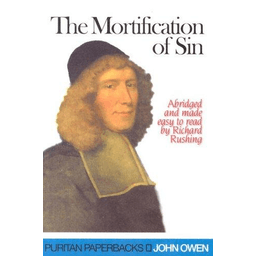 The Mortification of SinJohn Owen's 1656 Puritan handbook on killing indwelling sin - the diagnostic of the struggle Edwards's diagnostic of experience sits alongside. Demanding in the same way, focused on a different question.
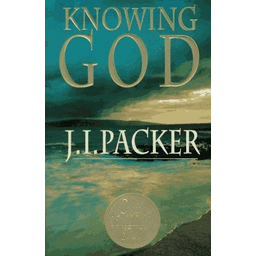 Knowing GodJ. I. Packer's 1973 classic on the character of God - warmer and more accessible than Edwards, and the doctrinal foundation most readers do well to read first.
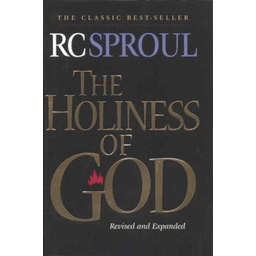 The Holiness of GodR. C. Sproul's accessible modern study of God's holiness, drawing explicitly on Edwards and the Reformed tradition. A gentler on-ramp to the themes Religious Affections treats at depth.
Frequently asked questions
Do I need to read the original 1746 text, or is a modern edition fine?
For a first reading, a modern or abridged edition is almost always the better choice. Several publishers offer updated-language versions that modernize Edwards's long sentences, and abridged editions condense the twelve signs into a shorter read. The unabridged Banner of Truth paperback and the scholarly Yale edition reward a second pass once you already know the shape of the argument.
What does Edwards mean by "affections"? Is it just emotions?
Not quite. By "affections" Edwards means the deep inclinations of the heart - what a person genuinely loves, desires, fears, and clings to - rather than passing moods or surface feelings. His point is that true religion mainly engages these settled inclinations, which is why neither right doctrine alone nor strong emotion alone can prove that someone has actually been changed.
What are the twelve signs?
They are twelve marks of genuinely gracious religious affection that Edwards lays out in the final part of the book - among them that true affections arise from love of God's own beauty and holiness rather than self-interest, that they humble rather than inflate, that they soften the heart, and, chiefly, that they issue in a holy and changed life ("Christian practice"). Edwards is clear they describe the shape of real grace rather than functioning as a pass-or-fail checklist.
Is Religious Affections only for Reformed readers?
No. Edwards wrote from within the Reformed tradition, and some of its assumptions surface, but the book has been read with appreciation by evangelical, Anglican, and broadly devotional readers for the depth of its analysis of religious experience. The central question - how to tell genuine faith from self-deception - speaks well beyond any single tradition.
Is it really in the public domain?
Yes. The original 1746 text is long out of copyright and freely available from CCEL, Project Gutenberg, Monergism, and others in HTML, EPUB, and PDF. Modern editions (Banner of Truth, the Yale Works, updated and abridged paperbacks) hold their own editorial copyright on introductions, notes, and any modernized text.
Could this book make spiritual anxiety worse?
For some readers, yes - its relentless sifting of motives can intensify anxious, scrupulous self-examination. The safeguard is built into the book itself: Edwards makes the twelfth and chief sign a changed life over time rather than the unstable weather of one's feelings, which redirects attention away from endless introspection. Readers prone to scrupulosity may want to read it slowly, alongside warmer devotional reading and, where helpful, pastoral or counseling support.
What should I read after Religious Affections?
For more Edwards, the short revival sermon Sinners in the Hands of an Angry God is the most famous companion text. For a pastoral counterweight, J. I. Packer's Knowing God and R. C. Sproul's The Holiness of God treat related themes in a warmer, more accessible voice. For the diagnostic of personal sin rather than experience, John Owen's The Mortification of Sin pairs naturally with Edwards.
Sources & further reading
More Christian Classics (Pre-1900)
The Mortification of SinThe 1656 Puritan handbook on fighting indwelling sin - still the most rigorous spiritual diagnostic in print, four centuries on. The Imitation of ChristA 600-year-old devotional that has outsold almost every Christian book ever written - and still rearranges the modern reader who is willing to sit with it.
 The Practice of the Presence of GodA 17th-century Carmelite kitchen monk’s short, plain talks and letters on staying aware of God in the middle of ordinary work - the smallest devotional classic that keeps outlasting bigger books.The Treasury of DavidSpurgeon spent two decades on a verse-by-verse commentary on all 150 Psalms - his own exposition, centuries of collected commentators, and notes for preachers - and the result is still the first book many turn to when they open the Psalter.All of GraceSpurgeon's short 1886 book explaining salvation by grace through faith - written for the anxious and the seeking, given away by the millions, and still the booklet people press into a searching friend's hands.The Bruised ReedRichard Sibbes built an entire book out of half a verse - "a bruised reed he will not break" - and four centuries on it is still the tenderest page the Puritans ever wrote.